N.Y. columnist talks politics at Sundance

Font Size:
Default font size
Larger font size

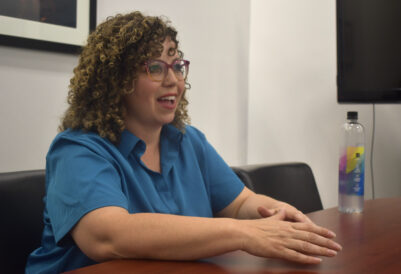
buy this photo MARIO RUIZ/Daily Herald New York Times Op-ed columnist Maureen Dowd speaks at the Sundance Author Series Saturday, April 5, 2008.

In a Saturday question-and-answer session moderated by UVSC president William Sederburg, Maureen Dowd, op-ed columnist for the New York Times, took on would-be U.S. presidents at Sundance.

Saturday was Dowd's third visit to speak at Sundance, though this time, she had no book to promote.

"I didn't come to hawk a book. I don't have one," Dowd said, noting that she wanted to escape a dark computer room and remembered Sundance as "an oasis of kindness ... So this year I thought it would be fun to talk politics in this remarkable year."

In a short speech before taking questions, Dowd opened by saying she had just come from Washington D.C., "where we remain flummoxed about why the president is in such a fine mood."

George W. Bush recently gave a speech "chortling and joking as the nation fell off an economic cliff," she said.

Dowd said she had recently written that, having secured his legacy as a crash-and-burn president, a jovial Bush seems to have "morphed into Gene Kelly."

That reference elicited "an outraged letter" from the widow of Gene Kelly, who wrote that "she knew Gene Kelly, and George Bush was no Gene Kelly," Dowd said, adding that she wrote back to apologize. The crowd laughed out loud.

A Salt Lake Tribune reporter asked Dowd over the weekend if she felt burned out by the political marathon of the campaign for the White House, but Dowd said she felt the nation might be seeing things a different way.

"After so many years of being apathetic, Americans seem to have woken up to how much fun it is to change the result" by getting involved in politics and having a voice, she said. She joked that perhaps people such as her own sister, voting for a favorite on the TV reality hit "Dancing With the Stars," had learned they could have influence by voting.

Moderating the question-and-answer period, Sederburg ribbed those present, saying he wanted them to ask Dowd the best trivial and frivolous questions they could think of. He got one, from a man he introduced as a BYU professor, who asked which of Hillary's hairstyles "was likely to get the most votes, and will any hairstyle be sufficient to win the South?"

Dowd took the moment, saying Hillary Clinton could care less about hair and clothes -- "she's a nitty-gritty policy girl" -- but there are indications that Clinton may be dressing now in bright yellow and red because those colors test well among her base of women voters. For real.

Sederburg himself opened the question session by asking why America is so fascinated with the combination of sexual practice and politics.

Dowd said that when New York Governor Elliot Spitzer stood to announce his philandering in a press conference "everyone was so amazed we still have to go through this ritual of the woman standing by her man and his wife has to stand there," Dowd said.

Answering a question about Hillary's public image, Dowd said the gender issues have been the most fascinating part of the 2008 campaign.

"In many ways, Hillary is beyond gender," Dowd said. "She is the manliest candidate in the race, if you want to use that term."

Clinton, in voting to support the war in Iraq, did not even bother to read intelligence reports on the war. Rather than basing her vote on research -- "this is a woman who always does her research, you have to give her that" -- this time, Clinton voted based on the public image she desired.

"She didn't want love beads in her jewelry box," Dowd said. "She did not want to be painted as a hippie who hates war."

As senator, Clinton has gotten herself onto the Armed Forces Committee and purposefully come to know the generals but overcompensated on the war because she didn't want to appear to be a soft woman, and that can be dangerous, said Dowd.

When asked about her perceptions of the media's so-called love affair with Barack Obama, Dowd said that despite the Saturday Night Live sketch in which reporters ask Obama if he would like a pillow, Obama rarely spends time with the press.

"He is aloof with the press and the press is not infatuated with him because of it," she said.

McCain, on the other hand, still hangs out with reporters, and Hillary should have taken a note from McCain, because in person "she can be very charming."

"I think she should have taken the McCain approach," Dowd said.

Unlike any other reporter or candidate who has ever been on the election trail, Obama has actually lost five pounds, Dowd said. As a result, people often try to get him to eat. His handlers had to chide him recently when he refused to eat chocolate in a chocolate factory.

Obama is unlike any other candidate before or after him, and many new reporters don't seem to realize this, Dowd said.

"I have never seen and doubt I ever will again, 16,000; 20,000; 22,000 people waiting in line for hours to hear him speak," she said, noting that he has a "golden vibe."

Dowd was pressed to predict who would win, and when she refused, was asked to say who she felt was qualified to win, which she also refused. Rather, she said, while Hillary may be down to a 1-percent chance of winning, don't count her out, as she could still pull it off. And McCain could take the general election, even though all the historic trends point to a Democratic victory, if, for example, the nation were attacked again and people became nervous at the last minute about Obama's experience.

When asked about who could become vice president, Dowd said that in this area, Republicans have something to teach Democrats: winning is winning. If Clinton or Obama wins, they don't have to choose the other as running mate, simply because they have won and now they can pick whomever they want.

Print Email

/news/local
30° F
Sponsored by:

Select Your Town:

Lowest Gas Price in Utah