Rocky Mountain Power requests 4.48% rate increase to feed fire fund
The proposal stems from a 2024 law that allowed large utilities to establish a surcharge to self-insure amid ‘astronomical’ premiums
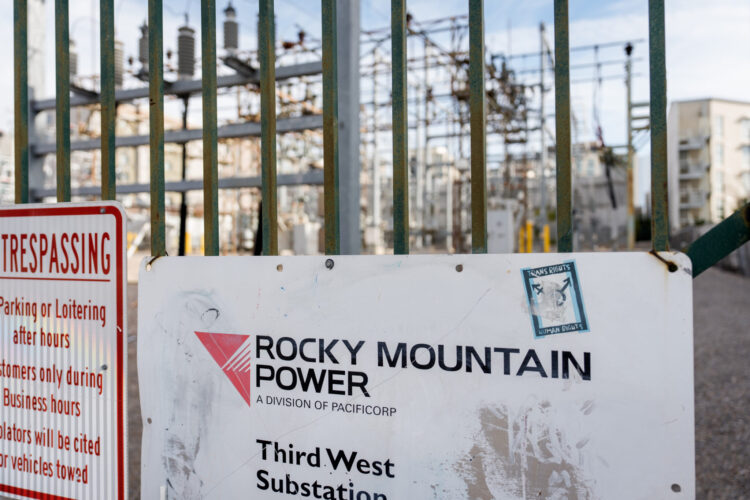
Photo by Spenser Heaps for Utah News Dispatch
A Rocky Mountain Power substation in downtown Salt Lake City is pictured on Saturday, Nov. 15, 2025.Rocky Mountain Power is proposing a 4.48% rate increase for all customers, potentially for the next decade. However, this time, the adjustment isn’t meant to cover its expenses, but a self-insurance account that would cover extraordinary expenses in case of utility-related catastrophic wildfires.
The company’s request stems from a law the Utah Legislature passed in 2024, which, among other provisions, allowed large utilities to establish a restricted fire fund fed by a surcharge to ratepayers.
Sen. Scott Sandall, R-Tremonton, who sponsored the law in the 2024 session, said the adjustment was driven by commercial insurance prices going “astronomically high,” especially after PacifiCorp settled a lawsuit with about 400 plaintiffs over deadly wildfires that devastated Oregon communities in 2020.
“The idea here is, if Rocky Mountain Power would have to go out and purchase insurance at the higher level, that cost would be blended back into the rates that we’re paying today,” Sandall told Utah News Dispatch on Monday. “So rather than pay the extra high cost of the additional insurance to an insurance company, the idea here is to self insure to a certain degree.”
According to November testimonies from Rocky Mountain Power executives, the proposed 4.48% increase would translate to about $3.70 a month for the average residential customer, the cap established in the bill. With the increase, the company is hoping to collect about $109 million a year, and eventually, after 10 years, about $1 billion.
Rocky Mountain Power argued in its request for the rate increase that the proposal is in the public interest, especially now that “the increasing incidence and severity of wildland fire has put unprecedented financial pressure on electric utilities operating in Western states like Utah.”
“The availability of the Fire Fund supports customers and the state of Utah generally by fostering the financial stability of the Company so it can deploy capital to effectively serve customers,” the company wrote. “Massive claims on utility assets arising from wildfire liability could compromise the Company’s ability to expand infrastructure to meet current customer needs and expected load growth in Utah.”
The code establishes that the fire fund would supplement other forms of insurance. And Sandall highlighted the account would not be part of Rocky Mountain Power’s system. It would instead be a restricted account, and would only be used as a last resort if there’s a catastrophic fire with liabilities that insurance won’t pay for.
“This is just an insurance account that the ratepayers pay into, but it’s always there,” Sandall said. “And if something else comes up in the future where we don’t need it, I’m sure that we’ll give it back to the ratepayers.”
The hope is that Rocky Mountain Power still takes the necessary measures to avoid fires by keeping their power lines clear and cutting energy in high wind situations, Sandall said, and that the state isn’t forced to use the account.
“They just were really at a point where the insurance companies, especially after the Oregon lawsuit, did not want to insure them at a reasonable rate,” Sandall said. “And so this becomes a self-insured fund, rather than pay the extra high premiums to an insurance company.”
Rocky Mountain Power’s request was expected after the passage of Sandall’s legislation. However, it also comes after a controversial request for a 30.5% residential rate increase, heavily criticized by Utah Gov. Spencer Cox and legislative leaders. Ultimately, the Utah Public Service Commission approved only a 4.7% bump, which would translate into a $4.31 increase in the average home’s utility bill.
However, Sandall reiterated the fire fund is different from the general rate because the money would not pay for Rocky Mountain Power’s regular operations.
The Public Service Commission is hosting a virtual conference on Thursday, a step in the process to consider the adjustment.