
When will the snowplowers come to your street?
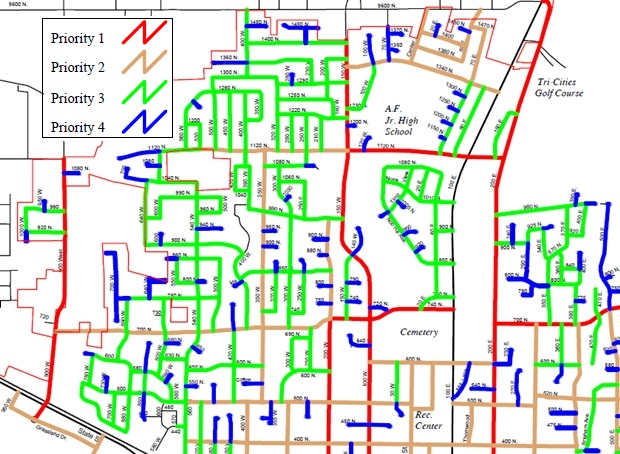
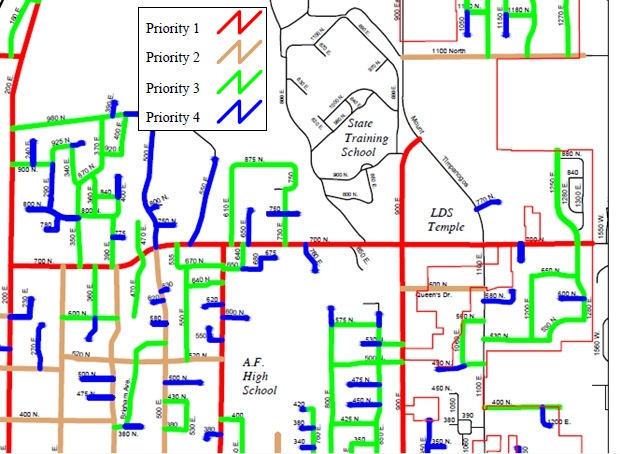
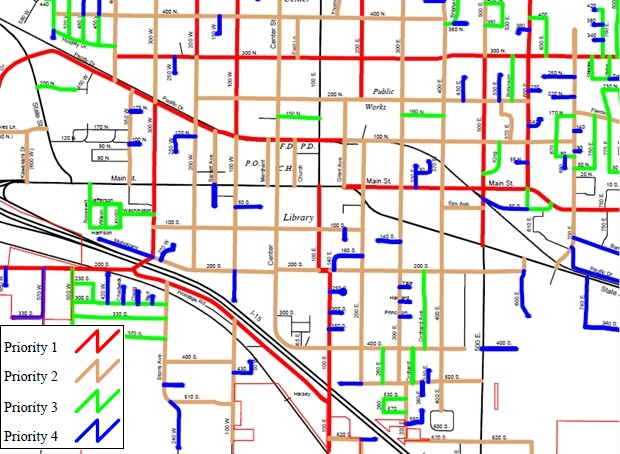
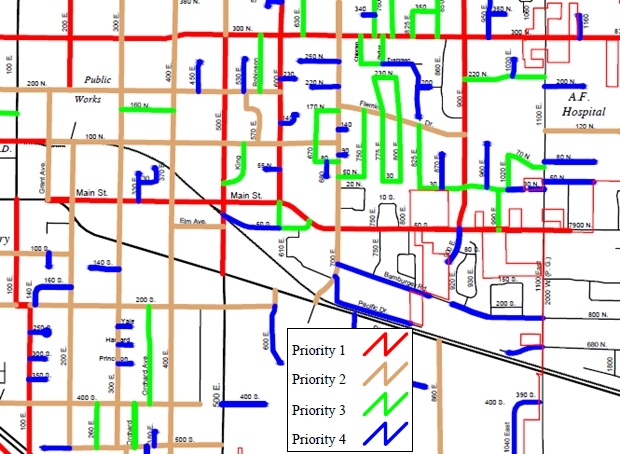
Click on thumbnails above to see other parts of American Fork.
When American Fork City’s full fleet of snowplowers load up, they can usually carry 36 tons of salt, which is less than what was required for last winter. But this winter, as the next storm is fast approaching, the City has already plunked down over 442 tons of salt on the ground.
The herculean challenge of keeping the streets safe for motorists in a city that counts over 100 miles of paved surfaces — in one of the top states in the country for annual snowfall — is given every year to the Streets Division of the American Fork Department of Public Works, in an expensive program that has cost taxpayers $15,800 in salt this season. And though we’re only a few weeks into the winter, it has taken 336 man-hours to accomplish the snow removal and deicing, a total cost of $9,000 in wages.

With states and localities facing budget cuts in the wake of the worst recession in 75 years, the high frequency of severe storms is straining resources and raising concerns about public safety.
“It is a very expensive program. It’s time consuming. We’re constantly looking for ways to improve this program and be more efficient,” American Fork’s street superintendent Troy Warnick told the City Council last Thursday. The program costs the City on average $98,000 annually, documents show, almost an 1/8 of the B & C Road Funds it receives from the Utah Department of Transportation for the maintenance of American Fork’s roads.
When a snow storm is forecast for the night, an American Fork on-call employee checks the condition of the roads every hour. While a three-inch accumulation triggers the dispatch of snowplowers, snow crews are usually already out salting the roads, as icing usually occurs before the accumulation conditions are met.
The city’s policies divide streets into four categories of priorities for snow removal with schools, hospital and access to Main Street and I-15 coming first. The last one on the list is cul-de-sacs and dead-end streets.
“The parking on the street and the removal of the snow from private properties onto public streets is an ongoing problem,” Mr. Warnick said. “If our snow crews clear the roads and someone puts snow back on the road to clear his driveway, it will freeze. And the next time the snowplow driver comes along, the blade will catch that. And it could send the snowplow out of control.”
This winter has already been challenging for the snow crews because of the recent sudden drop in temperature, rendering the salt’s chemical proprieties ineffective.
Still, Mr. Warnick said the snow removal next winter should be even faster because the jurisdiction of 900 East/1100 East will finally be transferred to UDOT. “We can’t wait to get that under UDOT jurisdiction,” Mr. Warnick said. “It’s a very expensive and time consuming road, going from two or three lanes to five lanes.”
Danny Crivello can be reached at crivello@citizen.af, via text at 801-477-6397 or on Twitter.