
Riverbottoms mortgage fraud: Residents deal with fallout
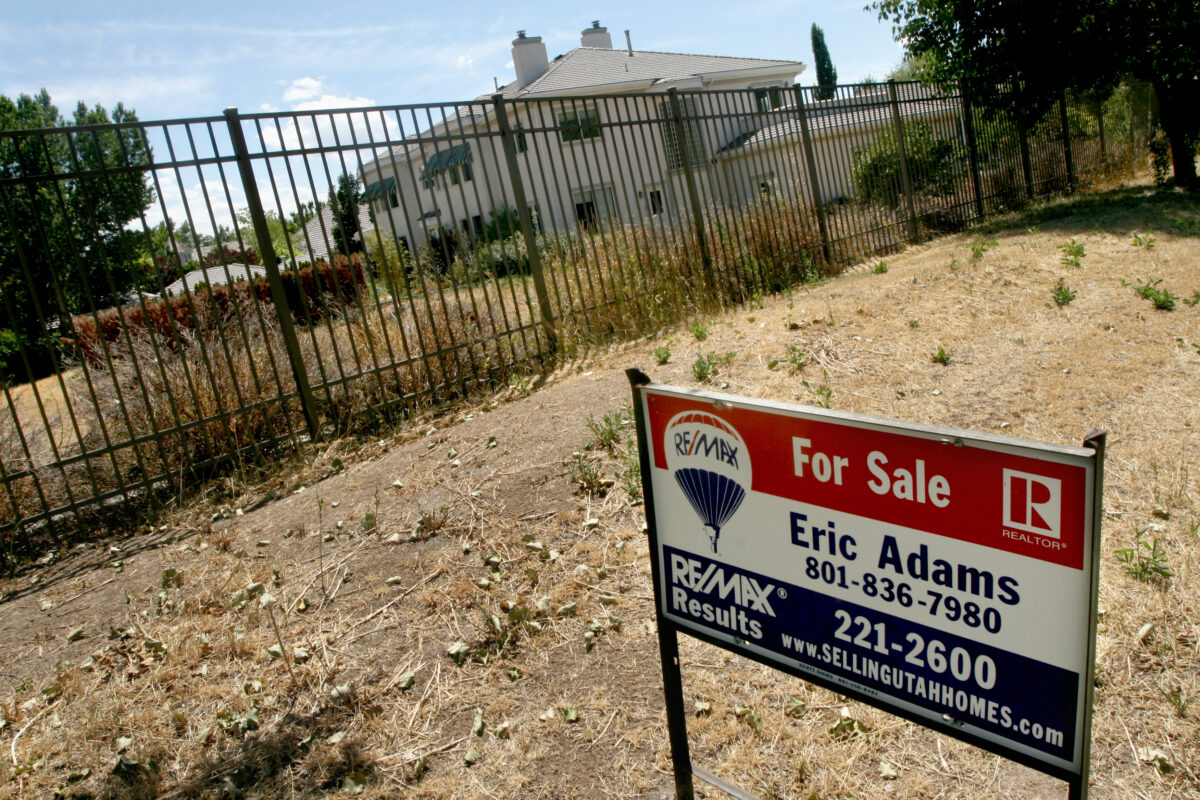
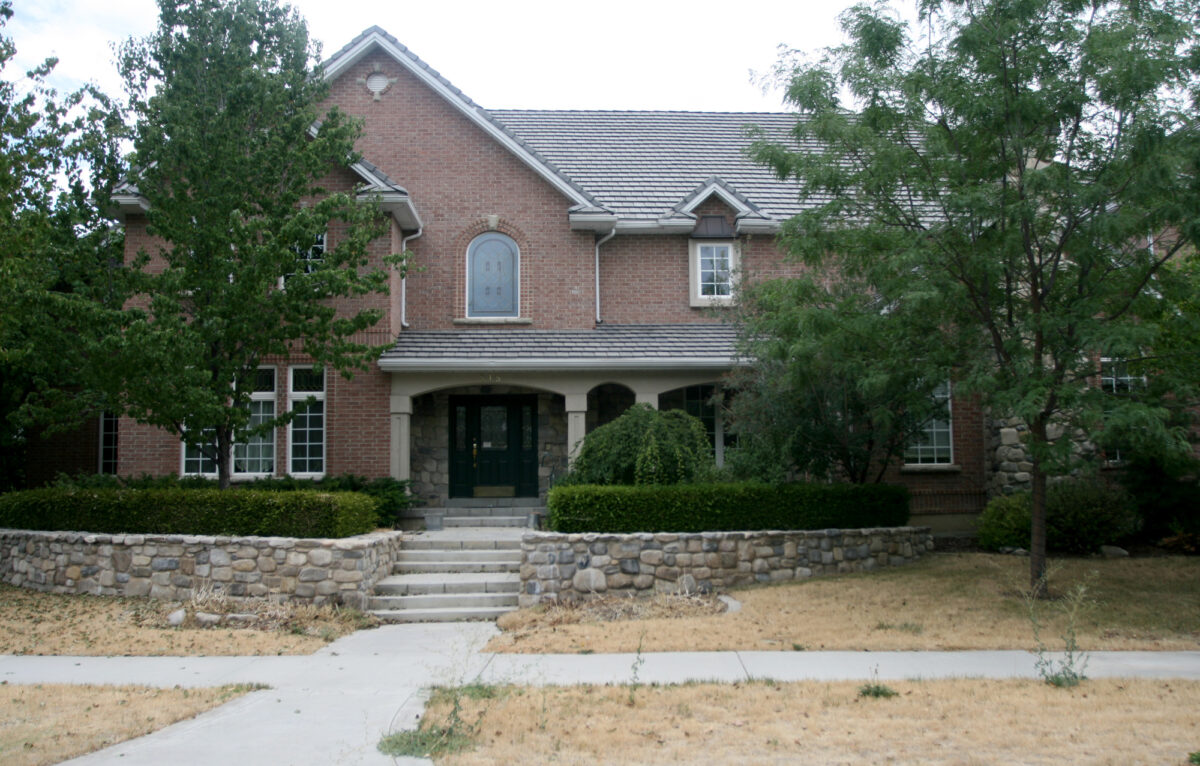
For nearly a year, a stately red brick mansion at 515 Sheffield Drive in Vintage On the River, a subdivision in the affluent Riverbottoms area in Provo, has remained vacant, its yellowing front lawn in stark contrast to the manicured, verdant lawns of neighboring luxury homes.
This home, one of five properties that federal investigators say were subject to an illegal property flipping scheme in 2006, is among an estimated 20 Riverbottoms properties blighting an area hard-hit by the housing downturn, an ongoing credit crunch and a glut of luxury housing inventory in Utah County.
Nearly a year after six Utahns were indicted for running an illegal property flipping scheme to artificially inflate the value of several high-end homes in the Riverbottoms area, longtime residents like Steve Cox say they are still living with “eyesores” or “abandoned homes” scattered throughout the upscale neighborhood. They worry that these properties, some of which have ill-kept yards or have sustained property damage, may impact their own home’s values in the near term.
The Sheffield home was owned by Salt Lake sports anchor Dave Fox, who along with Mark Atkin and Verrell Blaisdell was connected with the illegal mortgage scheme and charged with communications fraud in Provo’s 4th District Court. Fox and Atkin, in a plea bargain deal with prosecutors, agreed to testify against individuals involved in the scam in exchange for their cases being dismissed.
According to the Utah County Assessor’s office, the 20 properties in the Stonegate, Vintage On the River and Woods at Riverside subdivisions were abandoned after the six raked in millions of dollars by falsely inflating the value of these homes, recruiting straw buyers to dupe mortgage lenders into granting loans for amounts in excess of the homes’ fair market values, and then pocketing the difference.
Some of the loan proceeds were used for a period of time to make mortgage payments on the Riverbottoms homes. But over time, these payments stopped, resulting in the properties’ foreclosure.
An unspecified number of those properties are either still vacant, for sale or have been sold in trustee sales or short sales, according to Utah County Assessor Kris Poulson.
Mixed feelings
Now, one week before a five-week trial on the mortgage fraud case is scheduled, Cox and other residents in the Riverbottoms area — who are watching for the trial’s outcome — have mixed feelings about those involved in the scam and the effect it might have on the neighborhood’s otherwise pristine image.
Cox was among 180 residents who appealed to the Utah County Assessor’s office in October after the mortgage scam sent property valuations of some 550 homes in the area up by between 50 percent and more than 100 percent.
According to Poulson, some 460 homes have since had their 2007 property valuations adjusted. Of the 460, thirteen homeowners appealed to the state Tax Commission for further evaluation.
Cox, who saw his 2007 property valuation skyrocket 124 percent and his 2007 property taxes jump 73 percent in just one year, is planning to appeal his 2008 property tax valuations as well.
Even though his 2008 property tax valuation is about 40 percent lower than in 2007, Cox still wonders if those valuations are accurate.
“I just hope it’ll be as easy to bring those values down as it was to inflate them,” said Cox, a Riverbottoms resident and owner of Pioneer Diamond Co. in Provo.
New valuation method
Because of concerns over whether sales comparables in the Riverbottoms area are valid, the Utah County Assessors office is now using a program designed by Marshall & Swift, a Los Angeles-based building cost data provider, to determine the values of those homes.
“This program estimates what it would cost to replace the home based in part on current construction costs. For the older homes, their value is based on a depreciation rate based on property sales throughout the country,” Poulson said.
“Because of the mortgage fraud scam and because there are few luxury home sales in that area, property values in the Riverbottoms area will likely remain unstable for at least another year, depending on how the economy performs,” he said.
Eric Adams, a branch broker for RE/MAX Results in Provo, said it’s hard to determine how much the scam has affected property valuations in the area.
“Complicating matters is the fact that so few high-end homes are selling now because financing is drying up on higher-end homes. Lenders now require substantial down payments on those loans, plus there’s lots of inventory in the high-end category, and the ones that are selling in that area are mostly distressed properties,” Adams said.
“Typically, distressed properties aren’t fair market value. With the visual impairment factor, more than likely, distressed properties could sell for anywhere between 5 percent to 20 percent below market value,” he said.
To keep up the neighborhood’s manicured look and his own property’s valuations, Cox says he and his son have been mowing the lawns of some homes that were abandoned in the Brooktree area.
“Some of these were once beautiful, gorgeous and very prominent homes in a very exclusive neighborhood that are now eyesores. And because they are in disrepair or abandoned, they’re having a negative impact on valuations of other homes around them,” Cox said.
Adams is now marketing a foreclosed lot that was once part of a residential property at 3322 N. Cottonwood Lane in the Woods at Riverside subdivision. Both the lot and the home, which went into foreclosure, once belonged to Bradley Grant Kitchen.
Kitchen and five others including David Bolick, Steve Wells Cloward, Ron Clarke, Jeffery David Garrett and Rebecca Ann Hadlock had entered not-guilty pleas in January to four counts of mail fraud, nine counts of wire fraud and one count of conspiracy to commit mail and wire fraud.
Kitchen and Bolick, however, changed their plea last month, and now face a statutory maximum sentence of up to 20 years in prison and a fine of $250,000. The government has dropped its case against Hadlock, citing a lack of evidence.
A trial on the remainder of the case will start on Aug. 13 and will be held before U.S. District Judge Ted Stewart. “Who the victims are and how much they are owed will be determined at sentencing,” said Melodie Rydalch, spokeswoman for the U.S. Attorney’s Office.
Some still positive
A few are as yet unwilling to cast the first stone against Kitchen and Clarke, whose families still live in the Stonegate community.
“Ron and [his wife] Susie are good friends. We’ve known them since 2000,” said Sandra Heal, who lives in Stonegate right next to two properties formerly owned by Kitchen. One of them, 4272 North Stone Crossing, is among the five properties involved in the illegal property flipping scheme.
“The fact that we have two homes next to us that were foreclosed on is not a good thing,” said Tom Heal, Sandra’s husband and founder of Tom Heal Commercial Real Estate in Provo. “But we’re here to stay, and over a period of time, things will shake out and return to normal.”
Linda Bradford, a resident of the Woods at Riverside — home to CNN’s Larry King and singer Donny Osmond — lives near 3282 N. Cottonwood Lane, another property involved in the scam.
“Last year’s property assessments were out of whack, but everyone here has been patient. But it’s not fun to have it that way,” she said. “But for the two homes in this neighborhood that were let go, the other 30-plus homes are awesome. Things will be fine as long as buyers come in and get the homes back in shape.”
Despite the slower housing market, construction on several luxury custom homes in Stonegate is still underway today, and Clarke remains the agent for Stone Gate Villas and several other properties for sale in the community.
Increased penalties
“When you put a housing downcycle hand in hand with mortgage fraud, it pulls the market down faster and farther,” said Mark Steinagel, director of the Utah Real Estate Division.
“When people like Kitchen drive up property prices to pull money out, and then let the properties go into foreclosure, that’s damaging,” he said. “The buyer may end up owing more on the home if he obtained a loan based on inflated appraisals from fraudulent sales. And if the home loses 10 percent to 20 percent of its value in a downturn like the one affecting states like California and Nevada, these people may become upside-down on their loans.”
“People wanting to sell in such an environment may have difficulty selling because they can’t find a buyer, and even if they do find one, some lenders won’t let them sell for less than they owe,” he said.
But Steinagel said aggressive steps are being taken by the state Mortgage Task Force to combat mortgage fraud.
“The state Legislature this past session funded a dedicated prosecutor for mortgage fraud as well as an additional investigator. Mortgage fraud is now a second-degree felony, and up to 15 year prison term depending on the amount of fraud,” he said.