
Utah County wages are rising quickly, but not as quickly as housing costs
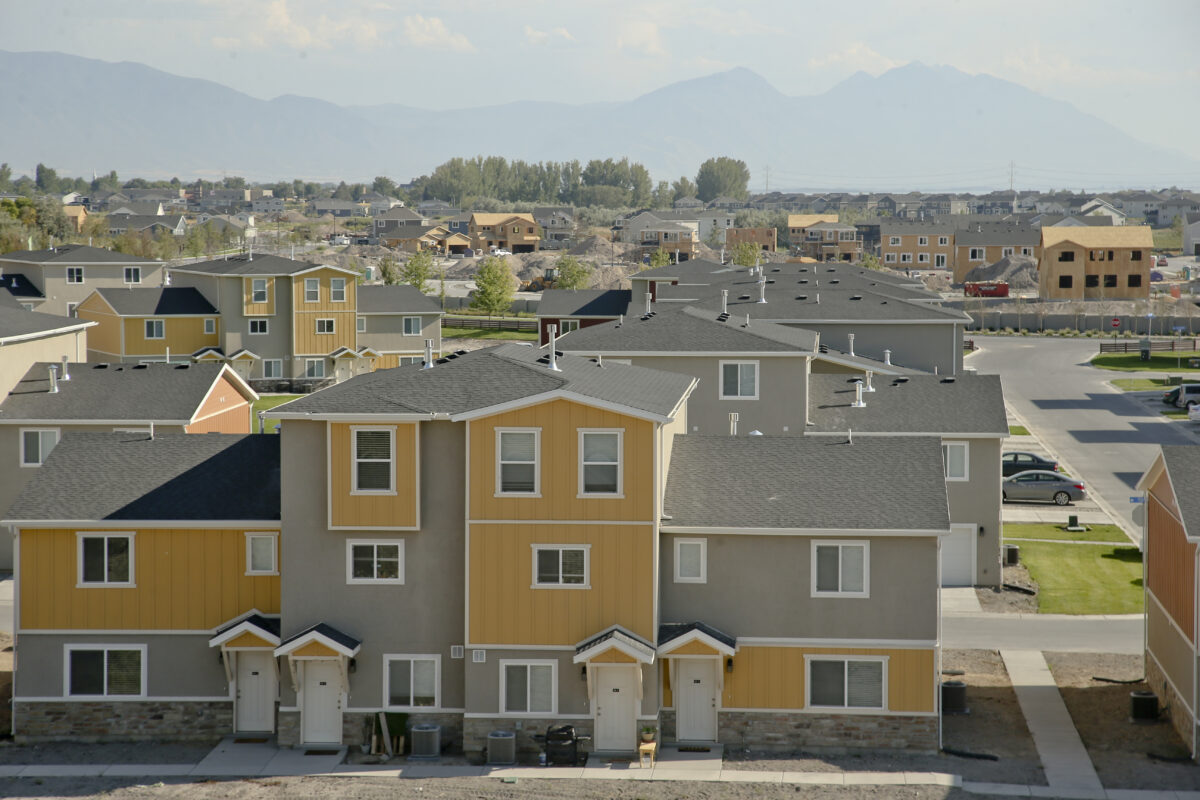
New housing is pictured Tuesday, Aug. 29, 2017, in Vineyard. As the population grows faster and faster in Utah County, many officials are struggling to keep up with the housing demand. DOMINIC VALENTE, Daily Herald
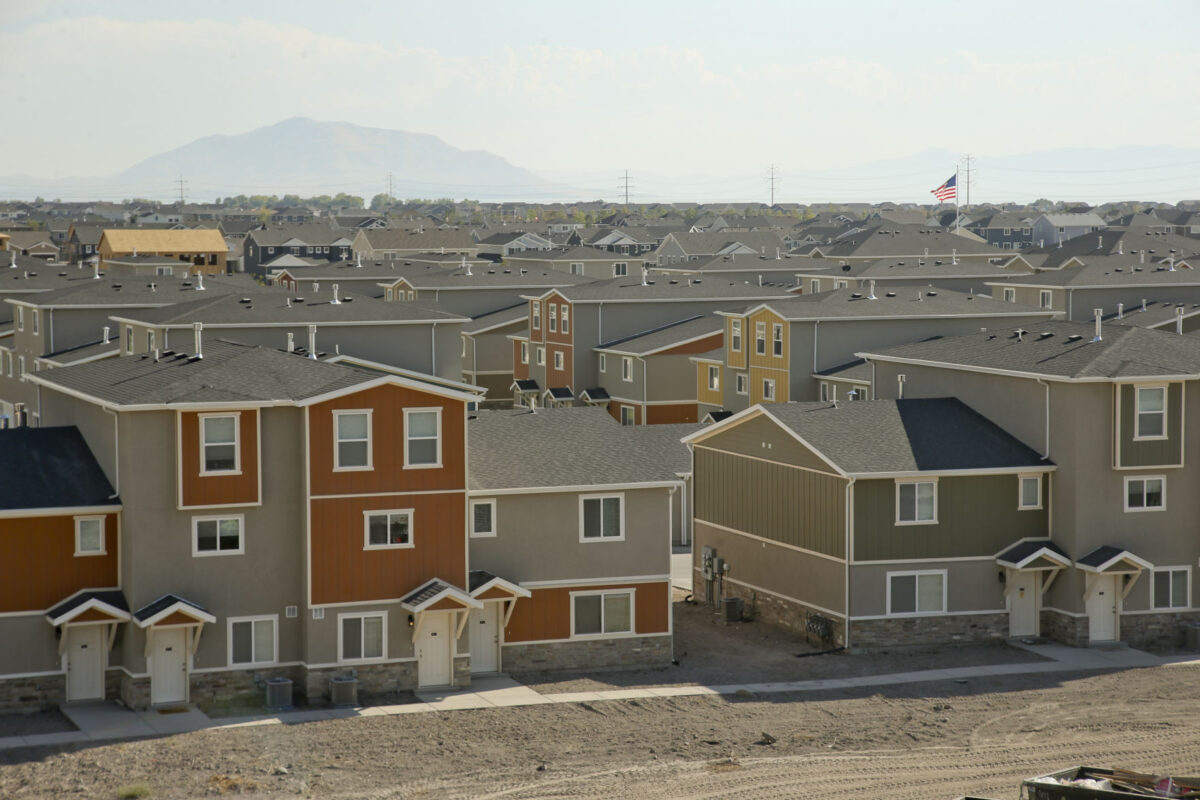
New housing is pictured Tuesday, Aug. 29, 2017, in Vineyard. As the population grows faster and faster in Utah County, many officials are struggling to keep up with the housing demand. DOMINIC VALENTE, Daily Herald
This story is the first in a seven-part series on the housing issues facing various demographics of residents across Utah County.
Housing costs and wages are both seeing steady growth in Utah County.
If you own your own home, your property value has been on a steady uptick since 2012, when home values bottomed out after the housing bubble burst in 2008. And if you rent, you’ve likely you’ve seen monthly rent increase steadily over that time as well.
Experts can point to multiple reasons for these increases, including increasing population, land prices, lack of subcontractors and local zoning regulations.
Wages are also steadily on the rise, boosted by low unemployment rates and strong job growth within the county and the state.
But are wages increasing steadily enough to keep up with consistently upward-trending housing costs?
Wages, household incomes, job growth
Not only are wages increasing in Utah County, they’re also increasing at a faster rate than the rest of the state.
Though wages stood still during the 2008 recession, average wages have risen 1 to 3 percent each year since 2010, according to data from the Bureau of Labor Statistics.
Average weekly wages in Utah County have risen by approximately 17 percent from 2010 to 2016, according to the BLS data.
Wage growth of 3 percent is considered healthy wage growth, said Cory Stahle, regional economist for the Mountainland and Wasatch Front South Region of the Utah Department of Workforce Services.
Utah County wage growth from 2015 to 2016 came in at 2.7 percent, Stahle said. That exceeded wage growth for both the state of Utah and the nation as a whole, which came in at 2.2 percent wage growth and 1.3 percent respectively.
“It’s a good time to be a (Utah) resident,” Stahle said.
One of the biggest reasons behind the wage growth is Utah County’s stellar job growth, another area in which the county is ahead of the state and nation as a whole, Stahle said.
“When we look in March 2017, when we look at job growth for that, every one of the major industries we define actually had job growth,” Stahle said.
In the first quarter of 2017, Utah County experienced job growth at a rate of 4.6 percent, compared to the state of Utah at 3.1 percent and the nation as a whole at 2.5 percent, Stahle said.
“The higher the job growth, the higher the wage growth,” Stahle said.
Low unemployment rates also factor into wage growth, Stahle said, because as it becomes more difficult to find workers, wages are driven upwards.
Though wage growth tells part of the story, median household income is a better indicator of people’s ability to own a home, said James Wood, senior fellow at the Kem C. Gardner Policy Institute. Household income is what is used to measure whether or not someone qualifies for a housing loan, whereas a wage only measures one particular job.
Many people work multiple jobs, or have multiple individuals earning income within the same household, Wood said, and looking at household income helps account for that.
Median household income rose by nearly 4 percent from 2014 to 2015, according to data from the American Community Survey. Data for 2016 was not available from that survey.
Stahle said that it’s normal for growth in housing to outpace growth in wages.
Over the past 15 years, Stahle said, approximately 62 percent of the quarters saw housing grow faster than wages.
“It is common during expansion to see housing grow faster than wages,” Stahle said. “In the last 12 quarters, there has been significantly higher housing price growth than wage growth.”
But Stahle said, it’s important to remember that housing costs are rising all over the nation, and Utah County is still outpacing the rest of the country in wage growth.
Housing/Rent
So if wages grew by 2.7 percent from 2015 to 2016, how does that compare to growth in housing costs?
The average monthly apartment asking rent in the final quarter of 2016 was up 5.8 percent from one year earlier — double the percentage of average wage growth, according to a Housing Market Profile on the Provo-Orem area published by the U.S. Department of Housing and Urban Development’s Office of Policy Development and Research.
Median gross rent in Utah County increased 8 percent from 2014 to 2015, according to ACS data.
Renters aren’t the only ones whose housing costs have gone up. Those in the market to buy a home are also seeing values rise across the board.
The average home value in Utah County went up from $344,769 to $365,787 from 2015 to 2016 according to data from the Utah County Assessor’s Office, just over a 6 percent jump.
Average sales price of residential units in Utah and Juab counties jumped nearly 7 percent from 2015 to 2016, according to data from the Utah Central Association of Realtors.
First-time homebuyers drive the homebuying market in Utah County, said Aaron Drussel, president of UCAR. But as far as starter homes go, builders are gravitating more toward condos and townhomes than they are toward a traditional “starter home.”
“If you are looking for anything single-family, you’re struggling to find anything in the low $200,000s,” Drussel said.
Affordability
But, Wood said, one important factor aside from home value that factors into affordability is the interest rate a family qualifies for.
“It can make a huge difference (in affordability),” Wood said.
Despite home values going steadily up over the past few years, mortgage rates have remained relatively low, keeping even homes with skyrocketing costs in a more attainable range for buyers.
“For the most part, depending on the loan program, we can pretty safely say that interest rates are in the high threes for the most part,” said Scott Asbell,* a mortgage consultant with Mountain West Mortgage, a division of American Pacific Mortgage Corporation.
“…That’s a very affordable place to be.”
It’s not likely that mortgage rates will get lower, Asbell said. They are expected to trend upward, with the Federal Reserve expected to bump interest rates before the end of the year.
Even one quarter of a percent difference on a 30-year loan makes a big difference in whether people can afford the monthly payment.
If someone is purchasing a $300,000 home, the difference of a quarter percent in rate makes a difference of approximately $45 on a monthly mortgage payment, Asbell said.
“So if rates were to go up half a percent, that’s about a $90 bump on their payment just between 3.875 and 4.375,” Asbell said.
Combine that with how much homes are appreciating every year, and it’s making a substantial difference in what people can afford.
If that same $300,000 home appreciated to $330,000, and someone has to borrow an additional $30,000, that adds about $150 to their monthly payment.
“Combined, that’s a $200 increase in payment from a year ago to now,” Asbell said. “Because the rate is at least a quarter (percent) higher than it was a year ago. So, conservatively, you could say that that $300,000 house is going to cost $200 (per month) more now than it did last year.”
Each time rates go up, someone gets priced out of buying a home, and Drussel said he’s been telling people for awhile now that now is the time to buy a home.
“It gets to a point where it’s like, the rates will go up enough, and the price will go up, and the window (for buying) will close at some point,” Drussel said. “But the hard thing is, when will that happen, when will that end up happening, and how much will that affect people?”
For those who can afford to do so, it’s often beneficial for people who can afford to to purchase homes rather than rent long term, Drussel said.
“You can be a buyer and lock a payment in for 10 to 30 years and it won’t change, no matter what the market does,” Drussel said. “That’s a whole different outlook than going and saying, ‘I am going to go year by year and hopefully my rent doesn’t go up.’ Because you know over 30 years, rents aren’t going to stay, especially when there is so much demand for housing.”
And, overall, Stahle said, it’s beneficial for homeowners to see the value of their property go up over time.
“Homeowners are benefiting from gaining that equity,” Stahle said. “So it’s definitely both sides of the coin. It’s very beneficial to see wages grow, and also beneficial for homeowners to see home values grow.”
* – Mountain West Mortgage, a division of American Pacific Mortgage Corp. NMLS #1850; Scott Asbell NMLS #270856; Equal Housing Opportunity.