
Could water supply hinder Utah County’s business growth?
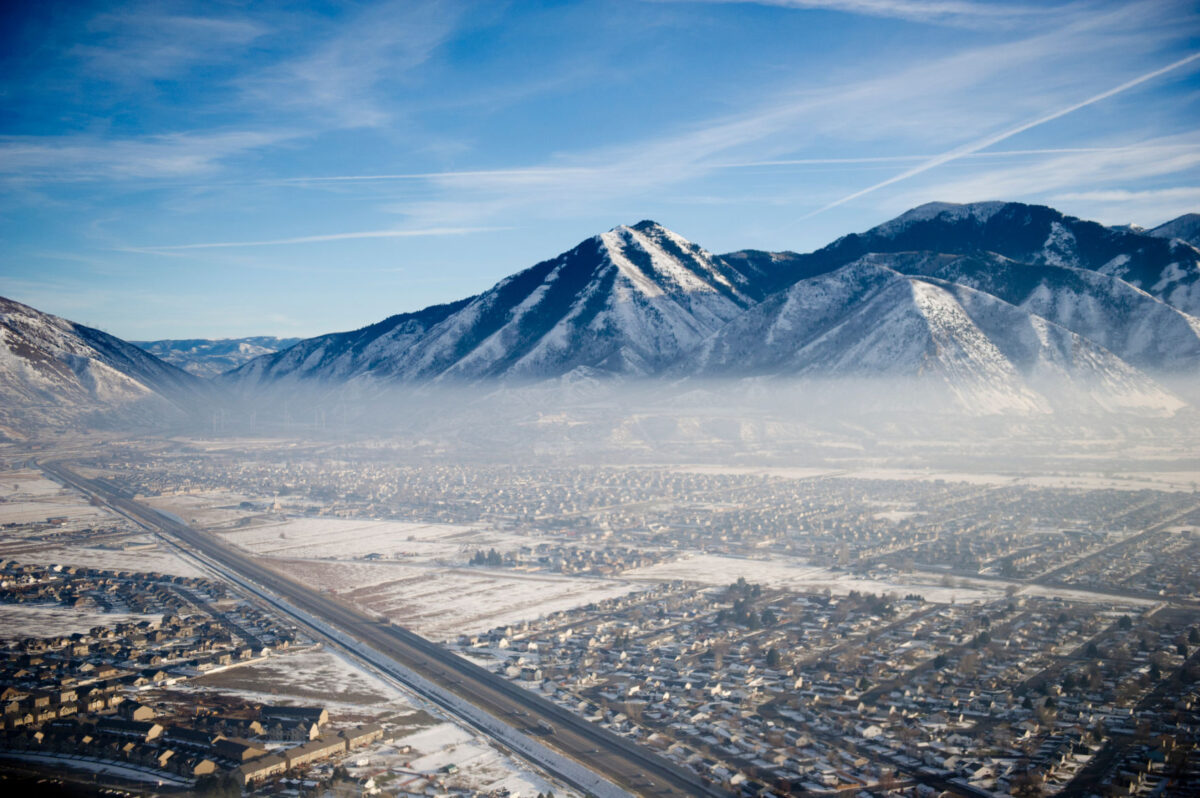
Utah Valley is photographed from Spanish Fork.
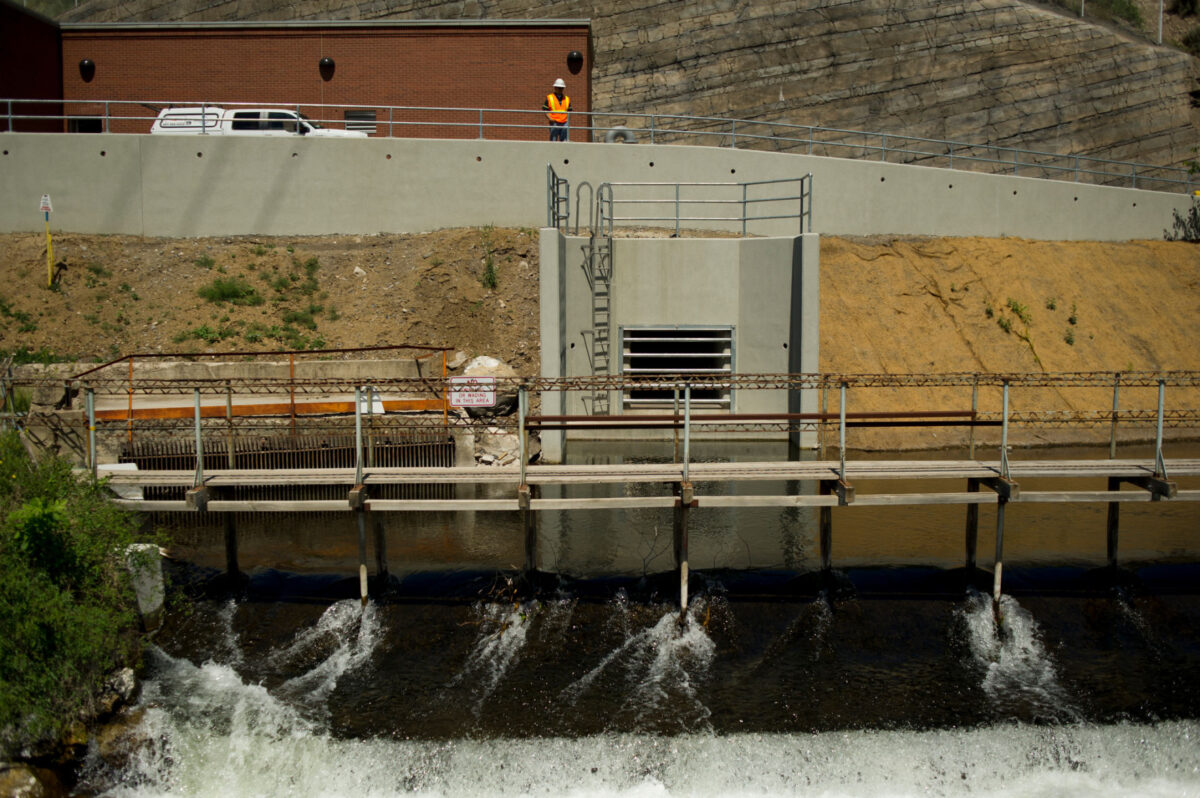
A worker stands above a purge valve pipe that control the flow of the Provo River's flow to Salt Lake County and local municipal water, at the new Provo River flow control structure at the mouth of Provo Canyon on Tuesday, June 9, 2015. GRANT HINDSLEY, Daily Herald
Housing and business are booming in Utah, and the state is growing. But could water limit that?
“The only limiting factor to the growth of Utah is our water supply,” said Gov. Gary Herbert at the Utah Global Forum on Oct. 17, speaking of the challenges the state faces in the future.
Herbert’s speech was directed to local business leaders, and he explained that this topic should be something, politically, that is discussed more.
“We need to make sure we have the opportunity to develop our water and conserve what we have. And then develop what we need,” he said.
According to a July Water Strategy recommendation to the governor, “Utah faces a daunting challenge. We have the distinction of being both one of the driest states in the nation and one of the fastest growing.” This is cause for concern at all levels of the state.
So how worried do we need to be? How much water is there?
According to a pamphlet, ”How Utah Water Works,” available through the Utah Division of Water Rights, Utahns current annually consume about 2.6 million acre-feet of the 3.3 million acre-feet water available for consumption in the state. Utah water users divert about 5.15 million acre-feet of water into the state, but much of it is returned to the state’s natural water system.
About 82 percent of the state’s water consumption is used for agricultural irrigation. Municipal and industrial users use the rest of the water. The majority of these users are homes and commercial businesses. According to the pamphlet, with current projected population growth data, municipal and industrial use “is expected to experience the greatest future growth.”
And Utah is poised to grow in a big way. According to research by the University of Utah Kem C. Gardner Policy Institute, Utah’s population is going to jump from where it is today — about 3 million — to 5.8 million by 2065. Utah County alone will double its population in that same timeframe.
So will Utah run out of water?
Most water experts think not — if conscientious planning is implemented right now.
“Looking down the road, the question isn’t so much about ‘running out of water,’ as it is about trade-offs,” said Rep. Timothy Hawkes, R-Centerville, in an email. He was part of the committee that completed the four-year study of water in the state, and made the July water strategy recommendations to Herbert. “As the state continues to grow and water supplies (by which I mean the average precipitation that falls) remain finite, it isn’t a question of ‘running out’ so much as figuring out how best to allocate those scarce resources among competing demands.”
Currently the state gets its water from in-state precipitation and out-of-state supply through the Colorado River Compact. According to Jim Reese, technical engineer with the Division of Water Rights, Utah does not use its full allotment of water supply from the compact, so the state could tap into that as future growth occurs.
Gene Shawcroft, general manager and CEO of the Central Utah Water Conservancy District, also feels the current and planned water systems can supply water, at least in Utah County, for approximately the next 15 or more years. He oversees the Central Utah Project, a water system started in partnership with the federal government in 1964. That system moves water from multiple reservoirs, including Upper Stillwater, Starvation, Strawberry Jordanelle and Deer Creek, to water users in Utah County and Salt Lake County. Parts of that project are still under construction, with one final fork piping water into the southern parts of Utah County.
Another project he oversees is the Central Water Project, which provides water to Saratoga Springs, Eagle Mountain and southern parts of Salt Lake County. This project has not yet hit its service capacity limit. Despite this good news, Shawcroft agrees that future water needs must be discussed and planned for.
“We recognize we have to be in the planning business to make sure we have water for future usage. The real trick is knowing where the growth is going to occur. Nothing’s cheap, and nothing’s easy,” he said.
Shawcroft echoed Hawkes’ sentiments that the type of future growth happening in the state will affect how planners must adapt the water supply. As more areas look at higher density housing and develop those on former farmland, the water supply will undergo a conversion. What was once a large agricultural use would be allocated more for indoor use.
“Outdoor takes about 60 percent of the residential water we use. If the trend of higher density continues, the amount of water needed for outdoor use is less,” Shawcroft explained, cautioning that indoor use also rises with the density — but the two are not necessarily in exact ratio to each other.
“The question is more how we grow and what uses we choose to value and prioritize,” Hawkes said, suggesting that water conservation needs to also be a serious topic of discussion.
This is what the governor seems to be asking of local political and industry leaders. And people like Shawcroft, Hawkes and his committee are working to ensure that when the future comes, the state is not left high and dry.
“We’re doing everything we can to make sure that doesn’t happen 30 to 40 years out. That’s why the state created the Central Utah Water Conservancy District, so we can plan out for the long term. The kind of things we’re looking at will take time, will be expensive, and won’t be easy,” Shawcroft said. “Utah’s planned well to this point, and we’re in a great position now, but we have to continue to focus on this, or it won’t very long and our backs will be against the wall.”