
Economic forecast solid for Utah, Utah County
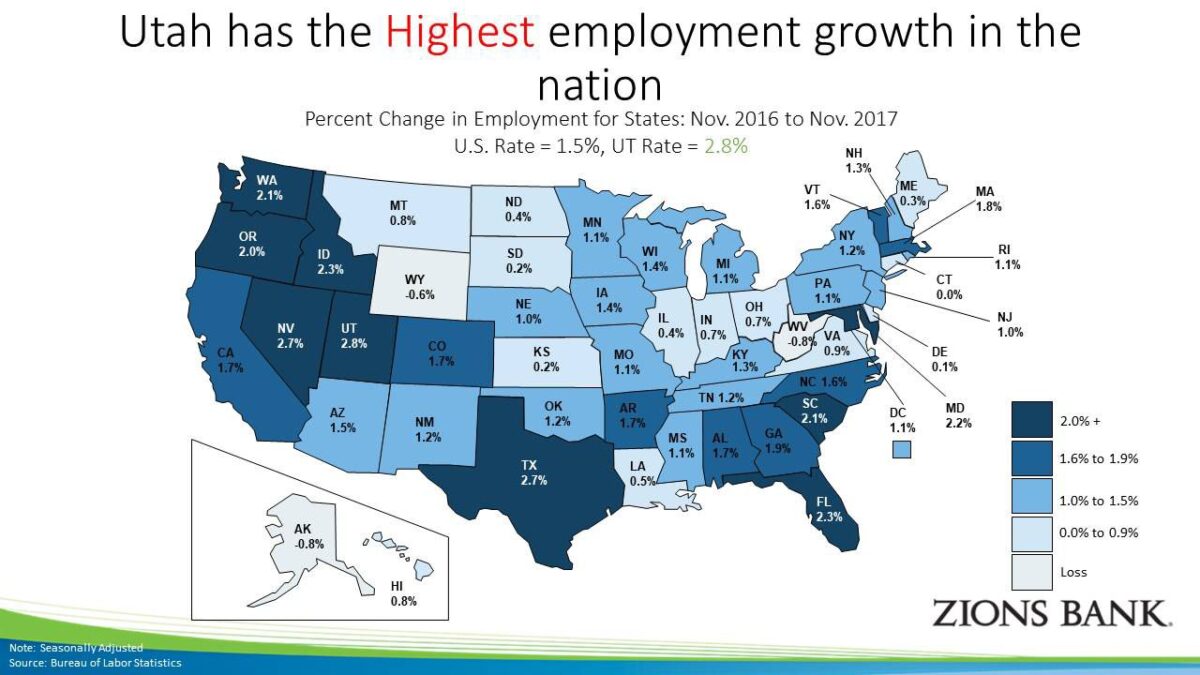
According to the 2018 Zions Bank Economic Update, Utah has the highest employment growth in the nation.
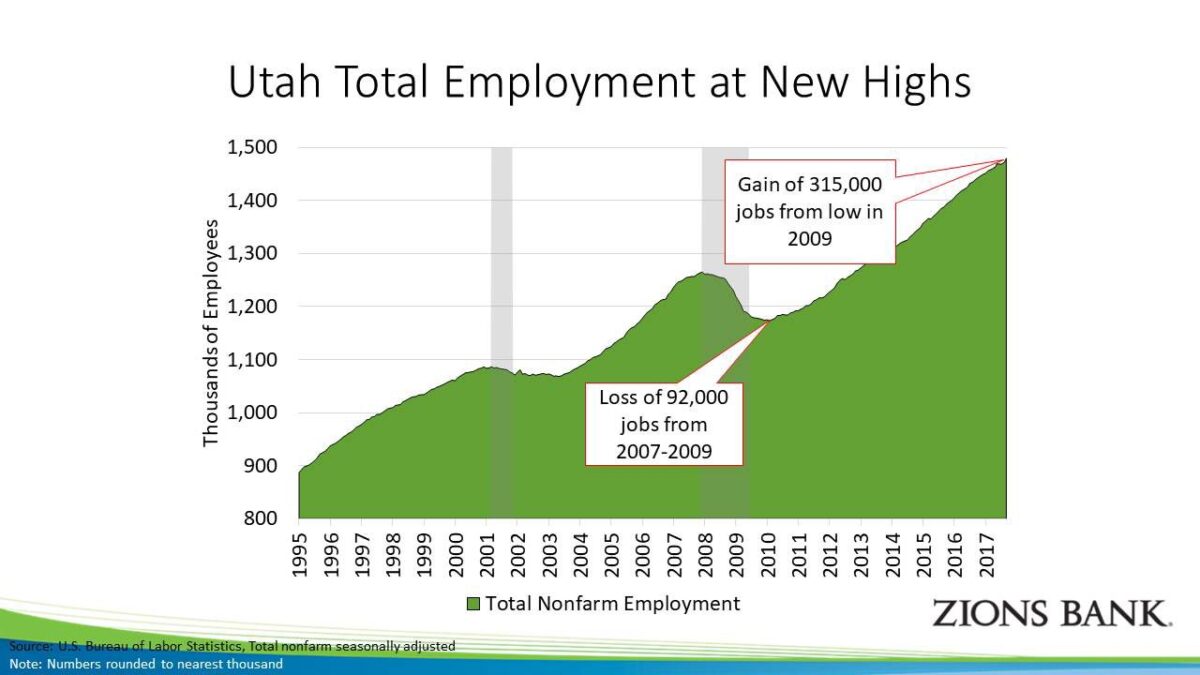
According to the 2018 Zions Bank Economic Update, Utah's total employment has hit new highs.
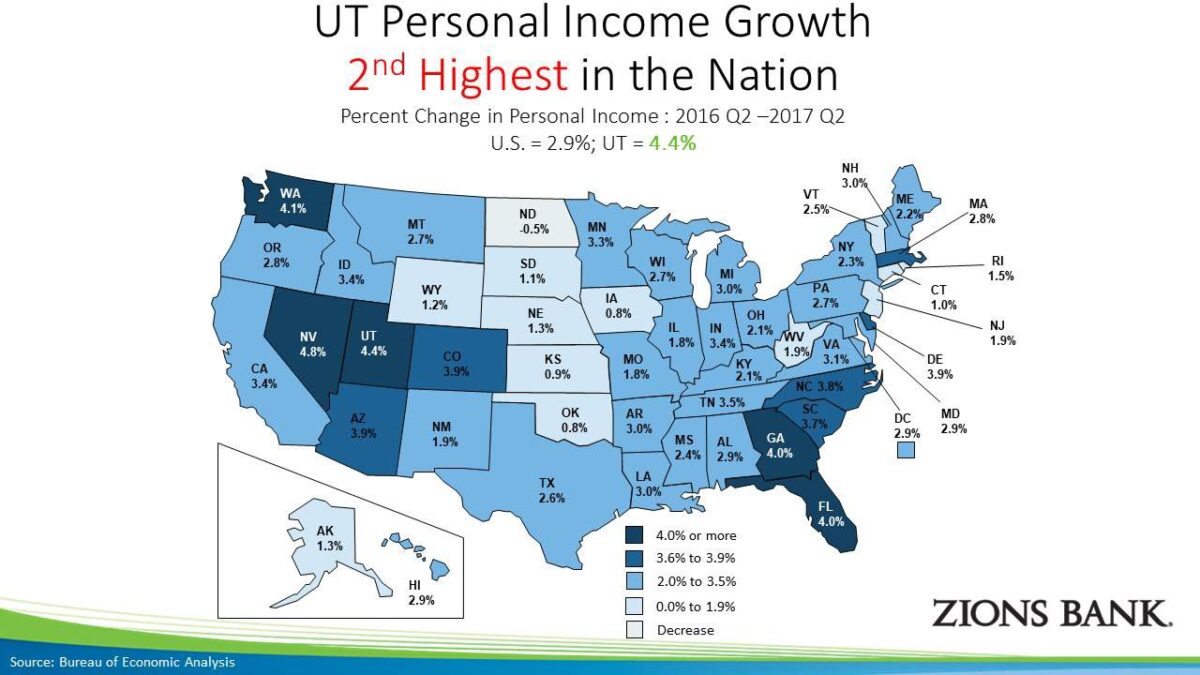
According to the 2018 Zions Bank Economic Update, Utah's personal income growth is second highest nationwide.
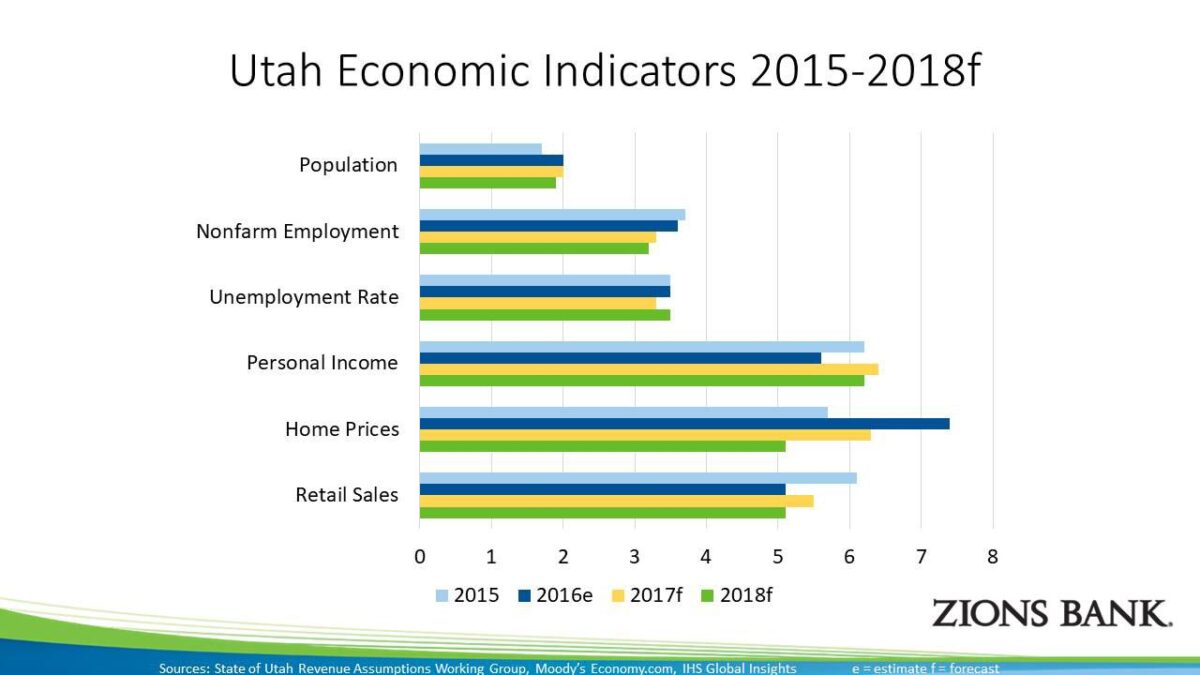
2018 Zions Bank Economic Update Utah Economic Indicators.
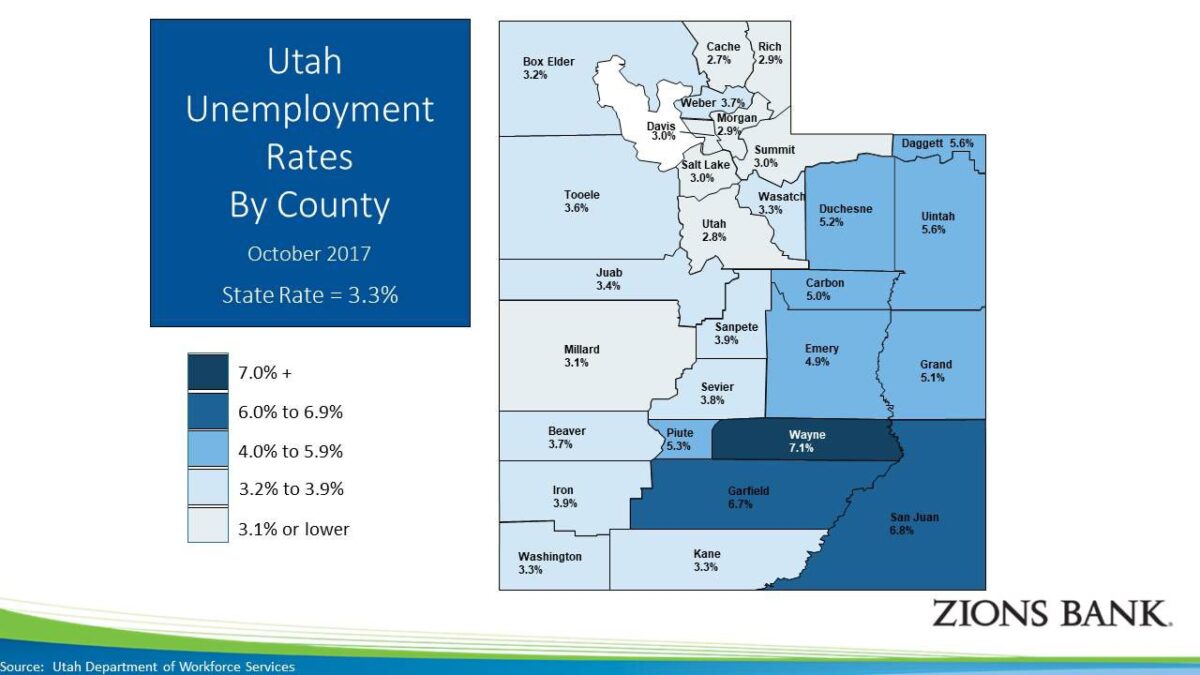
2018 Zions Bank Economic Update showing Utah unemployment rates.
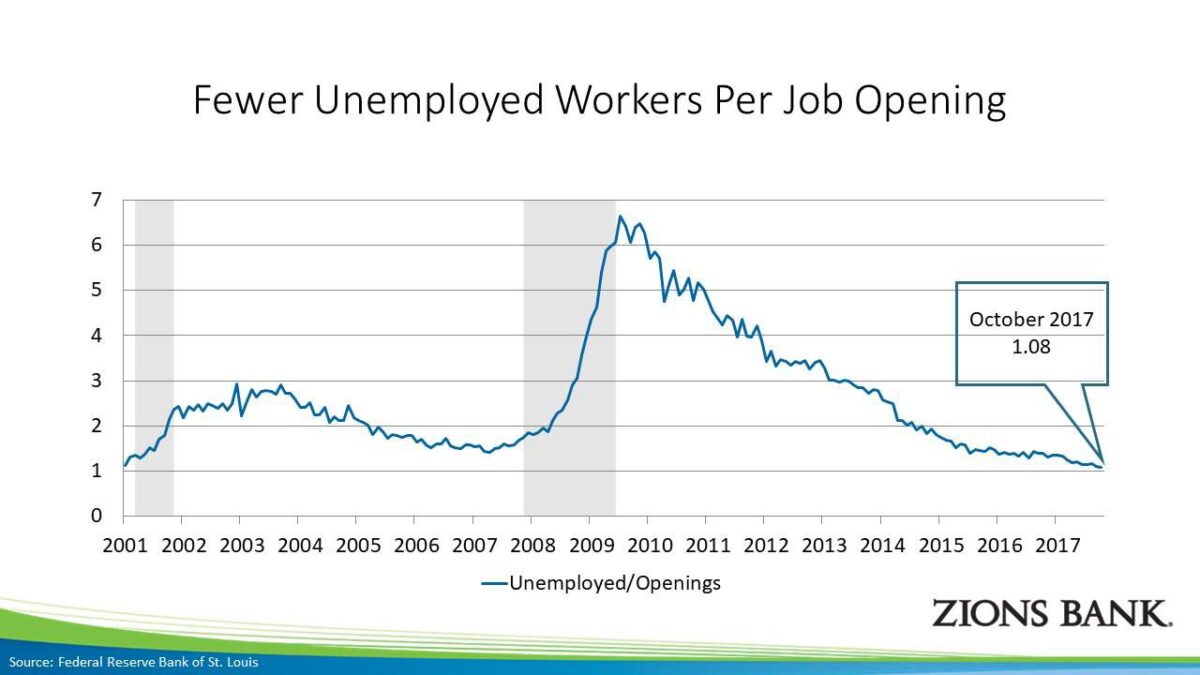
Unemployed workers trending down.
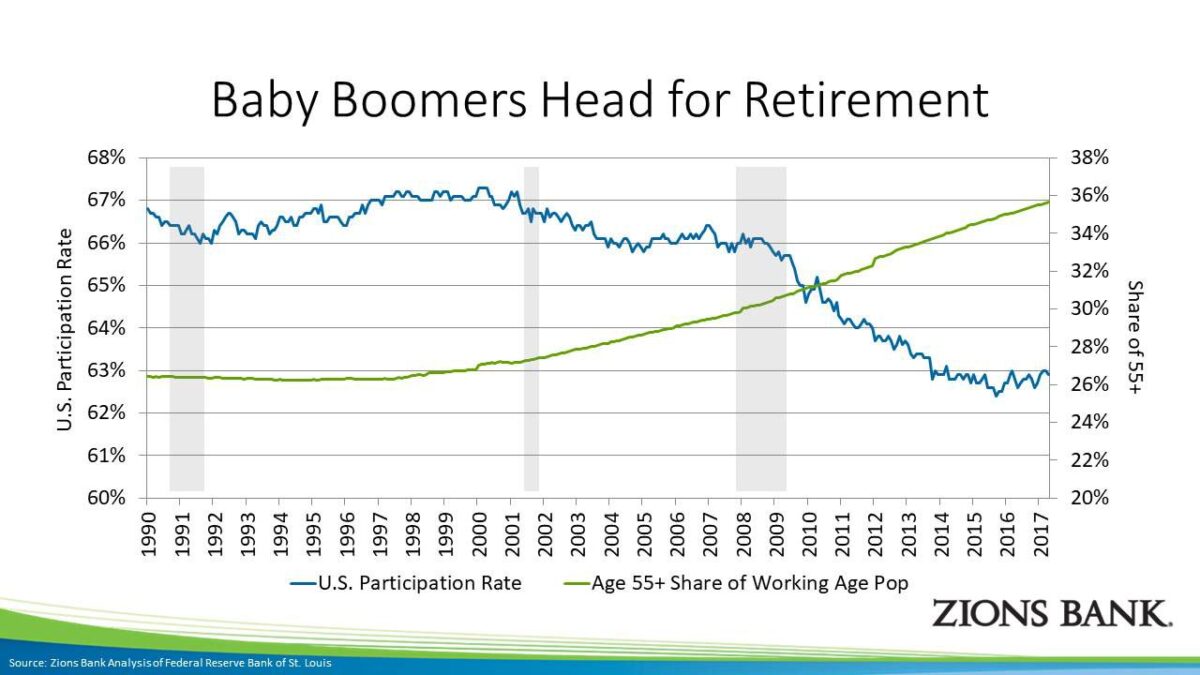
Employment numbers for Baby Boomers and others in Utah.
Utah economic experts say 2017 was a year for Utah’s economy, and while adding some cautions, forecast 2018 to continue in the same vein.
According to Robert Spendlove, economic and public policy officer for Zions Bank, the United States is continuing its 86-month streak of employment growth. Utah is following this trend as well, hitting all-time highs in total employment numbers. With very low unemployment numbers and growth in almost all sectors of the local economy, Spendlove said, “Utah is actually looking much stronger” than the country as a whole.
Small businesses are benefitting from the boom as well, according to Courtney Dyer, Wells Fargo Bank regional district manager over Utah County. 2017 brought more business and commercial loan inquiries at local Wells Fargo branches than in years past, which means small businesses are more confident in their success and ability to pay back loans.
“That tells us small business optimism is the highest than it has been in decades,” Dyer said. “They’re more confident expanding and hiring more employees — something they weren’t comfortable doing in years past.”
Utah lost 92,000 jobs across all sectors between 2007 and 2009 during the Great Recession, but has gained 315,000 jobs since then. According to Spendlove’s report, at 2.8 percent, Utah has the highest employment growth of the nation. Nevada and Texas come in a close tie for second with an employment rate of 2.7 percent.
All sectors, except the information industry, gained employment numbers nationwide. In Utah, all sectors except information, natural resources and mining increased their employment numbers. The information sector includes newspapers, broadcasting, magazines, book publishing and data processing industries. This sector took a hit of -2.3 percent nationally and -2.7 percent statewide.
Overall, both in the state and nationwide, there are fewer unemployed workers per job opening, and Utah County’s labor market is even tighter than its state and national counterparts, Spendlove said. According to the Kem C. Gardner Police Institute 2017 Economic Summary, Utah added about 40,000 jobs over the last year, and the state’s per capita personal income numbers continue to improve each year.
“While the nation is struggling to get the wage growth and inflation we should see, Utah is seeing both very strong wage growth and inflation,” Spendlove said.
Inflation usually has a negative connotation, and Spendlove admits it is a “double-edged sword.” Enormous inflation, at double-digit levels, degrades the value of money too quickly. Counter to that, deflation can cripple an economy, because people don’t want to spend money on something today that will cost less tomorrow. Spendlove said the federal government aims for about 2 percent inflation as a safe level, where money and investments are growing but not too quickly.
One area of concern Spendlove pointed out is job shortages. With Utah County’s extremely low unemployment rate, coupled with strong job growth, it really is a “job seekers market,” he said. While that offers more opportunities for people who are looking for jobs, and may have historically been “on the sidelines” of the job market, it can also cause some job shortages. Local tech companies and construction companies have been the most vocal recently in their struggles to find employees, but this can affect all industries.
Spendlove said there is one other area to keep an eye on as well. The federal government raised interest rates over the past year and has plans to raise them three times, at a quarter point each, during 2018. While this is good for those who have savings or other money market accounts, it does mean the nation is “entering a period of higher interest rates,” and it will be more expensive to get a home, a car or credit.
Utah County is experiencing a major housing boom, and rising rates could potentially price some buyer out of particular markets. According to the 2017 Economic Summary, the median sales price of a home in the Provo-Orem metro area in late 2017 was $303,506 — the costliest metro area in the state. While all Utah house prices were up more than 9 percent in 2017, Salt Lake City, Logan and Ogden still remained under the $300,000 mark.
There are many factors, like home size and land prices, that go into those numbers, and Spendlove is quick to point out that before the Great Recession, interest rates sat around 5 percent, and they currently are still only at 1.5 percent.
Despite these challenges, local experts agree the overall economic outlook for 2018 is very good.
“The overall story is strong,” Spendlove said. “People have a lot of confidence in the economy.”