
Tech leaders speak to thousands on Utah’s need for diversity, computer science education at Silicon Slopes summit

Mitt Romney waves to the crowd at the second annual Silicon Slopes event at the Salt Palace Convention Center on Friday, Jan. 19, 2018, in Salt Lake City. Romney had a conversation with Alex Dunn, the president of Vivint, to start the day for the event.
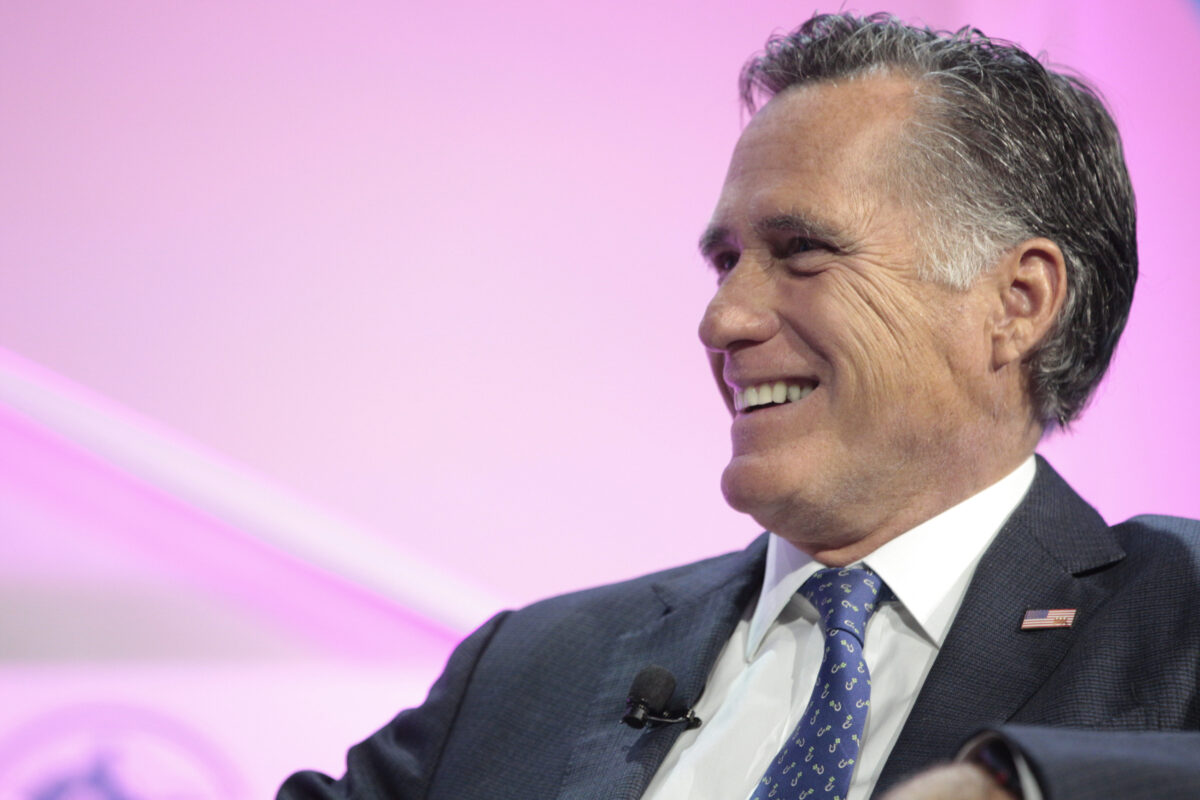
Mitt Romney laughs during his 30-minute conversation with Alex Dunn at the second annual Silicon Slopes event at the Salt Palace Convention Center on Friday, Jan. 19, 2018, in Salt Lake City. Romney said that he wouldn't be making any major announcements during the conversation.

Alex Dunn, left, and Mitt Romney speak during the second annual Silicon Slopes event at the Salt Palace Convention Center on Friday, Jan. 19, 2018, in Salt Lake City.
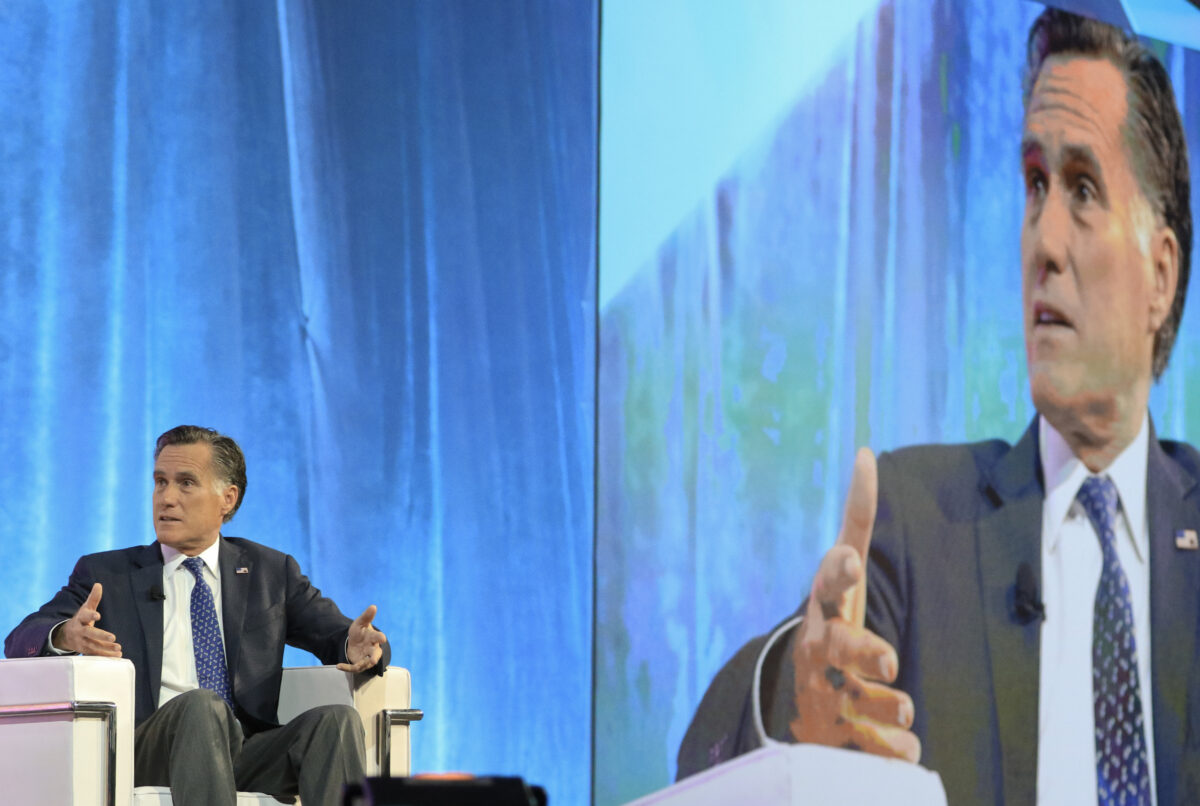
Mitt Romney answers a question and is shown on the big screen projects that flanked the stage at the Salt Palace Convention Center on Friday, Jan. 19, 2018, in Salt Lake City.

Alex Dunn and Mitt Romney have a conversation in front of the attendees of the second annual Silicon Slopes event at the Salt Palace Convention Center on Friday, Jan. 19, 2018, in Salt Lake City.
The second annual Silicon Slopes Tech Summit covered both a breadth and depth of topics relating to tech, leadership, diversity and the future of Utah business and education Thursday and Friday.
While the state of Silicon Slopes is on solid ground, speakers and presenters also addressed the future of the industry and the challenges and opportunities of the Utah tech sector. Of those, two of the most discussed were bringing diversity to workplaces in the state, and implementing long-term computer science education.
According Aaron Skonnard, Pluralsight CEO, there are 4,000 open computer science jobs in the state, and with only about 400 annually graduating in the field, there is a severe lack of employees to fill those jobs. Alice Steinglass, president of Code.org, explained that computer science education must start at a young age all over the United States.
“Every student at every school should have an opportunity to take a high-quality computer science class,” she said during Friday’s general session. “We need to change the education system right here in Utah.”
Skonnard echoed her assertion, applying it to Utah. While he readily recognizes every child will not choose computer science as a career, he still passionately believes every child should have the opportunity to learn computer science because all future careers depend on it.
Skonnard introduced a statewide strategy for getting computer science into every school in the state, regardless of location. There are four outcomes. First, by 2023, he said, he expects every school to offer at least one computer science class, whether virtual and physical. Second, every school district will have a clear definition of what computer science is, and thirdly, there will be development of K-12 computer science standards. Finally, the biggest challenge and opportunity he maintains, is the mechanisms for funding professional development for teachers.
“These four outcomes will define a new future for the state of Utah,” he said.
Gov. Gary Herbert announced the new IT Pathways Program being implemented this fall in school districts around the state, including the Alpine, Nebo and Provo school districts. This program will kick off the vision Skonnard mentioned.
“This is not going to be just coding and software engineering. It’s going be all assets and facets of the computer science and technology,” Herbert said. “This is an important investment for our future. The disruption of the marketplace, the expansion of that’s taking place — we need to have people that have the skills that will line up with the demand. And computer technology, computer science, is involved in every sector now of our society.”
IT Pathways is part of the state’s Talent Ready Utah initiative. Cathy Donohoe, vice president of human resources at Domo, and Jeff Weber, senior vice president of people and places at Instructure, will lead the advisory board overseeing IT Pathways.
Multiple speakers addressed the need for diversity in Utah’s workplace, highlighting many high-level female and minority executives from successful businesses around the nation. Silicon Slopes executives also were excited by the many companies that took the Parity Pledge — an initiative of Parity.org designed to increase the representation of women at the highest levels of leadership in organizations across the country.
As Ryan Smith, Qualtrics CEO, explained, without gender diversity in Utah, businesses are only accessing half the workforce. Shantanu Narayen, CEO of Adobe, explained that companies, in providing products and services, seek to reach as many diverse markets as possible. They cannot expect to effectively do that without mirroring that diversity in their own workplaces.
Friday morning kicked off another highlight of the event: a presentation by Mitt Romney, former Massachusetts governor and presidential candidate. He expressed excitement for the innovative trends occurring in Utah, and America as a whole.
“In an innovative world, where innovation drives the future — and I believe that’s what we’re moving into — America wins, because America is the innovator of the world. As long as government gets out of the way, and Uncle Sam doesn’t mess things up, America can win. And America winning is key to this planet,” he said.
Romney also tackled business failure, and assured those listening that, for all his success, he’s experienced his share of it.
“You all may not know this, I actually ran for president and lost. So the fear of failing was actually realized,” he quipped to laughter. In addition to that experience, he shared his own fear of failure in various business ventures. But he advised listeners that failure is an essential part of life. Recalling what he learned from his father as well, he encouraged entrepreneurs to overcome that fear and be bold.
“Don’t just muddle along. Have a vision for where you want to go,” he said.
Liz Wiseman, best-selling author and president of the Wiseman Group, followed Romney on Friday morning, complimented the Silicon Slopes area for its leadership vision.
“This is the hallmark, or even the legacy of Silicon Slopes. It’s not an industry started by a couple lone geniuses, but maybe an industrial democracy, where innovation is born of many minds,” she said.
The summit brought many of these minds together, both for its general sessions and its more in-depth breakout sessions. While the morning general sessions introduced the topics of diversity, innovation, leadership and business advice for the entrepreneur, the afternoon breakouts delved deeper into these areas.
Clint Betts, Silicon Slopes CEO, said he was pleased with this year’s turnout of about 14,000, more than doubling last year’s attendee numbers. This made Thursday and Friday’s event “the largest tech event in Utah history.” He expects the Silicon Slopes Tech Summit to potentially grow to 50,000 in the next five years, and become a “global tech event that just happens to be in Utah.”