
Lehi company aids industry leaders’ input into CTE programs
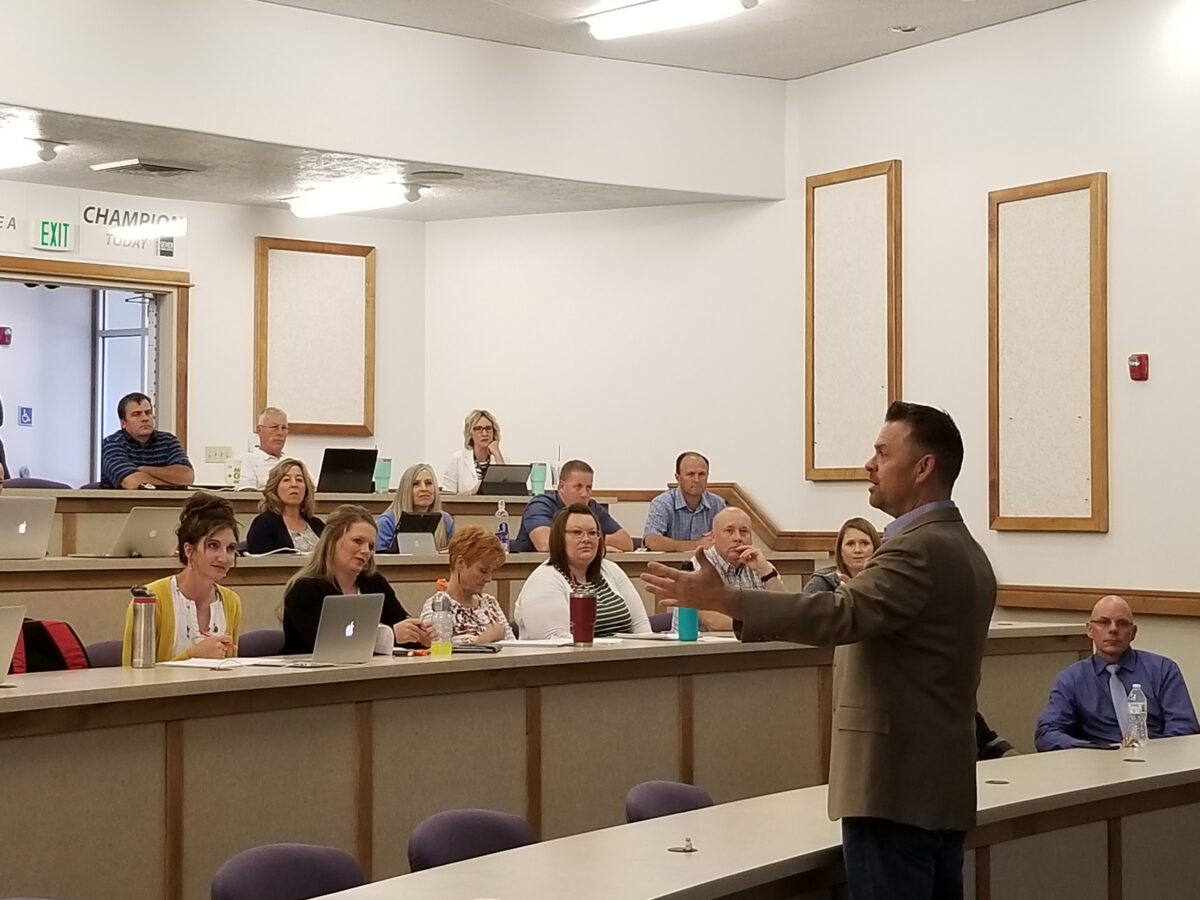
Sanpete and Sevier teachers and county economic development personnel take part in an Industry Engaged outreach conference Sept. 25, 2018.

Maple Mountain High School students and members of the SkillsUSA welding club work on various projects Saturday, June 10, 2017 in Spanish Fork. The students are doing projects for local community members to raise money for their trip to the national competition, which is in Louisville, Kentucky. DOMINIC VALENTE, Daily Herald
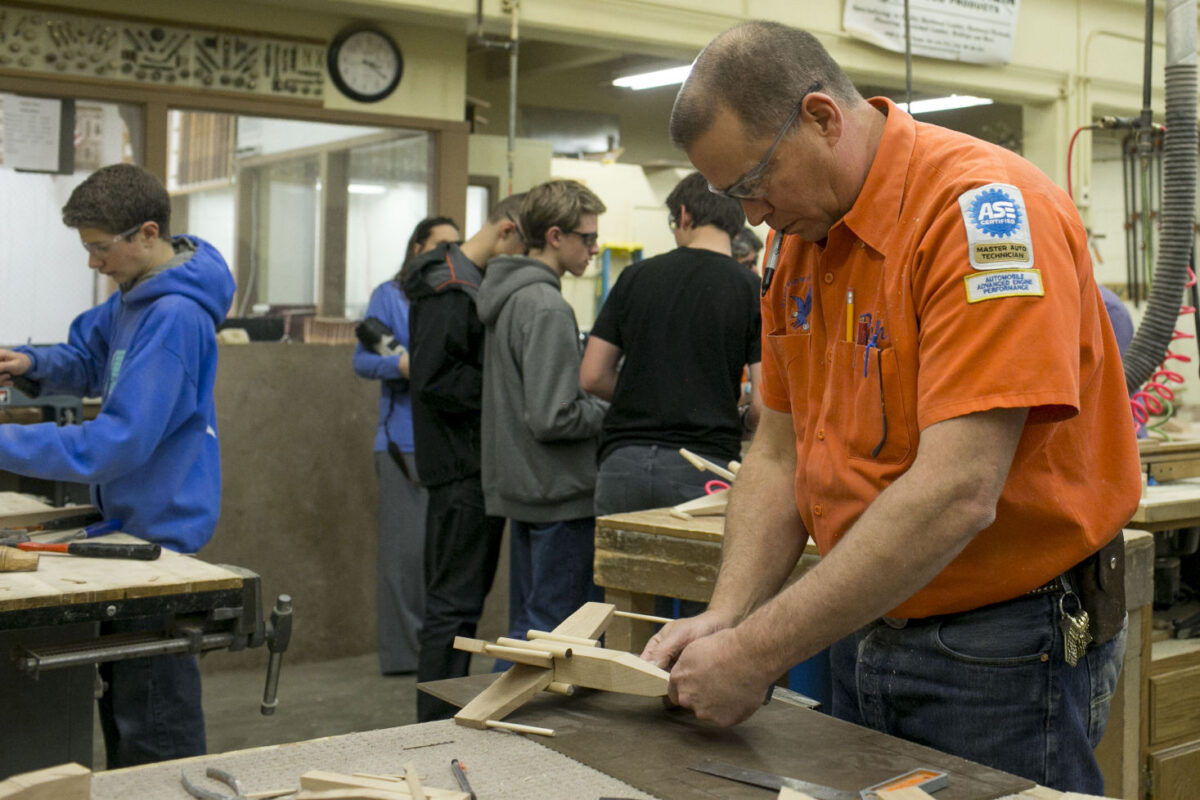
Rich Lamb of SkillsUSA puts the finishing touches on a Star Wars X-Wing while building toys for the needy December 16, 2015 at Timpview High School in Provo. Timpview's student government will sell the toys and donate the funds to Sub for Santa. DOMINIC VALENTE, Daily Herald
Two generations ago, most people successfully entered and maintained careers with just a high school degree. Those who are mid-career today grew up with the adage that all the high-paying jobs needed a four-year degree.
Business and education leaders say this opinion needs to change, and are trying to change the education talking points around post-secondary education. Gov. Gary Herbert has been behind this push for a few years now, spearheading Utah’s Pathways programs through the Talent Ready Utah initiative.
Earlier this year, Herbert declared 2018 the year career and technical education. As momentum for this concentration grew, state education leaders and businesses have solidified ways to partner to prepare tomorrow’s workforce.
Just last week, the Utah State Board of Education finalized an agreement with Precision Exams and partnered with the coalition, Industry Engaged in Education, to make it simpler for businesses to share input on education standards and the skills being taught in local high school CTE, or career and technical education, courses.
“Local industry input coupled with recognition of the Career Skills certificates adds even more value for students as it directly ties the knowledge and skills learned to a pathway into high-demand roles with local employers,” said Thalea Longhurst, Utah State Career and Technical Education director at the Utah State Board of Education, in a press release. “The Career Skills Assessment program, administered through Precision Exams, is utilized statewide and provides us with valuable program outcomes and data.”
Precision Exams is a Lehi business focused on facilitating skill completion in these CTE courses. Their software platform collates employers’ and industry experts’ rating of the importance of specific standards and workplace skills actually needed. CTE teachers in local schools use this information to inform and update their teaching.
“Our ability to connect industry and education with a tool to review and give input on standards will result in teachers teaching and students learning the skills employers look for when making hiring decisions,” said Edson Barton, CEO of Precision Exams, noting how rapidly in-demand skills change in today’s marketplace. “When businesses dedicate the time to review education standards in subjects their future workers are learning, it benefits more than just our economy, it’s a tremendous help for educators and a great advantage for students.”
Barton explained that the new agreement “creates a more sustainable and scalable feedback loop for industry recognized standards.”
He is a major fan of CTE classes because they directly tie future careers into a student’s secondary education. Data shows that students who take three or more CTE classes in high school have about a 13 percent higher graduation rate, he said. And for minorities and at risk populations, the graduation rate jumps even more when those students take CTE courses.
“CTE is education’s best-kept secret. CTE classes make relevant the math class, the English class,” Barton said this week. “CTE almost always fall under elective selections, and that ability to make a choice and choose classes related to future careers – as students move through these, their results are outstanding.”
As with Herbert’s Pathways programs, CTE classes offer stackable credentials, or skillsets that students can master and then build on with the next class. Utah CTE programs offer nearly 300 course offerings and 170 certification exams across every major career cluster, and most have stackable routes of achievement.
For example, in the finance career cluster, students can go through three levels of accounting classes. Barton explained that while most finance careers require four-year degrees, student who complete these courses could easily move into a bookkeeping type of position with a small shop or eatery.
In another example, most high schools have construction and architecture classes that build on each other — from architectural design courses to engineering principles to woodworking or machining. Students who go through these courses can get into construction careers right out of high school that pay quite a bit more than a run-of-the-mill fast food or retail job.
Barton joins other leaders in encouraging students to explore multiple ways to find careers.
“We always tell people that life is not a straight line — it’s a freeway with lots of small on-ramps and off-ramps. If you try to pigeon-hole people only into huge on-ramps and off-ramps, you lose people and you limit them,” Barton said. “Our philosophy is to give people options, and give them recognition for what they are doing.”
Precision Exams’ partnership with the State Board of Education will only work successfully if businesses get involved. Barton’s team is working to engage business associations and the businesses they represent to elevate various industries’ participation in the development of CTE programs throughout the state.
Rick Folkerson, president of the Success in Education nonprofit, also encouraged business leaders gathered Thursday at the Utah Valley Executive Summit to partner with educators for student success.
His organization created a Keys to Success app, another way to connect high school students with certificates, scholarships and internships related to careers these students might pursue. Similar to Barton’s work, the Keys to Success program only happens if community businesses are willing to offer scholarships, internships or apprenticeships through the app.
“What I’m inviting you to do, is to come help,” he said.