Criminals watch out — because the eyes don’t lie
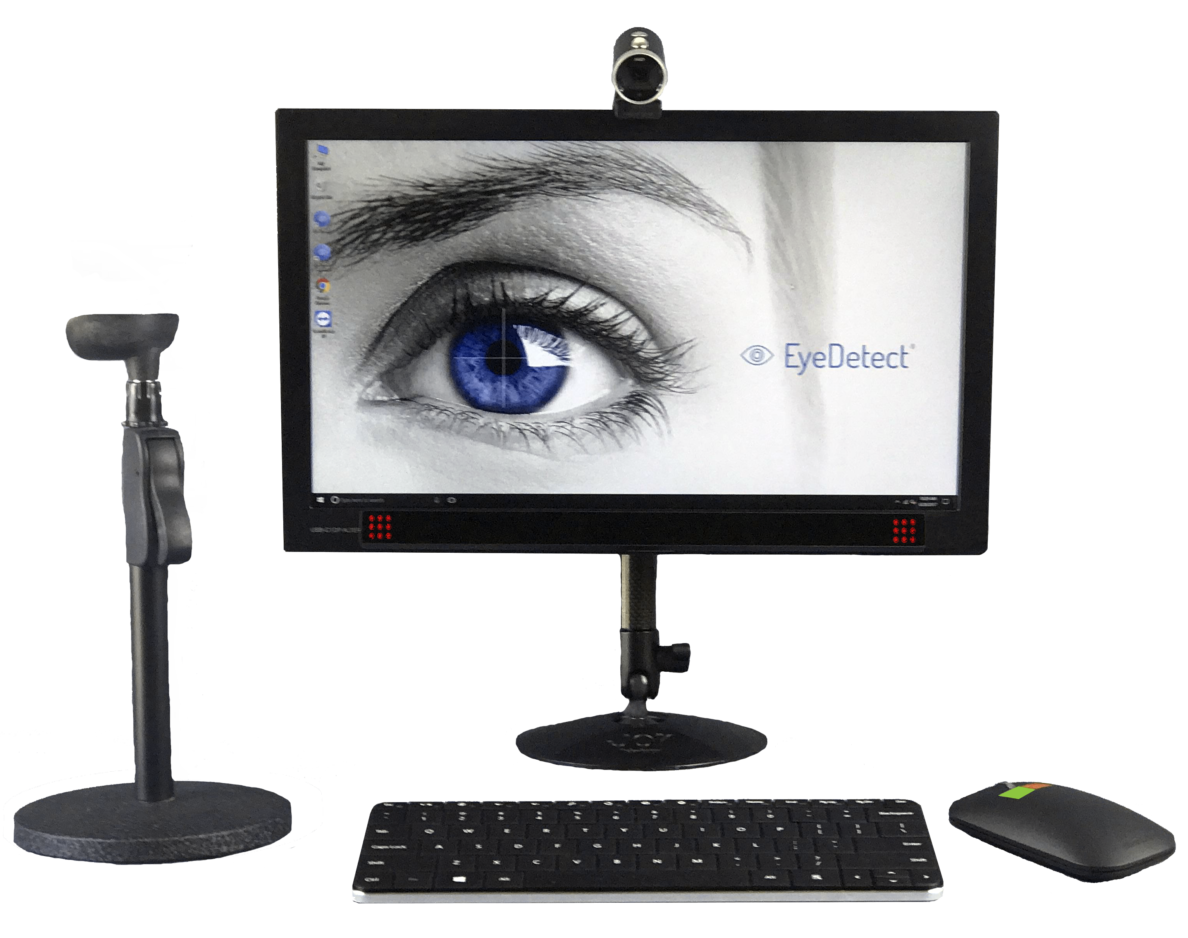
A product photo of EyeDetect, Converus technology that analyzes things like pupil dilation, blink rate and eye movement to determine whether or not a person is lying.
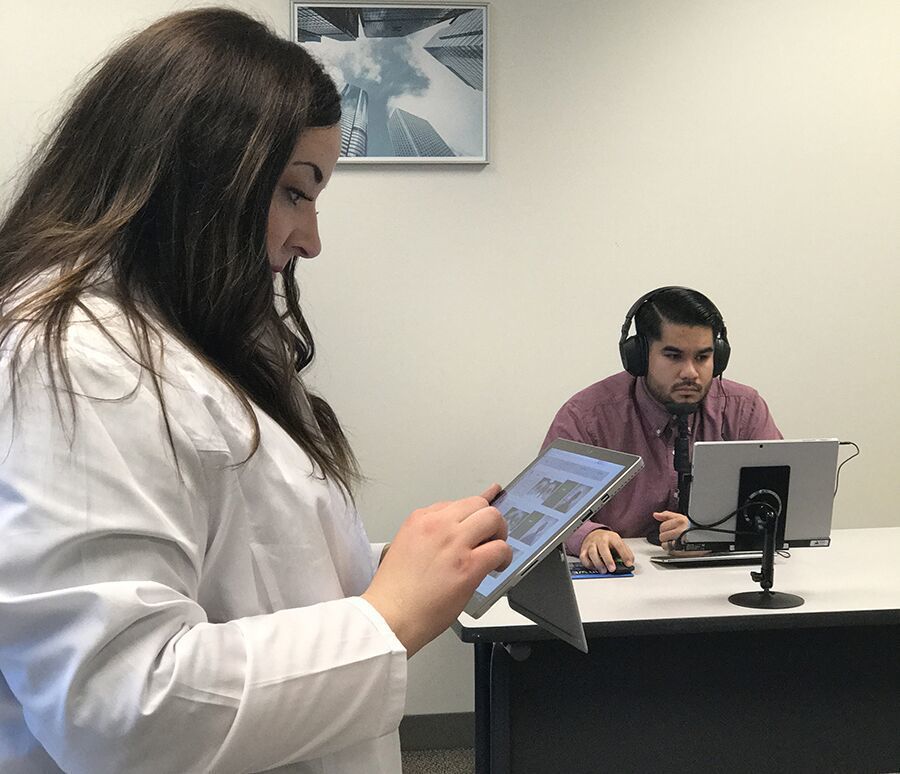
A Converus employee administers an EyeDetect test to a man. EyeDetect in the past has been used to screen potential employees before hiring, but in January 2019, Converus launched a form of the technology that can be used in criminal investigations.
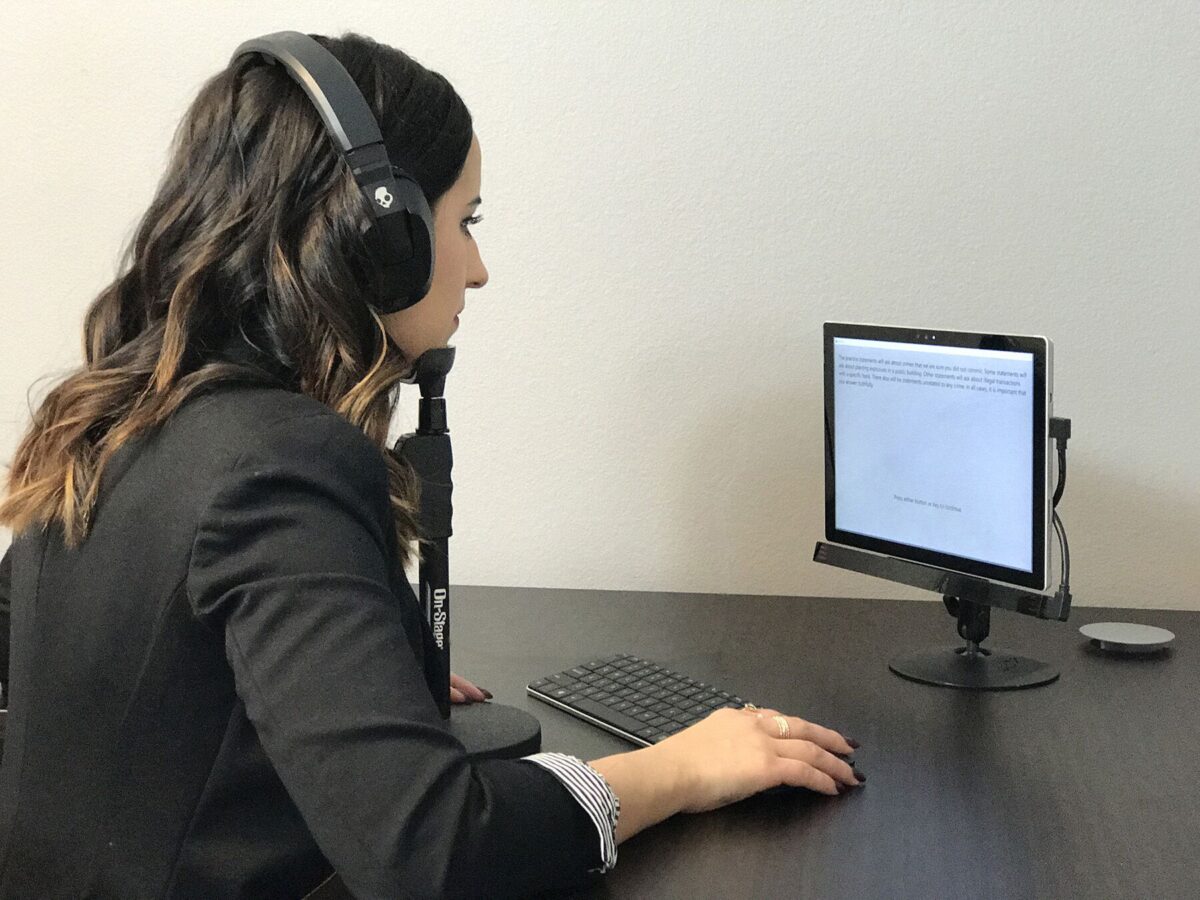
A woman takes an EyeDetect test. EyeDetect in the past has been used to screen potential employees before hiring, but in January 2019, Converus launched a form of the technology that can be used in criminal investigations.
In 2013, Lehi company Converus began working to create a commercial product of lie detector tech invented by a group of scientists. The product, EyeDetect, launched in 2014.
Since then, it has mostly been used by companies to screen potential hires. Converus provided typical questions and “tests” that could be used to screen potential hires. However, in January, Converus launched a version of the product which can be used in criminal investigations.
“We released the ability for people to create their own (tests),” Converus CEO Todd Mickelsen said. “That’s significant because we had to build a test editor that allows them to create their own (questions) without jeopardizing the science and the balance of the test, and how to ask questions and so forth.”
The science behind EyeDetect is similar to that of a polygraph, in that it measures a physical response. Whereas a polygraph can be tricked, since it measures physical responses like heart rate, whether or not a person begins to sweat and so on, EyeDetect measures the involuntary response of a person’s pupils — how they dilate, or grow, indicating if a person is lying or telling the truth.
”You can’t see it with the naked eye, but (pupils) dilate up to a tenth of a millimeter,” Mickelsen said. “We have tools … that allow us to capture those changes during our computer-based test.”The test also measures blink rate and tracks eye movement. Besides the science being slightly more reliable than a polygraph, it is also less intrusive. A polygraph test requires being hooked up with various wires meant to measure physical responses. EyeDetect simply requires sitting in front of a screen.
EyeDetect is also faster and more cost efficient, according to Sgt. Spencer Cannon with the Utah County Sheriff’s Office. The Utah County Sheriff’s Office is one of just a few law enforcement agencies in Utah currently using the technology.
Cannon said that if a person agrees to take a polygraph test, it can take up to three or four days to set up an appointment, during which time the person may change their mind, and it costs around $300 per test. While the initial purchase of EyeDetect technology is expensive — $4,000 for the whole setup, which includes a computer hooked up to a special camera to take eye measurements — each EyeDetect test only costs around $70.
With the hardware and software needed, Mickelsen explained, law enforcement groups then buy a “subscription” that includes a block of “licenses,” needed to conduct a test.
Examples of where EyeDetect has been used, Mickelsen said, include internet crimes against children stings. Officers will pose as young children online and meet up with an adult looking to sexually assault a child, and when the offender arrives, officers will use the tech to determine whether or not the adult was, in fact, expecting to meet a child and sexually assault them.
Typically, however, this kind of evidence is not admissible in court. Despite this, Cannon said it’s a “useful tool in the tool belt” when it comes to conducting investigations.
“(This tech) is good enough for us to be able to steer (the investigation) in one direction or another,” Cannon said. “It may give us cause to open a new line of questioning that we had had reason to before … or give a person an opportunity to maybe come clean about something.”
Mickelsen did say there has been at least one case in Ohio where both a polygraph and an EyeDetect test were submitted as evidence to a court, to prove whether or not a man was innocent of committing murder. Mickelsen also mentioned that there is a current court case in Utah where a judge is considering whether or not to allow an EyeDetect test as evidence, which would set precedence for it to be used as evidence in Utah courts. Mickelsen declined to give more specific details of these two cases.
The Utah County Sheriff’s Office has been using the technology since November, and Cannon said it’s too early to really rate the technology on its usefulness or effectiveness. He said only six or eight tests have been administered in the past few months, “but so far the results have been good.”
As for Converus, the company has continued to expand its reach. When the Daily Herald first reported about the company in 2017, Converus had 350 customers in 34 countries running tests in 20 different languages. Now, the company reports it has over 500 clients in 42 countries, running tests in 40 different languages.
The company is also working on a version of the technology that is audio only — currently, tests are administered in a manner where the subject reads questions on a screen, but that option isn’t available to people who aren’t literate. Mickelsen said they are finalizing testing on the audio-only version of the tech and expect it to launch in June of this year.