Going the distance in style: The 2026 Toyota Prius Plug-in Hybrid Nightshade Edition
-
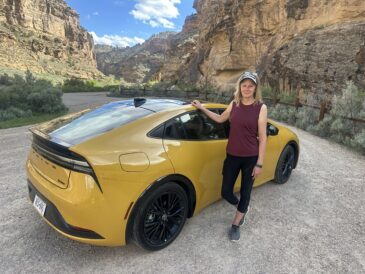
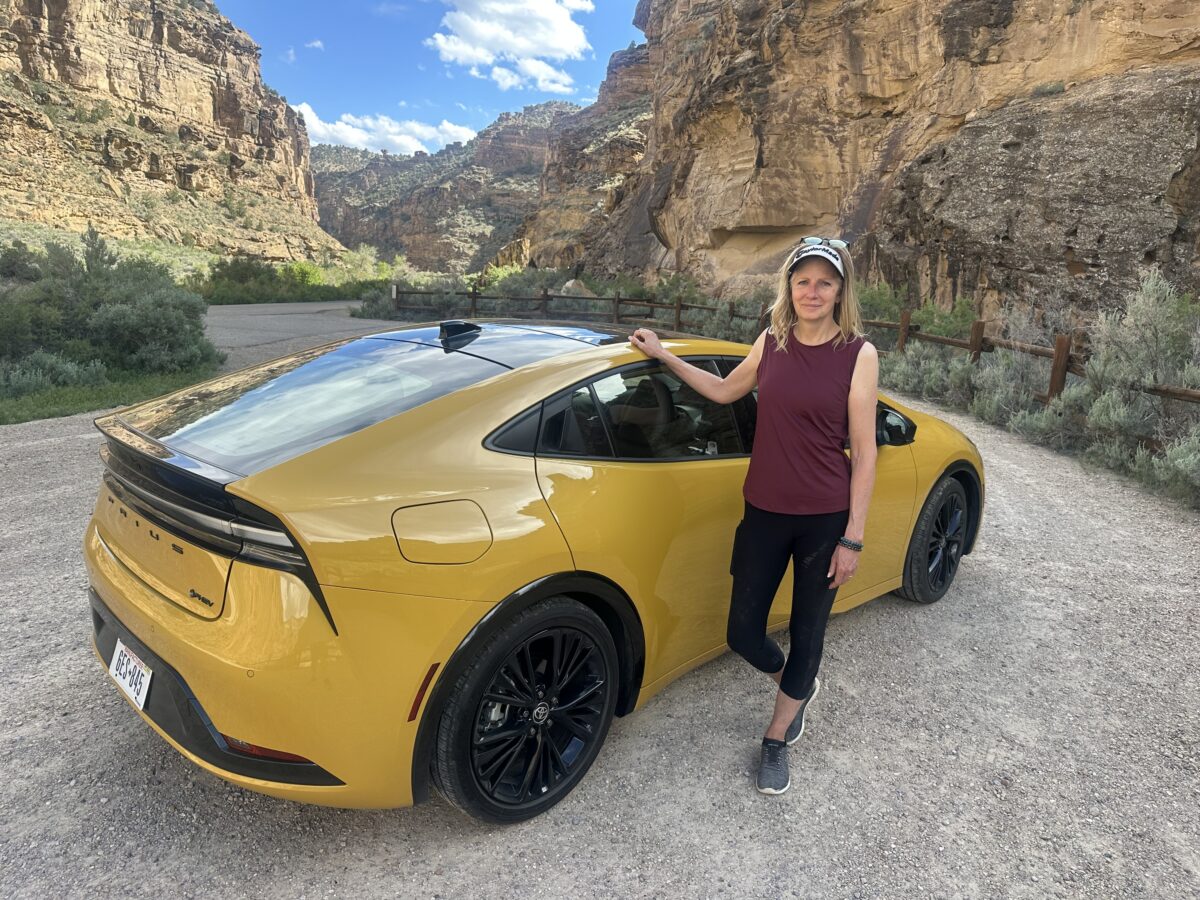
- Deanne Conover stands with the 2026 Toyota Prius Plug-in Hybrid Nightshade Edition amidst the towering rock walls of Indian Canyon. The bold, eye-catching Karashi Yellow paint finish perfectly contrasted with the rugged eastern Utah landscape during our Saturday road trip.
-
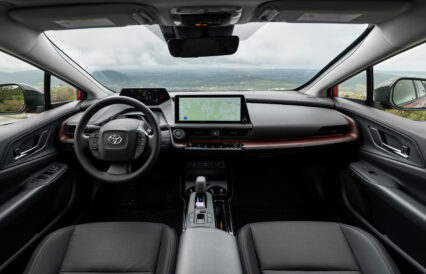
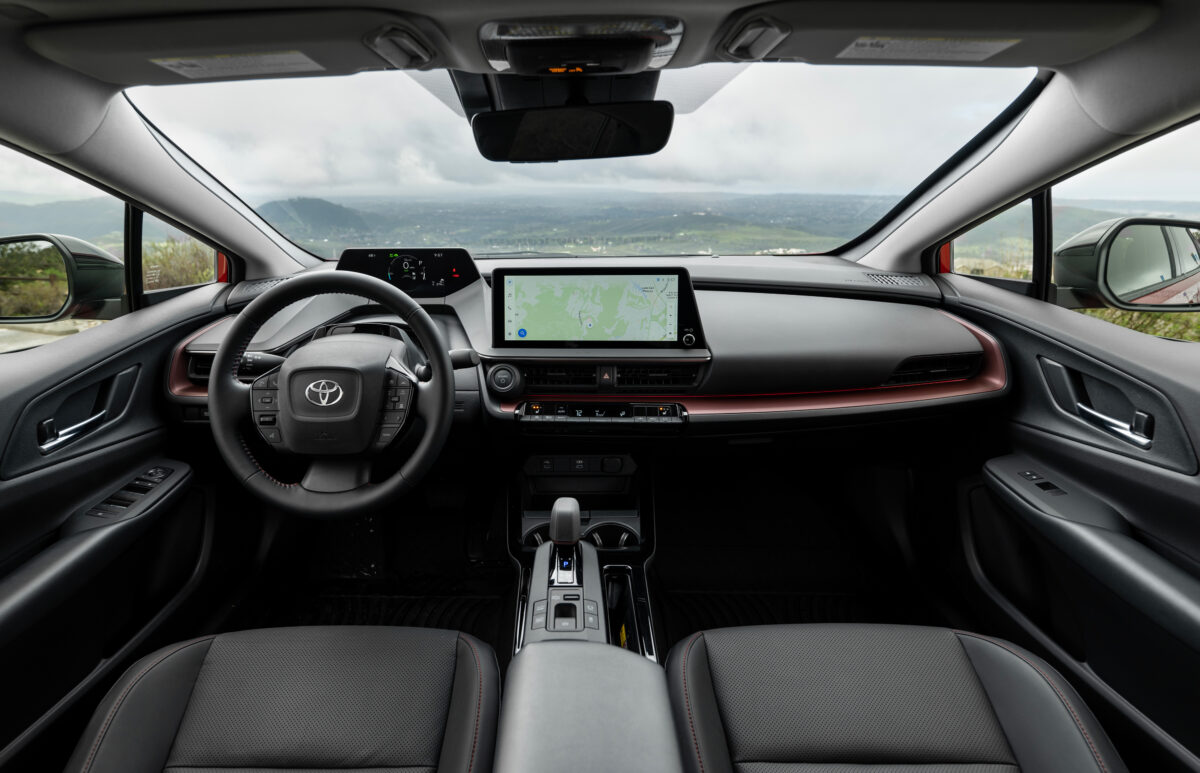
- Inside, the redesigned cabin features a modern, clean, and intuitive layout centered around a responsive infotainment screen. The lower seating position provides a much more engaging, connected feel to the road, while the supportive front seats kept us comfortable through hours of canyon driving.
-
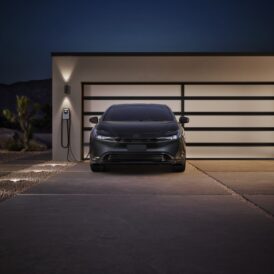
- Designed for maximum plug-in flexibility, the Prius is shown connected to a home charging station at night. Committing to plugging the vehicle in each evening rewarded us with a full battery and 41 miles of pure electric driving range every morning, keeping our daily Utah County errands completely gasoline-free.
-
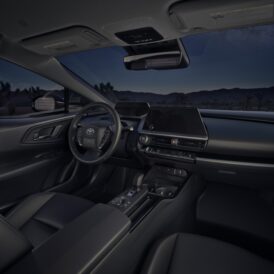
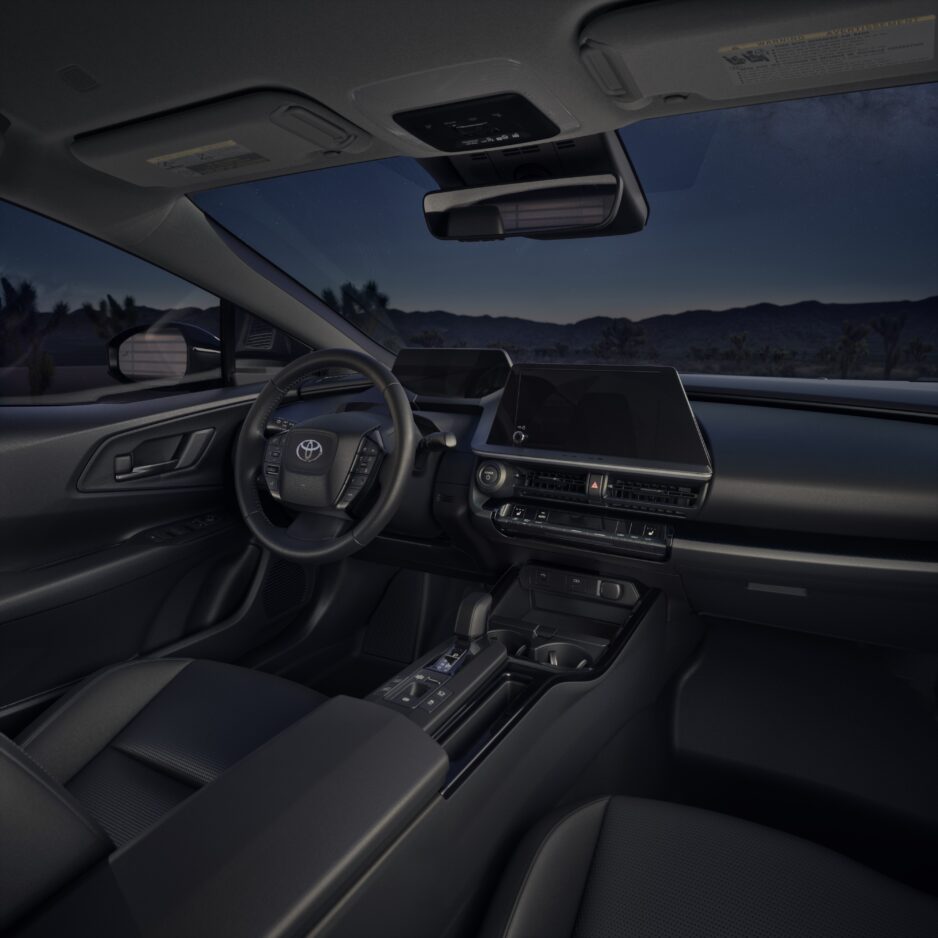
- A nighttime view highlights the refined aesthetics of the driver’s cockpit. With advanced hybrid tech working seamlessly in the background and road noise kept to a minimum, the cabin remains a quiet and peaceful environment whether cruising at Interstate 15 freeway speeds or navigating tight city parking lots.
-
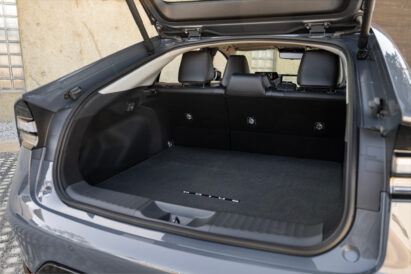
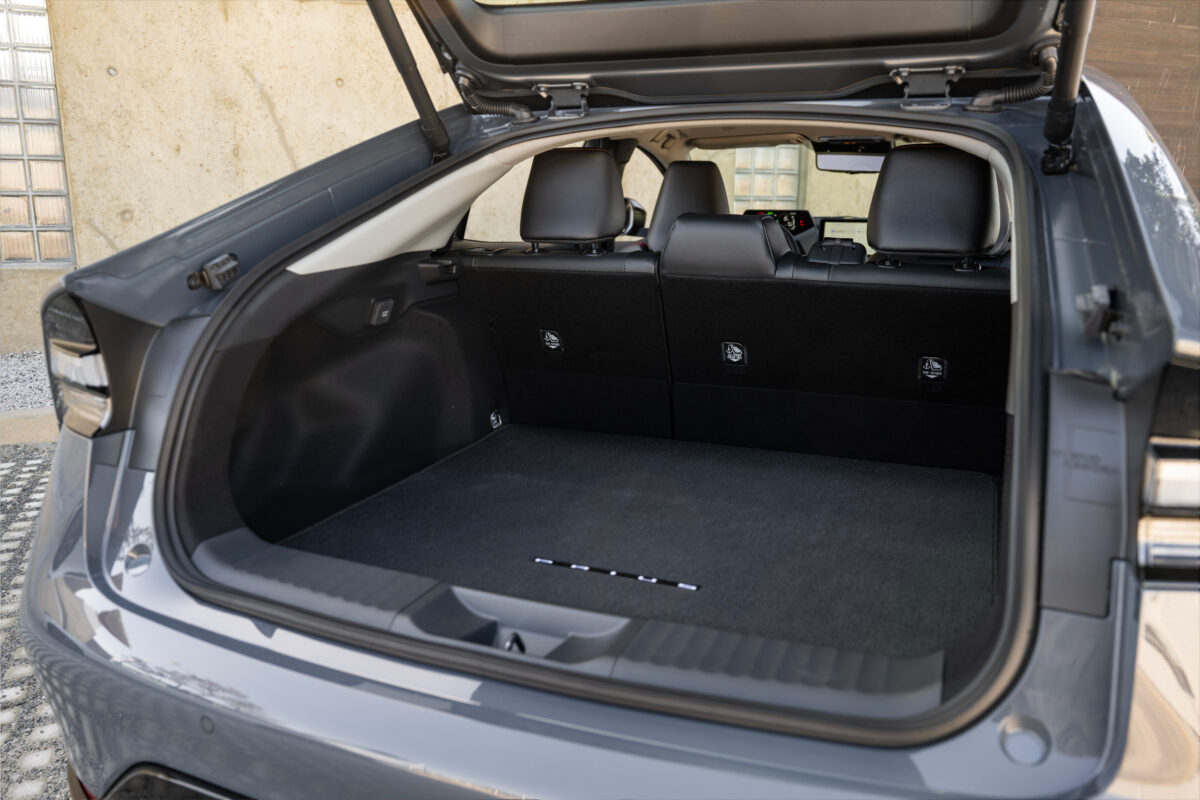
- The practical hatchback design continues to be one of the vehicle’s greatest assets, opening up to reveal a surprisingly spacious and flat rear cargo floor. It easily swallowed our weekend bags, groceries, and gear, proving that chasing exceptional efficiency doesn’t require sacrificing everyday utility.
Craig Conover, Daily Herald
Deanne Conover stands with the 2026 Toyota Prius Plug-in Hybrid Nightshade Edition amidst the towering rock walls of Indian Canyon. The bold, eye-catching Karashi Yellow paint finish perfectly contrasted with the rugged eastern Utah landscape during our Saturday road trip.
For years the Toyota Prius built its reputation on one simple idea — getting exceptional fuel economy without asking owners to change the way they drive.
Now Toyota has taken that same formula and wrapped it in a package that is far more stylish and surprisingly enjoyable than many people may expect.
We recently spent a week with the 2026 Toyota Prius Plug-in Hybrid Nightshade Edition finished in a bold Karashi Yellow paint color, and after putting it through our normal routine along with a longer weekend drive into eastern Utah, we came away impressed not only by how efficient it was, but how practical and enjoyable it had become.
The Prius has grown up.
Bright Color, Sharp Appearance
Courtesy photo
Inside, the redesigned cabin features a modern, clean, and intuitive layout centered around a responsive infotainment screen. The lower seating position provides a much more engaging, connected feel to the road, while the supportive front seats kept us comfortable through hours of canyon driving.
Before even getting behind the wheel, the first thing everyone noticed about our test vehicle was the color. Karashi Yellow is not subtle.
In a world of white, silver and gray vehicles, this Prius stood out wherever we parked. Combined with the Nightshade Edition’s black wheels, dark trim and blacked-out exterior accents, the yellow paint created a sporty look that made the Prius feel completely different from earlier generations.
More than once during the week someone stopped to ask what vehicle it was.
The current Prius shape is lower, wider and more athletic looking than before. Instead of emphasizing efficiency through unusual styling, Toyota seems to have embraced the idea that fuel economy and good looks can coexist.
Living With a Plug-In Every Day
Courtesy photo
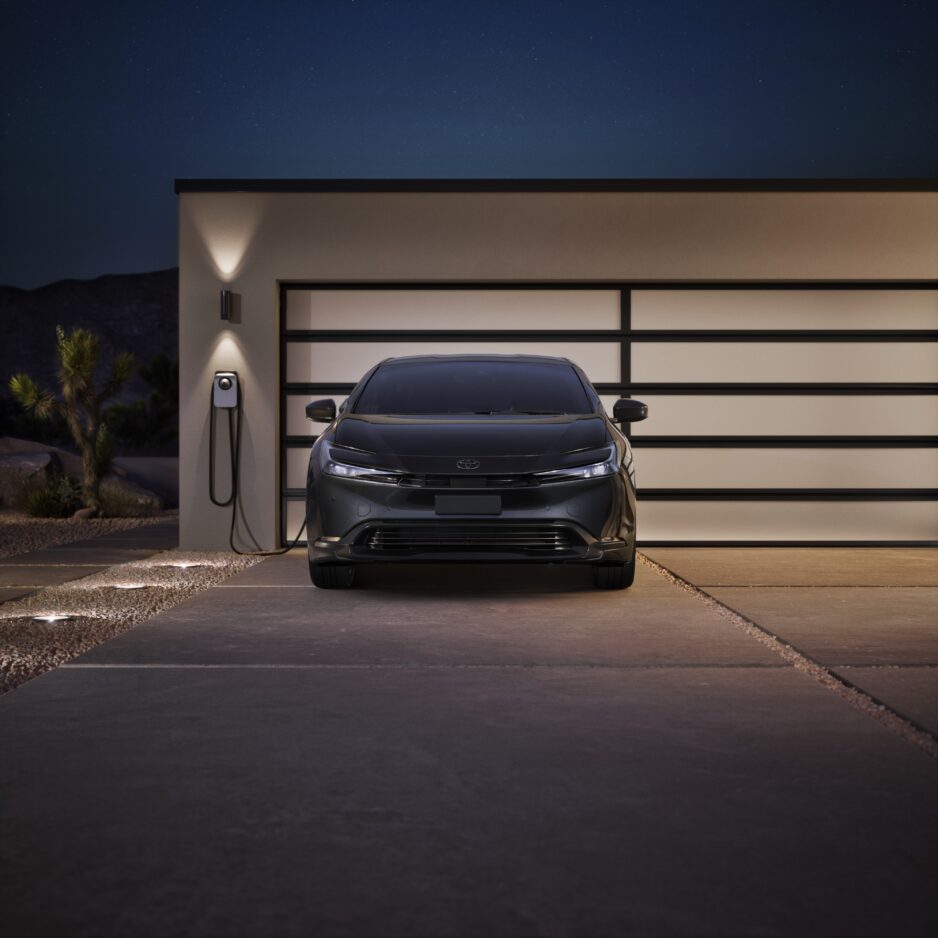
Designed for maximum plug-in flexibility, the Prius is shown connected to a home charging station at night. Committing to plugging the vehicle in each evening rewarded us with a full battery and 41 miles of pure electric driving range every morning, keeping our daily Utah County errands completely gasoline-free.
Like every vehicle we test, the Prius immediately became our daily transportation. We drove it to work, ran errands, picked up groceries and used it exactly the way most owners would use their own vehicle.
One thing we committed to during the week was plugging the Prius in every night. Each evening we connected it to charge and every morning it greeted us with a full battery and an indicated electric driving range of 41 miles.
For many of our daily trips, that turned out to be more than enough.
Driving around town, the Prius often stayed in electric mode for entire trips. The transition between electric and hybrid operation was nearly impossible to detect and the quiet operation added an extra level of comfort to normal driving.
The beauty of a plug-in hybrid remains its flexibility.
Courtesy photo
A nighttime view highlights the refined aesthetics of the driver’s cockpit. With advanced hybrid tech working seamlessly in the background and road noise kept to a minimum, the cabin remains a quiet and peaceful environment whether cruising at Interstate 15 freeway speeds or navigating tight city parking lots.
Unlike a full electric vehicle, there was never any concern about planning routes or finding chargers while away from home. We simply drove the car normally and let the system decide when gasoline power was needed.
The result was remarkable.
After three full days of commuting, errands and normal driving, we had used less than one-quarter of a tank of fuel.
That is impressive no matter how efficient a vehicle may claim to be.
Numbers That Make Sense Today
Courtesy photo
The practical hatchback design continues to be one of the vehicle’s greatest assets, opening up to reveal a surprisingly spacious and flat rear cargo floor. It easily swallowed our weekend bags, groceries, and gear, proving that chasing exceptional efficiency doesn't require sacrificing everyday utility.
The official EPA estimate for this version of the Prius is 48 miles per gallon when operating as a traditional hybrid.
When electricity is included, the rating climbs to 114 MPGe.
During our week, however, the numbers on the display became almost difficult to believe.
Because we charged nightly and completed so much driving on battery power, the Prius continuously displayed fuel economy greater than 99.9 mpg.
At first glance that sounds unrealistic, but when most trips happen using electricity and gasoline becomes secondary, the math starts to work. The Prius also showed efficiency approaching 4 miles per kilowatt-hour during electric operation. Those are excellent real-world numbers.
With fuel prices continuing to remain elevated, a vehicle capable of using this little gasoline becomes increasingly attractive.
For many drivers with shorter commutes, it would not be difficult to imagine weeks going by before needing to stop at a gas station.
Stretching the Prius’ Legs
Of course, not every drive consists of short trips around town. Saturday gave us the perfect opportunity to see how the Prius handled a longer journey. We headed east and made a drive down into Indian Canyon and continued just past Price, Utah.
This route gave us a little of everything — freeway speeds, elevation changes, canyon driving and enough distance to see how the Prius performed once the battery range was no longer the only source of power.
Starting with a full charge, the Prius quietly handled the early portion of the trip on electricity before seamlessly bringing the gasoline engine into operation.
What stood out most was how natural the transition felt. There was never a moment where the car felt underpowered or strained. The hybrid system worked in the background while we simply enjoyed the drive.
Indian Canyon remains one of Utah’s more scenic routes and provided plenty of opportunities to appreciate the Prius’ comfort and road manners.
The seats remained supportive and comfortable for several hours behind the wheel, and the cabin stayed pleasantly quiet. Even climbing grades and traveling at highway speeds, the Prius never felt like it was working too hard.
By the end of the trip, it became clear that the plug-in system had delivered exactly what many buyers are hoping for — the efficiency benefits of electric driving without sacrificing the ability to take longer adventures.
More Fun Than Expected
One surprise during the week was how enjoyable the Prius was to drive.
Electric torque gives the car immediate response around town and helps make acceleration feel stronger than expected. Merging onto Interstate 15 was easy and the Prius maintained speed confidently.
The steering felt direct and the suspension delivered a good balance between comfort and handling.
The lower seating position gives the car a more connected feel to the road, and body movement through corners remained well controlled.
No, this is not intended to compete with sports sedans. But compared to Prius models from years ago, this version feels much more refined and engaging.
Practical Inside
Inside, the Prius continued to impress. The layout felt modern and clean without becoming overly complicated. Wireless phone connectivity made daily use simple and convenient, and controls remained easy to reach and understand.
Front seat comfort was excellent throughout the week. Rear seat passengers still had adequate room, and despite the sporty roofline there was enough practicality for everyday use.
The hatchback design continues to be one of the Prius’ greatest strengths.
Groceries, bags and gear for the weekend drive fit easily and reinforced the fact that efficiency does not require giving up utility.
At the End of the Week
After spending a week with the 2026 Toyota Prius Plug-in Hybrid, it became clear this vehicle represents much more than just fuel savings. Charging every evening and driving normally allowed us to use less than one-quarter tank of fuel after three days while seeing fuel economy readings over 99.9 mpg and nearly 4 miles per kilowatt-hour.
Then, when it was time to head into Indian Canyon and beyond Price for a longer Saturday drive, the Prius simply adapted and kept going. That flexibility may be what makes this version of the Prius so appealing.
And in Karashi Yellow with the Nightshade package, it looked good doing it.
Base Price: $37,795
Destination Charge: $1,195
Price as Driven: $41,304