
Channing Tatum is a soldier of love in sloppy ‘Dear John’



In the future, someone will make an entire feature-length film that consists of nothing more than a rapid succession of wordless scenes that show time passing in the lives of the main characters while a scruffy white guy with a guitar yowls on the soundtrack about love, or pain, or puffy clouds, or a tree in winter, or an ice cream sundae, or whatever else could possibly signify life unfolding.
With a novel’s worth of story to plow through — the screenplay is from a romantic weeper by “The Notebook” author Nicholas Sparks — and a timeline that stretches out over 10 or 12 years, “Dear John” has a lot of ground to cover. Any filmmaker would have to figure out how to glide past its gaps in time, or compress weeks and months of stuff happening into a few efficient minutes.
Swedish director Lasse Hallstrom (“Chocolat,” “The Cider House Rules”), repeatedly uses the same lazy gimmick: kill the dialogue, cue the music aaaand scene and scene and scene and scene. He packs so many montages into “Dear John” that he doesn’t think twice about throwing a handful of American-soldiers-defending-freedom scenes into the move-it-along blender.
At least the musical undergirding for that one is orchestral and not wuss rock.
The John of the title is an infantry grunt who meets a college coed while on leave in North Carolina. Savannah is nice and John used to be naughty. John likes to surf and Savannah builds houses for Habitat for Humanity. He can make fire without matches, however, and she thinks foul swears in her head at all times, so there’s plainly something for each of them to dig about the other.
No, seriously. She actually says, “There’s a neverending string of curse words running through my mind.” And his firestarting skills really do turn her on. “You just made your own fire,” she coos. “That’s very impressive. That is very primal.”
The banter is like a string of firecrackers with these two. Savannah says, “You don’t scare me, John,” and — bam! — he comes right back with, “No? Well, you scare me.”
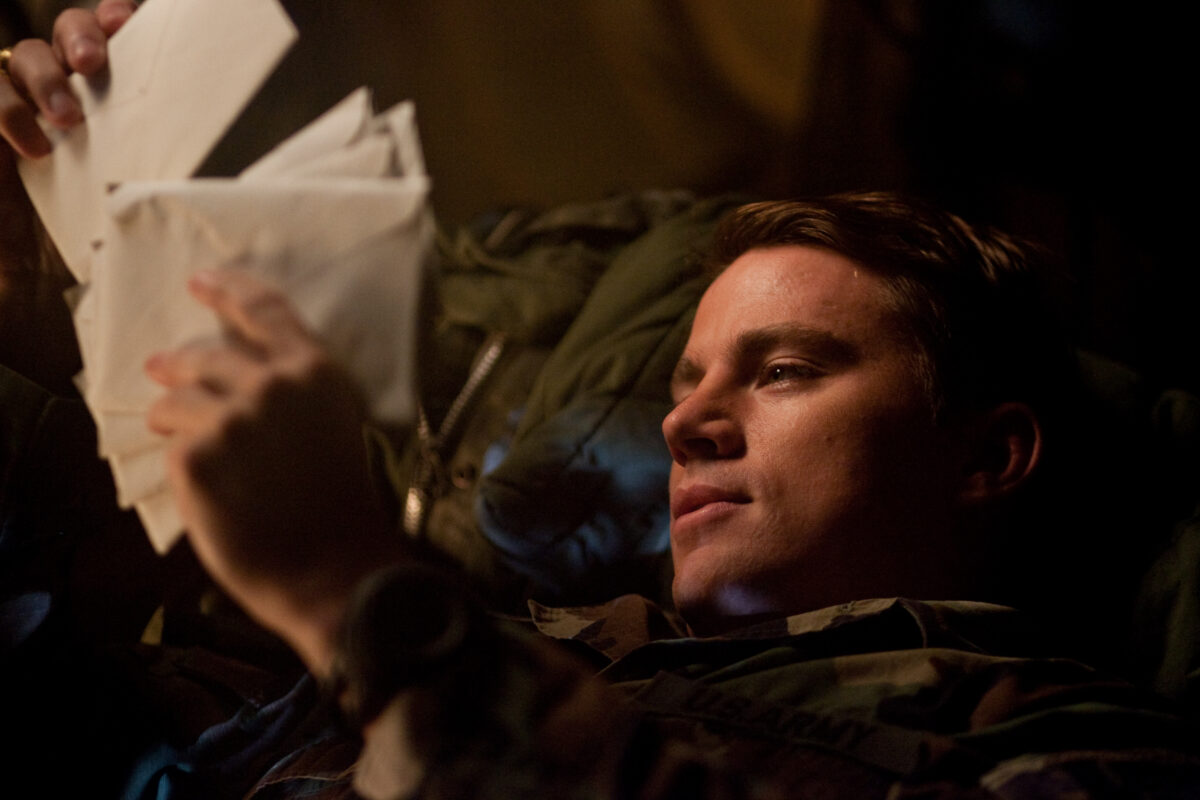
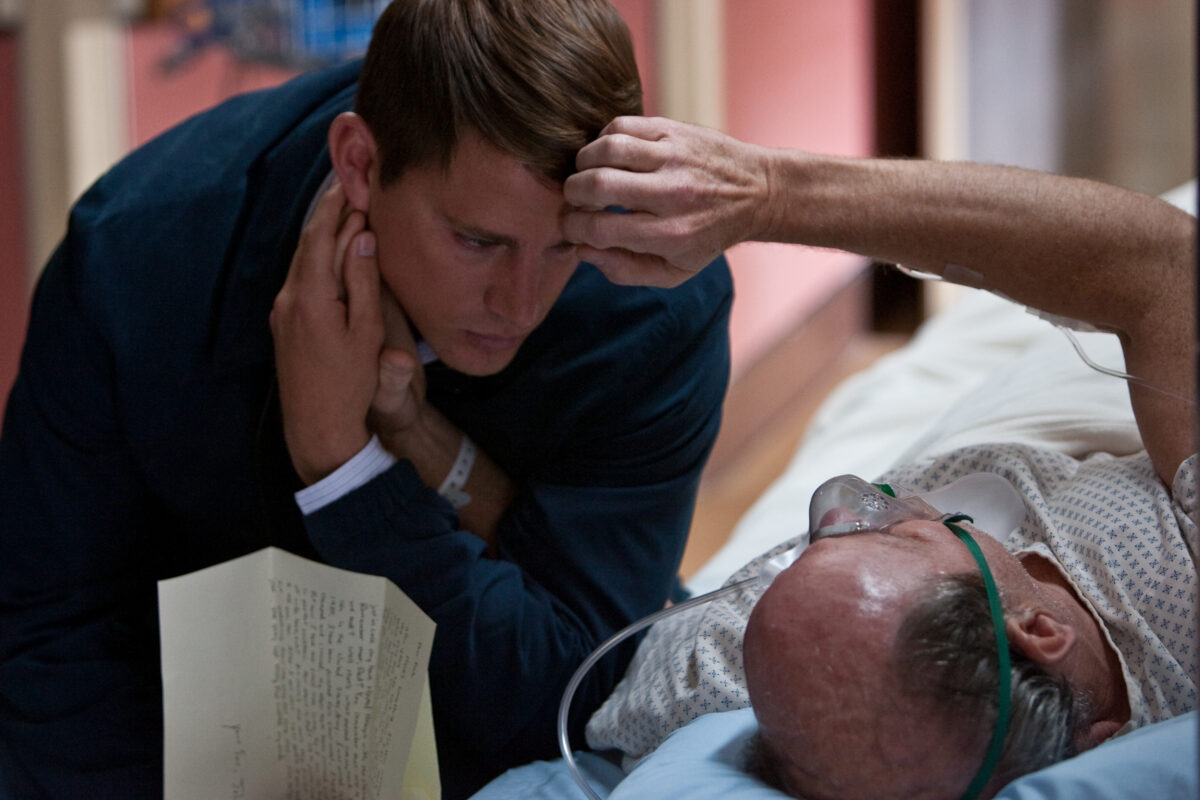
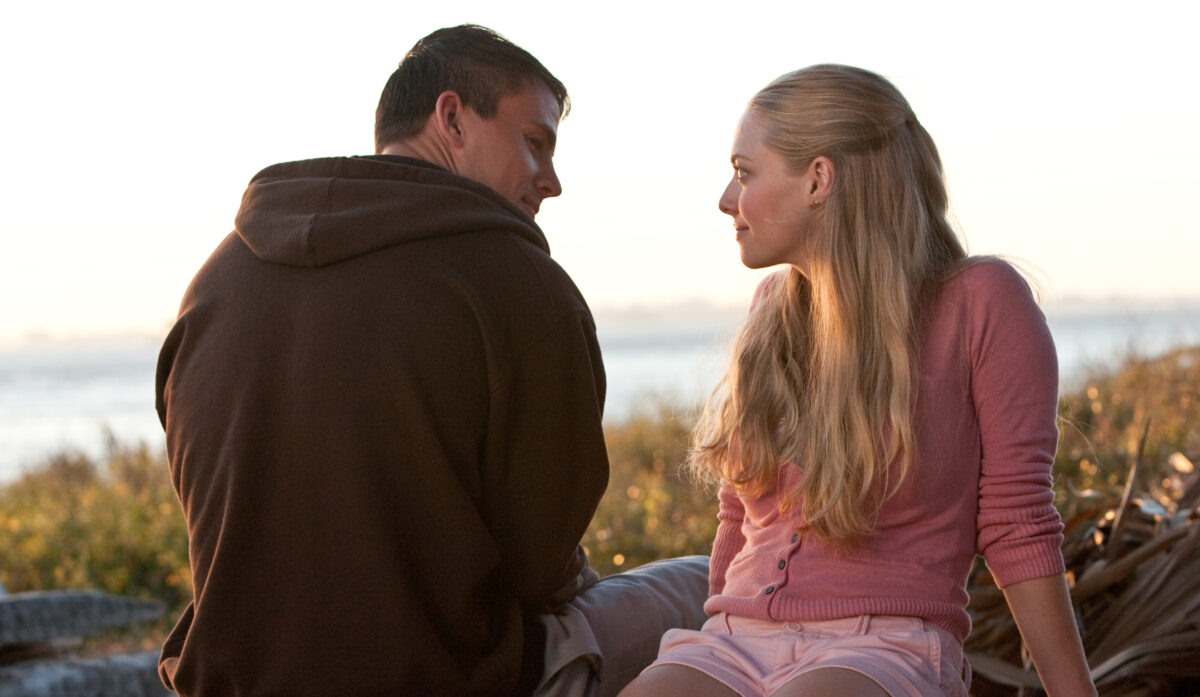
Brawny Channing Tatum and waifish Amanda Seyfried make the blossoming romance more charming than the broad outline that’s in the script. There’s a modestly engaging subplot involving Richard Jenkins as John’s socially paralyzed, routine-dependent father, and after John returns to active duty and Savannah goes back to college, the romantic yearning that builds up between them over many months of correspondence feels authentic.
What really sinks the movie is where it all ends up, a manipulative and tear-jerking destination that won’t surprise readers of Sparks’s novel — until it does. Despite all of the narrative shortcuts taken, Hallstrom still has to cram about a half-dozen twists of fate into the final 25 or 30 minutes of the movie, piling on his characters until the barrage of shattered dreams becomes more comical than sad.
And then there’s that final switcheroo, a tacked-on fateful encounter that is clearly a force-fed Hollywood apology for the bait-and-switch resolution of the ink-and-paper “Dear John.” Maybe it’s not all that surprising that having one’s cake and scarfing it like a pig leads to choking.