
Take a bow: Cellist takes instrument to new levels
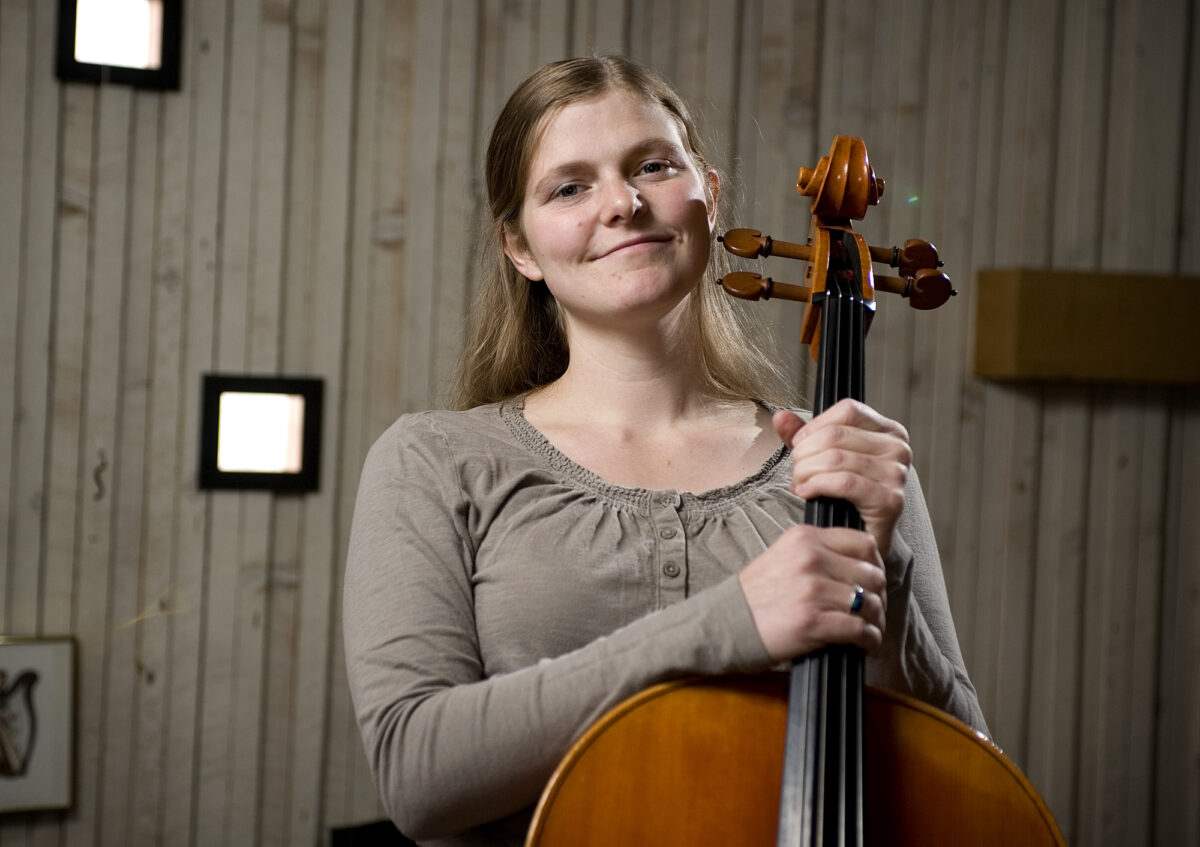
Liz Davis Maxfield stands for a portrait at her home in Provo on Thursday, Dec. 13, 2012. JAMES ROH/Daily Herald
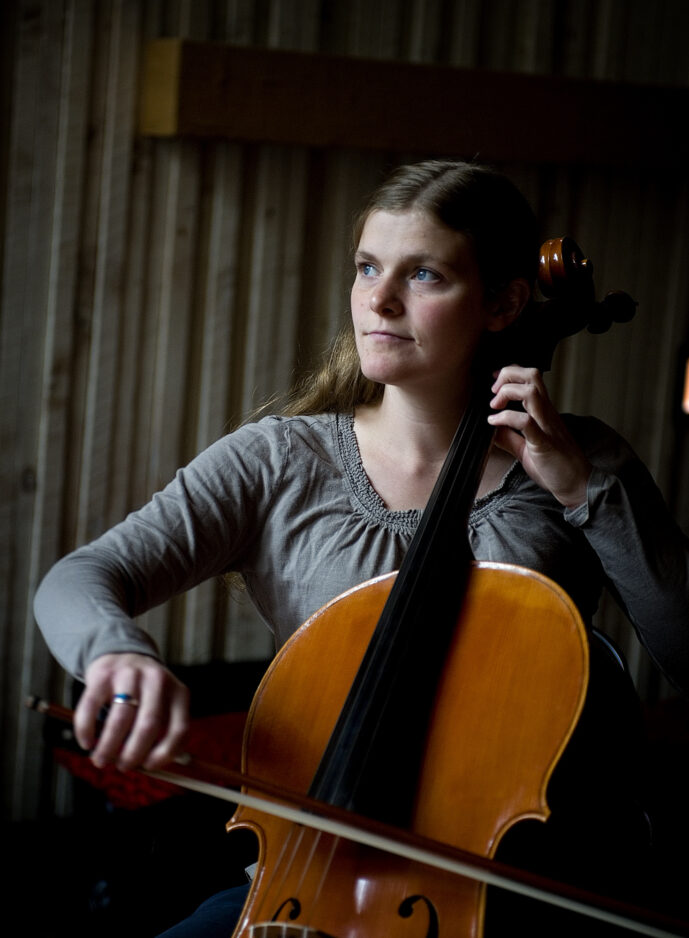
Liz Davis Maxfield plays the cello at her home in Provo on Thursday, Dec. 13, 2012. JAMES ROH/Daily Herald
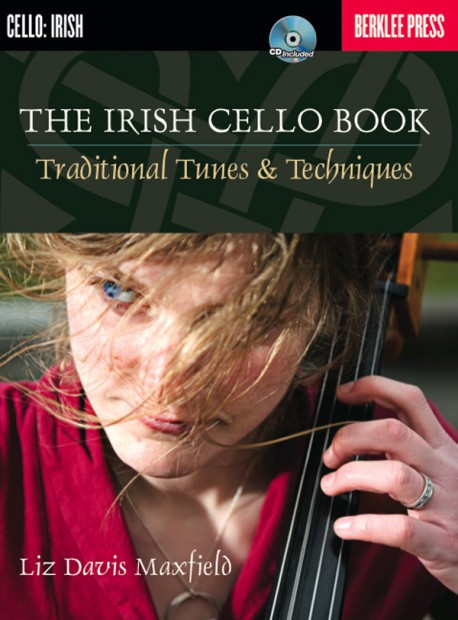
"The Irish Cello Book: Traditional Tunes and Techniques," by Liz Davis Maxfield.
Almost as though she’s seated in the captain’s chair of a musical starship Enterprise, cellist Liz Davis Maxfield is on a mission to boldly go where few other cellists have gone before. A new mother, a music teacher and a world-class musician, Provo resident Maxfield has a busy 2013 in store, with a new album and new book on the way.
“The Irish Cello Book: Traditional Tunes & Techniques,” due out from Berklee Press (the publication arm of Boston’s Berklee College of Music) early next year, is, as Maxfield put it, “the first of its kind.” That’s because the traditional stringed instrument of Irish music is the fiddle, a fact that Maxfield, 26, was well aware of when she went to the University of Limerick in 2009 on a Fulbright scholarship to study Irish music.
“I was a little bit afraid at first that I would receive some negative feedback,” she said. “There are some staunch traditionalists in Irish music who would prefer to stick to the pure drop.” (In Irish music circles, “pure drop” essentially means “the way we’ve always done things.”)
Instead, Maxfield and her non-traditional instrument were received at the university with open arms. “On my first day, they asked me for a list of my favorite fiddlers,” she said. From there, she learned to adapt her playing of the cello in a series of one-on-one master classes with some of the best fiddlers in Ireland.
“At first, I didn’t believe them,” Maxfield said. “I thought, ‘You must be joking, right?’ ” Then, however, things just fell into place. “I would say, ‘Can I work with Frankie Gavin?’ And they would tell me, ‘Oh, yeah, sure, he’ll be in next week.’ That just happened again and again.” (Among numerous other accomplishments, Gavin was anointed the world’s fastest fiddler in 2010 by “Guinness World Records.”)
Maxfield continued to meet and correspond with many of her teachers as she worked on “The Irish Cello Book.” And, in addition to earning a master’s degree, she moved up into a new realm of cello performance. “It made such a huge difference in my playing,” she said.
Cello runs deep
Music, and even Irish music, has been part of Maxfield’s life from the beginning. “There was no escaping it in our family,” said her father, international trade lawyer Mark Davis of Orem. “Her mom was very musical and I was involved in various musical projects.”
Maxfield’s mother, Kira Davis, who died when Maxfield was 10, provided her daughter’s first connection with the cello. “My mom was a professional harpist and she collaborated a lot with a friend who played the cello,” Maxfield said. (Kira Davis also had a pronounced interest in Irish music, so Maxfield had a deep familiarity with Irish sounds before discovering her own interest at Berklee.)
The musically adventurous Maxfield begged to take cello lessons and tried the instrument for a year at age 5, before setting the instrument aside for a while. “She was still interested,” Davis said, “she was just interested in lots of other things, too.” Gymnastics, for one.
The cello wasn’t out of the picture for long. Maxfield remembers being asked at age 9 whether she was a musician: “I said that I was, but I didn’t have an instrument. I figured it was time for me to pick up the cello again.”
After her mother died, Maxfield became even more committed to her instrument. “Music became my connection to her,” Maxfield said. “That was a really big motivation for me. It was a great emotional outlet and a way to connect with her memory.”
Music forged another important relationship after Maxfield began her college studies at Brigham Young University (she eventually transferred to Berklee). While at BYU, she was asked to join a string quartet for a project under the direction of fellow music student Andrew Maxfield. It was Andrew’s brother Stuart (yes, that Stuart Maxfield, the lead singer for Fictionist) who suggested the connection, and Stuart Maxfield didn’t stop there.
“We worked on that project for a semester,” Andrew Maxfield said. “Stuart kept needling me and telling me I would be an idiot if I didn’t ask her out.”
After a first date to see “Dear Ruth” at Hale Center Theater Orem, the couple dated for about a year before taking their relationship to the next level. “She laid down an ultimatum,” Andrew Maxfield said. “She told me, ‘I’m going to Berklee, and you can come or not.’ “
Spreading the sound
In the past year, Maxfield has seen a lot of change in her life. She finished her book just in time to give birth to her first child, a son who turned 6 months old just a few days ago. She and Andrew moved back to Utah Valley, and she recently became communications director for the Utah Valley Cello Society (www.uvcello.org), which held its first public event on Saturday.
The society, which has about 70 people involved after only a few months, is just one of many signs to emerge in recent years that the cello is more than just another instrument in your average symphony orchestra. Megan Boyle, who organized the society with BYU cello teacher Monica Call, said that the popularity of the cello is picking up.
“I’m a cello teacher, and I have 55 students,” Boyle said.
One thing that’s made the cello more accessible, Boyle said, is the work of musicians like Maxfield. Though Maxfield had the same classical training growing up that most cellists start with, she’s been adapting her playing to include folk music and, more recently, Irish music, for years. Boyle and Maxfield first met after Boyle attended one of Maxfield’s workshops.
“I’ve been to hundreds and hundreds of classical music concerts. Most of the time I walk away from them and feel inspired,” Boyle said. “It’s been a while since I walked away and thought, ‘I want to learn to do that right now!’ “
When she isn’t playing her cello, writing, or composing, Maxfield spends most of her time with her son. She also enjoys Frisbee, running and rock climbing. “I grew up climbing in Rock Canyon and at The Quarry [a climbing gym in Provo],” she said.
Most times, however, she probably won’t be too far from her cello. Davis said that he thinks what makes his daughter’s playing distinctive is that she blends technique and intuition. “She is very technically careful and precise and accomplished,” Davis said. “At the same time, she’s got this amazing ability, this intuitive ability with folk music.”
Maybe you could say that Maxfield marches to the rhythm of a different cellist. Or maybe she’s the one creating the different rhythm.
On the Web:
Find out more about Liz Davis Maxfield at her website: www.lizdavismaxfield.com.