
Barsch code: Springville MOA presents retrospective of artist
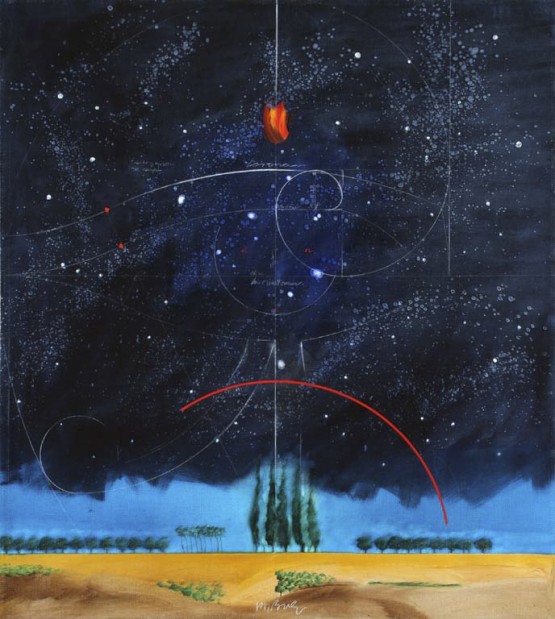
"Amor Vincit Omnia" by Wulf Barsch, part of the "Ex Corde Lux - A Retrospective of Wulf Barsch" at the Springville Museum of Art. Ph: Springville Museum of Art
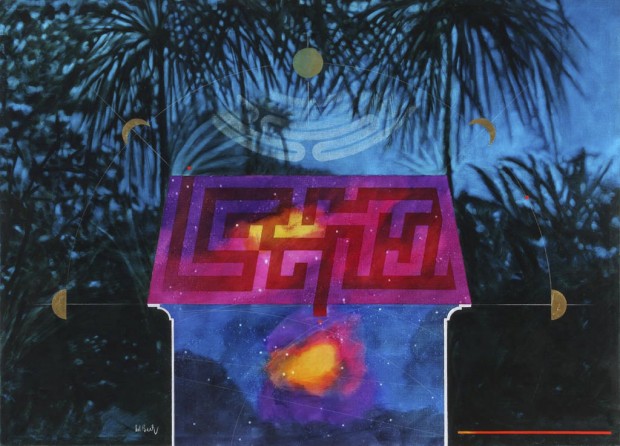
A painting by Wulf Barsch, part of the "Ex Corde Lux - A Retrospective of Wulf Barsch" at the Springville Museum of Art. Ph: Springville Museum of Art
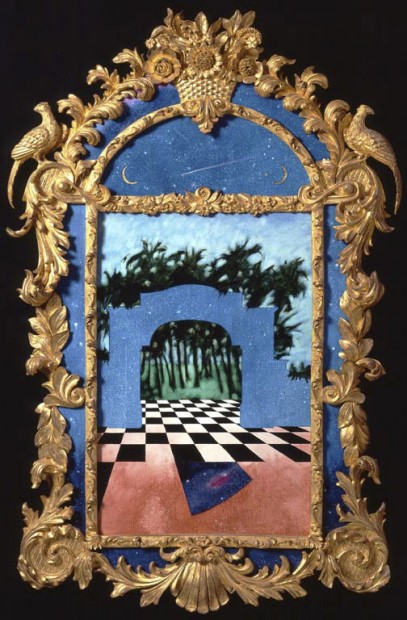
"Gate to Paradise," by Wulf Barsch, part of the "Ex Corde Lux - A Retrospective of Wulf Barsch" at the Springville Museum of Art. Ph: Springville Museum of Art
Colors, light and figures are brought together in visual harmony at the Springville Museum of Art exhibit “Ex Corde Lux — A Retrospective of Wulf Barsch,” on display now in the main gallery.
Barsch is an internationally recognized artist who was born in Bohemia, now the Czech Republic, in 1943. His education took him to Germany, where he graduated and began a study of art with Bauhaus masters before his first solo art exhibition in 1962.
After joining The Church of Jesus Christ of Latter-day Saints in 1968, Barsch made his first visit to the United States, and later served a mission for the church to California. His studies of art and design continued at Brigham Young University in Provo, where he later became a faculty member and taught for nearly 40 years before retiring in 2011. His works can be found in more than 35 collections worldwide, including the States Senate in Hamburg, Germany, and the Library of Congress in Washington, D.C.
According to Ashlee Whitaker, associate curator of the Permanent Collection and Exhibition at the Springville Museum of Art, plans have been under way for 10 years to have Barsch’s work at the museum, leading finally to the current compilation of pieces from throughout his life.
“With the retrospective, it’s something that looks at his full career,” Whitaker said. “There is a sampling of his student works on display, as well as paintings and lithographs that span his career.”
According to Whitaker, the pieces on display at the museum target every decade, helping to display the evolution of Barsch’s work as an artist. The vast collection fills all but one room of the main floor galleries and emphasizes Barsch’s reputation as a symbolic and spiritual artist.
“What you’ll see in a Wulf Barsch painting is perhaps a landscape or a skyscape or an architectural element with really dazzling colors,” Whitaker said. “His works are rooted in things we recognize in the world around us. But within those images, there’s always something else.”
According to Whitaker, one of the most impressive things about the work of Barsch is that it can be read on many levels.
“He’s an artist whose works are deeply spiritual with a strong resonance of religious themes and exploration … it draws you in,” she said.
Rita Wright, director of the Springville Museum of Art, said she first was introduced to Barsch’s work as an undergraduate at BYU.
“I remember at the time I was pretty new to the world of art history and studying works of art,” she said, “but there was just something that I sensed in these images that was deeply spiritual, deeply profound and visually engaging.”
According to Wright, the spirituality in Barsch’s works carries over to the title of the exhibition, “Ex Corde Lux,” which in Latin means “From the heart, light.”
“That puts this idea of our feeling, our intuition, level with this glory of eternal truth … this manifestation of light,” she said. “I think as a visitor you stand there and are just surrounded by the color and the depth and the richness. These works invite you to have a personal journey of meaning … it’s stunning visually, but also very engaging intellectually and spiritually.”
Ex Corde Lux — A Retrospective of Wulf Barsch
When: Now through Nov. 2
Where: Springville Museum of Art, 126 E. 400 South, Springville
Admission: Free
Info: (801) 489-2727, www.smofa.org/. Full-color catalogs of the images seen in the exhibition can be purchased at the Springville Museum of Art bookstore for $20.