
This new MOA exhibit will bend your mind
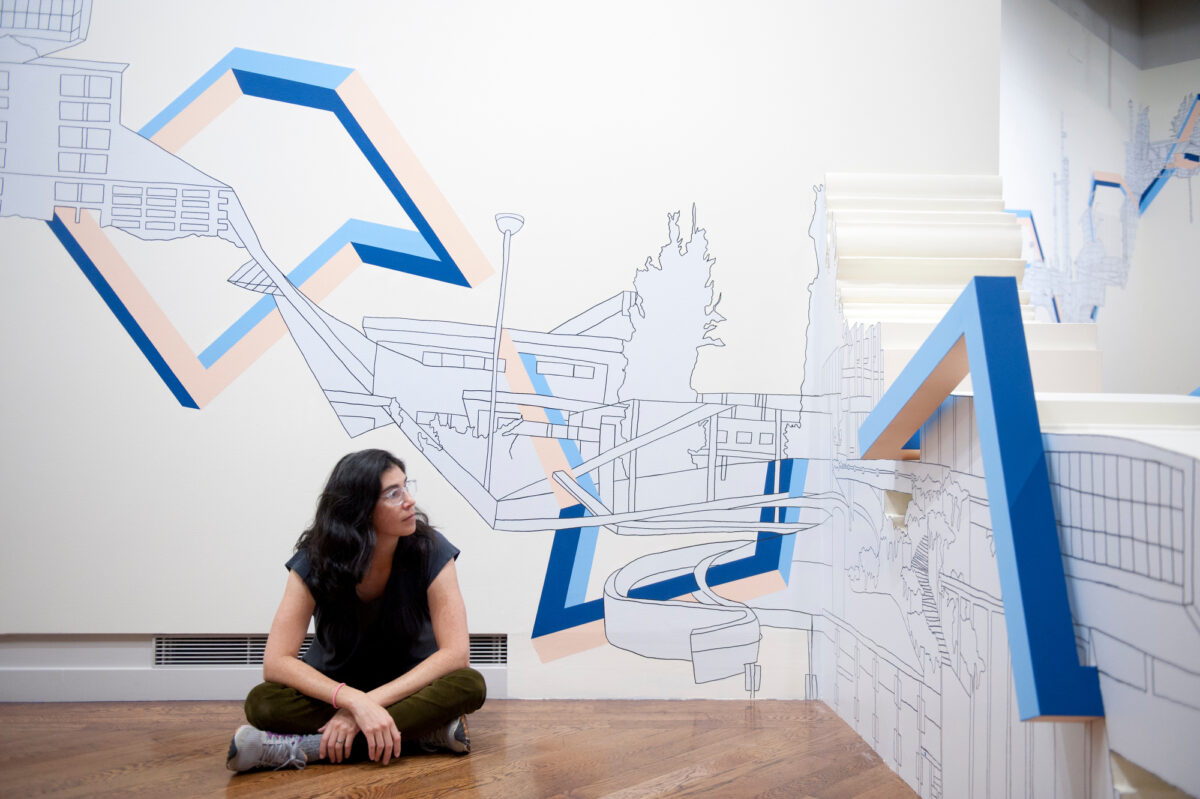
California-based artist Kim Schoenstadt poses for a portrait with her "Block Plan Series: Provo" installation at the BYU Museum of Art.
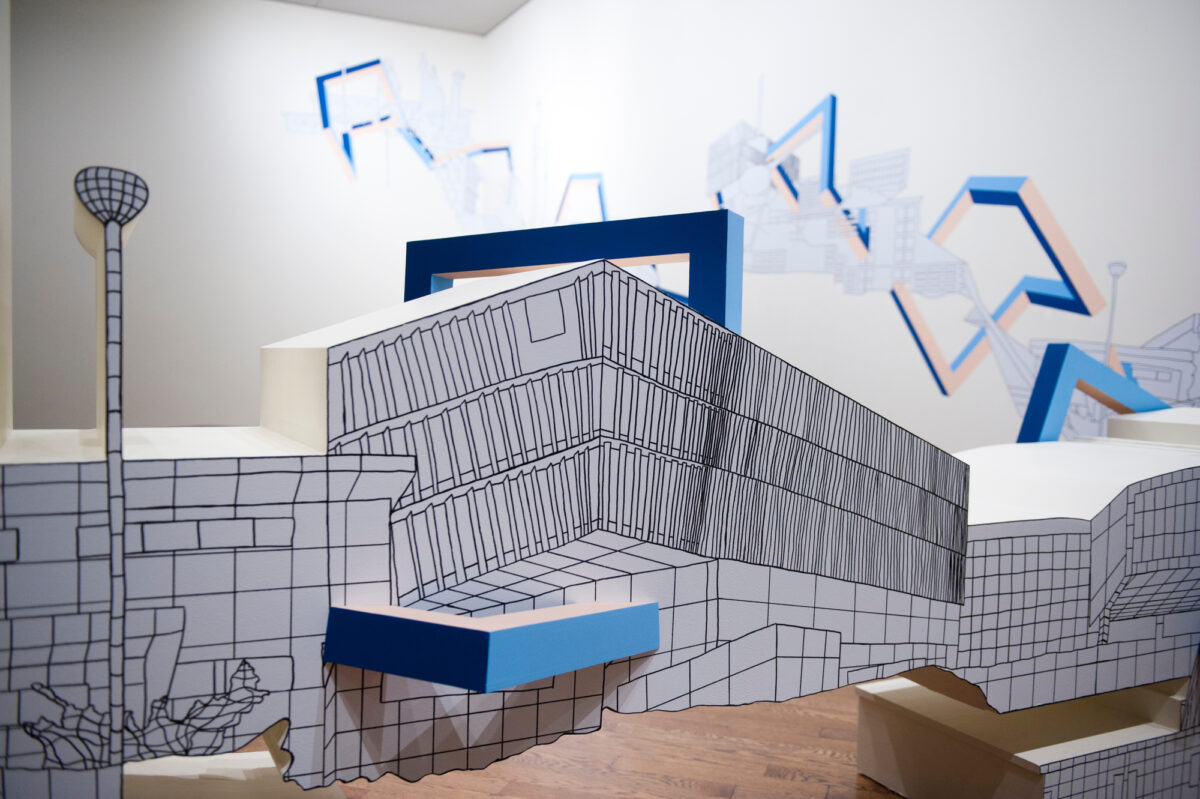
One side of Schoenstadt's installation mimics the wire frame mapping utilized in computer animation. It was inspired by a visit to BYU's acclaimed animation department.
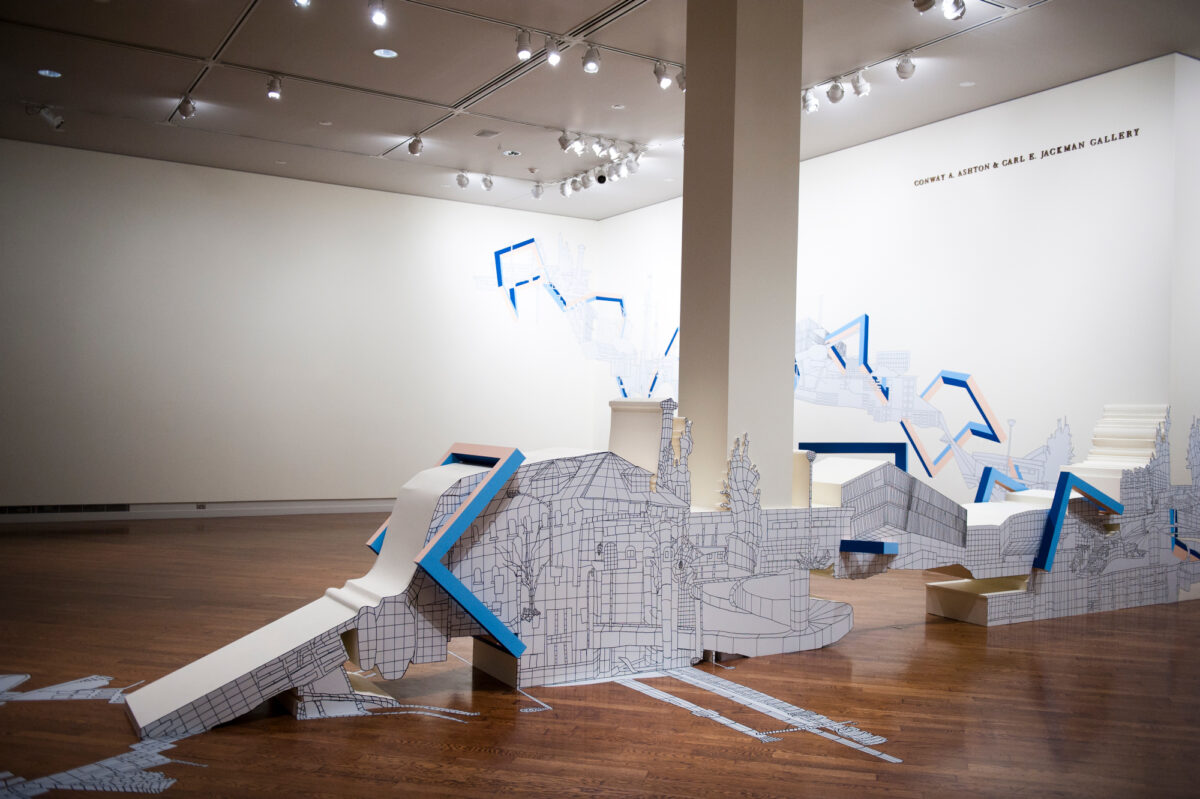
Getting the piece to come off the wall into a 3-D was no easy task. Schoenstadt and Jeff Lambson, curator of contemporary art for the BYU Museum of Art, gave considerable credit to the museum's fabrication staff for making it possible.
Kim Schoenstadt remembers going to art museums as a child. It wasn’t enough for her.
“A lot of times with these big, interesting, complicated museum shows, the curtain goes up and you don’t see it till it’s done, and it’s like a magic show,” Schoenstadt said. “As a kid, I found that so frustrating.”
With her new exhibit at the BYU Museum of Art, Schoenstadt avoided that magic show approach. Though looking at it, it does feel a bit magical.
The exhibit, “Block Plan Series: Provo,” feels like an optical illusion of sorts. It features an eclectic series of local buildings — the old Startup Building and the new Adobe building, among others — all hand drawn, and melded together like some kind of architectural serpentine. The drawings begin on one wall, then, in a bit of visual trickery, expand off the wall into a three-dimensional sculpture — “busting into reality,” she described. The sculpture then retracts back into a two-dimensional drawing on the opposite wall.
The two sides of the V-shaped exhibit are mirror images. One side, however, is rendered to look like the wire-frame mapping used in computer animation. Schoenstadt got this idea after visiting BYU’s acclaimed animation program. It’s also a nod to Utah Valley’s tech-focused reputation — adding new meaning to the region’s “Silicon Slopes” nickname. Schoenstadt added another intriguing element to the piece — a deconstructed, unraveled, multi-colored three-dimensional cube, woven throughout the entire piece. Indeed, it’s all a bit mind-bending.
“For me, it just made sense,” Schoenstadt said. “My mind works in that scattered way.”
Schoenstadt and the museum staff recruited a bunch of locals to complete the intricate installation. So many people volunteered that the grunt work was completed in two days. They had initially scheduled for 10 days.
“They were fantastic — we had more than we needed, which was a first. Usually we’re just scrounging,” she said. “I like having an open installation where you can see how things come together.”
Jeff Lambson, curator of contemporary art for the MOA, met Schoenstadt a few years ago, and played a major role in recruiting the California-based artist. This installation provided some unique challenges. An art piece of this kind is highly ambitious and a bit unprecedented. While Schoenstadt’s previous pieces had explored these concepts, “Block Series: Provo” did so on a much larger scale than she’d ever attempted. Seeing it come to fruition, Lambson said, has been rewarding.
“That’s the excitement of working with a living artist, because you never quite know what you’re going to get,” he said. “So you do have to have faith in the artist. But I’ve seen Kim’s works, and I knew they were exciting. And because this is a site-specific work that depends upon the community conceptually, but also manually, I had faith in the community that they would come and help us pull this off.”
Schoenstadt and Lambson also gave considerable credit to the museum’s fabrication department. The installation really depended on the expanded 3-D element. This element, unsurprisingly, was the most challenging. Having the drawing seamlessly come off the wall into a three-dimensional structure required a ton of planning and construction know-how. Without these experts, they said, it would have been practically impossible.
John Adams, manager of exhibit production and installation, worked with Schoenstadt and his staff to make Schoenstadt’s vision a reality. Yes, it was difficult, he said, but it’s what they’re there to do.
“Every show we do has its own unique challenges, so we really never know what we’re getting into until the artist actually arrives and we start working together,” Adams said. “(Kim is) very particular. She knows what she wants, and that’s great. I appreciate when they know what they want the final product to look like.”
Schoenstadt remained confident and focused throughout the process — “She came in with her laser vision,” Lambson said — but she also remained realistic.
“It definitely had the chance to fall apart and not work,” Schoenstadt said. “With these big installations, that’s always an option. It could go either way — you have a 50/50 chance of it coming together or falling apart. But it’s a testament to the volunteers that worked on it, and the museum crew.”
BLOCK PLAN SERIES: PROVO
When: Now through April 18
Where: BYU Museum of Art, 500 Campus Dr., Provo
Admission: Free
Info: moa.byu.edu/kim-schoenstadt/