
Scorpions’ Rudolf Schenker: ‘We wanted to leave, but nobody let us!’

Scorpions guitarist Rudolf Schenker performs at USANA Amphitheatre in 2010. The Scorpions opened a five-show mini-residency this weekend at The Joint inside the Hard Rock Hotel and Casino in Las Vegas.

The Scorpions kicked off their five-show mini-residency at The Joint in Las Vegas this weekend. Shows continue Wednesday, Friday and Saturday.
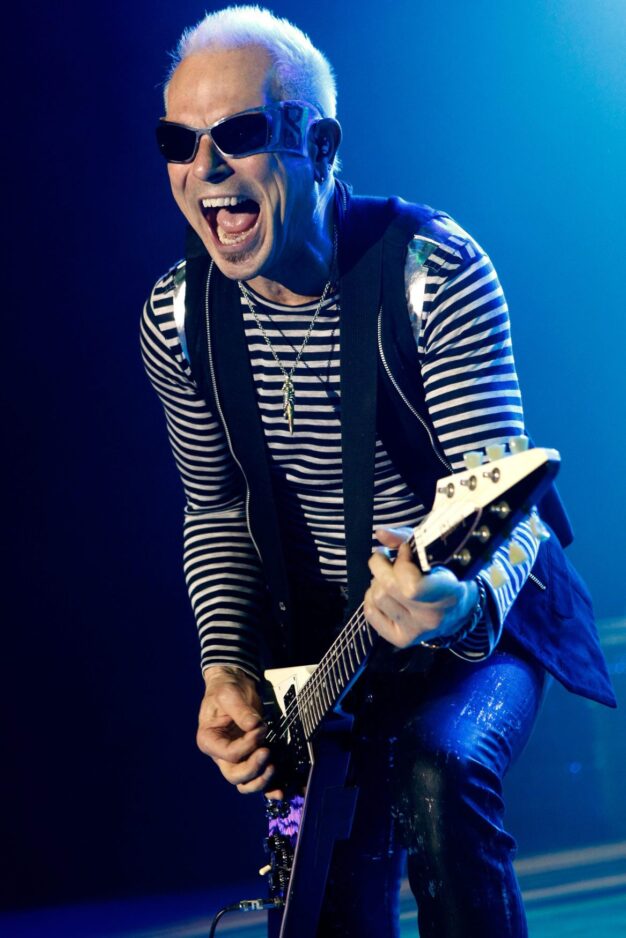
In this picture made available on Sunday, May 16, 2010, Rudolf Schenker guitarist of German hard rock band Scorpions performs on stage at the Long "I" Rock Music Open Air Festival in Longirod, Switzerland, late Saturday, May 15, 2010. (AP Photo/Keystone/Jean-Christophe Bott)
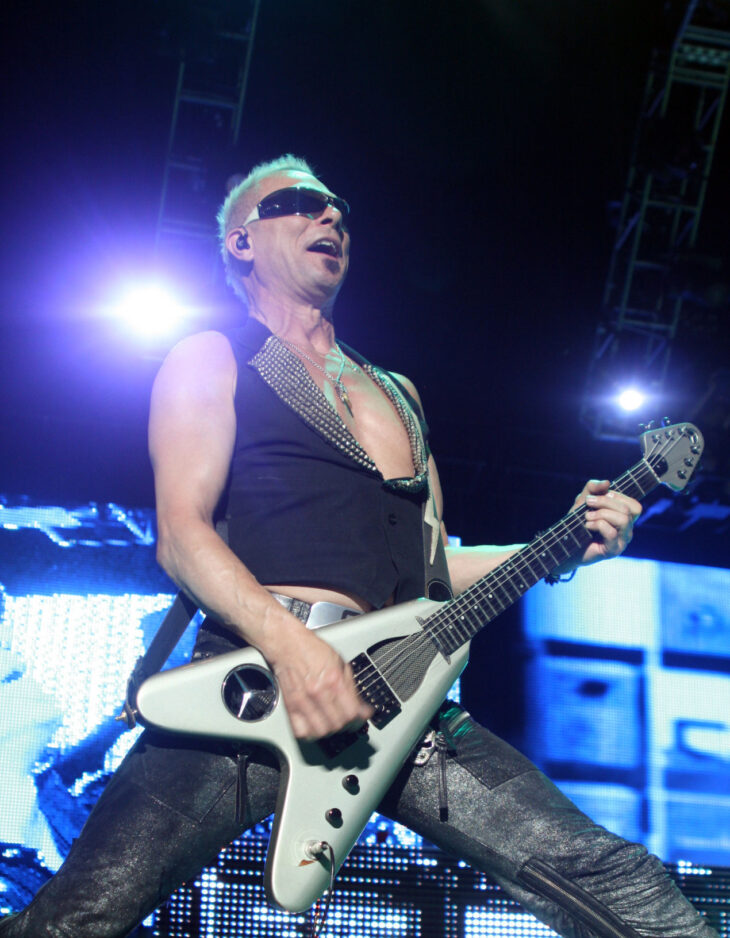
Scorpions guitarist Rudolf Schenker performs during a 2010 concert at USANA Amphitheatre. The band is in the midst of playing five shows in Las Vegas this week.
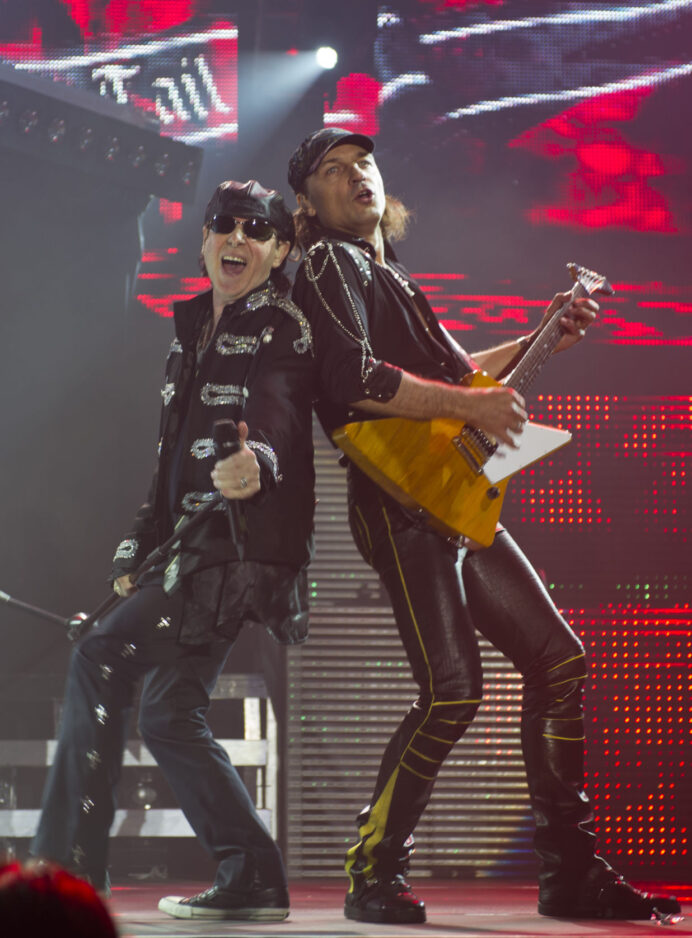
Members of German rock band the Scorpions, singer Klaus Meine and guitarist Matthias Jabs, perform in Leipzig, Germany, in 2010.
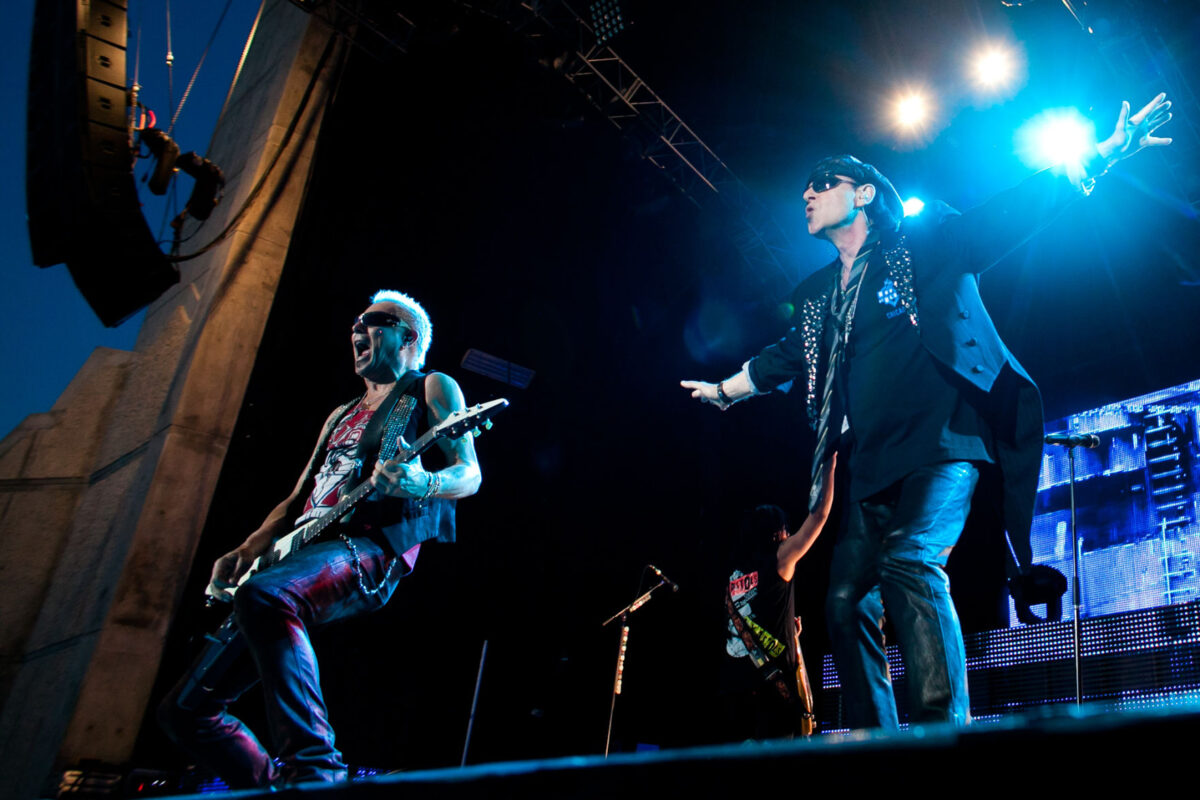
Rudolph Schenker, left, and Klaus Meine perform with the Scorpions at USANA Amphitheatre in West Valley City on June 11, 2012.
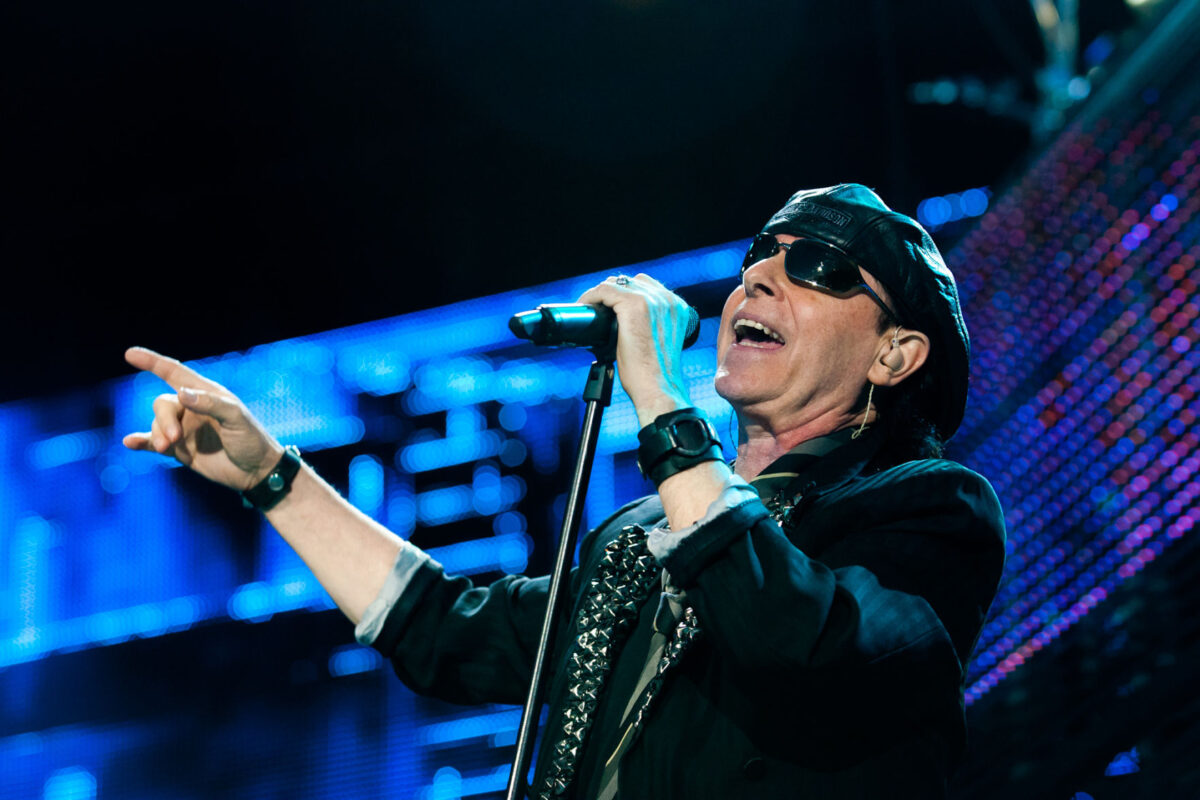
Klaus Meine performs with the Scorpions at USANA Amphitheatre in West Valley City on June 11, 2012.

Matthias Jabs performs with the Scorpions at USANA Amphitheatre in West Valley City on June 11, 2012.
Talking with Scorpions rhythm guitarist and co-founder Rudolf Schenker is an exercise unto itself.
That’s because Schenker is naturally so animated and enthusiastic that you can’t help but get completely fired up just talking with him. His enthusiasm is so contagious that at the end of our recent chat to discuss the band’s now current five-show mini-residency at The Joint inside the Hard Rock Hotel and Casino in Las Vegas, I almost felt like I needed to drop and give him 20.
The Scorpions — which also include Schenker’s long-time bandmates Klaus Meine (vocals) and Matthias Jabs (lead guitar), as well as Pawel Maciwoda (bass) and Motorhead’s Mikkey Dee (currently sitting in on drums for James Kottak) — opened their “Blacked Out in Vegas” stint at The Joint with shows on Friday and Saturday. The residency continues this week with concerts on Wednesday, Friday and Saturday.
Like sands through an hourglass, opportunities to catch the Scorpions in concert are steadily diminishing. The band has already passed through Salt Lake City twice on its announced farewell tour (the last time in 2012), and is only playing 16 select U.S. dates on its current 50th Anniversary tour.
The band may or may not ever make it back to Salt Lake — so catching up with Schenker and Co. for their extended Vegas visit was too good an opportunity to pass up.
As Schenker told me during our conversation, “We wanted to leave, but nobody let us!”
Here’s our conversation, edited for clarity:
DOUG FOX: It’s a pleasure to talk with you again today, where am I reaching you — are you at home in Germany?
RUDOLF SCHENKER: Yes, I’m in the studio at the moment.
FOX: I know you’re getting ready to come to the United States again for a run of shows, and in particular I’m checking with you in regards to your five-show residency at the Hard Rock in Las Vegas.
SCHENKER: Exactly, yes, we’re very much looking forward to that.
FOX: How did the shows come about?
SCHENKER: We’ve had this offer a few times already, but we weren’t ready because we had other dates to do. So in this situation, being our 50-year anniversary tour, and doing the United States for the second time, the second round for some other markets which we didn’t do in 2015, it was a great possibility for us to say that, OK, this time we can do it.
FOX: How are you approaching the shows? Are you approaching them as something different or will they be similar to the shows you’re doing on tour right now?
SCHENKER: In the moment, I don’t know what will be the technical situation that we can play because the place is a little bit smaller than our original tours in places like the Barclays (Center) in New York or the festivals or the big places. Here we have to make a different setup and we spoke already with our production manager, and we will try to do things quite a bit different. And we’re also recording the whole show. Two nights we will record the shows to bring them out next year on Blu-ray. Yeah, of course, we want to do also maybe every show a little bit different in some wise.
FOX: Yes I was going to ask you about that, too. Good. Is there any chance we’ll be hearing you sing “Hey You”? (laughs)
SCHENKER: I’ll tell you one thing, I like the song.
FOX: I love the song!
SCHENKER: Yeah, but the lyrics I don’t like so much. They’re a little bit like, (with exaggerated voice) “Hey you, I’m in love with you!” You know, it’s a little bit teeny (bopper) like. I’m a little bit out of the teeny (bopper) years. Maybe we have to look for a different lyric to make the song again sooner or later, I don’t know.
FOX: I love that song, it’s fantastic, but you’re right it just shows the growth you’ve had over the years. That’s been a long time ago.
SCHENKER: Exactly, exactly, ’78 or ’79.
FOX: I know the normal shows that you do, typically you go to a city and all the people in that area go to the show — but this set of shows are kind of like what I call a destination event show, where I imagine there will be people traveling from all over the country just for these shows because they’re in Las Vegas and it’s a special set of circumstances. When you’re on stage, do you notice a different sense of energy or excitement from the crowd — a different kind of buzz when you’re in situations like that or does it seem like a typical show to you?
SCHENKER: No, it’s a kind of family show. In fact, you’ll see all these faces you remember from Russia, from the United States, from France, from whatever. You know, it’s people that want to go to Las Vegas for a long time but maybe they’ve said, “No, I’ll go to, let’s say, the beach” and now they have a reason to say, “Oh, Las Vegas and the Scorpions, that would be fantastic!” In this case, I have already, I heard a lot of people who are writing, “Oh, yeah, I’m living in Paris and I’m looking forward to going to Las Vegas!” So it may be a very interesting thing, an international audience and also, of course, Americans, coming from different places like New York or Los Angeles or whatever.
FOX: Right. I was just in Las Vegas last weekend and all I could think about was when I was coming again in May to see the show.
SCHENKER: (Laughs) Hey, maybe you rehearsed already! Now it will be, right?
FOX: (Laughs) Yeah, I’ve already got it in my mind because we’re traveling down with friends and as soon as these shows were announced, we were, like, “Hey, we don’t know how many more times we can see the Scorpions, we have got to go to this one.”
SCHENKER: Exactly. There you go. If you’ve seen now, when we did Hellfest, which is on our (“Return to Forever”) DVD tour edition, it was the last time I saw Lemmy from Motorhead because they were celebrating last year the 40 years and we the 50 years. And we were congratulating each other. “Hey, Lemmy, hello and congratulations for 40 years of rock ‘n’ roll!” And he said, “Yeah, Rudolf, congratulations for the Scorpions for 50 years!” So it was a great meeting and Lemmy was already a little bit weak on his health situation, but he still was rocking and he always had this kind of humor. I think Lemmy and also Keith Richards, these guys are the best of rock ‘n’ roll.
FOX: Well you guys are right behind them.
SCHENKER: Yeah, yeah, that’s right. You know, we try to connect both together, without losing the life, and still rocking.
FOX: Right, not many people can be around 50 years and still rocking like you guys have.
SCHENKER: Especially coming from Germany. You know, we never thought, at least when I was starting, that my dream would come true.
FOX: Can I just say that I think the best decision that you guys have ever made was to do away with all this talk about retirement.
SCHENKER: Exactly! I’ll tell you one thing, we were really serious about that. We didn’t know at that time, first off, we had a very good album called “A Sting in the Tail,” which was really great work from our producers — two Scorpions fans who brought us back to the roots — and also with a twist of a little bit new kind of touch, which touched also the young generation. Because the situation came that we had 80 percent (fans) on Facebook between 18 and 28 years old, which is fantastic, especially when you have them in front of the stage. They kicked our ass. We enjoyed it very much and they gave us really, a saying of what our music means to them — and also, of course, our old fans. And then we said, “All right, as long as we can really kick ass on stage, we will do it for the next years.” I don’t know how long, but hopefully — we knock on wood, that health (will remain) with all of us — as long as possible.
FOX: I knew that you guys were serious about doing this because I interviewed Matthias by phone two times when you came to Salt Lake City on those tours, and I could tell that it didn’t seem like just a promotional gimmick or anything. But I tell you, it’s like you mentioned. When you see those shows, my thought was, “These guys cannot quit right now, they are just playing too great.” I mean the shows are fantastic, so you are right on the money with that.
SCHENKER: It’s so much fun still. If you have made it to 50 years and you were surfing in the ’80s on top of the wave, party time every night and kicking ass and stuff like this — and then you’re surviving it through the ’90s, you appreciate it much more now and we really, as a band, are reveling every day we’re onstage, We appreciate it, we are smiling and we are happy that we can live this life.
FOX: And you know the fans feel the same — because a lot of the bands kind of give up along the way. But to have a band as vibrant as you guys and still creating new music and everything, as a fan after all this time you really appreciate that, just like you said.
SCHENKER: Yeah, that’s fantastic, especially with all the things around the world and also Americans especially. It’s like really fantastic. You’re coming to the city, you feel like every time you’re coming to any city — Las Vegas, Los Angeles, New York, that you are coming home. That’s fantastic. Like we have the song called “Coming Home.” It’s great.
FOX: Yes, it’s also a great opener to a concert, I must say.
SCHENKER: Yeah, it’s like (at) the moment we have a different one but maybe we’ll change it a little bit for the Las Vegas shows so we have a different kind of approach for the audience.
FOX: Even when you talked about retirement there for a little, like you were just mentioning, you still had new projects coming out and everything — what is it that kind of drives you to keep making new music at this point in your career?
SCHENKER: I tell you one thing, when we announced the farewell tour, the last show was (to be) in Munich in 2012 in December. I was booking already my way around the world for vacation and then in 2013 in January, we got this phone call from “MTV Unplugged” asking us, “Hey, guys, we want you to make ‘MTV unplugged.’ ” We said, “OK, but right now we are on our way for vacation.” They said, “OK, we’ll do anything, let us know what you want,” and we said OK. In the ’80s we were always looking to do this “MTV Unplugged” because we got the offer, but we were already booked. So this time we had the chance ultimately, the two guys, the two Swedish producers, which should be a great one. So we said, “OK, when we do the ‘MTV Unplugged,’ we want to do it open air, we want to do it in the highest mount in Athens, not in the studio like most ‘MTV Unplugged’ things, and in front of 3,500 people.” MTV said yes and we started working on it. So that was the point. And then we promised our fans a final album when we announced our farewell tour and we said, “OK, there’s a lot of stuff around.” But when we finished the ‘MTV Unplugged’ thing, which was very successful, I was looking for some tapes for the situation of doing this (final) album, and I found, instead of the tapes I was looking for, I found this book that my mother did when I started the Scorpions. And my mother and my father gave me a lot of money to buy equipment. My mother said that you can depreciate the whole money your father gave, but you will have to pay the house back. So she did the book and in the book was written half part for the pocket money for the guys — and half part for my father. And this book starts in September 1965. So when I came down to the studio and I told the manager, I also told the guys about it. I said, “She left the book here.” And the manager immediately said, “Hey, guys — 50 years! You have to celebrate that!” In this case, we said, “Yes, that’s a good idea maybe, but I don’t know, we did already a farewell tour.” He said, “OK, I will call the promoters around the world and ask them,” and every promoter was very into it, and so in this situation we came up into the position to make this farewell tour. And then I said, “Look, guys, we can’t go with this (leftover cuts) album on this 50-year anniversary and that was the reason we went to writing new stuff connected with the leftover stuff from the old days (together with the new stuff). And that was a great thing to do for this 50-year anniversary tour. This (“Return to Forever”) Tour Edition is something very interesting, too. It has all the 19 songs we worked on for the 50-year anniversary … including two DVDs, Hellfast in France, a festival, and also the Barclays arena last year in New York. So in this case we wanted to leave, but nobody let us! So in this case we will wait for something else to kick our ass again because this tour will be finished on the end of 2016 — and then, of course, we’ll take a half year, at least, break. And if something else comes around the corner that is very interesting, why not?
FOX: I totally agree, actually. And when you mention “Return to Forever” and how it kind of ties in both with the present and the past, it reminds me of the first time I interviewed you back in 1999 on the “Eye to Eye” tour in your dressing room before the show and you made a comment then that I found very interesting that I’ve remembered all these years. You said that musicians often want to write songs that are more and more complicated, but you said that your philosophy was to try and write simple riffs. You said writing simple riffs is really hard, but those are the things that really stick in people’s memory.
SCHENKER: Exactly.
FOX: Do you believe the same today, that it’s still the same after all these years?
SCHENKER: Of course, of course. I mean it’s simple riffs. It sounds very easy to do, but to bring the riff is the epic tease … like the one that was in the film that was with Jimmy Page and The Edge and the other guy, what was the name of the other guy? … (Makes sound of riff.) You know, a space riff. The Edge and Jimmy Page and another guitar player. It’s three different guitar players, doing a film.
FOX: Oh, yeah. Oh my goodness. I should remember.
SCHENKER: His (ex-wife) and he play together.
FOX: Yes, I know exactly what you’re talking about.
SCHENKER: Anyway, this riff sounds so easy, but it’s so effective. It’s so catchy. And that’s what it’s all about. That’s what The Stones did, it’s what The Beatles did, and especially what Jimmy Page did. That is what it’s all about. It has few notes, but it’s so effective, that people immediately when they hear it … AC/DC is the same thing … when you hear the first two notes, you know already — “Yeah, it’s great!” So that’s what it is.
FOX: Jack White!
SCHENKER: Jack White! Yeah, you’re right! (laughs)
FOX: I knew it would come to me, it just took a second. (laughs)So tell me, how in the world is a band with such worldwide success like the Scorpions not in the Rock ‘n’ Roll Hall of Fame?
SCHENKER: Oh, that’s a good question. We have to wait. We still have time. We are still in good shape. Whatever, you know? We have a lot of things already, the last bit, which is missing, but sooner or later you never know. Don’t rush things, you know! (laughs) The best is yet to come, let’s play it this way.
FOX: That will certainly be a great day. So you, Klaus and Matthias have been the core of the Scorpions, together for like 37 years now, and obviously you’re great bandmates and have created music that has rocked multiple generations around the world. I know you guys are so busy all the time, but do you ever have the opportunity to sit back in the quiet, like out of the spotlight and just shake your head at everything you’ve accomplished together? You guys seem like really good friends.
SCHENKER: I mean look at it this way, when you’re on the road, we have so many concerts every year. So in this case you have to be good friends to really go through it without any damages. So in this case that’s a very important point. When I first started thinking about making a band like the Scorpions, I said to myself, “I want to have good musicians, but also people I can be in a friendship with.” And this is at the end, the red line which keeps the Scorpions moving because this band is about music, friendship and building bridges.