
From Utah to Disney: Filmmakers discuss growing up in Utah, behind the scenes of ‘Moana’
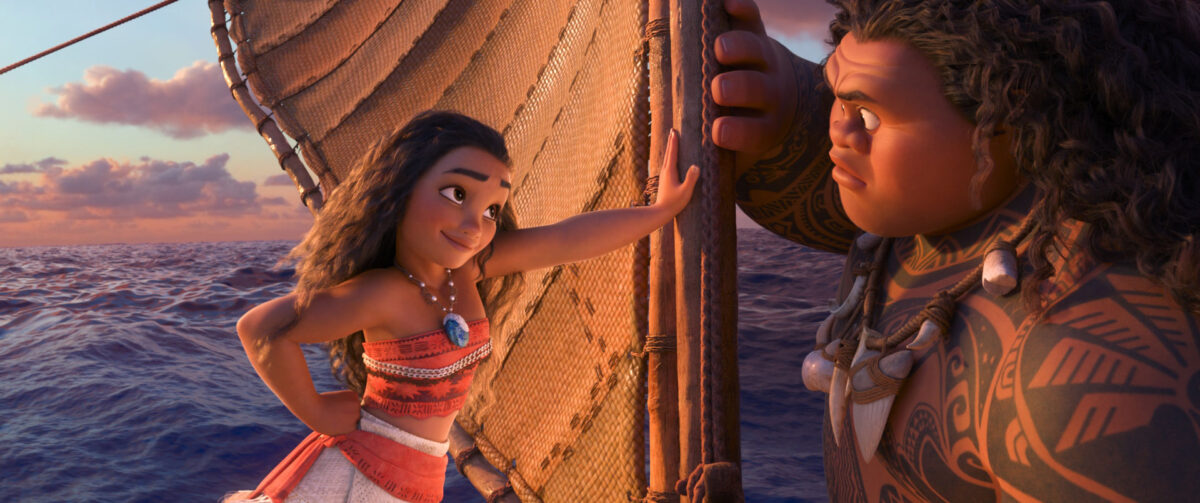
Auli?i Cravalho provides the voice of Moana in "Moana," along with Dwayne Johnson, who plays Maui.
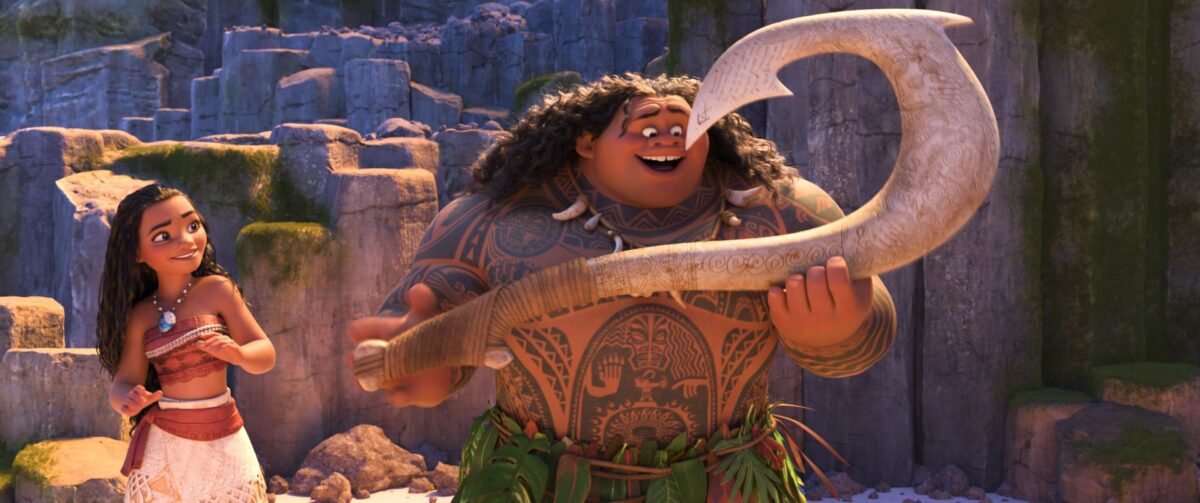
Moana and Maui are pictured in "Moana."
With universities like Brigham Young University, Utah Valley University and the University of Utah, the state of Utah in recent years has shipped many artists to Burbank, Calif., to work at Walt Disney Studios.
Ed Catmull, president of Disney and Pixar animation, even invented some of the technology that would eventually become Pixar while studying in Utah.
“He helped develop polygonal modeling at the University of Utah,” said David Derrick, story artist on “Moana.” Derrick also studied at Utah, as well as BYU. He grew up in Farmington.
Derrick was in Utah last week on a press tour with the co-head of animation of “Moana,” Hyrum Osmond, who — as his name might suggest — also has local roots as well.
“I was born and raised in Utah,” Osmond said. “My dad is the oldest of the Osmonds — George.”
Osmond also worked on “Frozen,” as a supervising animator, and he managed to work in a familial reference as a secret tribute during one of the dance numbers that involved the character Hans.
“As kids we kind of would mimic the Osmonds — the lifting of the arms, the closing of the eyes, and the belting out that note,” Osmond said. “And so I kind of put that into Hans at a moment in ‘Frozen.’ We didn’t do that in ‘Moana,’ but what we did do, was when the animators would animate a shot with singing, I’d let them know that Donny and Marie would be proud.”
Like “Frozen,” “Moana” is also a musical, with a score composed by another Tony Award-winning team. “Hamilton” composer Lin-Manuel Miranda wrote songs, along with Opetaia Foa’i of the group Te Vaka and Mark Mancina.
“We were really attracted to (Mancina) on ‘Moana’ because of his work on ‘Lion King,’ ” Derrick said. “He was able to take Elton John and merge him with the cultural sounds of Africa in a really beautiful way. And so that’s really what Mark did in an amazing way. He took Lin-Manuel Miranda’s lyrics and his melodies and then merged them with Opetaia Foa’i.”
The hiring of Miranda demonstrates impressive creative instincts for the crew, because at the time, “Hamilton” hadn’t even come out yet.
“Initially Lin would be in the office now and then for table reads and for early screenings, but obviously ‘Hamilton’ kind of became popular,” Derrick said. “When he first started I was like, ‘Yeah, it’s the guy who did “In the Heights!” That’s great! That’s cool!’ “
Disney is known for incorporating Broadway styles into its animated features, but just as “Hamilton” has an atypical Broadway score, Miranda’s songs for “Moana” represent a shift in style for Disney.
“A lot of times we didn’t know what was coming,” Osmond. “We just knew, ‘OK, Lin’s writing this piece for Maui. It might have kind of that rap flavor to it, but it’s coming.’ And we in animation are like, ‘Rap … rap? For (animation)?’ We didn’t know what to expect, but then it would come, and we were just like, ‘Wow!’ “
Plus, writing Disney songs during the peak of Miranda’s run as the title star of “Hamilton” came with perks for the animators.
“One cool thing, in storyboards I would storyboard out the sequence, and all the rough demos that I’d work to were the cast of Hamilton,” Derrick said. “So when I was storyboarding ‘How Far You’ll Go,’ I had (Phillipa Soo), her voice coming through.”
If “Moana” represents new territory for the studio in terms of musical style, it also has the influence of some of the most veteran Disney artists, including the film’s directors, John Musker and Ron Clements.
“I’m working today with the very people who inspired me to be an animator,” Osmond said. ” ‘Aladdin’ was so influential to me growing up. So to work with Eric Goldberg, who animated the genie, is a dream come true.”
Derrick said that one thing that makes his work enjoyable is the way that veteran and newcomer alike can have a voice to make the best film possible.
“It’s the most egalitarian studio I’ve ever worked at,” he said. “You’re in a room, and you’ll have very senior people, you’ll even have John Lasseter in the room, and it’s not about who has the idea, it’s about what the idea is, and the idea can come from anyone.”