
‘Dunkirk’ stands out among WWII films in portraying the terror of war
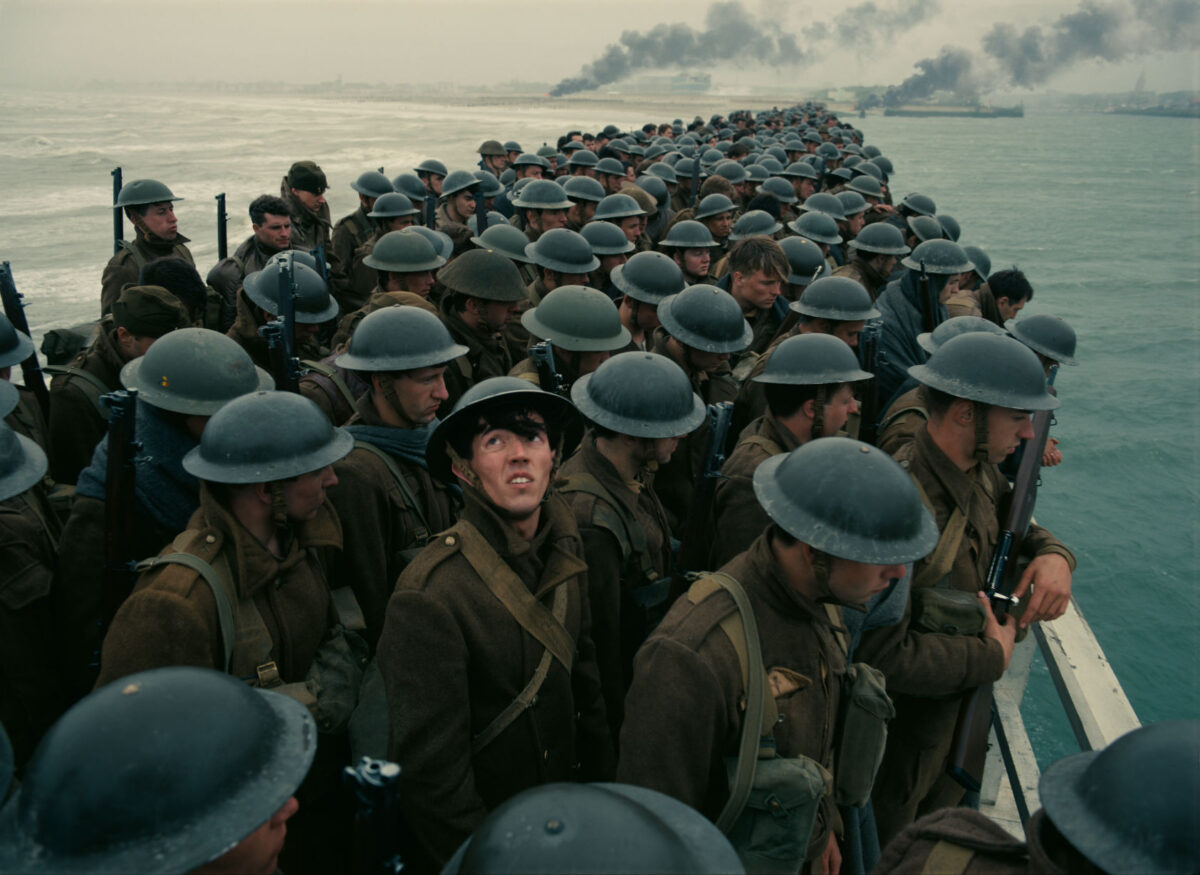
Stranded soldiers nervously look to the skies in “Dunkirk.”
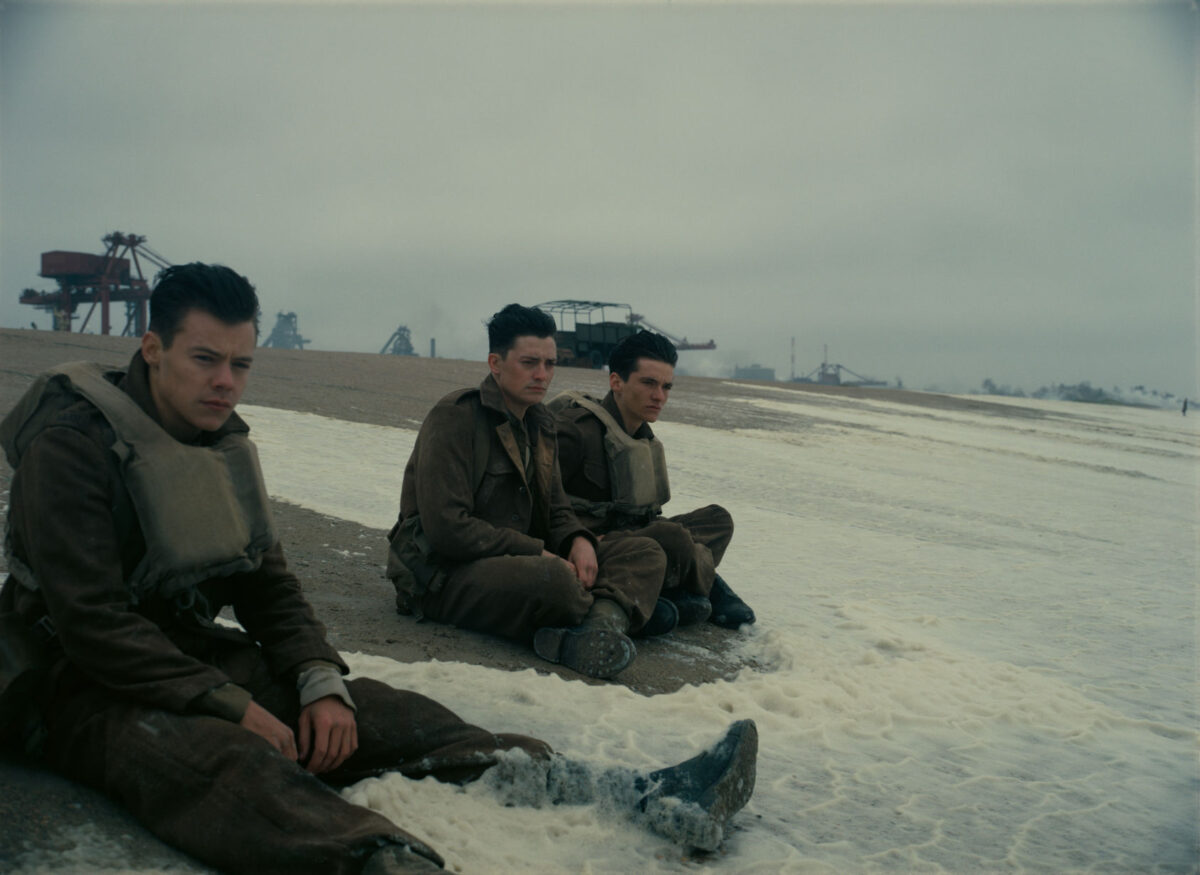
(From left) Harry Styles, Aneurin Barnard and Fionn Whitehead star in "Dunkirk."
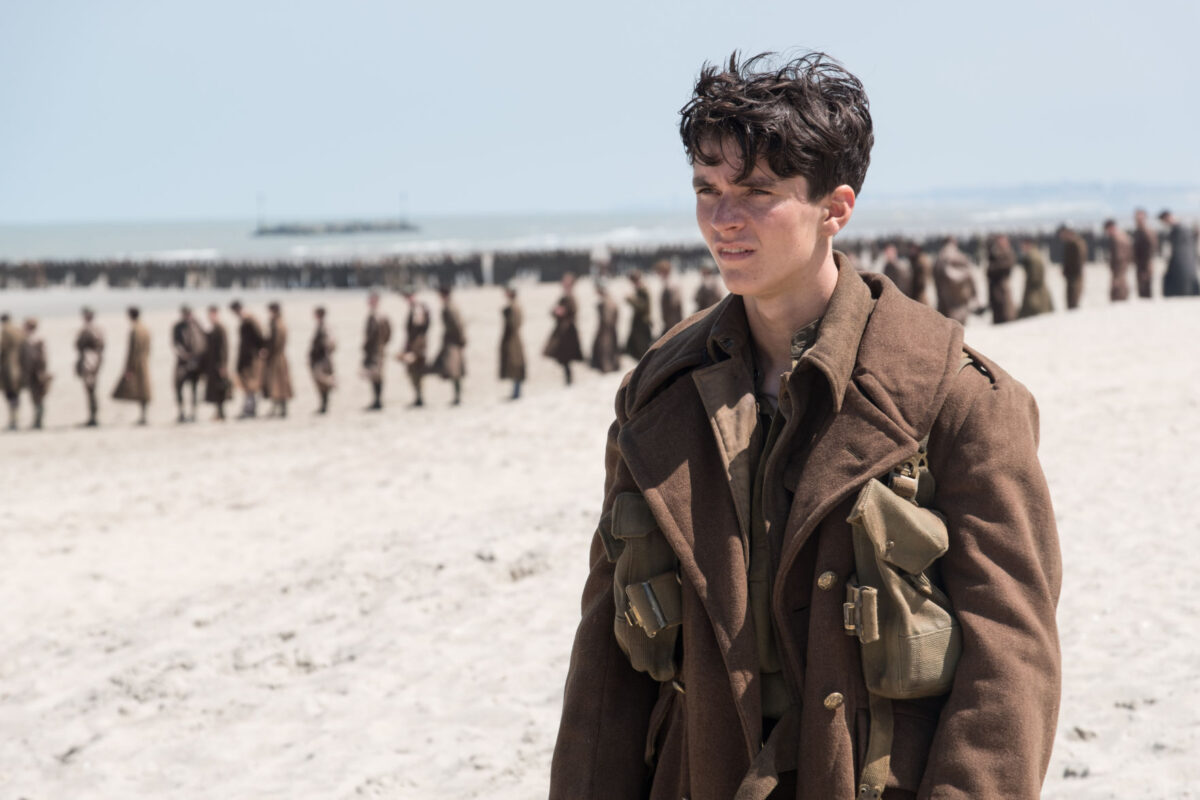
Fionn Whitehead stars in “Dunkirk.”
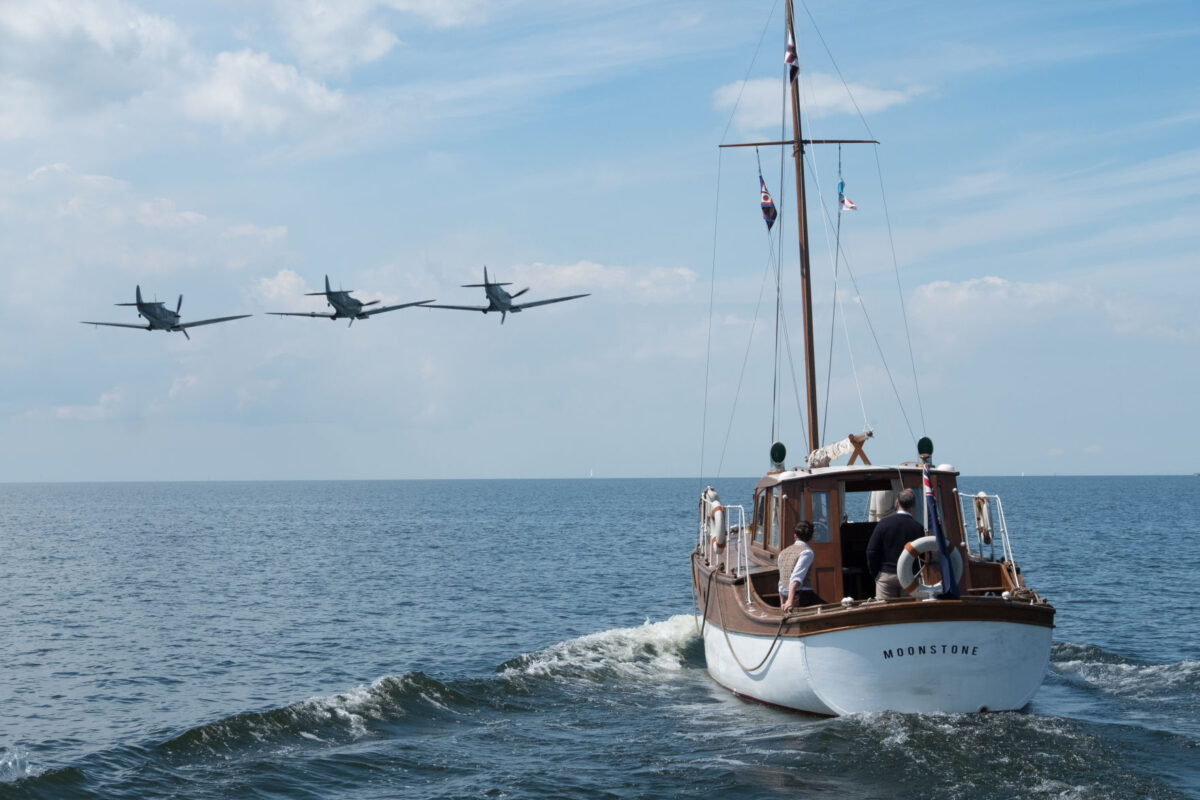
Danger is in the skies and the seas in "Dunkirk."
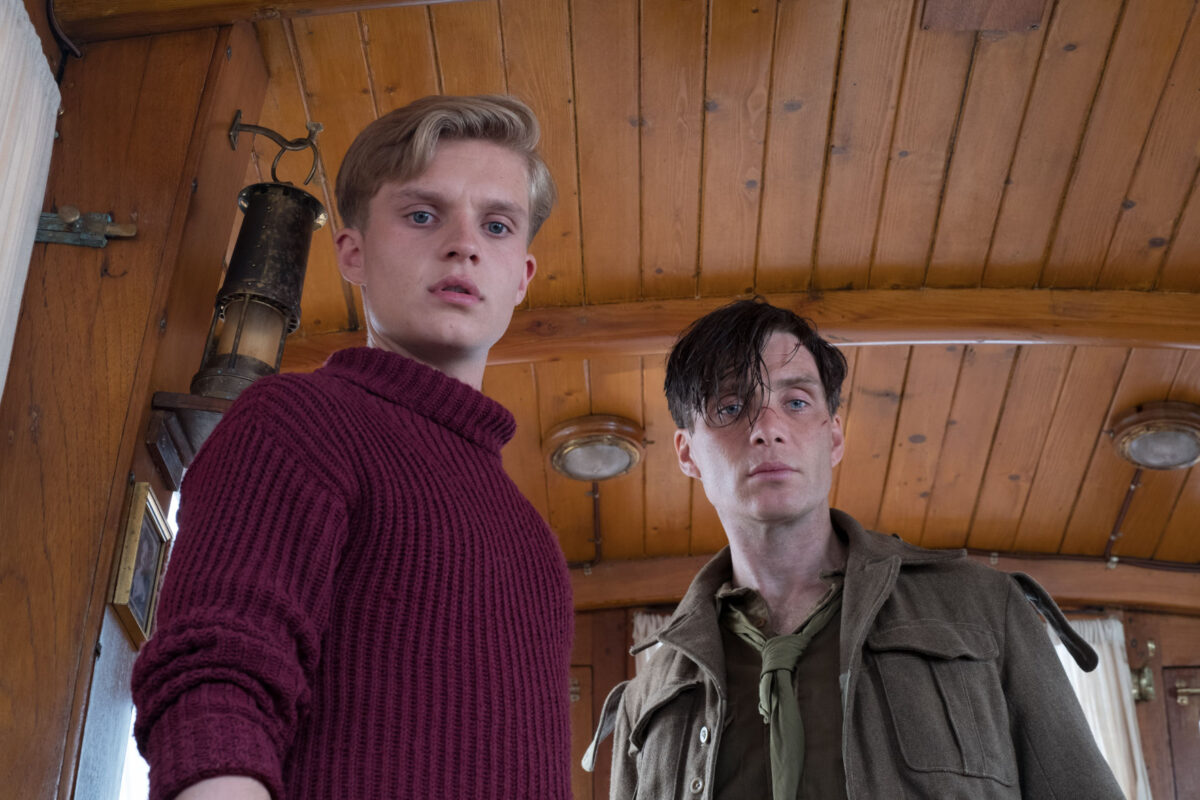
Tom Glynn-Carney (left) and Cillian Murphy star in "Dunkirk."
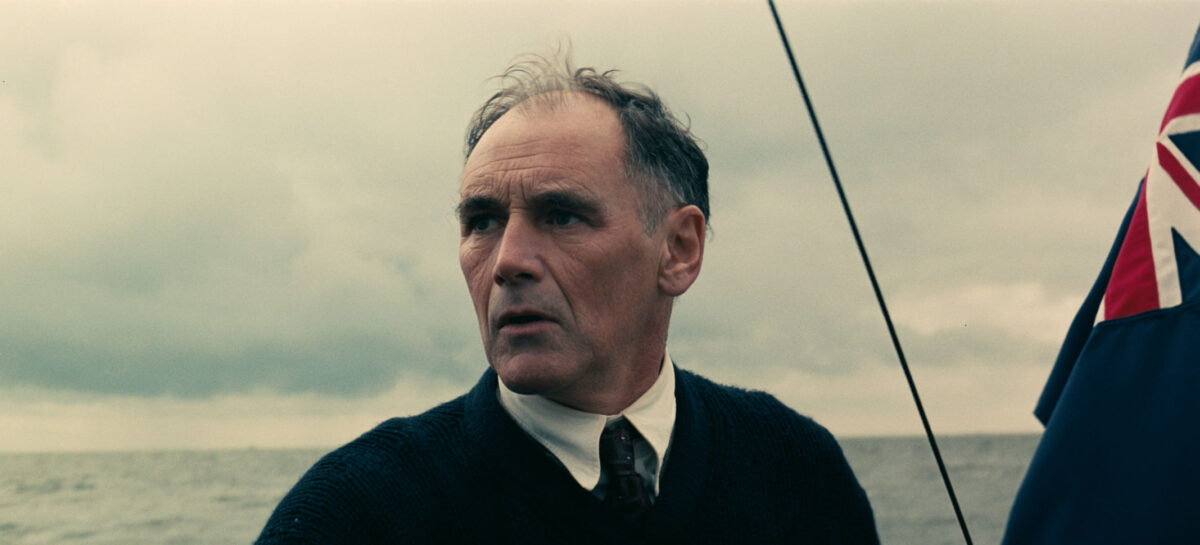
Mark Rylance stars in "Dunkirk."
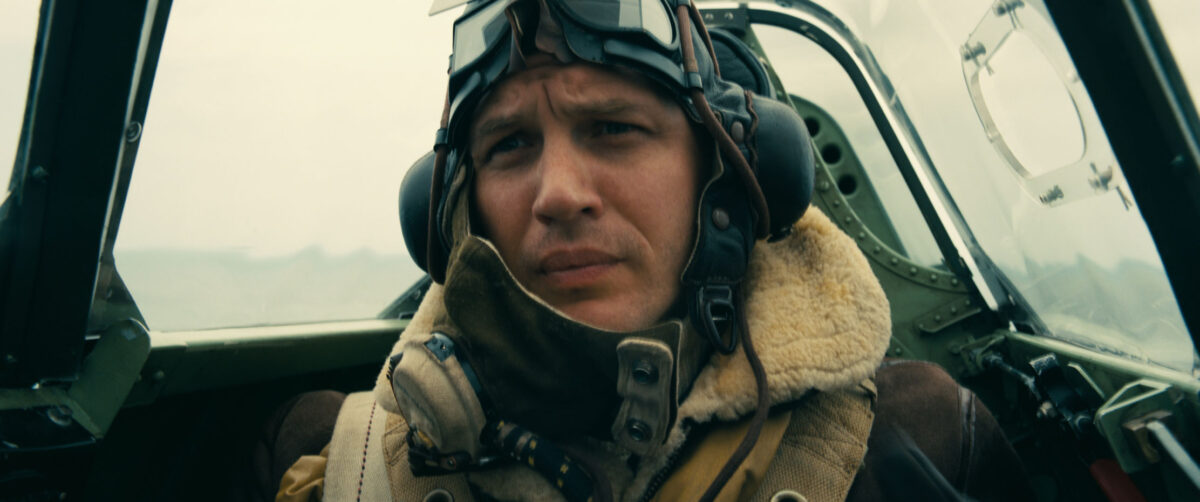
Tom Hardy stars in "Dunkirk."
In between moments of intense, impressively orchestrated cinematic spectacle, Christopher Nolan’s latest blockbuster “Dunkirk” made me think about the morality of telling war stories.
The storytelling subgenre is one that must go back eons. As long as people have been warring, we’ve been war-storytelling. But the victors always seem to tell the happiest ones.
Not “happiest” per se, because, of course, the staples of a war story are its violence and destruction. But storytelling is always subjective, and victors often tend to tell the kinds of war stories that make their listeners cheer, celebrate or swell with pride.
Sometimes the war stories we tell are so good that we sew them right into the cultural fabric forever, marking military triumphs with holidays, to be celebrated every year from then on, probably with explosive fireworks that ritualistically recreate the violence being commemorated, swapping its terror with flashy, colorful, fun distance.
I am, personally and politically, anti-war, and I find questionable action thrillers that are based on war stories, because I believe that a crowd who just said “Rah, rah, rah” to a war movie might be less likely to mind when their government intentionally chooses to start or join another real one.
Trey Parker and Matt Stone satirized both this kind of war movie (and war itself) in “Team America: World Police,” but lots of filmmakers do it straightforwardly. Michael Bay’s movies (from “Pearl Harbor” to “Transformers”) fetishize military action and honor military efforts through their cinematic constructions.
(It’s no wonder that Bay’s films are frequently subsidized by the United States military itself, whose representatives let him use their equipment, because they see to what subjective point of view the equipment is used.)
Spielberg’s “Saving Private Ryan” is another pro-war war film, despite the visceral horror it recreates. It’s no coincidence that most anti-war films in American cinema are about Vietnam, a war with a less-easily glowing narrative, from the American perspective.
Other American anti-war films, such as Matt Reeves’ brilliant recent “The Planet of the Apes” films, use fantasy and metaphor to argue against war.
But although I am anti-war, I am not anti-“war film,” because I believe cinema can do a great job exploring and explaining profound human experiences. And “Dunkirk,” despite coming from the filmmaker behind “The Dark Knight” and “Inception,” is an action thriller that boasts some of cinema’s best action thrills ever, but doesn’t ever elevate them above the complex human beings on the ground.
It doesn’t relish in war itself, it mines it for a story of human compassion and bravery.
At first glance, it’s difficult to know where to put “Dunkirk” in relation to other war movies. It tells a chapter of British history in which hundreds of thousands of soldiers were stranded on a beach, surrounded on all sides by enemy forces, and individual British civilians braved the war zone to try to rescue them.
It’s a World War II film, so we should expect (and do get) some Allied Forces-brand reverence. But it’s a British World War II film, which gives it a markedly more uncertain and somber perspective than its American counterparts.
The film’s reverence is also laser-focused, not on the war broadly, but on the participants, both military and civilian. It’s about how human beings have found courage in unbelievably scary circumstances. The heroes of this film have absolutely no swagger as they put themselves in harm’s way. All they really want, actually, is to leave, to go home. They’re terrified.
And the movie — brilliantly — makes us terrified too. This is one of the scariest war films I can recall seeing, and the terror goes on for basically the entire running length. Nolan doesn’t pepper a romantic comedy script with climaxes of fast, fun, cathartic violence, blasting, say Aerosmith, as guns blaze in slow motion.
And speaking of music, Hans Zimmer’s score in “Dunkirk” is just as unrelenting (and almost as assaulting) as the violence onscreen, but it works. It’s also cranked up, even making dialogue sometimes hard to hear (something we also saw in “Interstellar”), but it takes the focus out of the plot and makes the experience more visceral. Musically, the soundtrack is what one would hear if the score to “Inception” had a nightmare.
There’s something different about “Dunkirk,” especially in the way it explores heroism, and especially for a story about World War II. The film doesn’t turn the participants of war into pageant archetypes, but depicts more of their full human selves — worthy of honor, flaws and all, but also without being overly concerned with flaws.
The movie’s optimistic thesis statement is embodied by Mark Rylance’s Mr. Dawson, a civilian father who takes his sons to try to be of help, whose unflinching dignity and bravery represent the polar opposite of smugness (I mean, it’s Mark Rylance).
I will be thinking about “Dunkirk” for a long time, and revisiting it for years to come. It’s a cinematic achievement that finds a fresh place in the pantheon of Hollywood war stories, and it honors human achievement without losing sight of its moral perils.
Director: Christopher Nolan
Starring: Fionn Whitehead, Mark Rylance, Tom Hardy, Kenneth Branagh, Harry Styles
Running time: 1 hour, 46 min.
Rating: PG-13 for intense war experience and some language
Locations: Opens Friday in theaters nationwide.