
‘Alien Worlds and Androids’ exhibit mixes fact, fiction at Leonardo
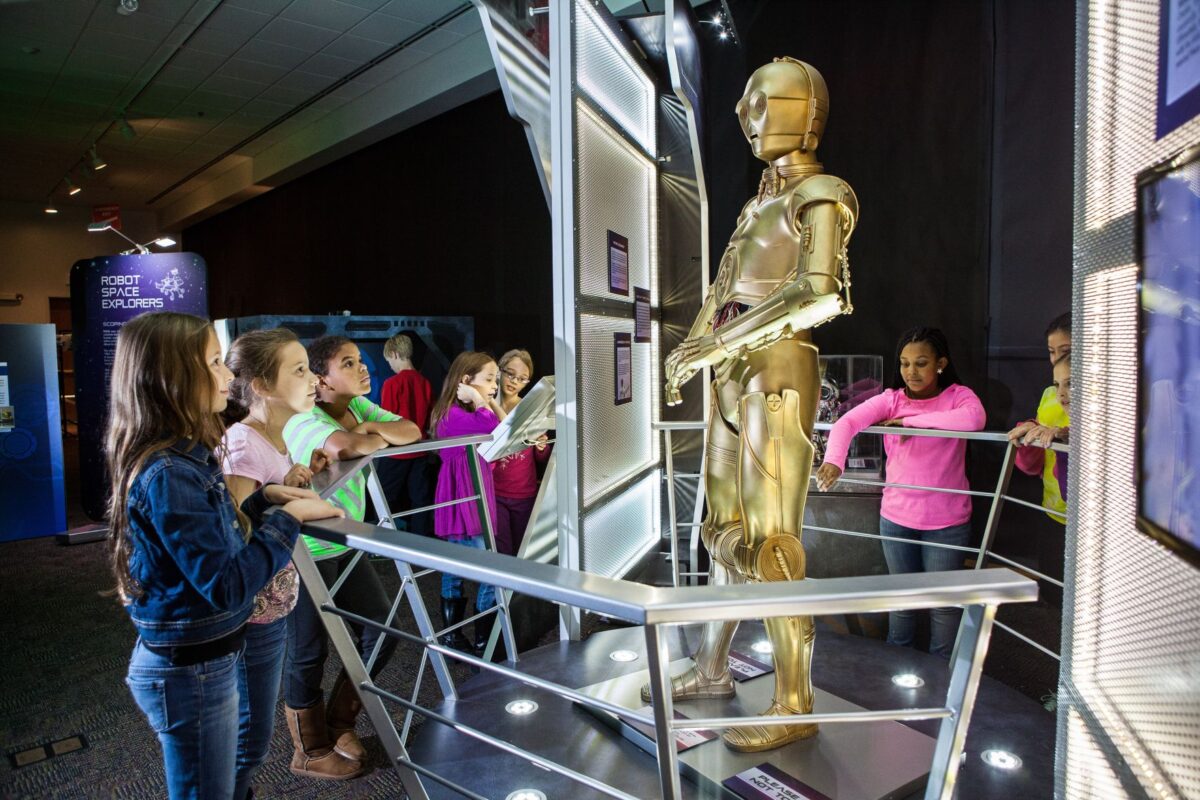
C-3PO is one of the characters on display at the “Alien Worlds and Androids” exhibit at the Leonardo in Salt Lake City.
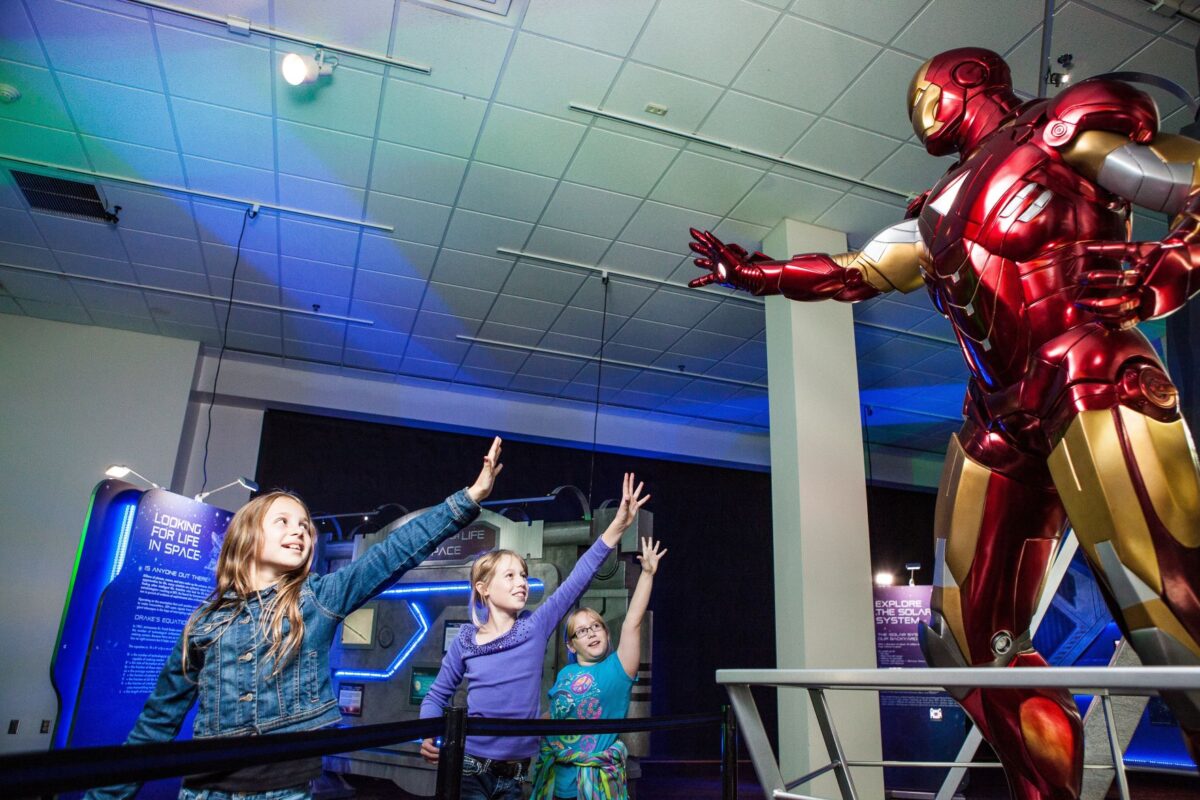
A replica of Iron Man is on display at the “Alien Worlds and Androids” exhibit at the Leonardo in Salt Lake City.
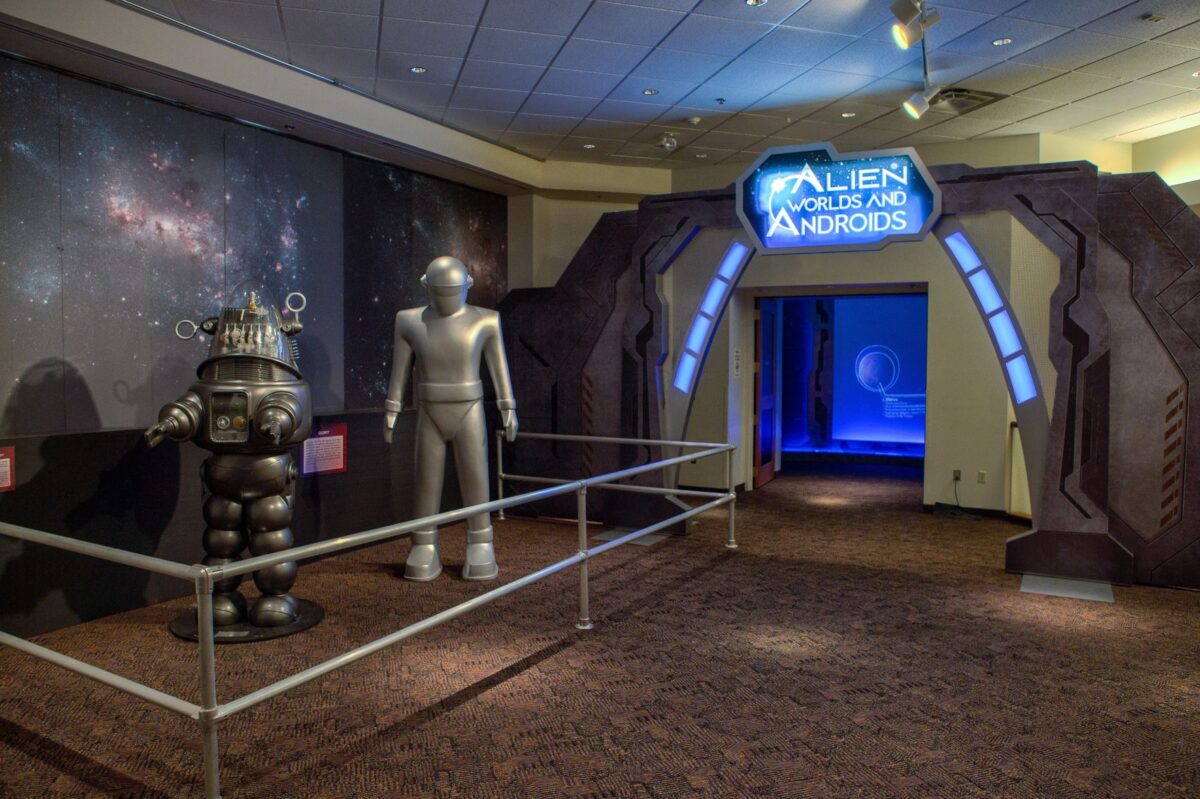
Replicas of bygone sci-fi robots are on display at the "Alien Worlds and Androids" exhibit at the Leonardo in Salt Lake City.

At the "Alien Worlds and Androids" exhibit at the Leonardo in Salt Lake City, children can learn about robotics at a hands-on station.
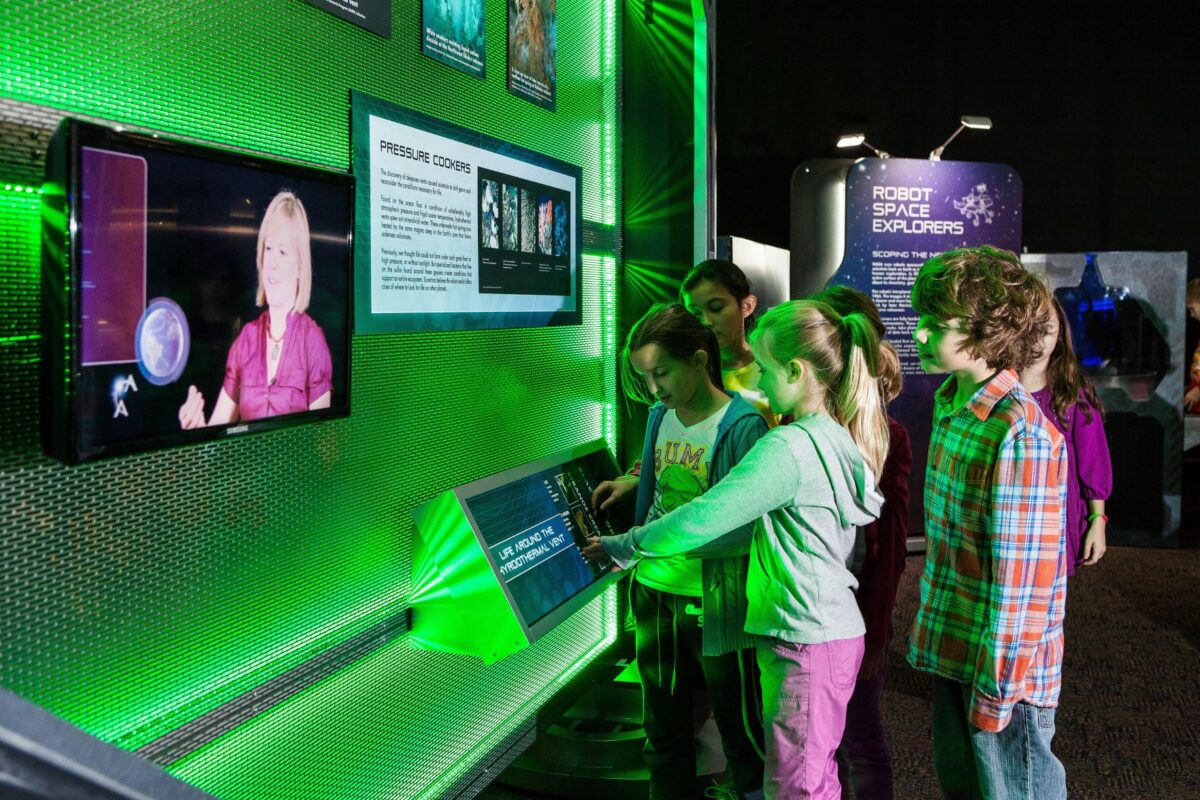
At the “Alien Worlds and Androids” exhibit at the Leonardo in Salt Lake City, patrons can learn about alien life in familiar places.
A new exhibit at the Leonardo museum in Salt Lake City is like a collision of science education and Comic Con. “Alien Worlds and Androids” is an intersection between pop culture and several fields of science.
“It’s kind of got everything,” said Marissa Day, exhibits director at the Leonardo. “So for people who are really interested in outer space and exploration, there’s a whole section about the potential for alien life, there’s a section about biology, there’s a really interesting section about robotics and the future of androids.”
The exhibit also features replicas from popular sci-fi and comic book films.
“We have a life-size C-3PO, R2-D2, a life-size Iron Man, so those have been a really big hit as well,” Day said. “It’s very cool, and R2-D2 is responsive, so as a visitor walks by, it activates, and so people are having a really fun time with that, too.”
The traveling exhibit was put together with input from NASA and the Jet Propulsion Laboratory.
“We were just super excited to not only have these really cool sci-fi characters, but also the content from NASA, which pairs really well with a lot of the science initiatives we have here at the Leonardo, and also our ‘Flight’ exhibit, which we opened in August,” Day said. “We always are looking for things that are interdisciplinary and give people really cool opportunities to try hands-on learning, or look at a topic in a way that maybe they haven’t looked at it before.”
One aspect of the exhibit focuses on how “aliens” can come from unexpected places.
“It kind of makes you think about it in a different way, that an alien being can be something from outer space that you see in a sci-fi movie, but there are also these creatures here on Earth that could technically be considered aliens,” Day said, “because it could be something like a microbe that lives in your body that is alien to who you are as an organism but is living within you, so that’s just an interesting way of looking at biology, and then those extremophile sea creatures that live in the sea, and probably look more like something out of a sci-fi movie than anything we can even imagine.”
“Extremophile” creatures are species that have evolved to survive in extreme conditions, where life is often unsustainable for most life forms, such as hydrothermal vents, where geothermally heated water springs close to the planet’s surface.
Topics heavy on scientific research can reach visitors that come in to the exhibit more focused on entertainment than learning.
“People come in for Iron Man and then they find themselves getting really interested by the electronics interactive that’s over by R2-D2,” Day said. “And they kind of seamlessly weave all these different topics together, and all of a sudden, maybe you’re interested in something that you didn’t even think you were before.”
Another part of the exhibit uses a hands-on touch screen to explain the Turing test, which scientists use to determine whether the being at the other end of a communication is human or artificial intelligence.
“We’re always thinking about what’s really cutting edge and what’s most interesting to scientists today, and androids and artificial intelligence are definitely one of those topics,” Day said. “And so to be able to introduce people to the Turing test and start to talk about topics like artificial intelligence is really exciting.”
That part of the exhibit is one of the many hands-on elements.
“The ‘Alien Worlds and Androids’ exhibit has some really cool, very impressive interactives, including an opportunity to try out, like, a robotic arm and see how that works, and different touch-screen interactives, where you can try out things and explore topics like the Turing test, and everything covering topics from coding to robotics to electronics, and give you a chance to get some hands-on opportunities to build and test out those kind of technologies,” Day said.
The impact of an exhibit like “Alien Worlds and Androids” may be to increase general curiosity in patrons, which is a general goal of the museum.
“For us it really goes back to our namesake, Leonardo da Vinci,” Day said. “(The museum) was inspired by his curiosity and the way that he looked at the world. He wanted to really understand everything around him to make his work better. And so if he was completing a painting about a mountain, he wanted to understand how the water vapor in the air changed the coloration of the mountains in the distance, and he really wanted to see how science could impact art and how the world around him worked.
“And he really very intensely studied that, and was very, very curious. And so basically everything we do here at the Leo is to help our visitors find those connections, seek out the things that they find particularly interesting, and then study them, become more and more curious about them, and use that curiosity to fuel discovery, just like Leonardo da Vinci did.”
ALIEN WORLDS AND ANDROIDS
Where: The Leonardo museum, 209 E. 500 South, Salt Lake City
When: Available until May 1 during regular museum operating hours, Sundays through Fridays, 10 a.m. to 5 p.m.; Thursdays, noon-10 p.m.
Tickets: $8.95-$12.95
Info: (801) 531-9800, theleonardo.org