
‘The Crucible’ tackles integrity and piety in a religious community
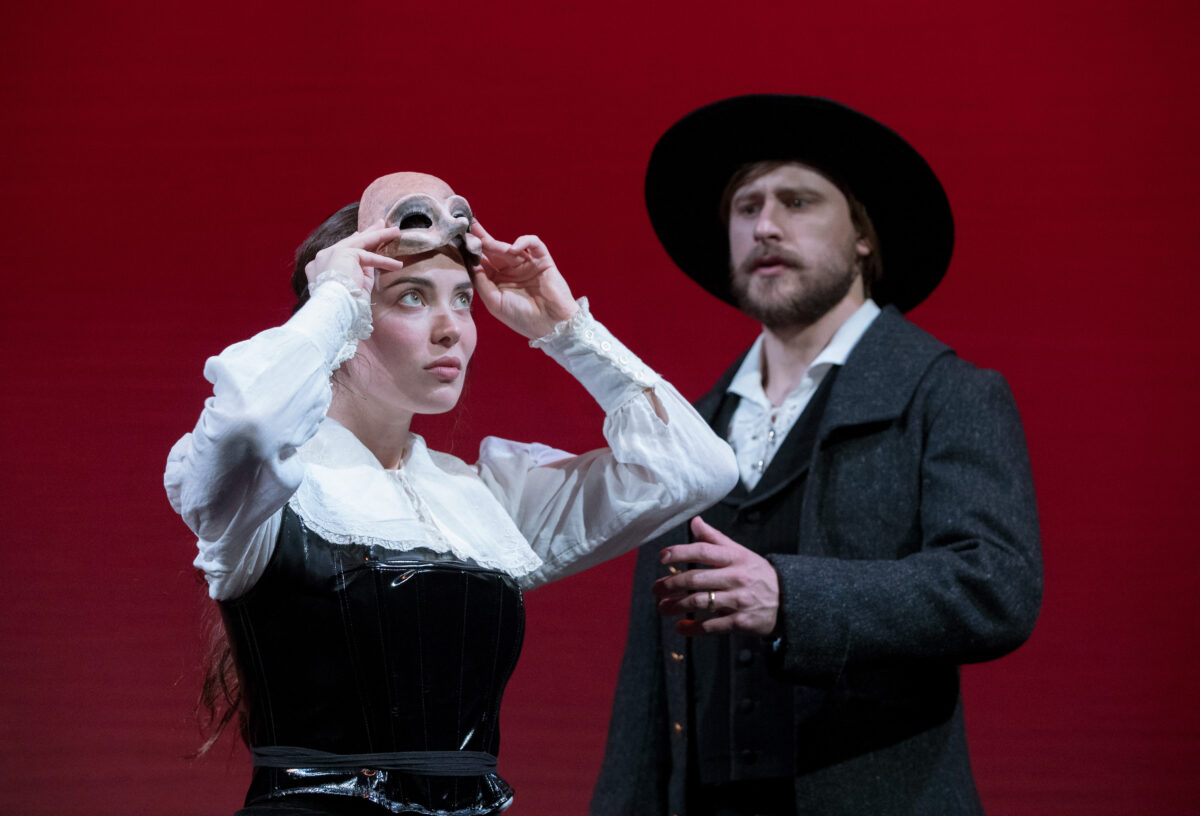
Brigham Young University's production of "The Crucible" will utilize masks.
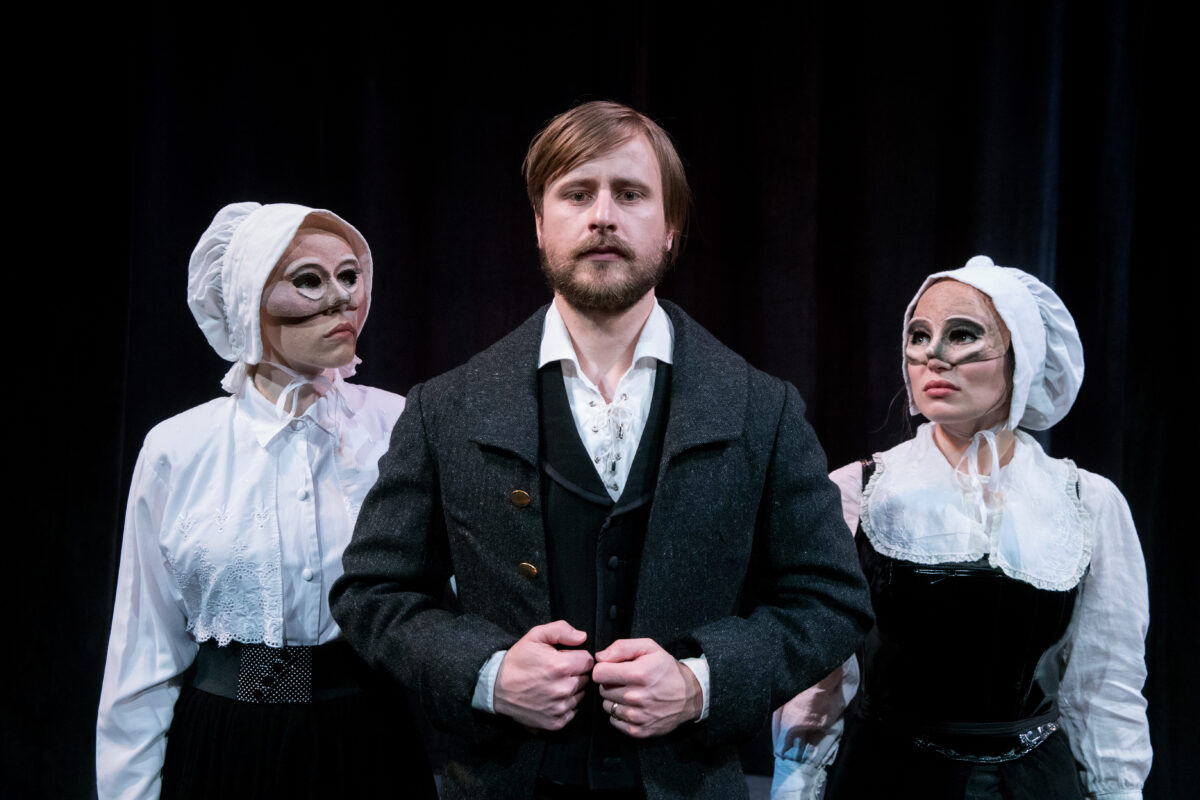
Brigham Young University’s production of “The Crucible” will utilize masks.
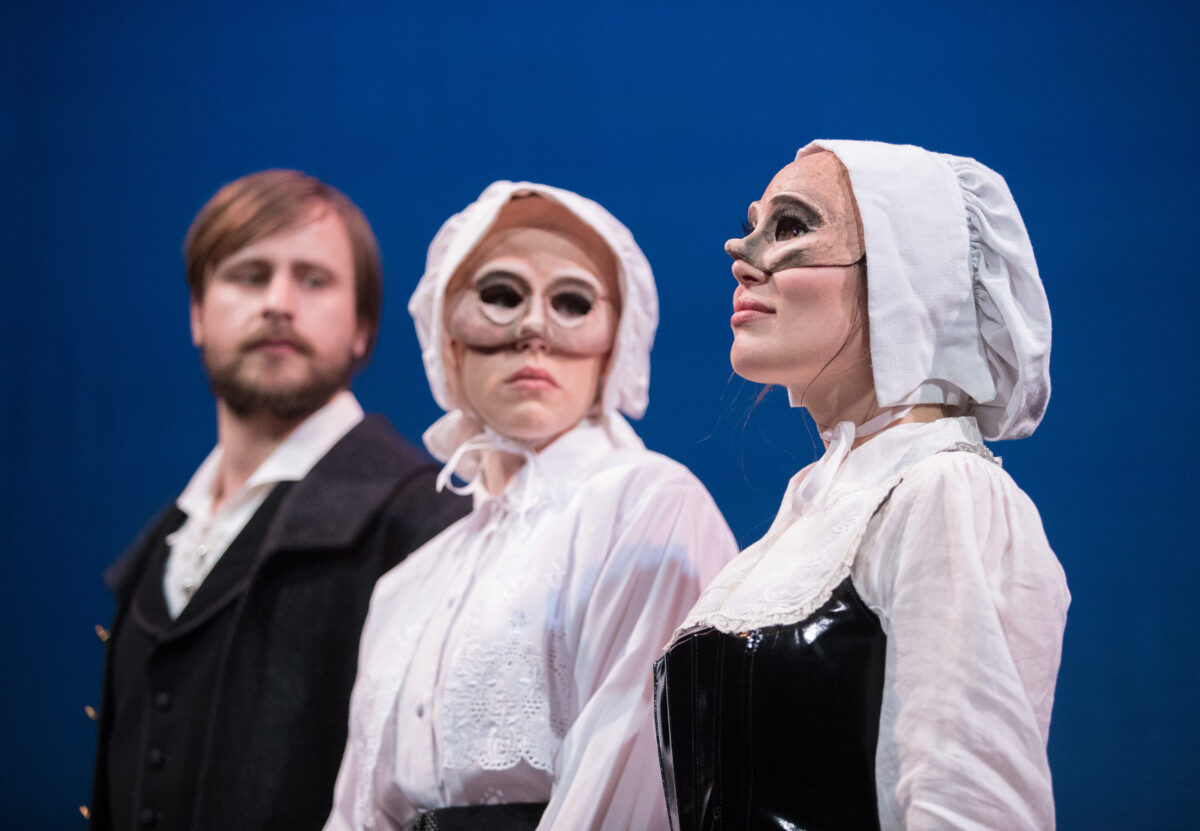
Brigham Young University's production of "The Crucible" will utilize masks.
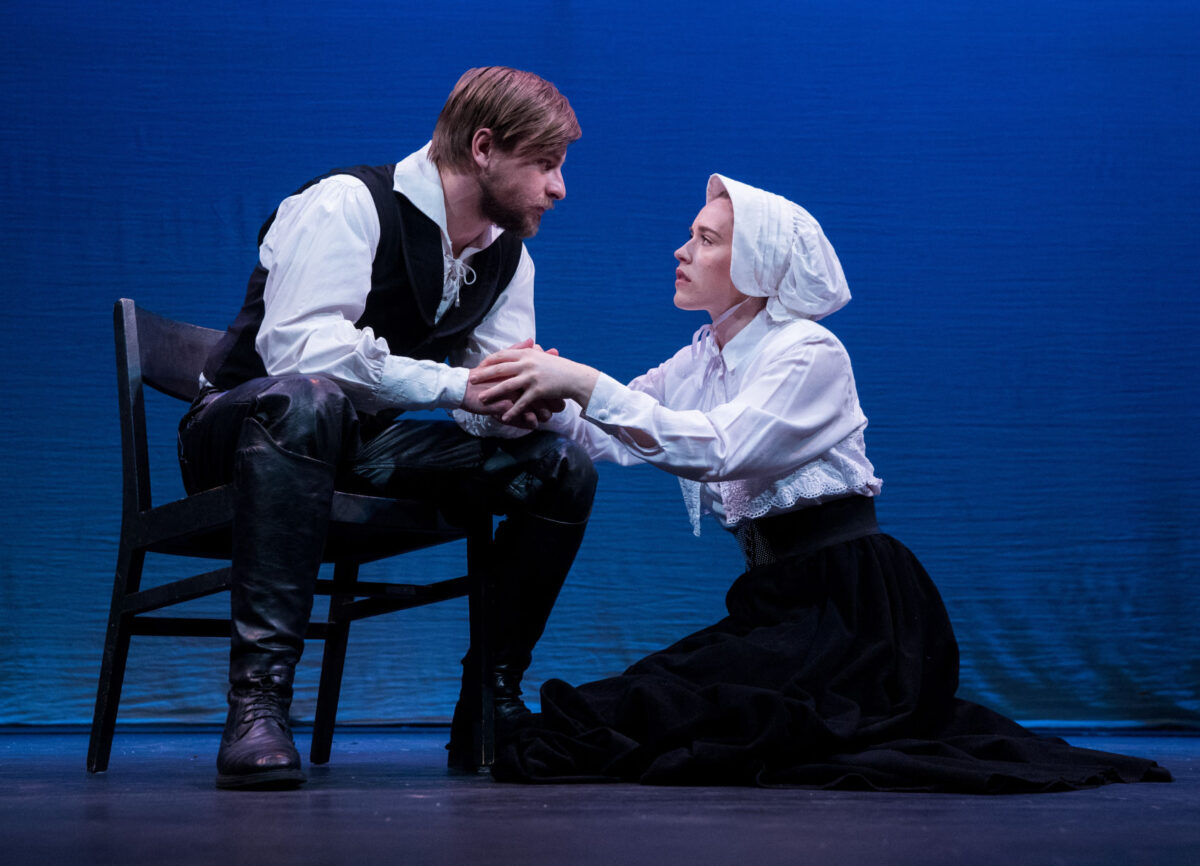
Arthur Miller's "The Crucible" draws contemporary relevance from the Salem witch trials of the 1600s.
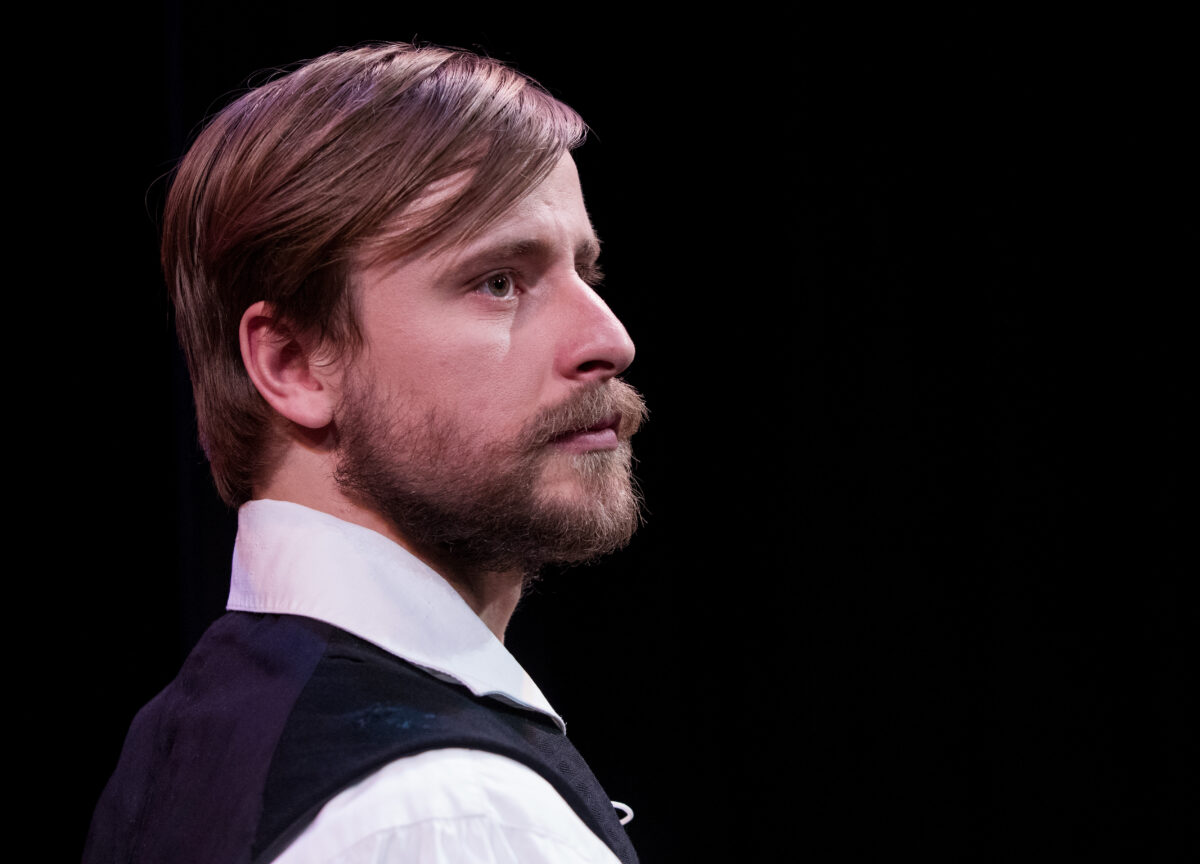
Arthur Miller's "The Crucible" draws contemporary relevance from the Salem witch trials of the 1600s.
Arthur Miller’s classic play “The Crucible” was always about masks of identity in a highly religious community, but a production opening this week at Brigham Young University — itself a religious community of sorts — explores that concept literally: The actors use and remove physical masks throughout the show to signify fear-based public personas versus authenticity.
The play is set during the Salem witch trials in the 1600s but was first performed in 1953, during a time when suspected communists were investigated with a nearly religious zeal throughout the United States.
It’s easy to read the play’s depiction of a literal witch-hunt as a metaphor for 1950s-era McCarthyism, with the protagonist John Proctor dramatically forced to choose whether to save his own life by giving names to religious and civic authorities.
Eventually, the playwright’s own life would give way to an example life imitating art. A few years after the play was first performed, Miller was questioned by the House of Representatives’ Committee on Un-American Activities and — echoing the moral position of his play’s protagonist — he refused to name suspected communist writers and was convicted of contempt of Congress.
At BYU, the play’s treatment of piety and individualism might read less as a political metaphor and more as a literal religious examination: The university is owned and largely populated by The Church of Jesus Christ of Latter-day Saints, and director David Morgan said he is, in part, interested in exploring how the Mormon community at BYU might benefit from seeing themselves in some aspects of the show.
“Hopefully it’s going to say something to the Mormons,” Morgan said. “It’s obviously going to be different for different people, but I’m hoping that they’re going to see themselves in it, because there is quite a similar judgmental quality going on with Mormons as well as Puritans. And obviously it’s not to the extent, but I mean that’s why you watch something that’s kind of a parable, because it’s turning the volume up on something, so that you’re kind of shocked by it, but at the same time you can see yourself in it, the human part of yourself.”
Morgan said that his Mormon students sometimes see themselves placed on the fringes of their religious community at BYU for engaging in theater arts — and also that when they leave the university, they will find themselves on the fringes of the theater arts community for engaging in religion.
“They do feel like they’re the outsiders. They do feel like they’re John Proctor,” Morgan said.
And Morgan feels an affinity to the character as well.
“He’s so overwrought with trying to understand who he is, because he’s so lost,” Morgan said. “He’s caught between his religion and his wife, his wife’s judgment of him, and trying to be real and be himself, and yet live in this society, and I feel totally like him. I feel exactly like him, because I’m very much a person who just tries to be who I am. And it’s a problem when you’re in Mormonism because there’s this ‘Mormon way to be,’ and I don’t like it. I think it’s bull crap. So it’s hard.”
Spencer Hunsicker is one of the performers in the show, playing Reverend Samuel Parris.
“Playing Reverend Parris, it’s interesting because he’s so motivated by fear,” Hunsicker said. “Everything he does is out of fear that people are going to see him and perceive him in a way that he doesn’t want to be perceived, and it makes him do some really awful, awful things. And I think that for us in a religious setting, in a religious community, we should be able to look at it from those eyes.”
In Morgan’s concept for the show, the only character to not wear a mask is John Proctor.
“He doesn’t put on this image, he’s not trying to wear his religion before him,” said Tyler Hatch, who plays John. “Which, I can’t help but think that that is a very resonant thing within our culture to some degree, which is that people really put forth an effort to wear their religion before them in the wrong way. Because I think we should exemplify the core of the gospel, but I think we let the outer trappings of the gospel and the outer appearance get in the way of us actually living the gospel properly.”
In addition to the metaphorical meaning of the masks, the appearance of the masks may also stoke a visceral response in the audience.
“There’s something grotesque about the mask,” Morgan said. “And there’s something grotesque about (the 17th century Salem) community.”
The new production marks the second time Morgan has put on a version of “The Crucible” using masks — the first was for a Character Mask class he taught — but this is the first time the show will be public.
“I did it originally as a class piece, and they had a performance at the end, but then I liked working on it so much that I thought, ‘Well, I think it would be interesting to explore on the season, and see what people who have never experienced mask work, have a chance to see it,’ ” Morgan said. “I’m excited for (audiences) to see the show, which is considered a classic, done in a different way. To approach it from a more metaphorical way, or a more stylized approach.”
THE CRUCIBLE
What: Play by Arthur Miller
When: Runs at various times Friday through April 8
Where: Margetts Theatre, Brigham Young University
Tickets: $8-$14
Info: (801) 422-2981, byuarts.com