
Peter Frampton talks talkbox, ‘Almost Famous’ and how a friend saved his career
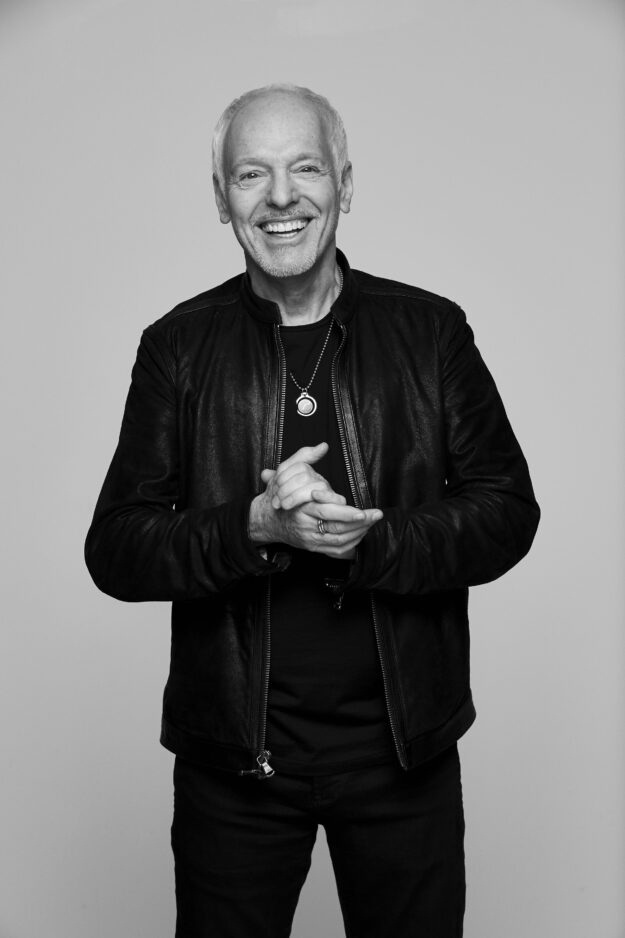
Peter Frampton will perform at the Capitol Theatre on Thursday.
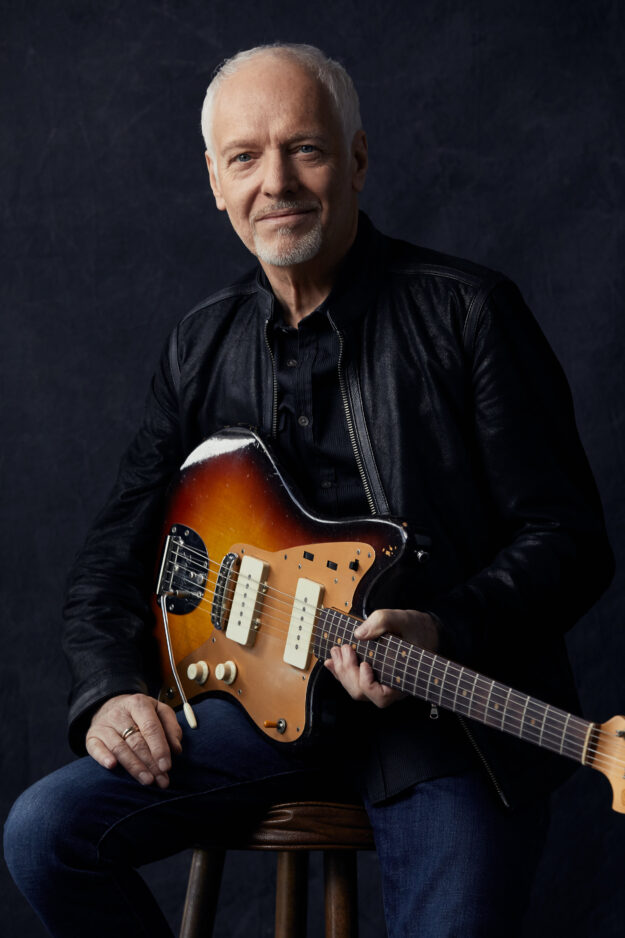
Peter Frampton appeared in concert at the Capitol Theatre in Salt Lake City on Thursday.
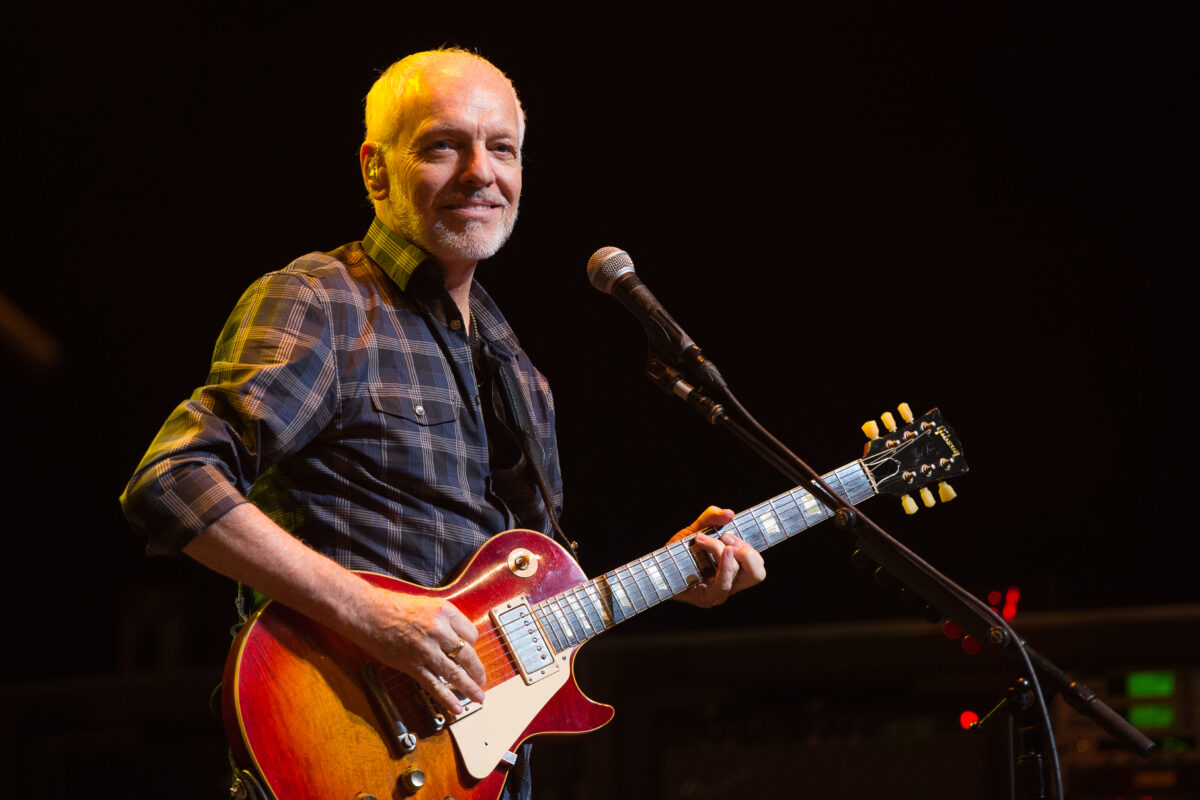
Peter Frampton performs at the Tobin Center in San Antonio. The guitarist will perform in Salt Lake City on Thursday.
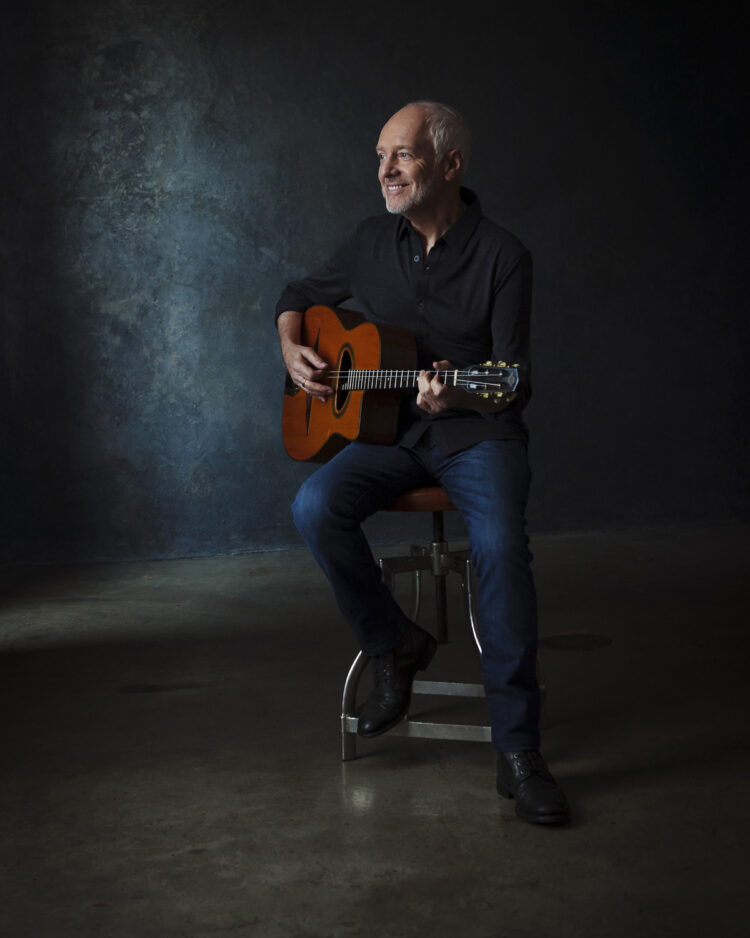
Peter Frampton returns to Salt Lake City on Thursday when he will appear in concert at the Capitol Theatre.
Peter Frampton was larger than life during my high school years.
Well, let me re-phrase that. The dynamic guitarist was certainly larger than life in the sense that his album “Frampton Comes Alive” was a true phenomenon in 1976, topping the Billboard 200 for a total of 10 weeks en route to becoming the best-selling album of the year. (Both feats were pretty unheard of for a double-live album.)
He was also larger than life on stage — with the first two times I saw him in concert in the Los Angeles area occurring at a sold-out four-night stand at the Inglewood Forum followed up the next summer with a gigantic headlined show at Anaheim Stadium. My friends and I actually camped out for that concert — an experience I recommend that every music fan do … once.
Where Frampton was not larger than life, however, was on my bedroom wall. There he was merely life-sized as one of the concert tour programs I’d purchased folded out into a huge poster of the cover of “Frampton Comes Alive.” Back in high school, my walls were covered with posters of my favorite musicals acts, especially guitarists and, in the interest of full disclosure, that one famous swimsuit poster of Farrah Fawcett, which I had won by being the right caller at the right time into 93-KHJ (the dominant musical AM radio station of the day).
The “Frampton Comes Alive” cover always kind of intrigued me. The purple lighting hue kind of gave the guitarist an otherworldly glow, which extended to his shaggy hair and even parts of his famous black Gibson Les Paul. It remains one of the most iconic album covers in rock, and easily one of the most recognizable.
With Frampton headlining a solo “Evening With” show at the Capitol Theatre in Salt Lake City on Thursday, I had the opportunity to catch up with the man, the myth, and the one-time dominant poster on my bedroom wall during a recent phone interview. This was my third interview over the years with Frampton, and this time around we talked talkboxes, the surprising return of his famed black Gibson and how he credits high school friend David Jones (Bowie) with resurrecting the second half of his career in the mid-1980s.
DOUG FOX: So I see that you will be touring again with Steve Miller this summer, and I know the Salt Lake show isn’t part of that tour …
PETER FRAMPTON: I don’t believe so, no. Obviously when there’s a couple of days off, we like to fill at least one of them so we’re working … we like to work!
FOX: I was going to say, you toured with Steve Miller to Salt Lake City just this last summer, and as great as the entire shows were, I think something that was a real highlight of the show for me was the part where you came out in Steve Miller’s set and you guys jammed on four blues tunes.
FRAMPTON: Yes, that’s the highlight for Steve and I, too.
FOX: As concert fans, we don’t really get to see things like that that often. It’s what we imagine things are like behind the scenes when bands go on tour, you know that the artists get together and jam around backstage and have a fun time, but I think in reality maybe that doesn’t happen quite as much. So how does something like that come together? For two guitar greats like you guys, does it take much pre-rehearsal or planning to perform those songs or does it happen pretty organically?
FRAMPTON: Well, in the end it’s organic, but in the beginning we do talk about, you know, what would be good. I suggest numbers and Steve suggests numbers and last year I didn’t sing — this year I’m going to sing on a couple also. You know, it’s developing. (laughs)
FOX: When you do your one-off shows like the one you’re doing in Salt Lake, I assume we can expect a typical Frampton live show or are there any special things you might be doing this time around?
FRAMPTON: Well yes, when we get to do our own show — and what is the venue in Salt Lake?
FOX: It’s the Capitol Theatre. And I don’t think you’ve ever played there before. And I don’t think I’ve ever seen an actual concert there either. It should be interesting.
FRAMPTON: Really? OK, well usually we just do “An Evening With,” and I’m sure that’s what this is, and it will be probably a minimum of two hours, maybe two and a half, I don’t know, it depends on the night. (laughs)
FOX: Can we talk about talkboxes for a second?
FRAMPTON: Yes.
FOX: The talkbox effect, of course, has shown up in numerous songs throughout the years, but to my knowledge, no one has ever developed it to the heights of verbosity that you have. So I’m curious, how hard is it to actually speak through the talkbox and how much coordination does it take to match up the guitar parts to your voice and speaking, things like that?
FRAMPTON: Well, obviously for me, it’s very easy, but obviously it took me a while to get it sorted out. (laughs) It’s a lot easier, than … I don’t know, maybe I shouldn’t say that. To me, it seems pretty easy once you deal with having this pipe in your mouth and then being able to … I mean, Joe Walsh, who did the amazing guitar solo on “Rocky Mountain Way” with his talkbox, he used it as a sound, whereas I, as you so rightly said, I wanted to actually communicate with the audience. And I figured that that could work out really well because it’s such a funny sound, you know? So basically, I locked myself away for a couple of weeks and learned how to talk with this thing in the early ’70s. And, yeah, it’s just one of those things — I guess I did more talking with it than most people.
FOX: Did you get an immediate reaction from the crowd when you started talking with it in the early days?
FRAMPTON: Yes. It still has the same effect today, it just was at that point when I started doing it, it was just Joe Walsh, myself and Roger Troutman doing it the most. Stevie Wonder and Jeff Beck did it as well. I think everybody tried it — Joe Perry and Richie Sambora, so there’s a lot of different people used it. But I think when I first introduced it into the act, just the sound of it, before I start speaking, is such a surprise that is so different from everything else in the evening — that it just sort of catches people’s attention. It’s a great attention grabber, that’s for sure! Then when I started talking with it, that’s when people started freaking out.
FOX: Can you literally say anything you want with it?
FRAMPTON: There are certain words that are difficult. (laughs) Like a ventriloquist, you can always tell. There’s like one letter in the alphabet that each ventriloquist finds hard to say. But I’ve pretty much mastered everything. And if it doesn’t come out right, then I just say it and people laugh. And I’ll say, “Oh, that’s a difficult one!”
FOX: I’ve also been intrigued with your video and song for “I Saved a Bird Today” and how that came from a real-life experience, and especially the life lesson that sometimes, to save someone or something, you have put them in the right environment for them to kind of do their thing.
FRAMPTON: Right.
FOX: And it made me wonder if that metaphor, if you thought it might also translate to your career, because you had the meteoric heights and then you had a few down years before you got your feet going again and you picked things up. I was wondering was there ever someone in your career that you could point to, who picked you up when you were at your most down point and gave you that hand that got you going again?
FRAMPTON: Yes. And I went to school with him. David Jones was his name. We’ve lost him now, David Bowie. David and I knew each other — I was 11 and he was 14, something like that when we first met, and we got to know each other at school and started playing music together. Our careers, he went to his bands and I did my bands. And then I got onto TV before he did, and he wondered why I wasn’t at school and why I was on “Top of the Pops.” (laughs) He said that in an interview, jokingly obviously. He knew what had happened with “Comes Alive” because he saw how huge it had gotten, and how he knew me as the guitar player and it seemed like the world knew me as this pop idol. Having been there himself, and (having) reinvented himself, he came to me and said, this was ’86, “Would you come and play some guitar for me on my new record.” And I said, “I thought you’d never ask.” And so I went to Switzerland and played on the “Never Let You Down” record, and then while I was there, that’s when he asked me to come on the road and be one of the guitar players in the band, and I lapped that up. And I realized what David was doing. He’d always been there like an older brother for me, for advice and whatever. Even with my instrumental album, “Fingerprints,” he would recommend Courtney Pines, the sax player to use on the opening track — so he’s always been there to help. And so what he actually did was he gave me this huge gift. He had me on the record, had me on the tour, then took me around the world in stadiums and reintroduced me as the guitar player, the musician. That coupled with later, the instrumental record, that’s when my career started up again due to the “Glass Spider” tour and the “Never Let You Down” record. And I never stopped thanking him, so there you go.
FOX: That’s a great story. Something I also find truly amazing is the story of how you were reunited with your black Gibson (which had been presumed destroyed in an airplane crash) after, what was it, like 30 years?
FRAMPTON: Yes, 30 years when I heard about it surviving. So, three decades of saying to people, “Is that the one that’s on the front cover” and I go, “No, it’s not. (laughs) It looks like it, but it’s not the one.” One day I just opened up this email that went to my website — contact Peter — and I opened it up and there’s a dozen forensically taken shots of the guitar now, or a few years ago now. And I screamed! I knew it was mine, but didn’t want to tell the guy that had gotten it. And there’s a bit of a gray area getting it back, a couple of years there. No one wanted to bring it back to me because they all thought I was going to have them arrested for stealing it. (laughs) But I just wanted the guitar back. In the end, this man from Curacao, an island off the coast of Venezuela, flew up to Nashville and brought the guitar to me, and I got it back. So this is now 32 years later, and I took it straight to Gibson and we authenticated it — brought it back to life, left the scars, but just made it playable. And I reintroduced it on stage at the Beacon Theatre in New York for the last number of the show, for “Do You Feel,” and the guitar made its own entrance in the big stock, we just put it on a stand in the middle of the stage and then put a spotlight on it. And it got more applause than I do. (laughs)
FOX: Well, it did have a long hiatus!
FRAMPTON: It was great because “CBS Sunday Morning” were there that night and caught it on video, so it was great.
FOX: I’m wondering if you could take me back to the moment when you first got it in your hands again after all those years. What was the first riff, or the first song you played on it again?
FRAMPTON: Oh, gosh, I don’t remember the first thing I played on it, but I do remember when he handed it to me in this horrible little plastic cover, it wasn’t even a case. And I could feel the weight of it, and my Les Paul was always a light one, comparatively speaking, so when I got it out, I just said … you can see it on YouTube actually, there’s a video of me getting it back, which we did. We had three cameras there for the whole day, so when the guy walked in, there it was. I just remember saying, “It’s mine.”
FOX: I know we’re running out of time, but I wanted to ask you about my favorite movie of all-time — which would be “Almost Famous.” What was it like to be involved with that movie? I know you were a technical adviser, are there any great stories from the set?
FRAMPTON: Oh, yes. I mean, considering that Cameron Crowe wrote the very first article and the liner notes on “Frampton Comes Alive,” there’s a long history with Cameron there. And he was just starting to write, it was one of the first things he did for Rolling Stone, I think. And so for him to ask me to, you know, be a part of the production of the movie and to help out, you know I just love the technical side of music and film. I’m a gadget freak, and I think I would have been a director of cinematography if I hadn’t been a musician, so it sort of put the whole ball of wax together for me. And there I am teaching Billy Crudup how to play guitar. So it was wonderful. It was the best experience, one of the best experiences I’ve ever had because it was behind the scenes. All right, so I’m on the screen for a few seconds as Humble Pie’s road manager, but the main thing was that I had so much enjoyment just being part of getting something right. And boy, we got it right. Well, Cameron got it right. I was just there to help, you know. Unbelievable!
FOX: The thing about your scene, though, unless people knew you were in it, they wouldn’t have recognized you.
FRAMPTON: No they wouldn’t. No.
FOX: I think one of my all-time favorite movie scenes is when William (Patrick Fugit) is interviewing Russell (Crudup) at the very end and he asks him, “What is it that you love about music?” So how would you answer that question?
FRAMPTON: What was the question? Sorry …
FOX: The very last scene, where the William character is interviewing Russell in his bedroom …
FRAMPTON: Right.
FOX: And he says, “What is it that you love about music?” He spent the whole movie trying to interview him and he finally gets to sit down … and ask that question.
FRAMPTON: That’s right. Yeah, yeah.
FOX: How would you answer that?
FRAMPTON: What is it that I love about music? I can’t live without it, you know. It’s part of my DNA since I was … well I guess it was part of my DNA before I even picked up an instrument because I picked it up very quickly and then it became a passion. And so music to me is my passion. So it’s like breathing. It’s the same thing. I can’t be without it. It’s just what I do and what makes me tick.
PETER FRAMPTON
When: Thursday at 8 p.m.
Where: The Capitol Theatre, 50 W. 200 South, Salt Lake City
Tickets: $37.50–$100, available at arttix.artsaltlake.org
Info: (801) 355-2787