
The earth: A sacred stewardship


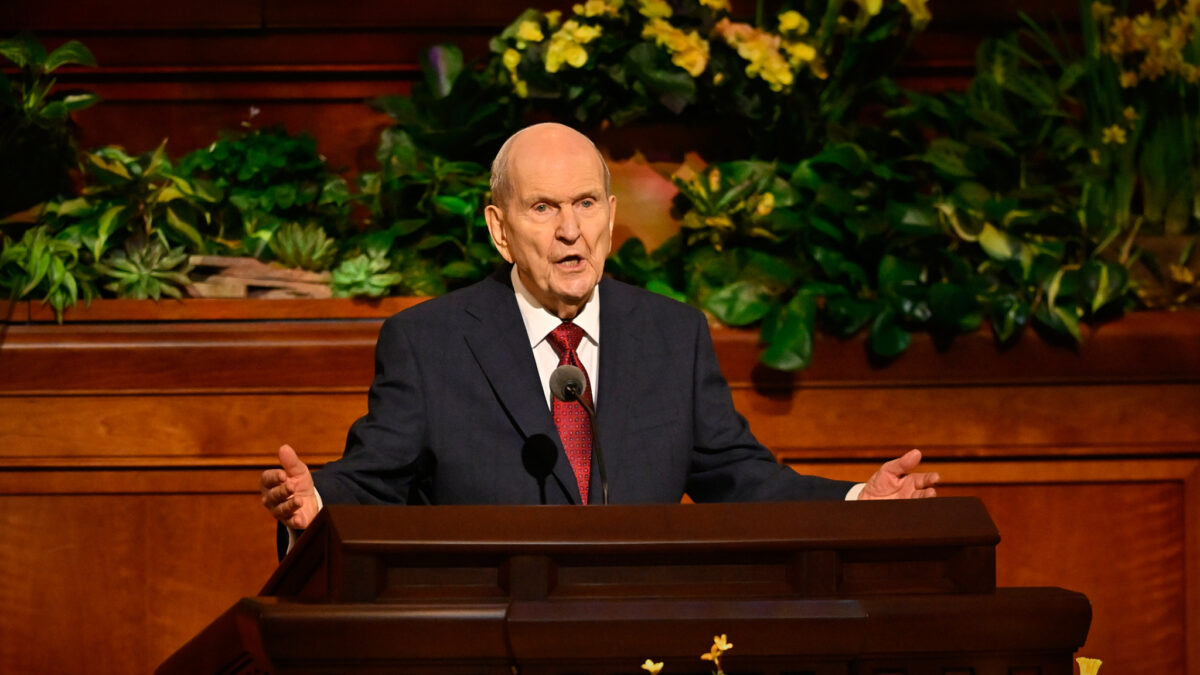

President Russell M. Nelson, leader of The Church of Jesus Christ of Latter-day Saints, once remarked: “As beneficiaries of the divine Creation, what shall we do? We should care for the earth, be wise stewards over it, and preserve it for future generations.”
As a church, the leadership has started putting a new, more robust emphasis on caring for the planet that was created for mankind’s use and given to us as stewards and caretakers of it.
“Our approach to the environment must be prudent, realistic, balanced and consistent with the needs of the earth and of current and future generations,” said Elder Marcus Nash of the Seventy.
“What we understand of who are and why we are on this earth can (and should) have a profound effect upon how we choose to relate to the earth and all life there on,” Nash added.
So, it appears that hugging a tree is OK, growing a garden is good for man and for the soil, and cleaning the air is necessary.
Latter-day Saint scripture the Doctrine and Covenants 104: 13-17 says:
“13 For it is expedient that I, the Lord, should make every man accountable, as a steward over earthly blessings, which I have made and prepared for my creatures.
“14 I, the Lord, stretched out the heavens, and built the earth, my very handiwork; and all things therein are mine.
“15 And it is my purpose to provide for my saints, for all things are mine.
“16 But it must needs be done in mine own way; and behold this is the way that I, the Lord, have decreed to provide for my saints, that the poor shall be exalted, in that the rich are made low.
“17 For the earth is full, and there is enough and to spare; yea, I prepared all things, and have given unto the children of men to be agents unto themselves.”
Water
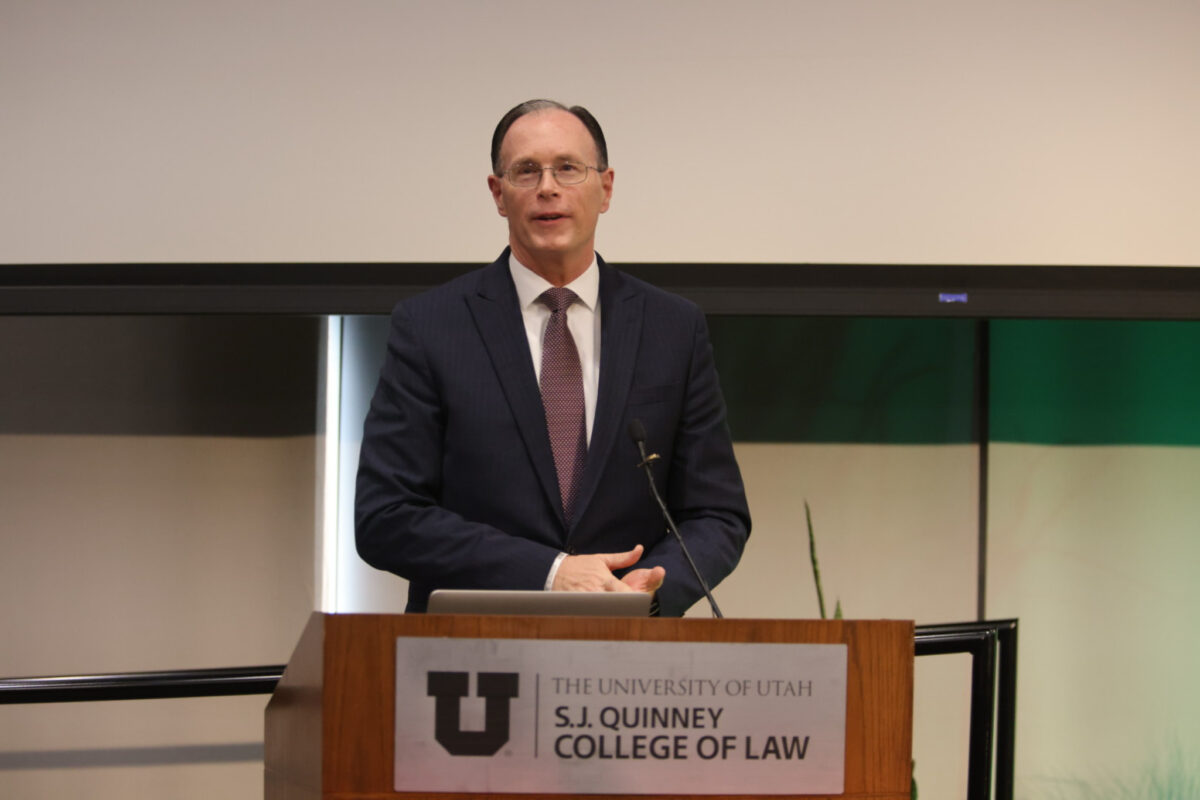
Speaking at the 28th annual Wallace Stegner Center Symposium at the University of Utah on March 17, Bishop W. Christopher Waddell of the Presiding Bishopric noted, “A severe drought has gripped much of the western United States for many years. Researchers at Brigham Young University say that without a dramatic increase of water, the (Great Salt Lake) could be gone in as little as five years. And that disappearance could cause significant damage to Utah’s public health, environment and economy.”
“We (the church) are committed to be a part of the solution to help the Great Salt Lake and have made some initial efforts to contribute,” Bishop Waddell said.
Those efforts include a donation announced March 15 of the church’s water shares in the North Point Consolidated Irrigation Co. — possibly the largest permanent donation of water to benefit the Great Salt Lake that Utah has ever received. The 20,000 acre-feet donated are equivalent to a water supply for 20,000 single-family homes.
Waddell mentioned several other ways the church is using water wisely. For example, on its farms, the faith uses soil moisture probes to inform irrigation decisions. They are also developing water management plans for all the church’s agricultural properties.
At its meetinghouses, temples and other facilities, the church has installed smart controllers, hydrometers, rain sensors and drip irrigation systems.
From 2018 to 2022, these practices have saved nearly 40 million gallons of water a year at church headquarters in Salt Lake City.
Beginning in the early 2000s, the church moved away from lawn-heavy landscaping at its meetinghouses. This shift (from as much as 90% grass to as low as 35% grass), along with other water-saving practices, led to a 35% reduction in water use at meetinghouses in Salt Lake County in 2022 compared with 2020, according to Waddell.
In the past 20 years, BYU has cut its use of culinary water by two-thirds, even with an increased building footprint. The university also conducts regular water audits and uses smart irrigation and water-wise landscaping, including drought-tolerant plants and mulch comprised of campus green waste, which reduces water use in flower and shrub beds by 30%.
In addition to all this and more, Waddell said, the Presiding Bishopric created a Sustainability Office and Sustainability Leadership Committee to develop key cross-functional initiatives within church operations.
Along with its efforts to help save the Great Salt Lake and conserve water at its Utah facilities, The Church of Jesus Christ continues to study how to implement water-wise practices globally.
“Our aim is to understand more fully what sustainable landscaping should be based on local climates and identify opportunities to conserve water and natural resources,” Waddell said.
People will notice some of these changes when Temple Square reopens in coming years. The new grounds will feature more perennials, less grass and 30% more trees. Turfgrass is being reduced by 35% and annuals by 50%. All turfgrass will receive 35%-40% less water from June to September.
Climate
U.S. Rep. John Curtis (R-Utah), a member of the church, cares about the climate enough that he has decided to do something about it and is in a position to make change. While holding several get-together dinners in his home in Provo to discuss options, his greatest work on the climate is coming from his established Conservative Climate Caucus in Washington, D.C., that has grown from just him to 84 members — one of the largest caucus groups in Washington.
“Everyone is born with a desire to keep the world better when you leave,” Curtis said. “It’s a real thing. I used to be uncomfortable when ‘climate’ was said.”
For some, it doesn’t resonate that conservatives and climate can partner, but Curtis has proven that’s not true. Curtis has traveled across six continents to find best practices and worldwide movements on climate.
Everyone can do something, according to Curtis, even if it’s changing lights bulbs to be energy efficient or putting your trips to town together at one time.
At the Oct. 10, 2018, environmental stewardship symposium at Utah State University, Elder Steven E. Snow of the Seventy said, “As Latter-day Saints, we believe that God created this earth to provide a place for the human family to learn, progress, improve and find joy.”
“God expects every one of His sons and daughters to act as good stewards of the land He created. It causes me much grief when I look outside my window and see a hazy inversion or when I hear consistent reports of Utah’s poor air quality,” Snow said. “I am concerned for the families affected by wildfires and for the schoolchildren forced to stay indoors because of smoky skies. Algal blooms are breaking out in Utah’s lakes. We are experiencing unusually dry seasons and record-breaking warm winters.”
President Dallin H. Oaks shared some of these same concerns in an address in February 2017. He said: “These are challenging times, filled with big worries: wars and rumors of wars, possible epidemics of infectious diseases, droughts, floods and global warming. Seacoast cities are concerned with the rising level of the ocean, which will bring ocean tides to their doorsteps or over their thresholds. Global warming is also affecting agriculture and wildlife.”
As one commentary on the church’s newsroom says, “The earth is vulnerable. … Excessive consumption sullies God’s seas; wanton waste blackens His air. The creation groans under the weight of recklessness and indulgence that neglects both the poor earth and the earth’s poor.”
“Climate change is real,” Snow notes, “and it’s our responsibility as stewards to do what we can to limit the damage done to God’s creation.”
So what does it mean to be a good steward?
Presiding Bishop Gerald Causse said, “Our Heavenly Father allows us to use earthly resources according to our own free will. Yet our agency should not be interpreted as license to use or consume the riches of this world without wisdom or restraint.”
Beyond being simply a scientific or political necessity, the care of the earth and of our natural environment is a sacred responsibility entrusted to us by God, which should fill us with a deep sense of duty and humility. It is also an integral component of our discipleship, Causse added.
-

- Members of the church gardening and making their surroundings more beautiful.
-
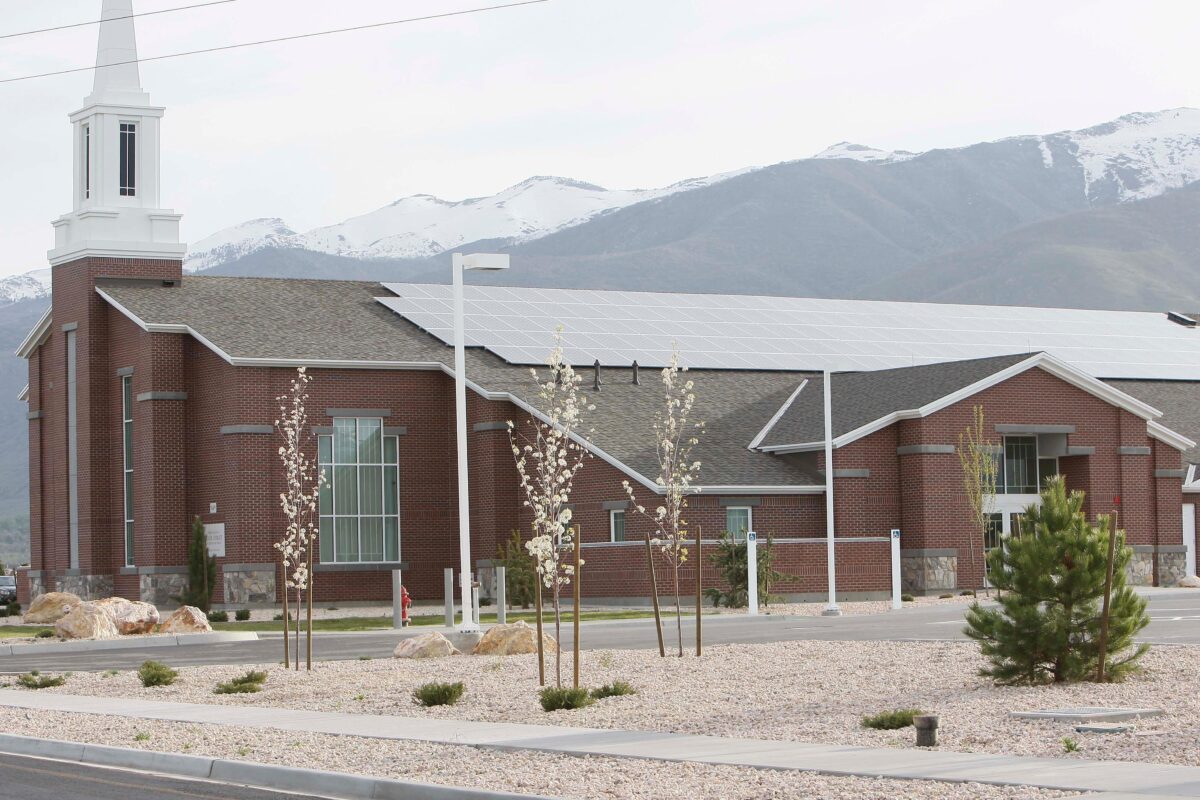
- The Church of Jesus Christ of Latter-day Saints’ first solar panel meetinghouse, located in Farmington.
-
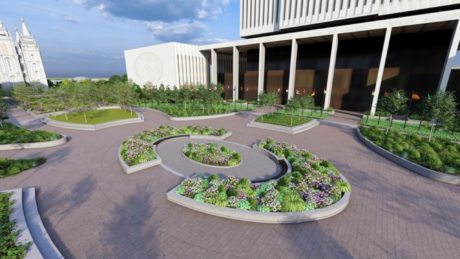
- A rendering of the new Church Office Building plaza. The new grounds will feature more perennials, less grass and 30% more trees.
-
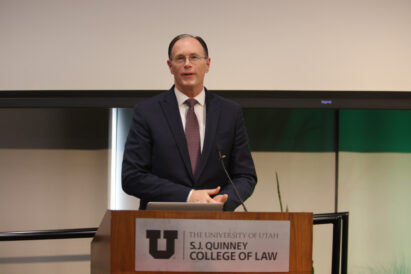
- Bishop W. Christopher Waddell of the Presiding Bishopric speaks at the 28th annual Wallace Stegner Center Symposium at the University of Utah on Friday, March 17, 2023.
-
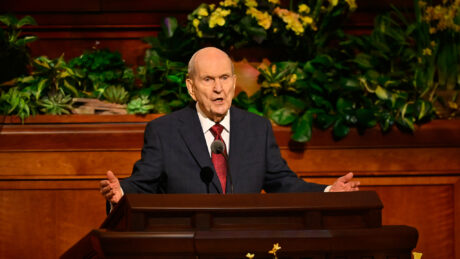
- President Russell M. Nelson of the First Presidency encourages peacemaking during the morning session of general conference at the Conference Center in Salt Lake City on Sunday, April 2, 2023.
-
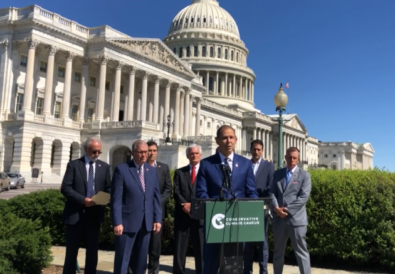
- In this screenshot taken from video, U.S. Rep. John Curtis, R-Utah, speaks during a press conference at the U.S. Capitol on Wednesday, June 23, 2021, to announce the formation of the Conservative Climate Caucus.