
Making a Difference: Become More Charity fighting poverty in Cambodia
-
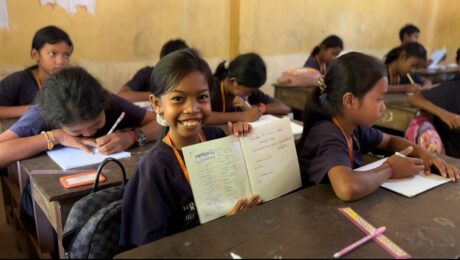
- Become More Charity is using unique approaches in Cambodia to help children get an education, including offering rice to parents in exchange for allowing their children to attend school.
-
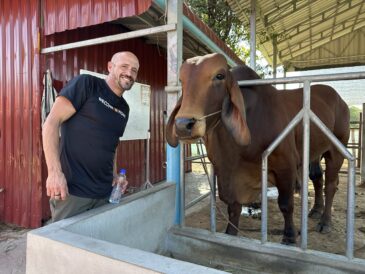
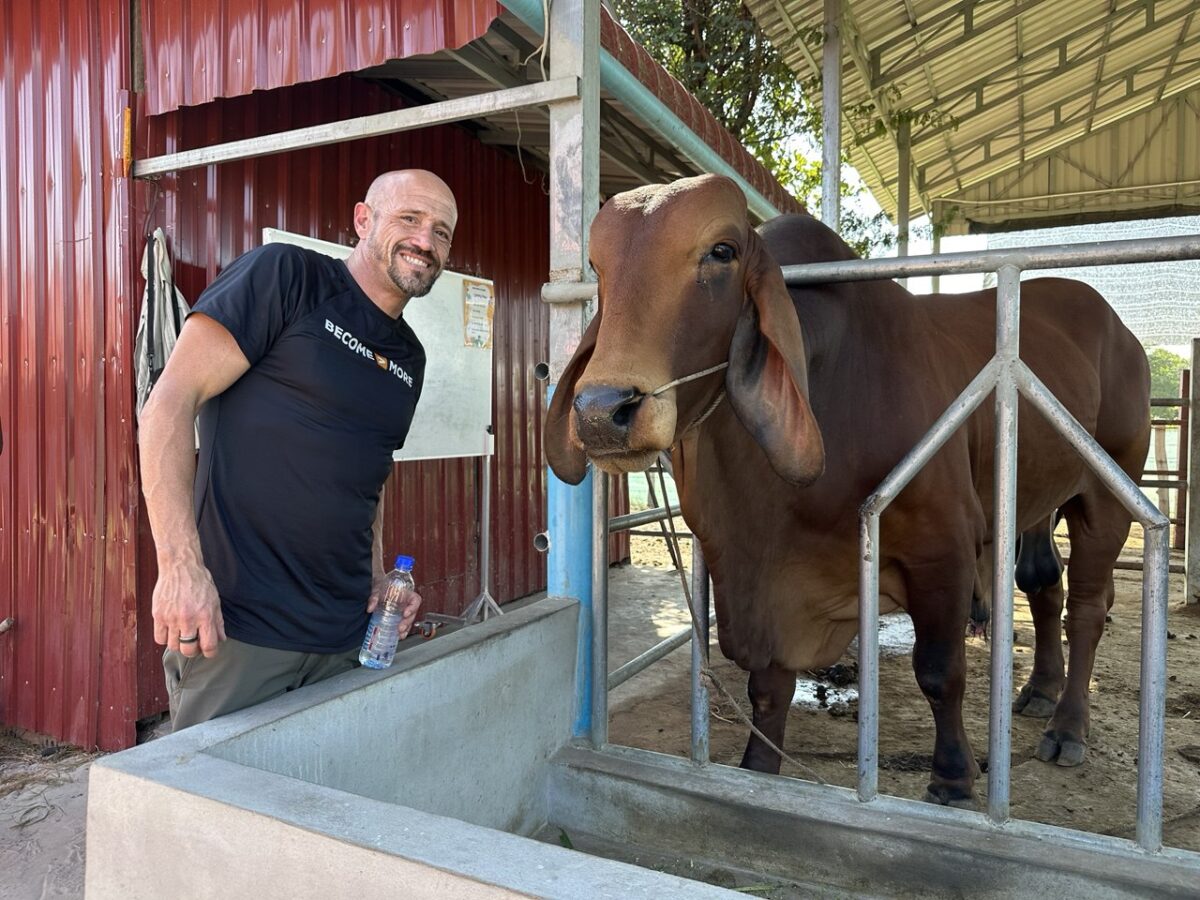
- Wade Roberts, founder of Become More Charity, is shown with a “Fat Cow” in Cambodia.
-
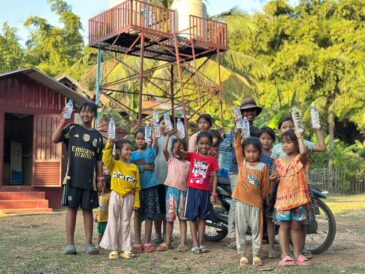
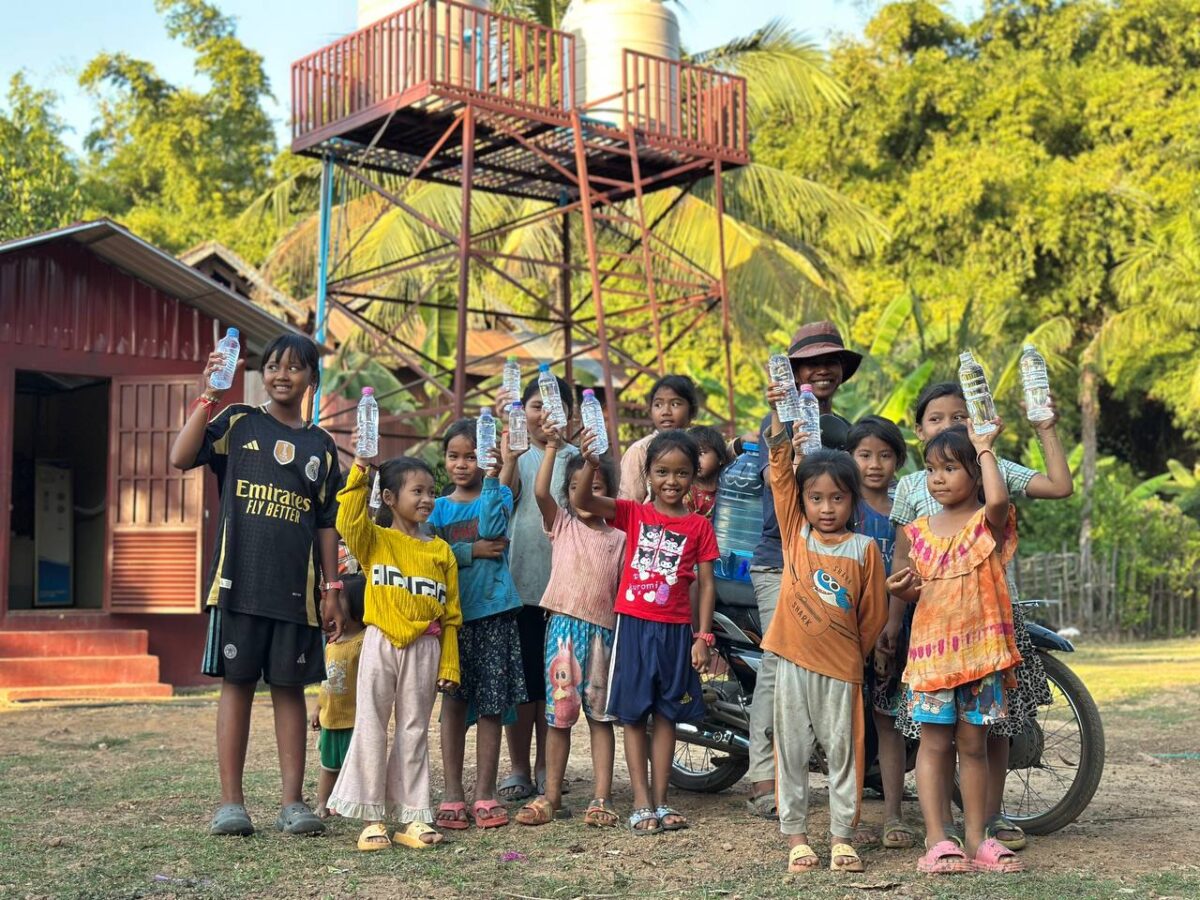
- Become More Charity is working to help reduce poverty in Cambodia through a variety of means, including increasing access to clean drinking water.

Become More Charity is using unique approaches in Cambodia to help children get an education, including offering rice to parents in exchange for allowing their children to attend school.
Wade Roberts’s love of Cambodia and its people began in 1999 when he served a church mission in Fresno, California, where he learned Khmer, Cambodia’s language. He loved his mission, the people he taught and the language.
“When I arrived home, I started teaching my brothers Khmer,” Roberts said. “Plus, I taught my girlfriend, who ultimately became my wife, too.”
Wade is now married with three children, and one of them is now serving a church mission in Cambodia. He also has two nephews serving in Cambodia. Both the nephews and Roberts’s son had visited Cambodia, had some language ability and loved their humanitarian work in the country.
For their first wedding anniversary, Roberts and his wife Cindy visited Cambodia for the first time.
“I think for the first time, I saw what poverty looked like,” Roberts said. “I had heard various stories of genocide, war and poverty throughout my mission, but when I arrived in Cambodia, it all became real. I realized I could not unsee what I had seen, and I knew that I needed to be part of the solution.”
Courtesy Become More Charity
Wade Roberts, founder of Become More Charity, is shown with a "Fat Cow" in Cambodia.
After returning home, he continued his college career, shifting his attention to the field of economics. He began researching solutions to poverty.
“I realized things I had never thought about,” Roberts said. “I learned that policy, when done right, has real power, and that I needed further education to participate at that level. ”
This path eventually led him to graduate school, where he studied land mines in Cambodia. As he studied the land mine problem, the magnitude of the poverty felt overwhelming.
“A conversation with a professor reframed the poverty question entirely, from ‘poverty is too large for anyone to address’ to ‘poverty is so large that anyone can touch it,’ Roberts said. “That perspective shift motivated me to continue my research abroad, ultimately earning my Ph.D. from the University of Utah in 2007.”
After completing his degree, Roberts held a series of academic teaching positions and continued research across multiple areas of development economics in Cambodia while simultaneously managing significant health challenges.
Courtesy Become More Charity
Become More Charity is working to help reduce poverty in Cambodia through a variety of means, including increasing access to clean drinking water.
Wade was born with cystic fibrosis, a genetic condition that had an expected lifespan of roughly eight years. In 2020, Wade’s health was declining rapidly, and he was given six months to live. He began having difficult conversations with his family and quietly preparing for what lay ahead. It was then that his brothers asked him a defining question.
“When they talked to me about what legacy did I wanted to leave behind, my answer was immediate: Cambodia,” Roberts said.
In 2022, Wade and four others founded the Become More Charity, a name that grew out of family conversations and reflects the belief that each of us has a responsibility to continue becoming more.
“We didn’t want to spend our lives chasing things or climbing ladders,” Roberts said. “Become More was built around a different idea, that real opportunity in Cambodia had to be created, village by village, by addressing health, education and economic development as a connected whole.”
Roberts learned by listening to others and by working where the need was greatest. He saw firsthand that most Cambodians lived on less than $2 a day, lacked reliable access to safe drinking water and faced recurring disruptions in their harvest cycles.
“I wanted to build a village-level model of development in the heartland of Cambodia with projects centered on families and communities,” Roberts said. “To make everything work, we take on one village at a time, involve neighbors and address core needs such as education, economic development, safe drinking water, nutrition, prenatal/vitamins, hygiene, dental and vision.”
Become More Charity creates sustainable, long-term prosperity partly through the “Fat Cow” program, a village-based initiative that is improving lives in Cambodia (becomemorecharity.org).
Cambodia raises cattle differently than in the West. Typically, you see a young male walking one cow down the same road every day to the water and feed source, which takes 4 to 5 hours round trip. The cows are skinny, and the young man does not attend school.
“Many farmers in Cambodia do not vaccinate their cows, resulting in a low survival rate of 56%,” said Ben Roberts, Wade’s brother and co-founder of Become More. “Also, inadequate nutrition stunts their growth and significantly delays maturity and the number of offspring that can be produced. A skinny cow produces skinny profits.”
The Fat Cow program helps mentor farmers in their own community and teaches them modern farming techniques. This process helps farmers achieve significant savings and drives economic development.
“Our Fat Cow program doubles the number of calves a cow can have and increases their survival rate to 98%, allowing Cambodians to experience a five times return on their investment,” Ben Roberts said. “Once the calves are sold, the proceeds are reinvested into the community, supporting our ongoing education and healthcare needs, ensuring the sustainability of our model.”
The premise of the Fat Cow project is simple. When cattle are properly fed and cared for, they become healthy, productive assets that raise incomes across the community. With proper nutrition, cows can grow from roughly 550 pounds to as much as 1,200 pounds, turning skinny cows into Fat Cows.
“If we follow the skinny-cow path, puberty is delayed, breeding does not begin until around age 4, and there can be a two-year gap between the first and second calf,” Wade Roberts said. “When cows are fed properly, they can calve every year for roughly 16 years, with offspring that are nearly twice the weight. Instead of a boy spending hours walking a cow to find grass, the grass is brought to the cow, and the child can go to school.”
Karma in Cambodia is a long-standing belief and is integrally linked to the culture. An integral part of karma reinforces the idea that when you “do good,” you “receive good” as a natural consequence. The law of karma ensures that whatever you give will inevitably be restored to you.
“The Fat Cow program’s original design required each participating family to give the first calf to a neighboring household, accelerating the reduction of poverty,” Wade Roberts said. “That first calf is paid forward, not sold. This structure creates strong demand to participate and ensures the program grows organically. It works because it is Cambodians helping Cambodians.”
Become More Charity also places strong emphasis on education. Cambodia’s past genocide (1970s) systematically targeted educated individuals, leaving generations with limited access to schooling. As a result, many children today surpass their parents’ level of education by the time they reach second grade.
“We sponsor education programs that make better use of existing resources,” Wade Roberts said. “Students attend public school until 11:30 a.m. By paying for teachers and the electricity bill of the school, we are able to use the public-school buildings so more children can access education, English classes and financial literacy.”
The challenge with low school attendance is that many Cambodian children are needed to help their parents in the fields, which keeps them out of school. Change began to occur when incentives were introduced.
“Part of the model begins by asking parents to consider the economic value of their children working in the fields. This question is extremely difficult for most parents to answer,” Wade Roberts said. “Instead, the question is reframed to: ‘If your child attended school at least 85% of the time this month in exchange for a 20-kilo bag of rice, would you allow them to attend?’ The answer is a resounding yes! Parents see the value of sending their children to school and Become More’s ‘attendance rice’ program allows children to start attending school.”
According to Wade, the biggest breakthrough moments come in layers. Poverty behaves much like an onion. Remove one layer and another challenge is revealed. For example, after several months of improved school attendance, the program discovered that about 7% of students could not see well enough to learn. Adding a vision component allowed those students to receive glasses and begin to learn.
Candice Stanford, Become More’s feminine hygiene director, joined the organization about a year ago and has played a central role in helping women understand their bodies, basic hygiene and unaddressed health implications. This year, Become More launched a feminine hygiene program at the high school and college. The initiative was developed in coordination with the Ministry of Health, aligned with national health priorities, and addressed a long-standing gap in girls’ education and well-being.
“Once we educate women and young women about their bodies, it eliminates shame and guilt and empowers them, and they stay in school,” Stanford said. “Educated women spread their knowledge and train and elevate an entire village by creating more opportunity for open discussion and having young woman ask important questions.”
For Stanford, working with Become More Charity has changed the way she views the world.
“My interactions with the Cambodian people, the way they live the law of karma and being so connected to their ancestors, have impacted my family, specifically my two youngest daughters, 9 and 11,” Stanford said. “They told me that it doesn’t seem fair how some people live, and they both want to adopt a student and serve more.”
Become More Charity has delivered measurable, village-level impact throughout Cambodia. To date, they have provided safe drinking water access to 11,200 people; reached 16 villages with dental services and 13 villages with vision services; provided prenatal services to 1,037 recipients; developed four English schools with a total of 742 students with a 95% attendance rate; developed 39 Fat Cow family farms; educated 1,461 Fat Cow families; and fully adopted one village with three additional villages partially adopted.
“People want health and education. Our goal is to create opportunities where access to basic services does not exist,” Wade Roberts said. “When you talk to people living in the participating villages, they don’t see Become More as an outside organization; they see it as themselves. ”
Looking ahead, Become More Charity plans to extend its impact by helping organizations reshape their cultures through shared experience that fosters gratitude, growth and a renewed commitment to giving. This is done through Fulfillment Trips, a 10-day immersion in Cambodia where groups stay in local homestays and participate directly in dental, vision and feminine hygiene service efforts while learning about the country’s history and culture and Become More’s village-wide development model.
Wade Roberts’s journey has unfolded with the constant awareness that tomorrow is never guaranteed, yet that reality has never slowed him.
“I was fortunate to begin an experimental medication that has worked remarkably well,” he said. “I feel deeply blessed, and I continue the fight. I often think about how to spend my time, talent and energy. What matters most is family and legacy. Helping my neighbors and families in Cambodia is where the magic lives, and I don’t want to lose that magic. I’ve been fortunate to live in that magical moment for decades.”
Those who want to connect with or donate to the Become More Charity may send an email to wade.roberts@becomemorecharity.org or donate directly on the Become More website: becomemorecharity.org.
Community
Making a Difference: Become More Charity fighting poverty in Cambodia
Utah Valley Calendar: Things to do – Jan. 10
AMERICAN FORK "Disney's Camp Rock: The Musical" — Timpanogos Youth Theater will present "Disney's Camp Rock: The ...
Utah Valley Calendar: Things to do – Jan. 3
AMERICAN FORK Sign up for choirs — Timpanogos Singers and Youth Choirs are now enrolling for January. Join the ...