
Buddhists seek enlightenment through silence in the desert

Deep in a remote desert valley, where rattlesnakes lurk in the scrub, Stephane Dreyfus and several dozen other Buddhists are preparing to undergo a mind-altering journey:
Three years, three months, three weeks and three days of silence.
There will be no word from the outside world in the Great Retreat, only the deafening quiet of rock and cactus, with seemingly endless time to ponder the emptiness of life. Dreyfus and his fellow adherents hope to find enlightenment in the silence, a gift they plan to share when they emerge from their seclusion.
They know that outsiders might dismiss them as eccentrics on a strange utopian trip, but their resumés suggest otherwise. Among them are an airline pilot, a dermatologist, a retired biochemist and a former television editor.
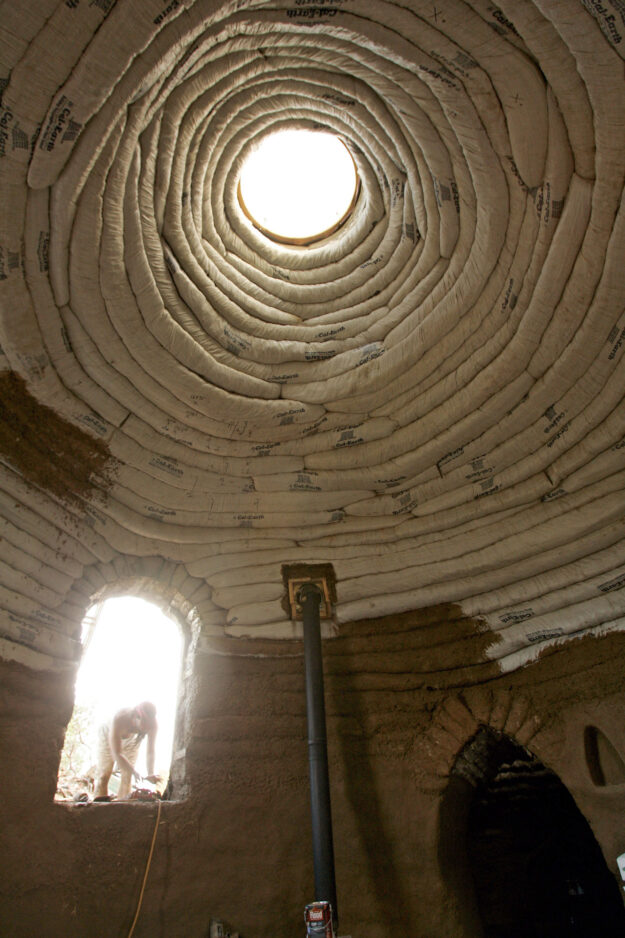
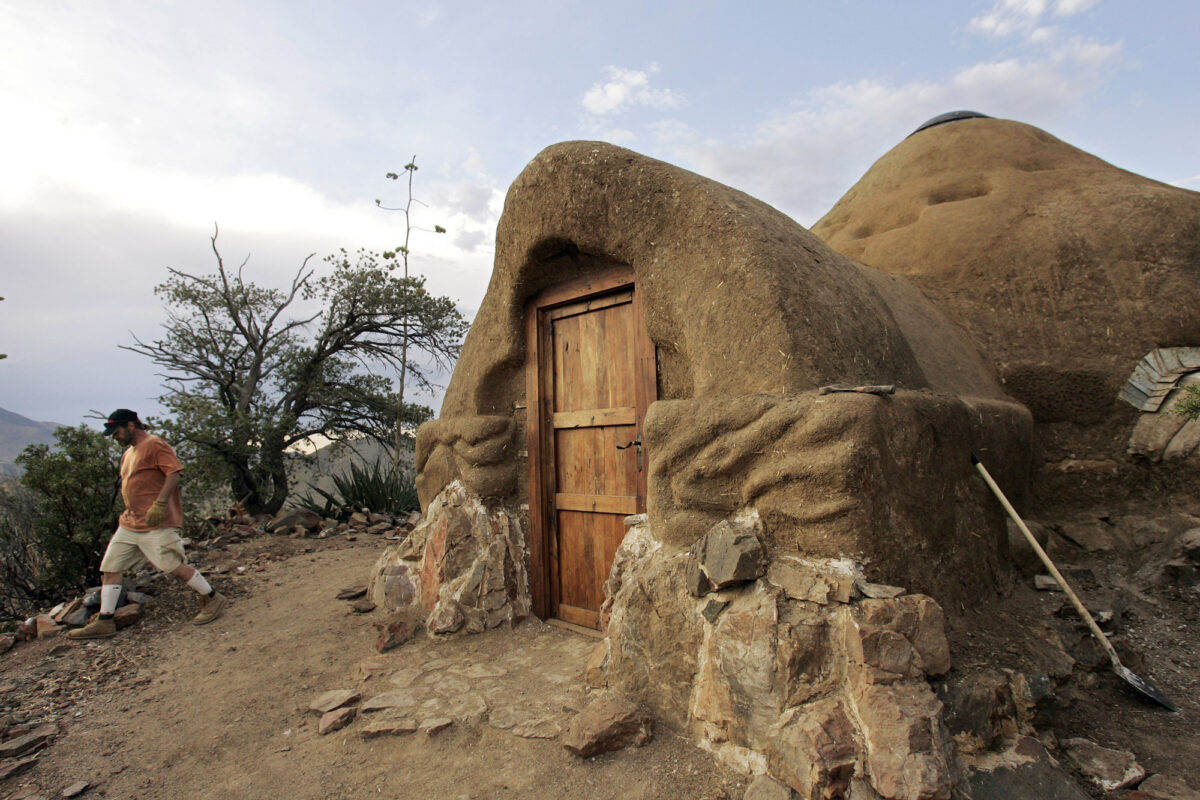
They’re jettisoning the trappings of their middle-class lives to carry on a Buddhist tradition that traces its lineage through the Dalai Lamas of Tibet. For many in the group, that means leaving behind six-figure incomes, young children or aging parents for the solitude of cramped retreat cabins made of adobe, wood — even hay bales.
Prolonged silence, they explain, is the only way to reach the deep level of inner awareness required to bring true happiness.
“If I can get to the position of being perfectly free of suffering and develop high levels of mental clarity that cause enlightenment, I can show others how to get there perfectly, quickly,” said Dreyfus, 32, who left a job as an assistant editor on “The Bachelor” to teach yoga and prepare for his undertaking.
Dreyfus, will be joined by his fiancee, Jessica Kung, a Yale University graduate and also a yoga teacher.
When they start the retreat late next year in this corner of southeastern Arizona, they will be newlyweds, sharing a 500-square-foot cabin, communicating only through gestures and facial expressions, and refraining from physical intimacy. Such pleasure, they both say, would dissipate prana — inner energy — distracting from the important karmic work at hand.
“I feel a desire to have some serious Ph.D.-like study in yoga [and] meditation,” said Kung, 27. “There is nothing better to do with my youth.”
Such talk provokes bewilderment, skepticism and even anger from the family members of many of those who will join the retreat. Hubert Dreyfus, a professor of existential philosophy at the University of California, Berkeley, worries that his son Stephane is wasting his talent for writing and filmmaking to pursue ideas he sees as irrational.
The elder Dreyfus conceded his son is happier than ever. Still, he can’t understand why anyone would leave loved ones behind to disappear into the desert — in this case, for 1,190 days. “I’m just torn,” said Dreyfus, 79. “I want grandchildren.”
Enlightenment isn’t cheap.
Each retreat participant will need $60,000 to $75,000 to build a cabin and pay for three years of food and supplies. Some already have set aside the money. A few are searching for sponsors at yoga and meditation seminars, or relying on the generosity of others on the retreat.
“I’m waiting for a miracle,” Ben Kramer, a 33-year-old Floridian, said recently as he practiced yoga poses with his girlfriend inside an adobe temple not far from the retreat site.
Those on retreat will cook for themselves in cabins equipped with kitchens and bathrooms. Power will be supplied by solar panels or propane tanks, and members probably will have air horns to summon help if something goes wrong.
Volunteer caretakers, fellow Buddhists who live nearby, will help by growing or shopping for food and dropping it off twice a week. David Stumpf, a retired plant biochemist from the University of Arizona who is planning to join the retreat, is in charge of installing a water supply system.
Stumpf has nearly finished building the 600-square-foot cabin he and his wife, Susan, will share on a small patch of earth surrounded by paddle cactus and ocotillo plants, whose red blooms shoot from the ground like Fourth of July fireworks.
Surveying the rolling landscape and cloud-streaked sky one recent day, the 56-year-old proclaimed the setting ideal for deep meditation. “This place is stunning at sunrise,” he said. “The lighting on the hillside is just magical.”
To reach “retreat valley,” drive 107 miles east from Tucson on Interstate 10 through empty stretches of desert to the small town of Bowie, then head south on a narrow asphalt road. From there, a rutted dirt road leads to Diamond Mountain University, a nonprofit Buddhist campus where footpaths connect an adobe temple, a tented student lounge and Mongolian-style yurts.
A short stretch of road from the university to retreat valley is even more primitive, coursing through brush-covered hillsides once home to a cattle ranch. In the heart of the valley is a single yurt within sight of several cabins under construction. This is the home of Geshe Michael Roach and Lama Christie McNally, the university’s founders.
Roach and McNally were born in Los Angeles, two decades apart. Both grew up as Episcopalians. An altar boy in his youth, Roach, 56, thought he might become a minister. Then he traveled to India while studying religion, Sanskrit and Russian at Princeton University.
Roach spent two decades studying at monasteries in India and the United States. He was ordained a monk in his early 30s and later earned a Geshe degree, the equivalent of a doctorate of divinity, one of the first Westerners to do so.
McNally, 36, who studied philosophy and literature at New York University and then traveled to Tibet and Nepal, met Roach at one of his teachings in New York in the late 1990s. They have been spiritual — though celibate — partners for a decade.
The two devote themselves to disseminating Buddhist teachings. They have written several books on meditation and yoga, and have preserved ancient manuscripts in an extensive online database.
“We believe that everybody is in pain right now, because they have all these negative thoughts running in their heads all the time,” Roach said recently. “If you can figure out how to stop your own pain, then you can teach other people how to stop theirs.”
Despite the harsh conditions, Bill McMichael of Chicago jumps at every opportunity to visit Diamond Mountain, sometimes bringing along his daughter and son, ages 7 and 9.
The 42-year-old American Airlines pilot said he intends to quit his job flying DC-9s to enter the three-year retreat. He also will take a lengthy leave from his children, who will live with his former wife. Friends will bring the kids to retreat valley two or three times a year, but McMichael will not speak to them, communicating only through gestures or notes.
“Leaving the kids is the most difficult part,” he said.
McMichael has tried to explain the retreat in terms the youngsters can understand, telling them that he is going to become an angel and reach heaven, and that he will show them how to become angels too. He sees a rare opportunity to bequeath ancient wisdom.
“I can give them something that death can’t take away,” he said.