Garden Help Desk: The truth behind the white fluff found on trees
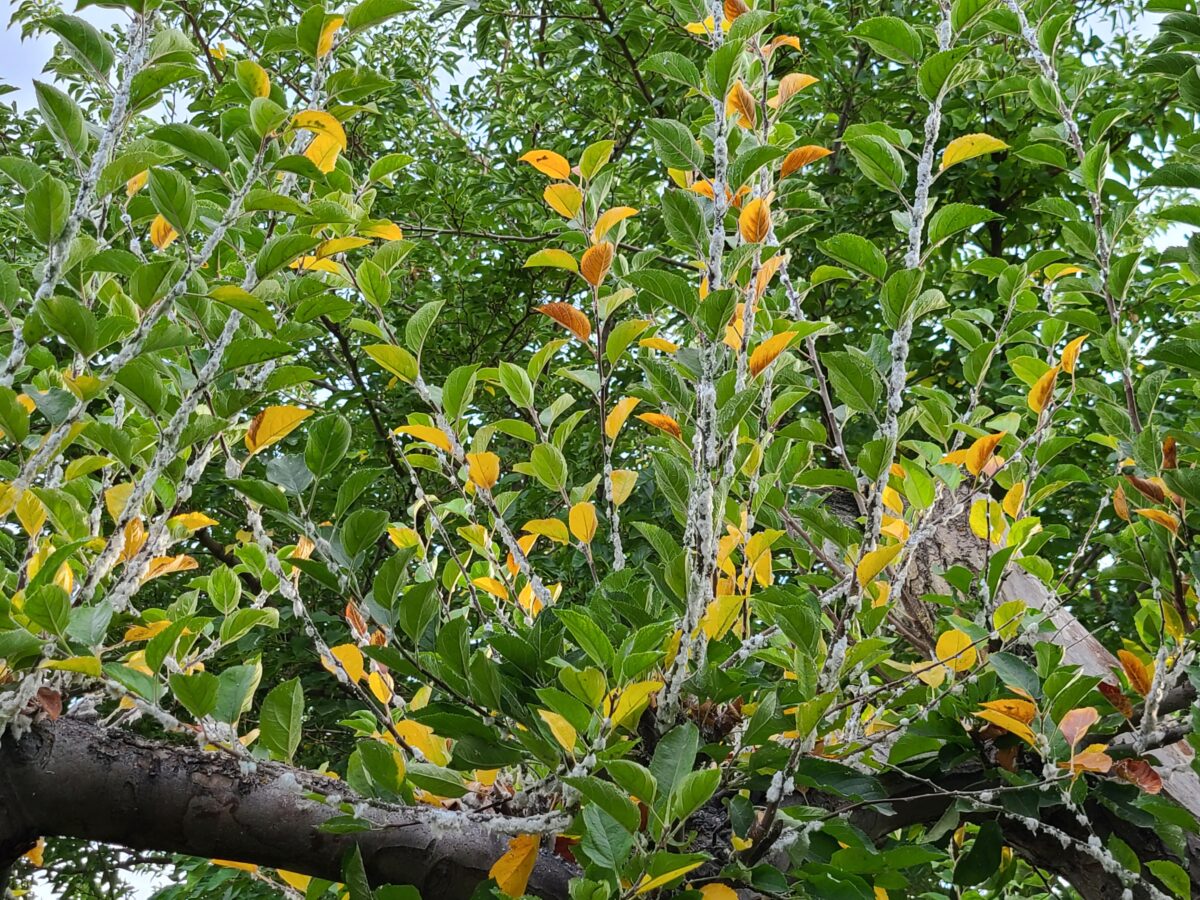
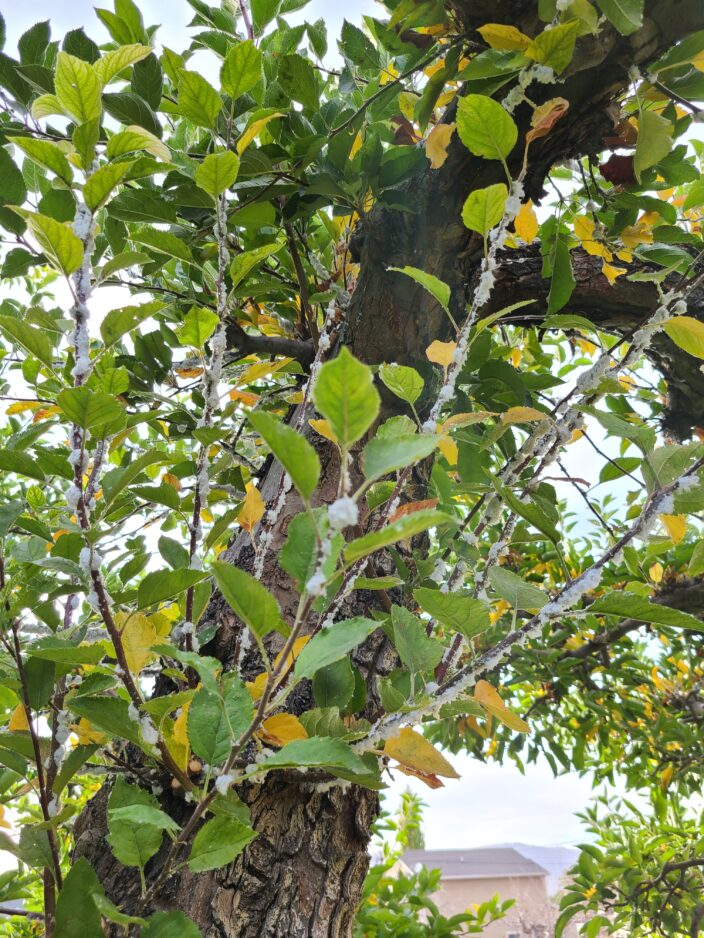
Question: Our apple tree has fluffy, white stuff on several of the limbs. Is there something we can use to get rid of this? I assume it is not good for the tree.
Answer: This looks like Woolly apple aphids, and you’re right, they aren’t good for the tree. These aphids get their name from the white strands of waxy material secreted from the backs of adult aphids. The waxy strands form shaggy mats that look fluffy or cotton-y and help to protect the aphids.
These aphids feed a little differently than the aphids you’re used to seeing in your garden or orchard. Instead of sucking out the sap from the underside of leaves and tender new stems, these aphids feed on the tree sap through tender bark, at pruning wounds and other bark injury sites. A heavy infestation on the young branches of an apple tree can also cause galls on the twigs and leaf yellowing.
Woolly apple aphids also feed below ground, on the roots, which causes galls to form on the roots. The galls can affect root function and reduce the growth and vigor of an apple tree.
Right now, there isn’t a lot you can do about this pest. The aphids will be entering their overwinter stage, mostly in the root zone below ground. You can knock a lot of them off the twigs and branches with stiff sprays of water from several different directions, but your real control will begin next growing season.
Next year, start watching for wooly apple aphids in mid-spring. You’ll probably see them first at the edges of old pruning cuts or on root suckers.
At that time, you can spray your trees with a broad-spectrum insecticide and 1% horticultural oil mixed in. Insecticide alone probably won’t effectively penetrate the waxy coating.
If you prefer to grow organically or want to preserve some of the beneficial insects that help to control wooly apple aphids, you can use a spray of insecticidal soap plus 1% horticultural oil. Target the woolly colonies with your sprays.
With either spray option, you’ll need to spray heavy enough to see the spray dripping off the twigs and branches.
Question: I have a few trees in my yard and they’re starting to drop their leaves. Is it OK to leave the leaves on my lawn? Leaves don’t get raked up out in the canyons and foothills, and it doesn’t seem to bother the plants.
Answer: There’s a big difference between the landscapes of our canyons and foothills and the landscapes in our neighborhoods. Residential landscapes have plant combinations you’ll never see in natural settings — not only won’t you see trees in lawns, you won’t even see lawns.
Trees will be loosely grouped together with understories of small trees, shrubby plants, perennials and annuals of varying heights and densities. Nature’s lawn is actually a meadow with various grasses and broadleaf plants. Neither the forest understory nor the meadow grows in a dense, closely spaced mat.
When deciduous trees in the forests drop their leaves in the autumn, most of the leaves settle down onto the forest floor where they sift down through the understory plants to form a loose, mulch-like layer that slowly decays to return nutrients to the soil. In your home landscape, you have a lawn that is a very dense stand of just one or two species of grass.
If you let the autumn leaves sit on your lawn, they can form a tight mat that rests on top of the grass and decomposes very slowly, which can increase the chances of fungal growth under the layer of leaves.
The layer of leaves can persist throughout the winter and make extra work for you in the spring in addition to affecting the health of your lawn.
You can ignore the leaves that settle onto your shrub and flower beds, if you want to, but you should remove the leaves from your lawn unless there are so few leaves you can easily see the lawn through the leaves.
Choose the method that works best for you — raking, mowing with a bagging mower, or mowing frequently with a mulching mower for lawns with fewer leaves (the more leaves, the more frequently you’ll need to mow).
Don’t waste those leaves by dumping them in your garbage can. Add them to your compost pile, work them into your garden soil, share them with a neighbor or place them in your green waste collection can.