EveryDay Learners: Give this a tri – A tested method for helping kids learn
Courtesy
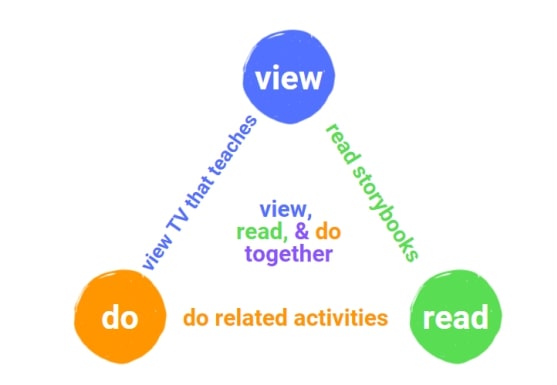
The PBS Learning Triangle illustrates the most optimal way for children to learn new skills.There is no one-size-fits-all approach when it comes to how children learn. Each child is uniquely different and as such often vary in what way they learn best. Consider yourself as an example. Some of you may learn best through visual demonstration, some through individual study and some through their own practice. This can make learning difficult in larger groups if only one teaching method is adopted and used. While there is no getting around this dilemma, there is a solution to learning that can prove to benefit all children: the Learning Triangle.
Created by PBS and utilized in all United Way Ready to Learn lessons taught, the Learning Triangle adopts the three most-prevalent styles of learning — view, read and do — and puts them together, creating an optimal environment for growing and adopting new skills. While it can be done in any order, the general first step is view.
Contrary to popular opinion, not all media is bad. In fact, media, when used wisely, can be an incredible teaching tool for children. Shows like “Daniel Tiger” and “Clifford” that teach critical social and emotional skills are just two examples. Considering these shows, watching video clips about understanding anger, working through feelings with friends, and methods to calm down through these shows can be an excellent starting point to utilization of the Triangle.
The next step is to read. There are an abundance of children’s books that teach crucial lessons about development for all ages. Books that compliment lessons taught in the previously viewed videos help solidify knowledge about the subject or skill being discussed. For example, Kevin Henkes is one of the best authors when it comes to teaching children about social and emotional skills. His books like “Wemberly Worried,” “Sheila Rae the Brave” and others give wonderful guidelines on healthy ways to view and understand emotions.
Finally, do. This last step should be anything but complicated. If learning about emotions, this step can be as simple as discussing a time a child felt angry and why. If learning about rhyming, recite the child’s favorite rhyme and make a dance to go along with it. Regardless of what is done, action on a skill is one of the greatest ways for children to solidify their new knowledge.
The Learning Triangle, when taught to children, can be extremely effective. Without realizing it, adults often use this method when trying something new. You might see a cooking TV show making the most delicious chocolate chip cookies. Then, you may look up a new chocolate chip cookie recipe, reading through and studying the ingredients. Finally, you take action and prepare the cookies. Suddenly, you’ve learned a new skill using the same three steps in the Learning Triangle.
While this method has proven effective, it is important to remember that children need time and practice when learning new skills. Often, it takes six weeks of practice before they are able to perform it on their own. The best thing any adult can do though this process is offer their love, patience and encouragement to try again.
Community

Connecting with the elderly: Utah Valley mayors go on Meals on Wheels deliveries in their cities

Celebrating together: Holi Festival of Colors returns to Krishna Temple