On safari in Africa without an ATV
-
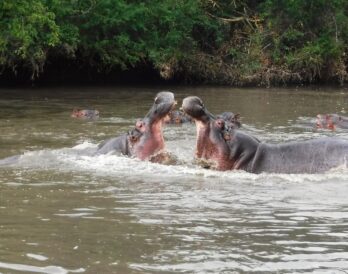
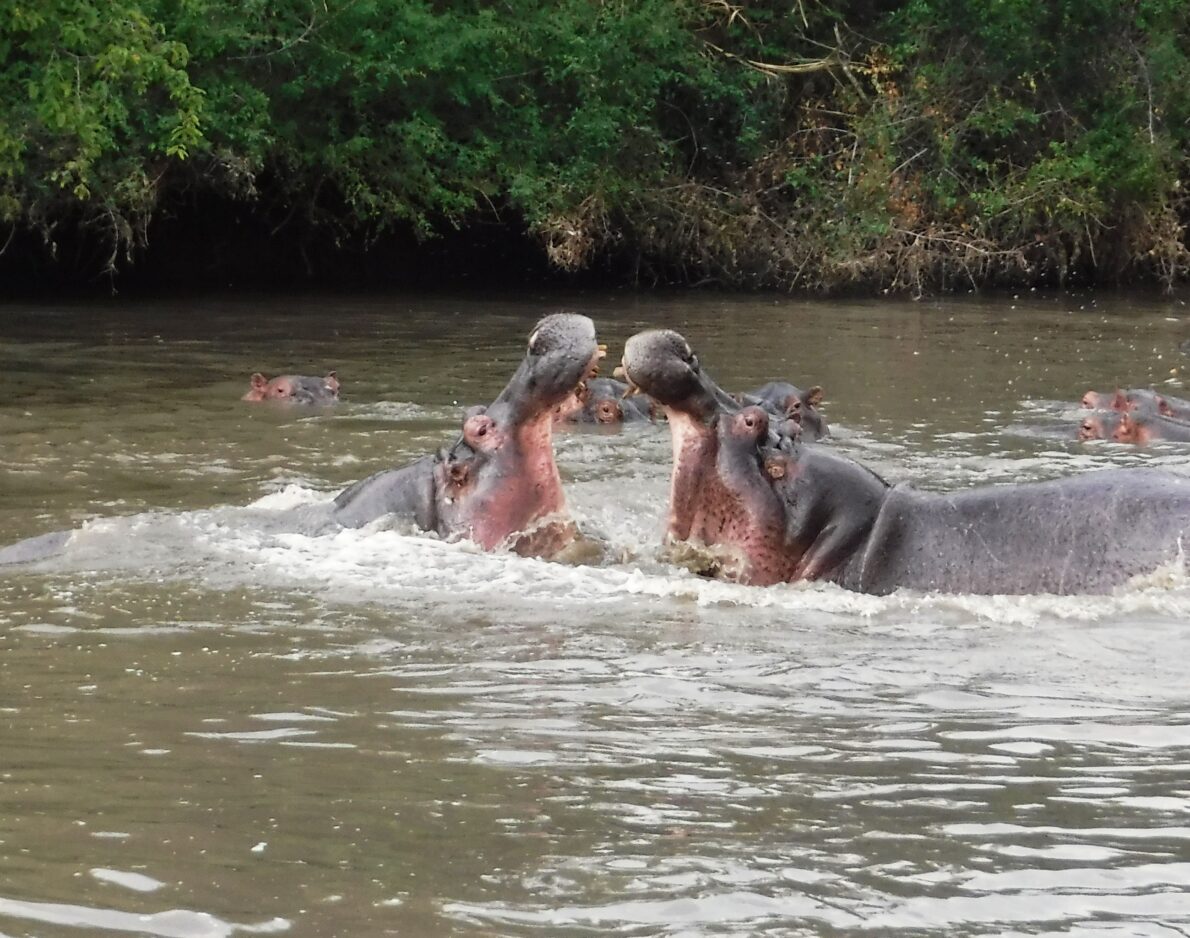
- Two unhappy hippos face off against each other. (Lynn R. Blamires, Special to the Daily Herald)
-
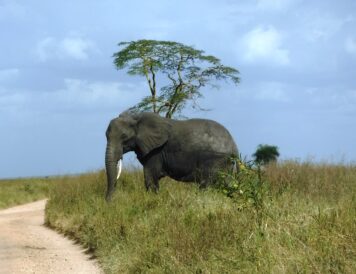
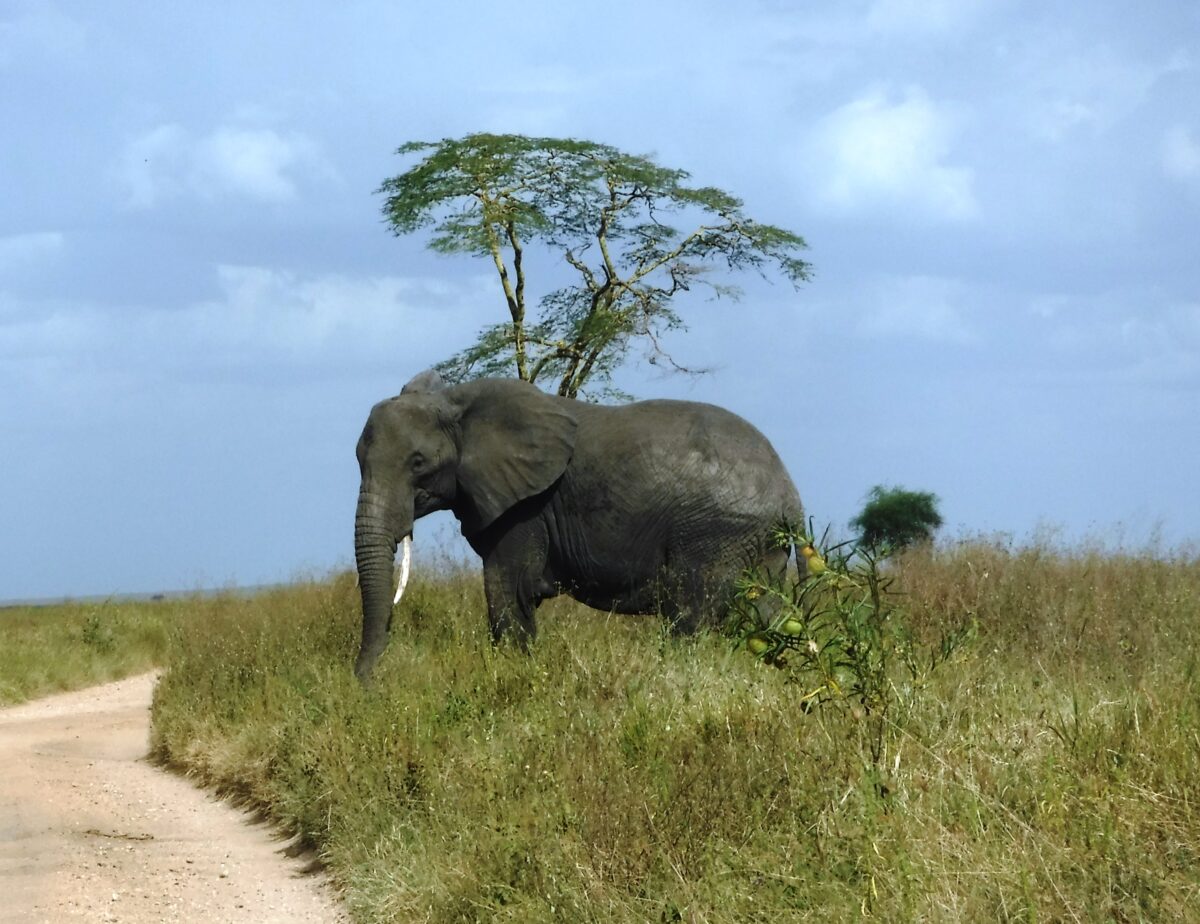
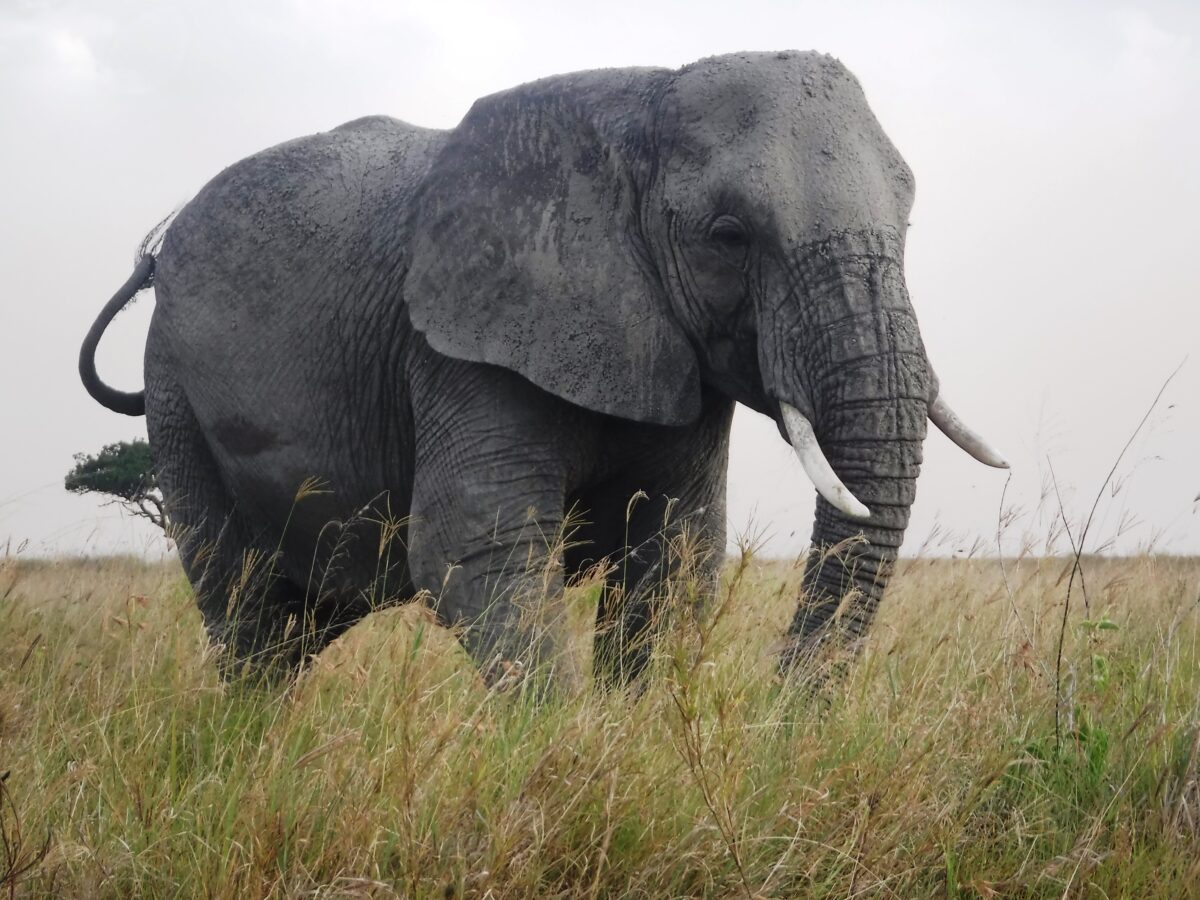
- Seeing an elephant in the wild is vastly different than seeing one in a zoo. (Lynn R. Blamires, Special to the Daily Herald)
-
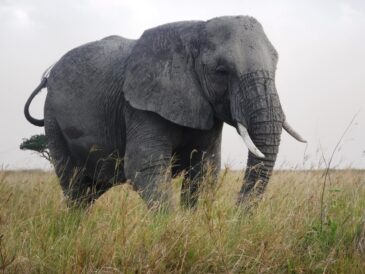
- Another elephant, up close and personal. I was safely inside the Land Cruiser. (Lynn R. Blamires, Special to the Daily Herald)
-
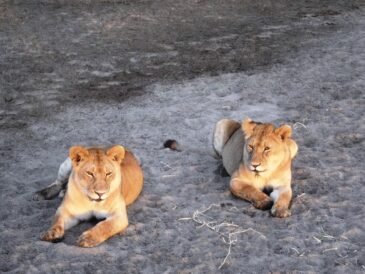
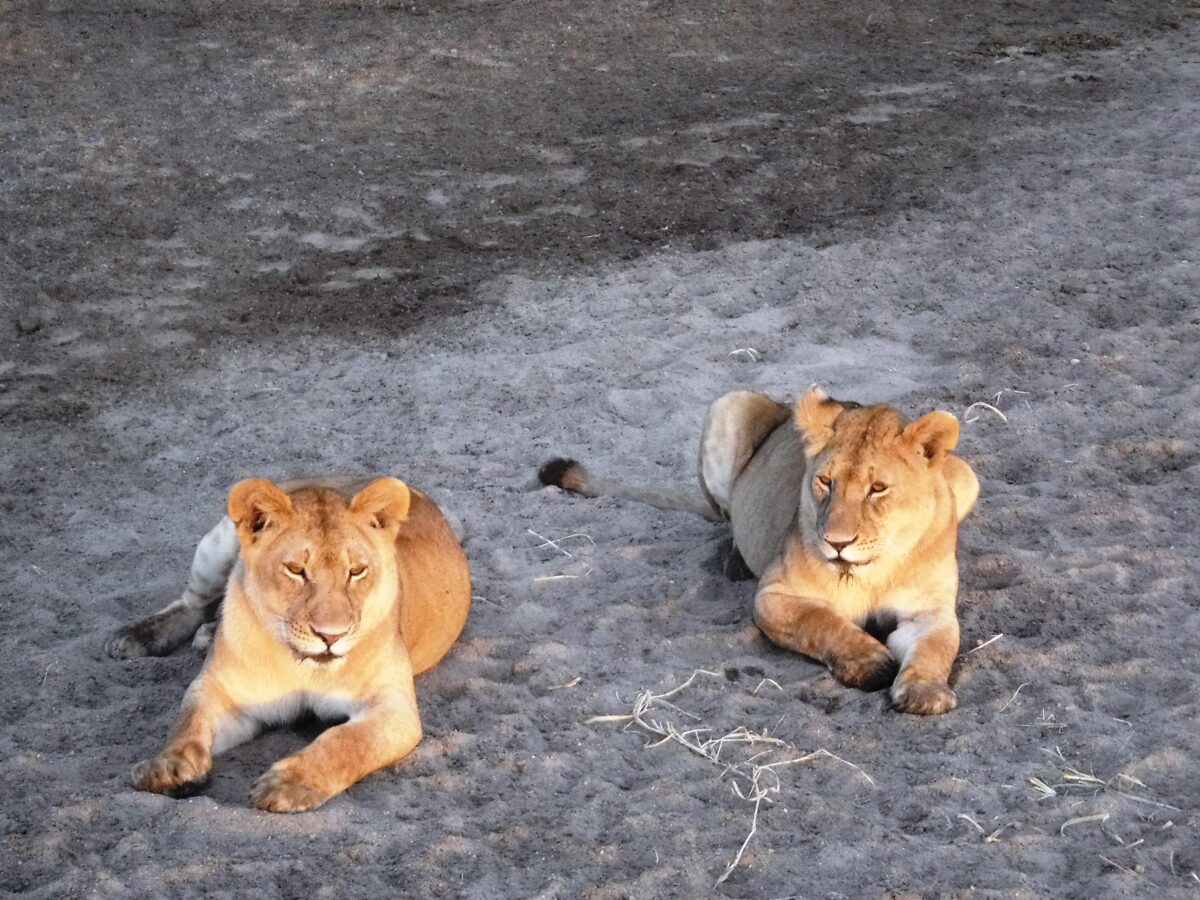
- Two perfectly harmless-looking female lions, not. (Lynn R. Blamires, Special to the Daily Herald)
-
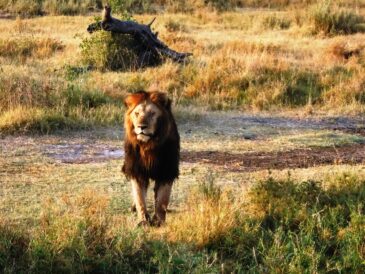
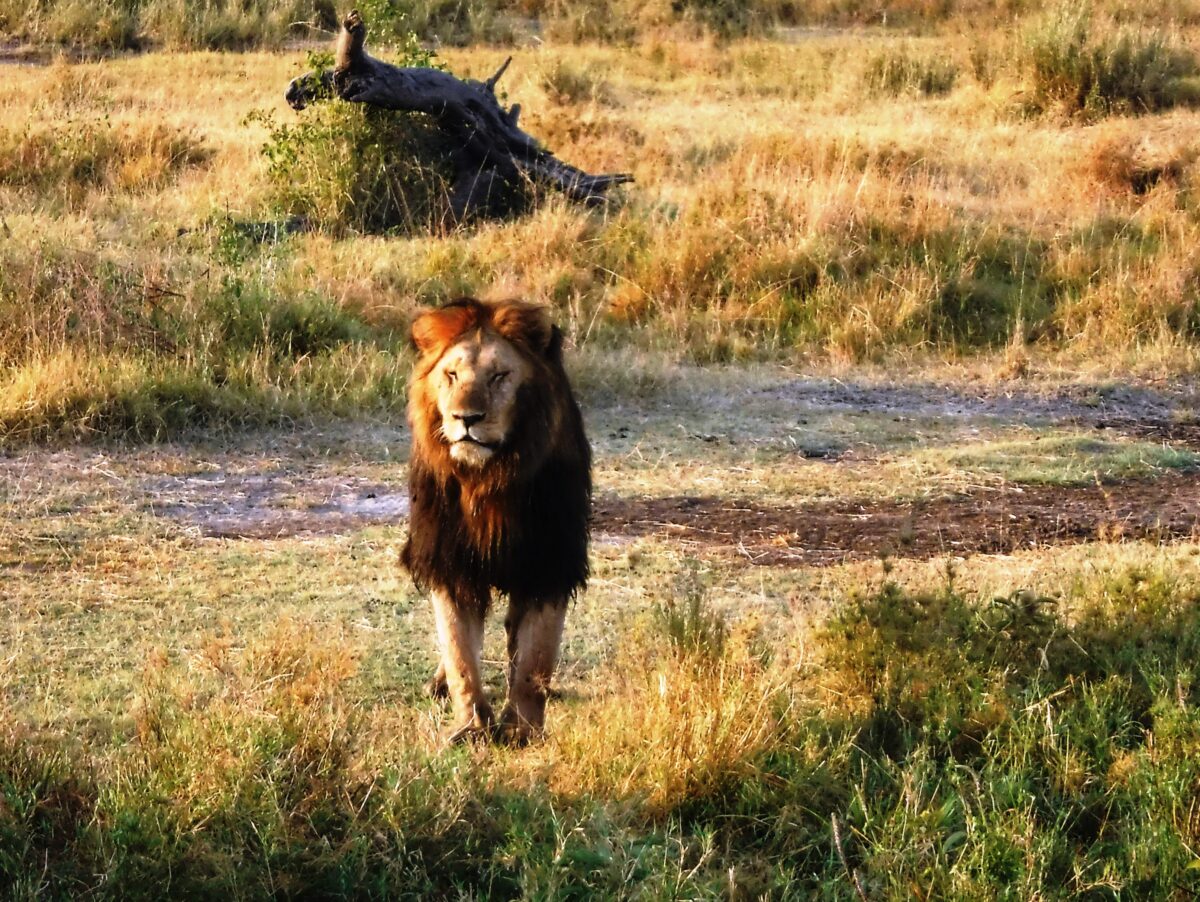
- The majestic lion – here comes trouble. (Lynn R. Blamires, Special to the Daily Herald)
-
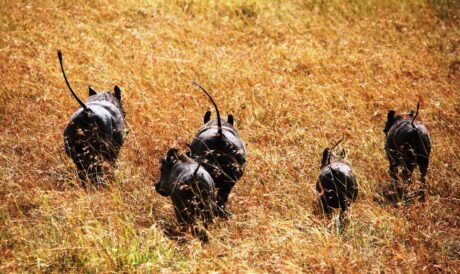
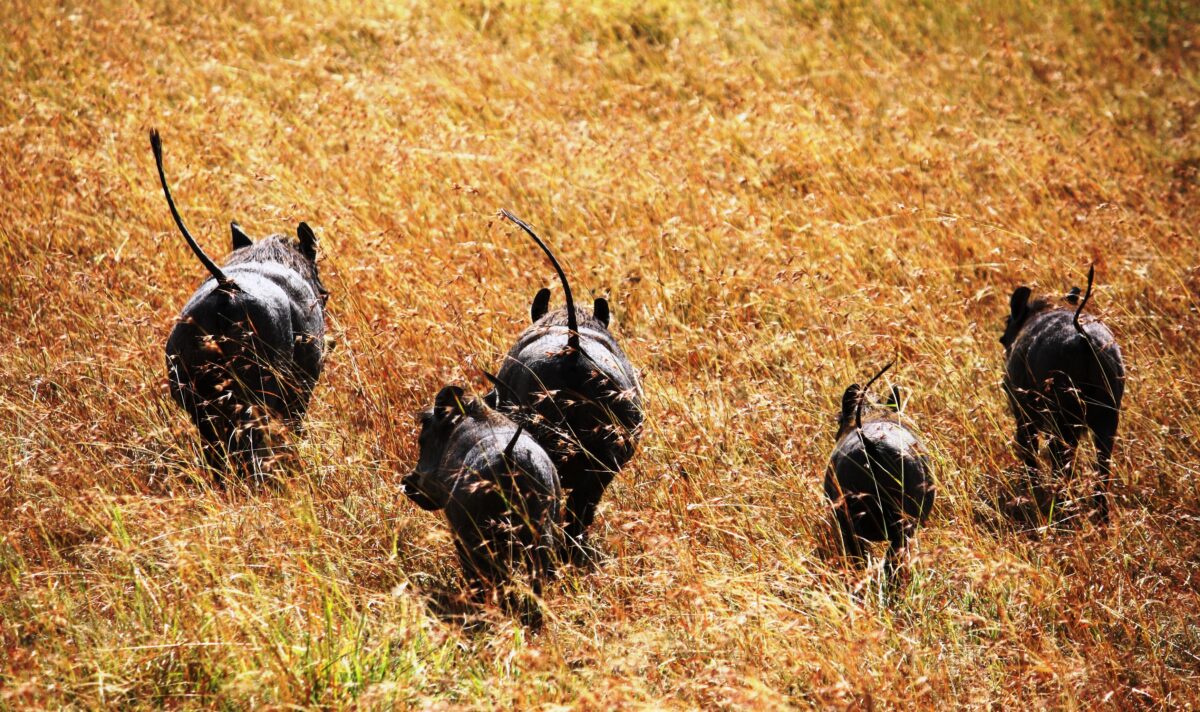
- A sounder of warthogs running with their tails high. (Lynn R. Blamires, Special to the Daily Herald)
-
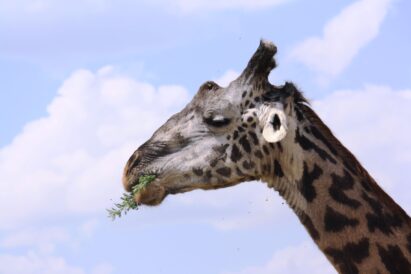
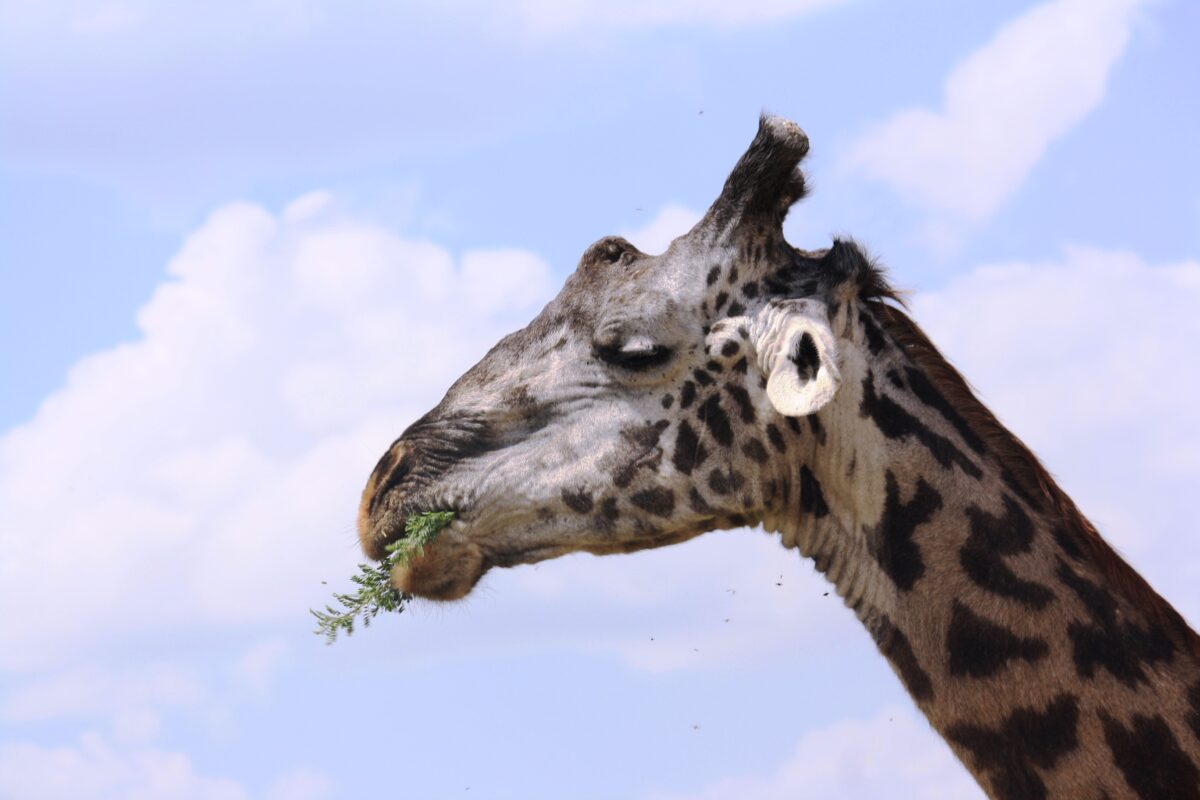
- A giraffe chomping on a treat. (Lynn R. Blamires, Special to the Daily Herald)
-
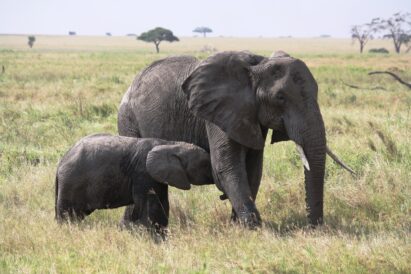
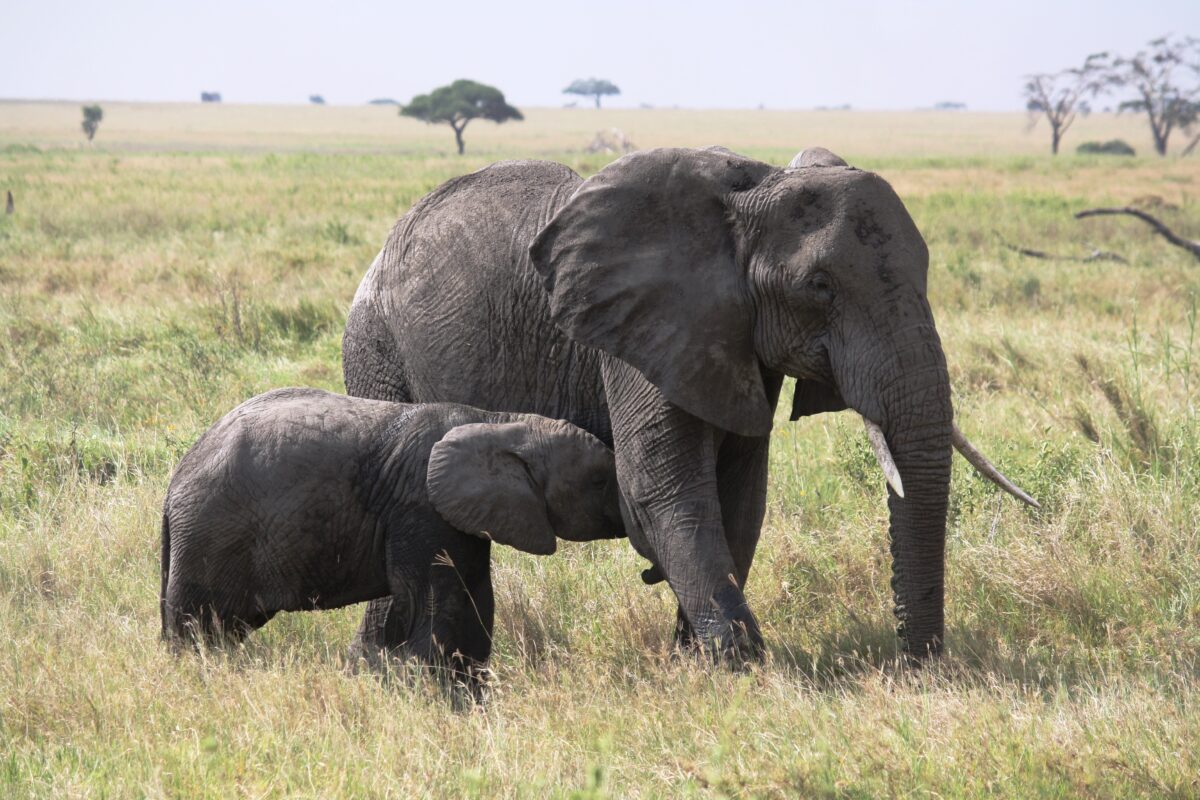
- A mother with her baby. (Lynn R. Blamires, Special to the Daily Herald)
-
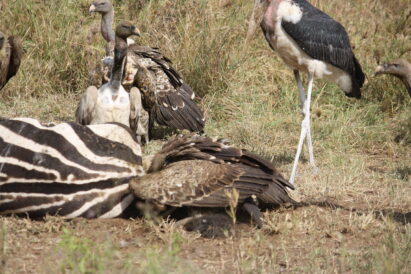
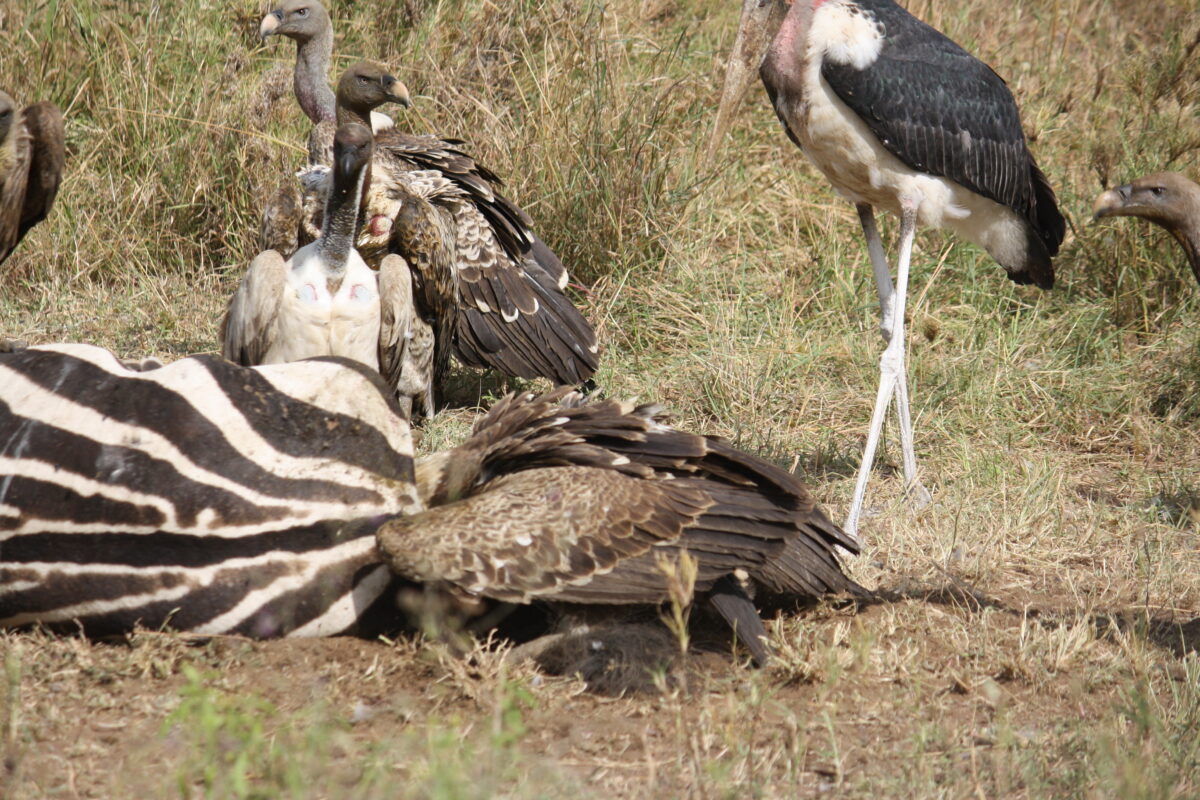
- A vulture feeding deep in the carcass of a zebra. (Lynn R. Blamires, Special to the Daily Herald)
-
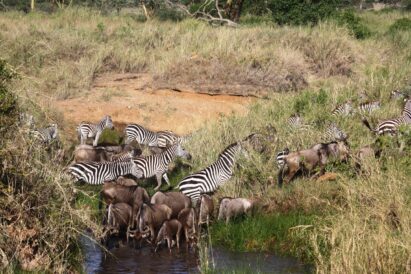
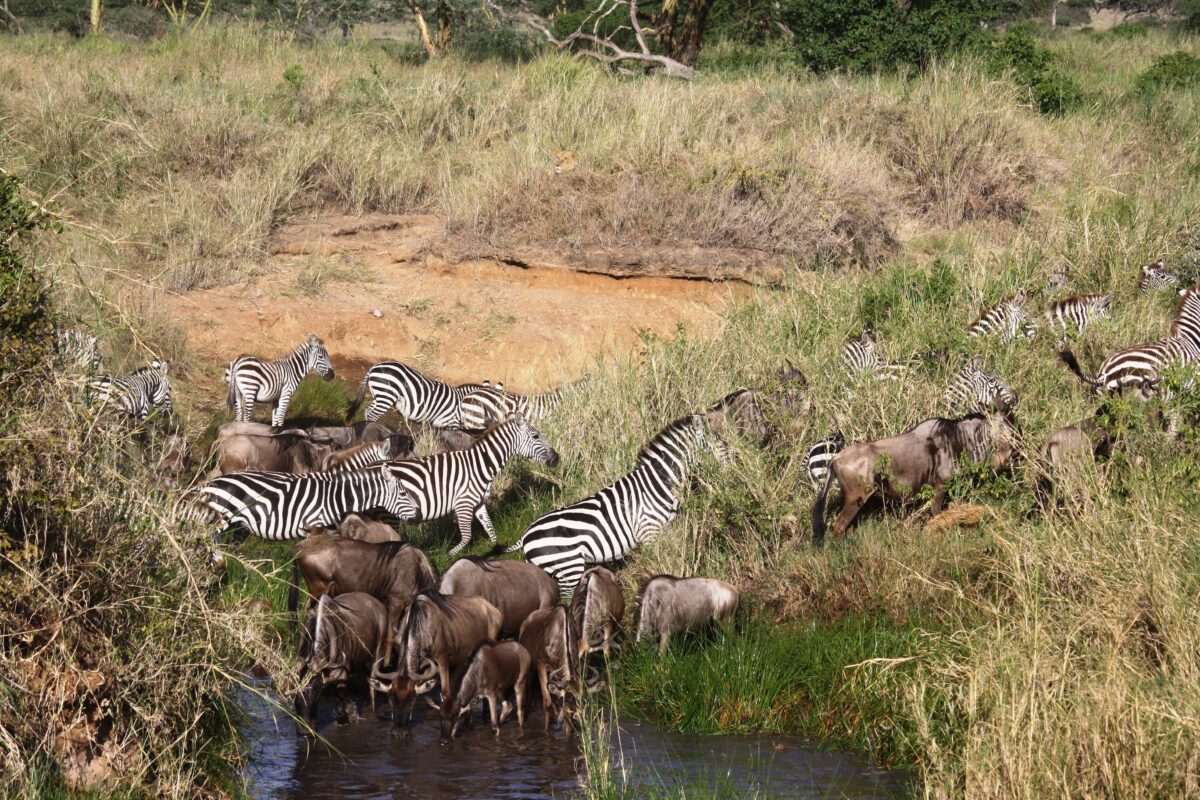
- You have to look closely to make out the lion hidden in the grass, watching the migrating zebras and wildebeests crossing the river. (Lynn R. Blamires, Special to the Daily Herald)
The safari was a bonus. The real reason we went to Africa was to visit my son, David, and his family. As a mining engineer, he was working at the Bulyanhulu Gold Mine in Tanzania. My son knew that if he could get his mom excited about seeing the grandkids, it would be up to me to figure out how we were going to do it. Well, she did get excited, and the rest is history.
I was relieved to learn that there is no such thing as a Tanzanian devil. They are all in Tasmania, but I did learn a lot about the animals in the Serengeti National Park. It was especially fun to learn the animal pack names. Each animal has its own designation as a group. Instead of a group of whales, we say a pod of whales, even though we didn’t see any whales on this trip.
Our guide picked us up in Mwanza. We rode in a specially designed Toyota Land Cruiser with a pop-up roof, convenient for standing and observing the wildlife. Before getting in, I made sure the vehicle had no dents from charging animals.
Making our way out of town to the west entrance of the Serengeti Plain was a challenge. The road is marked for two lanes of traffic, but there were actually three lines of vehicles. Motorcycles are exempt from any traffic laws, and there are not just a few of them. In short, everyone knew how to use their horns – it was best not to watch.
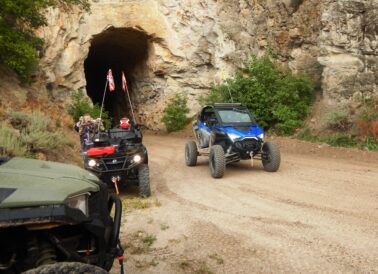
Entering the preserve, I felt right at home. The roads were dirt and not well maintained, just like an ATV trail. We arrived at the Mbalageti Safari Camp in the evening. Made up of separate cabins incorporated into this wild country, we were about three football fields away from the main lodge and restaurant. We couldn’t go outside of our cabin without an escort at night, but it was no comfort that security was armed with only sticks and flashlights.
After dinner, we got a closer look at our accommodations. The room was nicely appointed, the shower was built into a rock alcove, but the walls were made of canvas, which was a little disconcerting, especially since I was awakened in the middle of the night by the roar of a lion. Not close, but close enough. While I didn’t see or hear any mosquitoes, all the rooms we stayed in were enclosed with mosquito netting.
We came to see the wildlife, and we were not disappointed. We first came across a bloat of hippopotamuses. Known for their love of water, I was surprised to learn that they can’t swim. They use their buoyancy to come up for air, but they walk on the bottom and come out of the water to feed at night.
We watched a tower of giraffes feeding on Acacia trees. Their tongues, which have been measured at 21 inches, and their long necks allow them to pluck tasty morsels from high places only they can reach. It was fascinating to watch the giraffe chewing and swallowing. We could see the lump move all the way down its long neck.
When you see a kettle of vultures, you know you are in for a food fight, or at least a fight for food. We could see why vultures don’t have feathers on their heads or necks. They stick their heads far into the carcass to tear at the flesh.
I was encouraged to see parades of elephants with lots of babies. To me, it was a sign that they are doing well. We saw sounders of warthogs who stick their tails high in the air as they run through the tall grass. I learned that they do that so other warthogs can see them and follow, just like ATVs with whip flags. They have faces that only a mother could love.
We didn’t see basks of crocodiles, but we did see some. There are more in the Grumeti and Mara rivers where they take advantage of the crossing herds during the migration. We also didn’t see lounges of lizards, but we did see some.
The Serengeti can support a great variety of grazing animals because the animals have different diets. The wildebeest, for example, prefer short grass while zebras like the tall grasses. The small dik-dik antelope like the lower leaves on the trees, the impala likes those higher up, while the giraffe takes the leaves at the top.
A congress of baboons carried their babies on their backs and picked bugs off each other. They didn’t seem as active as the troops of monkeys we saw skittering through the trees. We passed clutches of ostrich and mobs of mongoose. We saw harems of impalas, packs of jackals and tribes of gazelles. We didn’t see leaps of leopards or coalitions of cheetahs, but we did see some.
We were fortunate to see a portion of the great wildebeest and zebra migration – a circular migration that runs 500 miles from Tanzania to the southwestern part of Kenya. The zebra and wildebeest run together in an interesting relationship. The wildebeest will watch the zebra, and if they make it safely through a section, then they will go.
We came across a herd of wildebeest and a dazzle of zebras crossing a creek when we noticed a disturbance in their movement. Our guide backed up so we could see down the ravine. Hidden in the tall grass at the end was a lion. We watched as the lion looked to be half asleep and very uninterested. Suddenly, he exploded out of the grass and took down a young zebra, dragging the meal to another location. My grandsons, Eli and Michael, thought that was great, while my granddaughter, Beka, cried for an hour for the poor zebra.
Coming to a pride of lions early in the morning, we noticed how the majestic male interacted with the females. We were parked in the middle of the pride with lions just a few feet away all around us. They all had the same disinterested look we saw on the lion lying in the tall grass. Our guide, however, told us that if one of us were to step out of the truck, it would be all over.
We spent four days in the Serengeti before moving on to the Ngorongoro Crater, an extinct volcano. Our lodge was on the rim some eight thousand feet above the floor of this 28 square mile crater. As we made our way up the rim, we passed through a lush rain forest that was in stark contrast to the Serengeti Plains.
The two days we spent at this crater and Lake Manyara were focused on an amazing variety of birds. One of the most impressive sights was a stand of pink flamingos. There were far too many to count. We learned that there are 500 species of birds that can be observed here.
The Serengeti covers some 12,000 square miles at altitudes ranging from 3,000 to 6,000 feet. Temperatures range from 59 degrees to 77 degrees Fahrenheit even though it is situated right at the equator.
Should you decide to go on a safari, the Internet is a good place to start. Safaris are a huge tourist attraction with many game preserves all over the country, so it is important to learn where you would like to go and what you want to see. A good guide is important, so ask lots of questions. Our guide knew the animals and where to find them. He also knew his birds.
Safaris are usually all-inclusive, which includes food, transportation, and lodging. Tips are extra. We used Rickshaw Travel, but there are more guide services to choose from. Some of the food in Africa was a little strange, but I always found something I liked. If you go, take plenty of water, keep the rubber side down, and discover what an amazing place Africa is.
Lynn R. Blamires can be reached at quadmanone@gmail.com.