
ATV Adventures: Product review: the Rhino Hitch and safe UTV loading practices
-
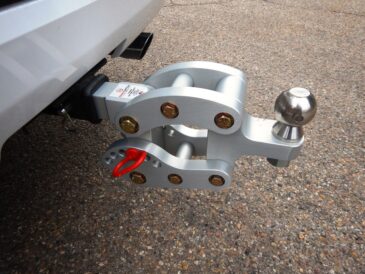
- The Rhino Hitch. The ball can be flipped for optimum performance.
-
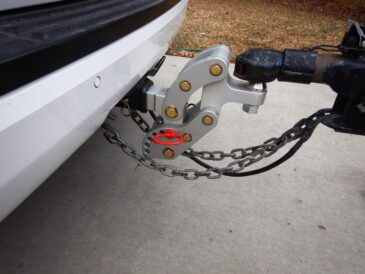
- The trailer can be leveled with the Rhino Hitch while it is attached to the tow vehicle.
Courtesy Lynn R. Blamires
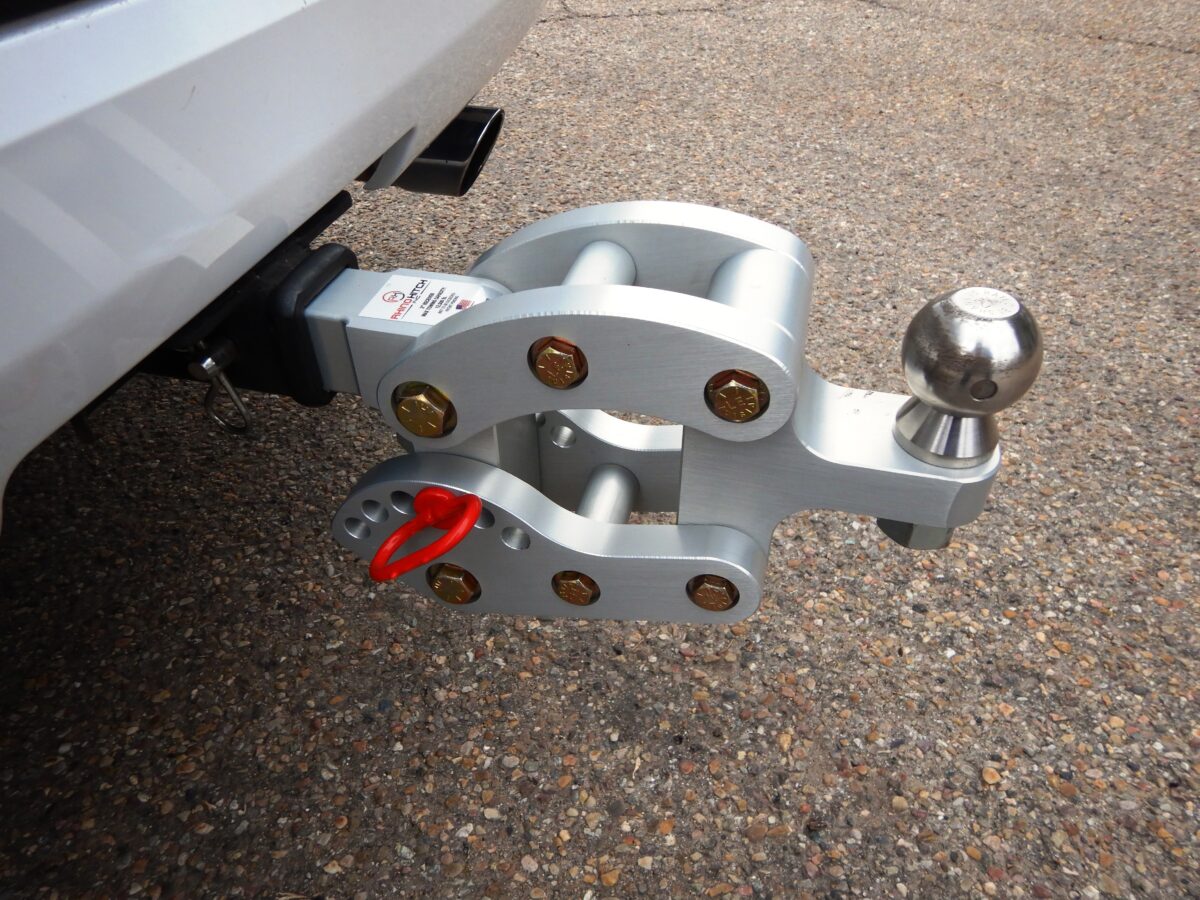
The Rhino Hitch. The ball can be flipped for optimum performance.
The Salt Lake Off-Road Expo, held at the Mountain America Exposition Center, is coming up in March. It is always a source of new ideas and products for the OHV community. One that caught my attention is the Rhino Hitch, a product based right here in Utah.
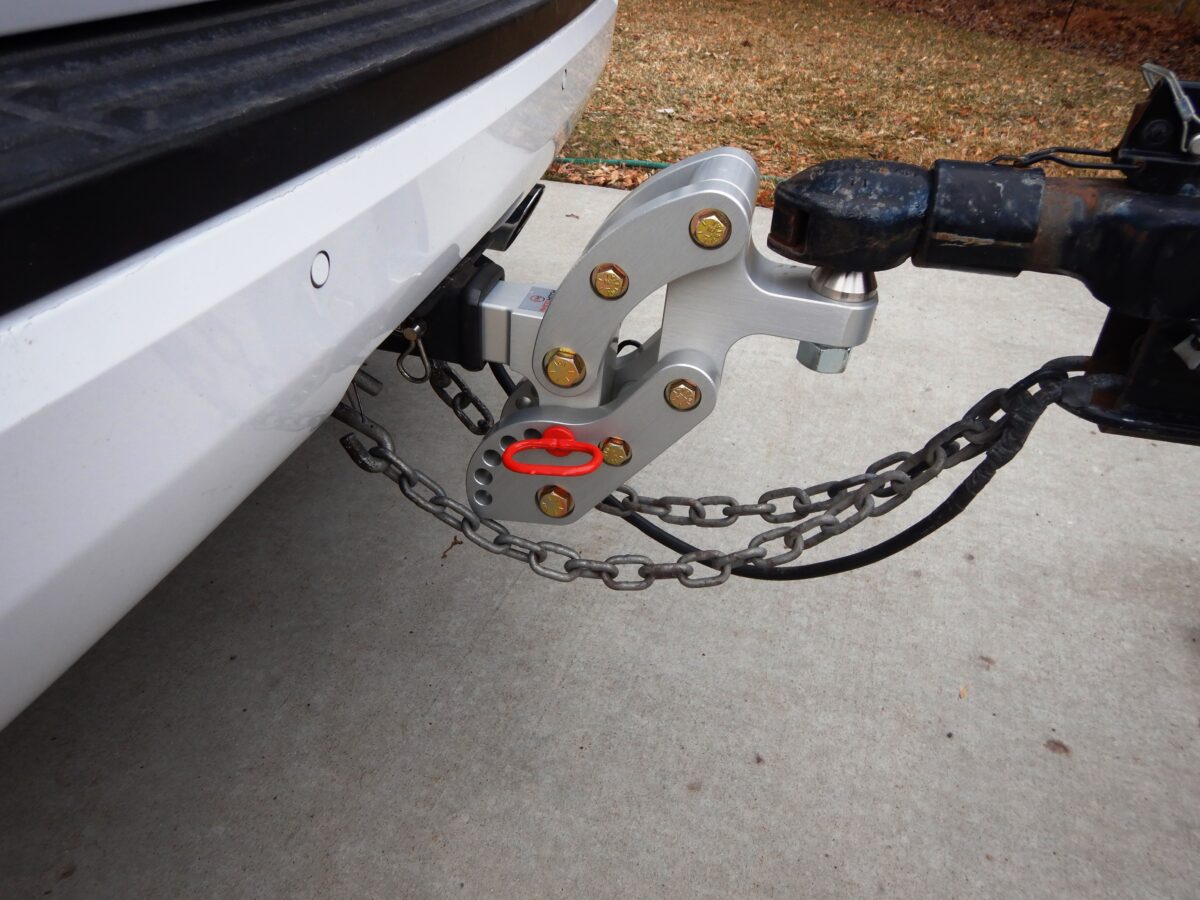
Having used one for the past seven years, I feel qualified to talk about it. The Rhino Hitch is an adjustable coupler with a nine-inch height range. The whole assembly rotates to adjust simply by removing a pin. Using your trailer jack, you can adjust the ball to level your trailer, then reinsert the pin, hook up the chains, connect the power, and you are ready to go.
Made of high-grade 6061 billet aluminum, this hitch is assembled with industrial-strength bolts and is made to outlast your truck. Clint Hedberg, who leads marketing for the Rhino Hitch, showed me one of the rocker arms used in the hitch assembly. A stress test had been applied to the piece to determine its strength. The arm was damaged, but it took 50,000 pounds of pressure to cause it to fail.
I have seen other adjustable hitches, but none that can adjust trailer height to pull level while attached. Pulling a trailer level is basic to safe towing practices. Balancing the load is just as important. If my load is too far forward with too much weight on the tongue, I feel it in braking and handling. If my load is too far back, my trailer will start to fishtail.
I have two trailers – a 5×12 foot single axle and a 7×22 foot double axle to haul my UTVs. Each trailer requires an adjustment to tow with a level bed. The Rhino Hitch is easy to adjust with the trailer attached.
Courtesy Lynn R. Blamires
The trailer can be leveled with the Rhino Hitch while it is attached to the tow vehicle.
I have a two-inch receiver on my Ford Expedition. The Rhino Hitch that fits comes with two balls – 2″ and 2 5/16″. Switching them is a snap. A pin moves to the side of the ball that holds it in place. Pull it out, remove the ball, put the other ball in place, and center the pin.
The Rhino Hitch is set for a level tow on the larger trailer. That setting is too high for the smaller trailer to be level. The Rhino Hitch solves that problem. Now I can pull both trailers safely. With an easy adjustment, I can pull them both parallel to the ground.
I have learned that safe towing is about more than a strong adjustable hitch. While the smaller trailer does not have trailer brakes, the bigger one does. I didn’t understand the gain settings on the trailer braking system. I now understand that for the trailer brakes and my truck’s brakes to operate at peak efficiency, I need to reset the gain according to the trailer load.
Other important factors in loading a UTV include –
The truck’s towing capacity. The combined weight of the trailer and the load should be 2,000 to 3,000 pounds below the truck’s towing capacity. Pulling an overloaded trailer for long distances is a risk.
Load on level ground. This prevents the UTV from rolling sideways or tipping on the ramp.
Secure the trailer and the truck. Lock the trailer coupler onto the hitch ball, connect the safety chains in a cross pattern, and plug in the electrical harness. Secure the ramps. Set the emergency brake on the truck and put the transmission in neutral to prevent transmission damage. UTVs are getting heavier. Not using the emergency brake, will cause the transmission to handle the jostling action while loading.
Use a spotter. This ensures the UTV tires are centered side to side, and the UTV is loaded for proper balance. Using the 60/40 rule, place about 60 percent of the weight just slightly ahead of the axle. Too much weight behind the axle causes trailer sway. Once in position, put the transmission in park and apply the parking brake, if equipped.
Secure the UTV. Use heavy-duty straps. I prefer ShockStraps with the stretchable bone. Don’t rely on the winch; it can kink, snap the line, or damage the winch. Attach straps to the lower A-arms or frame tie-down points instead of upper suspension points. Pull front straps forward and rear straps backward to low points on the trailer.
When you ride in the backcountry, take plenty of water, keep the rubber side down, learn what it takes to arrive at the trailhead safely, and take a serious look at the Rhino Hitch at www.rhinohitch.com.
Lynn R. Blamires can be reached at quadmanone@gmail.com.