Garden Help Desk: Finding good alternatives to Bradford Pears
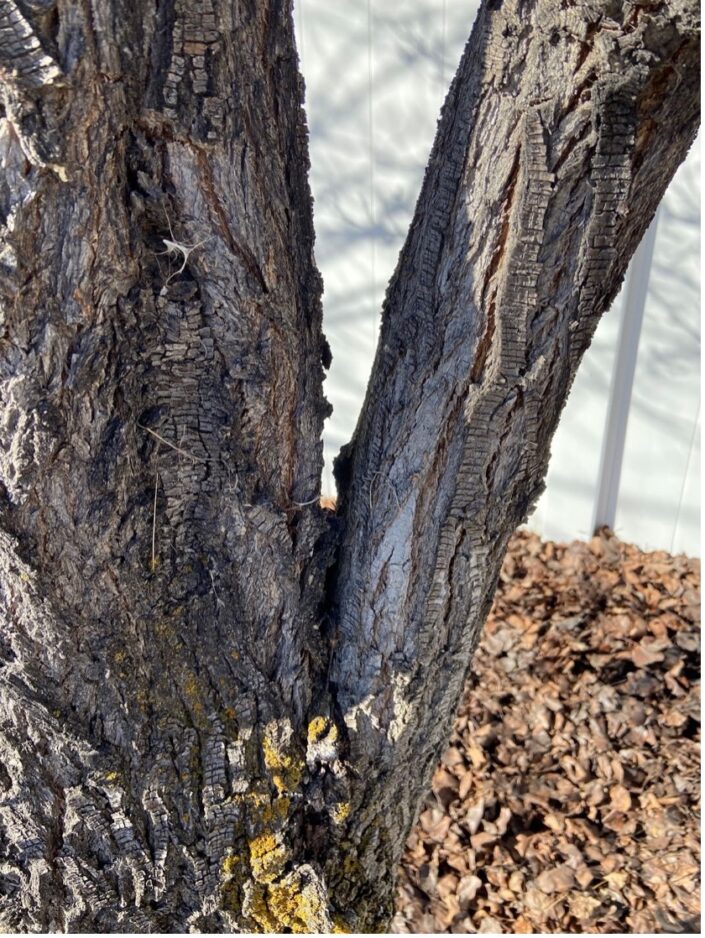
Courtesy Mary Hedengren
One characteristic of the Bradford pear is very narrow branch angles like the one seen here. These crotches are weak and prone to breakage.
I like the look of Bradford Pears, but don’t like the way they smell when they bloom! What are some good alternatives for my yard?
On the surface, the Bradford Pear is a nice tree. It blossoms with bright white flowers in spring, has dense foliage through summer and ends up with shiny red fall leaves. And to top it all off, there are small berry-like fruit that stay on the tree almost all winter!
But the Bradford Pear has a dark side, too. and lately it’s been falling out of favor. Some states have banned the sale of the Bradford Pear and even offer bounties on the tree to their citizens. Why is this tree so controversial?
In many places the Bradford Pear is invasive, crowding out native species This is less of a concern in our arid climate, but it can still be an environmental pest by not supporting native wildlife the way our native species do. Even though it isn’t spreading in our forests, the Bradford Pear is spreading in our suburbs, contributing to a “monoculture” of a pervasive tree planted more for its looks than for how it performs.
In addition to environmental concerns, there are other downsides to the Bradford pear in a landscape.

Courtesy Mary Hedengren
If Bradford pears don't receive good maintenance and inspections every year, problems like this branch crowded between other narrow branches don't get then care of while growth is small and simple to correct.
Here in Utah, the biggest problem is that Bradford Pears can be prone to breaking. The branches of these trees grow very close together and almost vertically. The narrow crotch angles of the branches make them brittle, especially under heavy snow or in winter storms. A large branch falling can cause a lot of damage. You can reduce the chances of a dangerous breaking limb with diligent pruning, but the Bradford Pear, especially as it ages, is not a sturdy tree.
Additionally, the blossoms of the Bradford Pear may look pretty, but most people think they smell terrible.
Finally, Bradford Pears send up suckers that can turn into saplings…which then send out their own suckers. You may have to cut out suckers several times a year. And Bradford Pear fruit aren’t always sterile either. It’s easy to see how these trees can get out of control!
If all of this convinces you to remove your Bradford Pear or not plant one, there are many tree varieties that can provide many of the same benefits.
The serviceberry, usually familiar as a shrub, also exists as a tall single-trunk or multi-trunk tree. Consider varieties Autumn Brilliance (Amelanchier x grandiflora “Autumn Brilliance”) or Snowcloud (Amelanchier laevis “Snowcloud”) for showy white flowers in spring, berries, and orange-red foliage in autumn. The serviceberry may be one of the best replacements for a Bradford Pear.

Courtesy Meredith Seaver
The fall color on a healthy Bradford pear can add beauty to the fall landscape, but this tree needs consistent attention and good care to avoid its potential problems.
Another tree with white flowers, berries and bright leaves is Thornless Cockspur Hawthorn (Crataegus crus-galli “Inermis”) This is, just as the name implies, a thornless hawthorn! It’s a very hardy and forgiving plant with dense branches. Like the serviceberry, this hawthorn can be a tree or a shrub, even a hedge.
Crabapples have spring flowers like Bradford Pears, but smell much, much better. Consider native varieties like the Sweet Crabapple (Malus coronaria) over potentially invasive Asian varieties (Malus toringo and Malus floribunda Sieb. Ex Van Houtte).
Not to be confused with our native red twig dogwood shrub (Cornus servicea), flowering dogwood trees (Cornus florida) boast large spring flowers, dark red berries and burgundy fall foliage. Be aware that while the flowering dogwood does grow in Utah, it may not thrive because because it’s not suited to our hot, dry climate and alkaline soils. Your flowering dogwood may not reach the height and flowering level described in its description.
You may be happy with your Bradford Pears if you look at them more than you smell them, but you might want to consider other options for flowers, foliage, and fruits instead of defaulting to the ubiquitous Bradford Pear.
How often should I water to establish new plantings?
There isn’t a set amount of water or single frequency for watering new plantings. The watering needs of new transplants depend on the type of plant, its size, the type of soil and the time of year.
In general, plants should be watered deeply at planting and then mulched. That deep soak at planting time makes all the difference. In my own yard and garden, I fill the planting hole with water first, let it soak in, plant, and then give another deep soak. After that a deep soak may be needed once every 4-7 days, depending on soil type and weather. Keep in mind that deeper, less-frequent watering is best.
The best watering practice is to pay attention to your plants and the weather, checking soil moisture about an inch or two down in the soil every few days and watering deeply as needed, instead of watering on a set schedule.
-
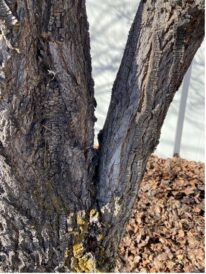
- One characteristic of the Bradford pear is very narrow branch angles like the one seen here. These crotches are weak and prone to breakage.
-
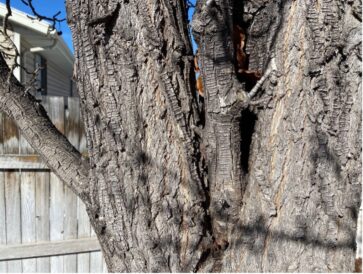
- If Bradford pears don’t receive good maintenance and inspections every year, problems like this branch crowded between other narrow branches don’t get then care of while growth is small and simple to correct.
-
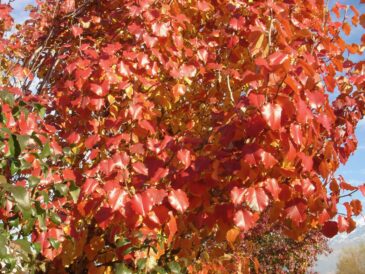
- The fall color on a healthy Bradford pear can add beauty to the fall landscape, but this tree needs consistent attention and good care to avoid its potential problems.
Community

Design to impress: Fashion designer with Utah County ties featured in Vogue Runway
BYU: New research finds all major AI models ignore faith, religion in responses
A new multi-university academic consortium led by Brigham Young University has found AI models have significant ...