Garden Help Desk: Identifying and dealing with pea weevils
-
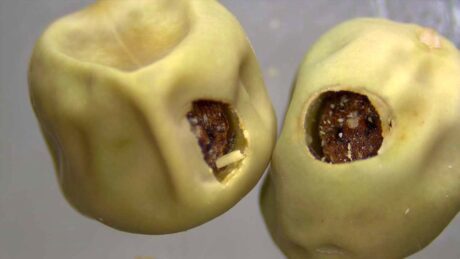
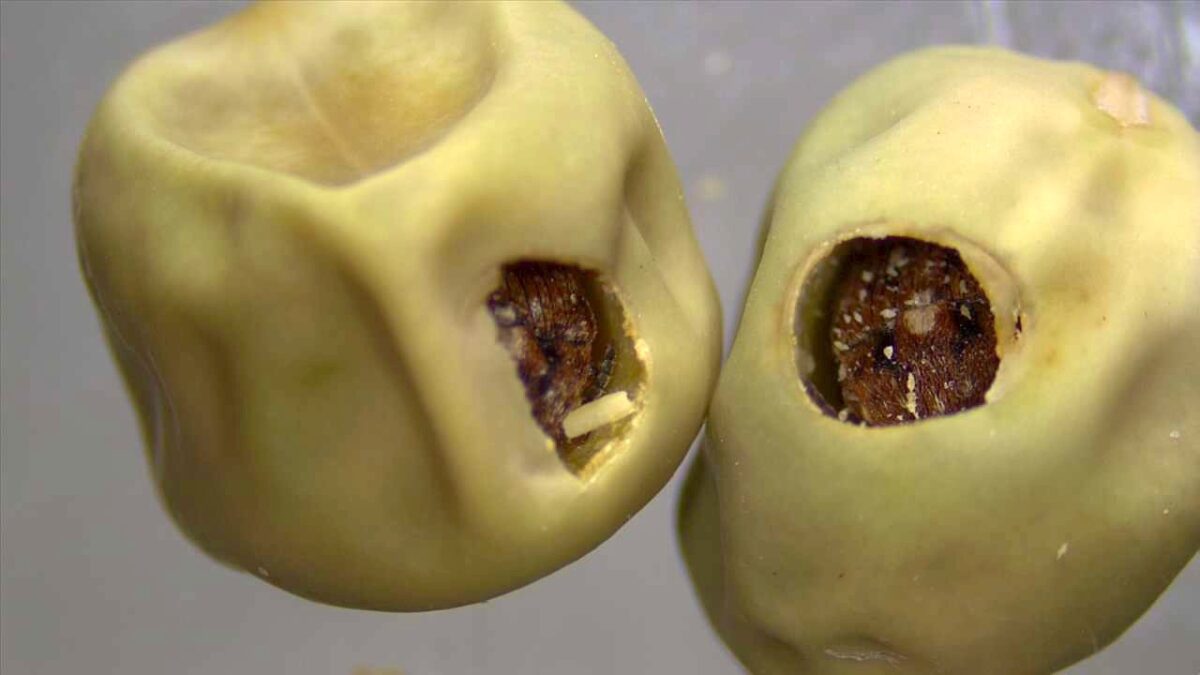
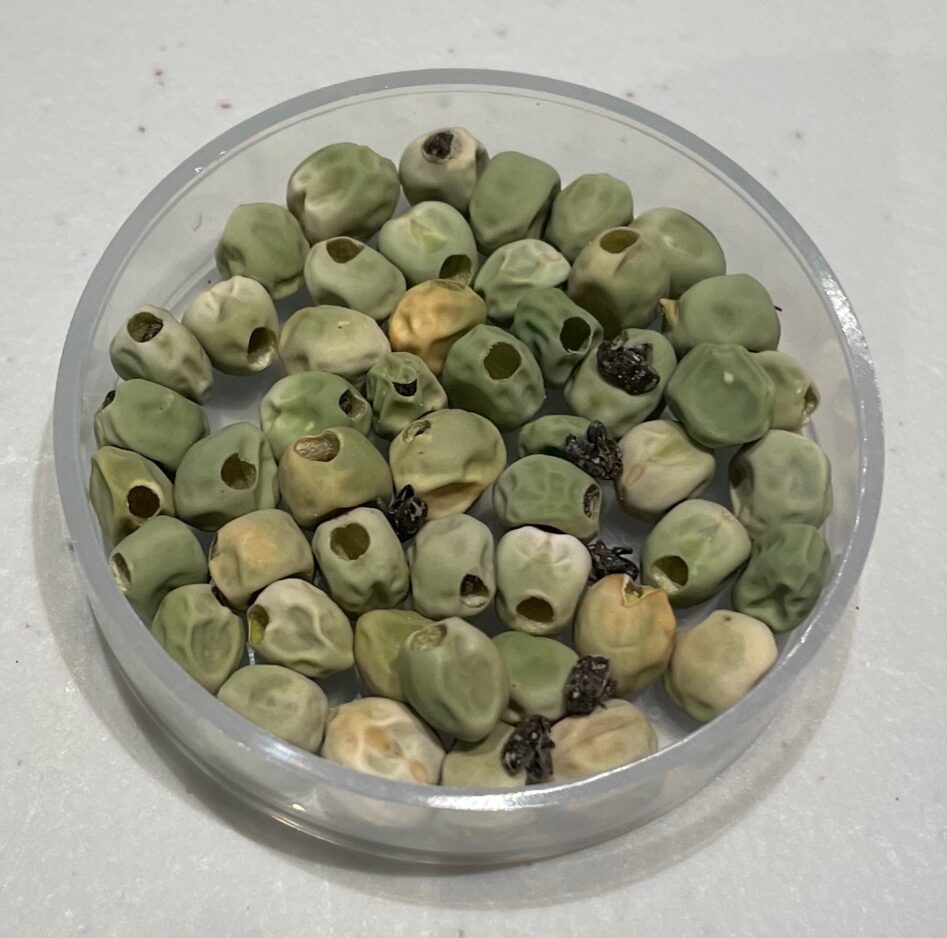
- Pea weevils pupate inside individual pea seeds and make a hole when they are ready to exit the seed.
-
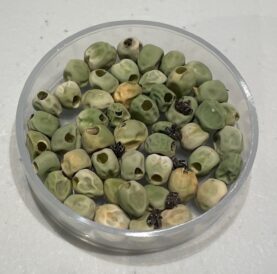
- Pea weevils leave large exit holes in pea seeds when they leave the peas.
-
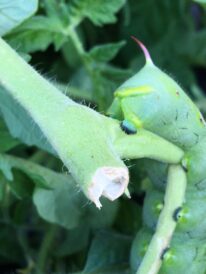
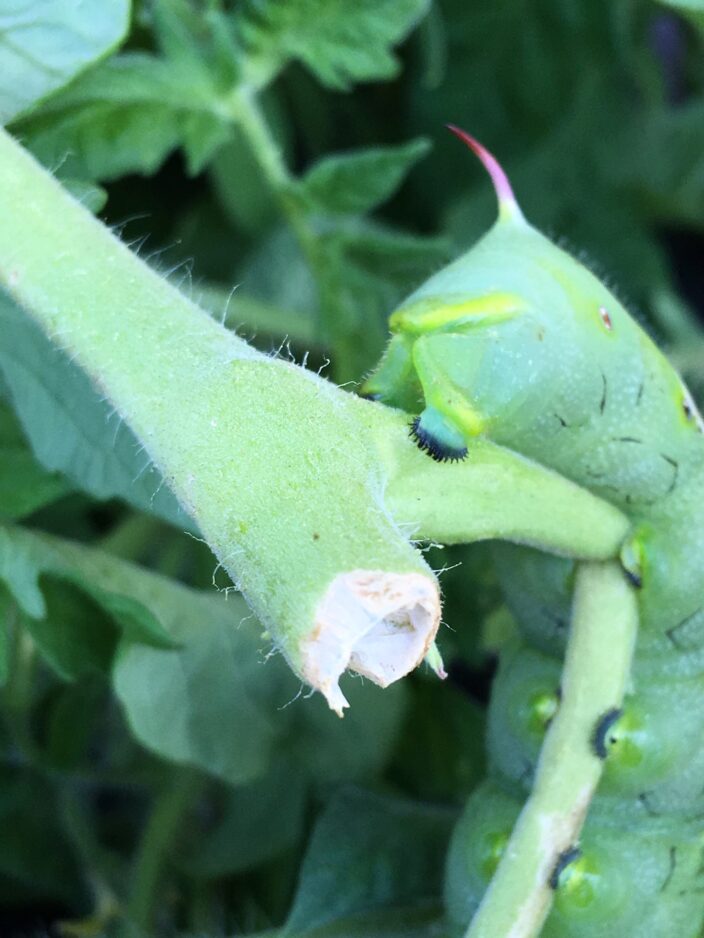
- The spine on the hind end of hornworms gives them their common name.
-
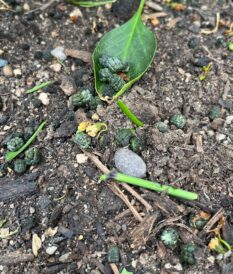
- Hornworm frass (excrement) is one clue that hornworms are present in a garden.
-
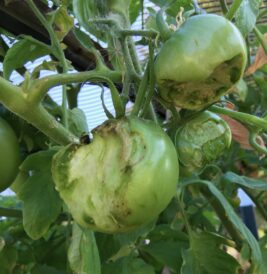
- Instead of notched edges or small holes in leaves, larger hornworms will consume entire leaves and leave coarse, rugged looking damage on fruits.
-
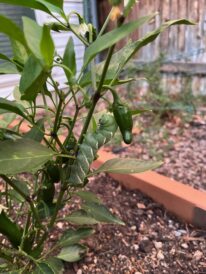
- Hornworms can be quite large but are easy to overlook because their coloring helps them to blend in with garden foliage.
Courtesy Meredith Seaver
Pea weevils pupate inside individual pea seeds and make a hole when they are ready to exit the seed.
I was in my shed sorting through my vegetable seeds, and I notice these little bugs crawling around in my bag of pea seeds. Some of the seeds have holes in them. What are these bugs, how can I keep them from getting into my other seeds and how can I save the rest of my pea seeds?
These little critters are Pea weevils. They’re tiny, stocky beetles in shades of brown with black, white, and gray markings.
Pea weevils become active in the garden when temperatures begin to warm enough in the spring for pea plant to begin blooming. Adult weevils may feed on leaves, pea pods and flowers, and female pea weevils will lay their eggs on the outside of developing pea pods. Newly hatched larvae burrow their way through the pod and into the seeds. Pea weevil larvae will mature and pupate inside individual peas. An adult weevil may leave the pea as soon as it’s mature and overwinter in plant debris, but it’s more common for pea weevils to spend the entire winter inside the pea.
There are many insects that will infest stored seeds, but these pea weevils aren’t a danger to your other garden seeds. I’m afraid your stored peas seeds are probably a total loss. When I examined the sample of pea seeds that you brought to our office, many of the peas had a hole that was left when the weevil matured and exited the pea, but there were also many peas that had small cracks where weevils were just beginning to exit. I found very few seeds that didn’t show signs of weevils.
To protect your peas in the future:
- Don’t leave old pea vines in your garden
- Don’t plant infested seed. If you are a seed saver, inspect your peas carefully. Purchase new seed if you suspect your saved seeds may be infested.
- Plant early in the spring so that you can harvest early. Peas will do well when they are planted in mid-March. If you want to plant a bit earlier than that you may need to protect the planting with floating row cover to encourage good germination.
- If you’ve had problems with pea weevils, protect your pea vines with insecticidal sprays shortly after you see the first blooms but before you see pods forming. Both organic and conventional options are available.
Courtesy Meredith Seaver
Pea weevils leave large exit holes in pea seeds when they leave the peas.
Something that poops has eaten part of my El Jefe jalapeno plant. What could it be- rabbit, squirrel, mouse?
Every living thing produces some kind of waste product, whether we see it or not. Rodent droppings are usually smooth and at least somewhat oval in shape, so we should rule them out. Based on the size of the droppings, you’re probably looking for a large insect. You’ll need to be a detective and scout in your garden. Once you can find the culprit, we can narrow down a control method.
I found it! I’ve never seen a caterpillar that big. I can’t believe I missed it before.
This is a hornworm. It has the markings of the Tobacco hornworm, the larval stage of a sphinx moth. The spine on their tail end gives them their common name. Hornworms start out tiny but quickly grow into the impressive-sized caterpillar you found on your pepper plant. I’m not surprised that you didn’t see it at first; they blend in with garden foliage because of their green color and often go unnoticed.
With their large size and voracious appetites, hornworms can cause a lot of damage, consuming entire leaves or small fruits. Tomato plants and their fruits are a favorite food, but they’ll also feed on peppers, eggplants and potatoes. Their frass (droppings) is sometimes the first clue that they’re in your garden, or you may notice coarse damage on fruits or entire leaves or stems missing.
Courtesy Meredith Seaver
The spine on the hind end of hornworms gives them their common name.
For small home gardens the most effective solution is to handpick and dispose of the caterpillars when you see them, but applications of Bt. or Spinosad can be effective in early summer while the caterpillars are small.
Hornworms pupate and overwinter in the soil, so tilling or turning the soil in the fall or the spring can reduce their population by killing some and exposing others to natural predators or the elements.
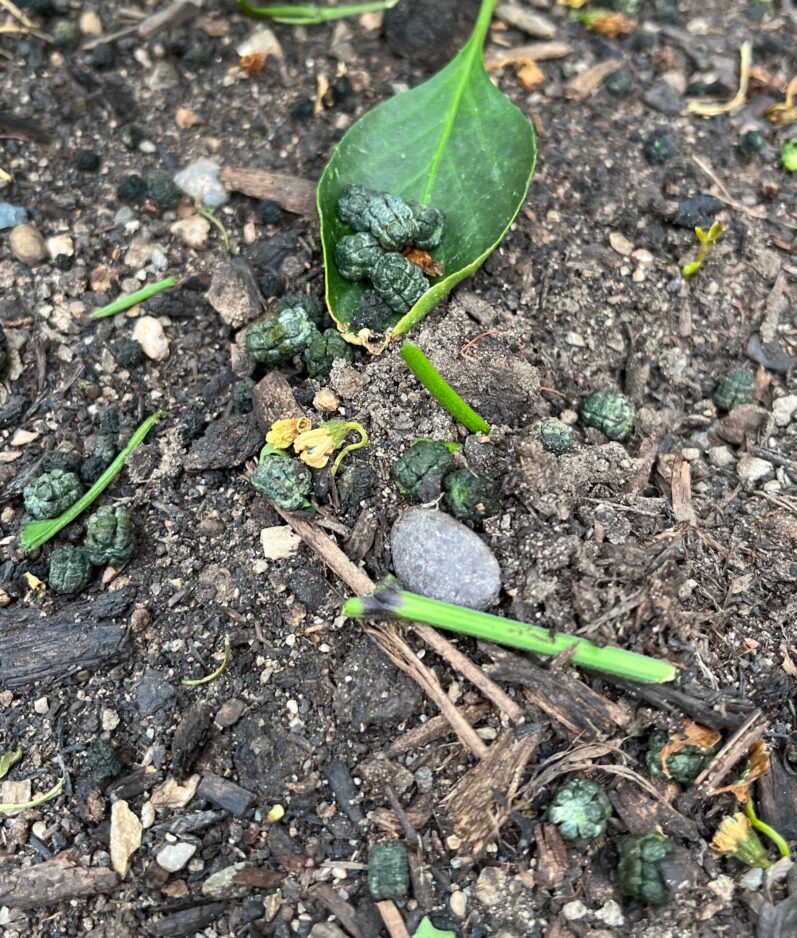
Hornworm frass (excrement) is one clue that hornworms are present in a garden.

Instead of notched edges or small holes in leaves, larger hornworms will consume entire leaves and leave coarse, rugged looking damage on fruits.
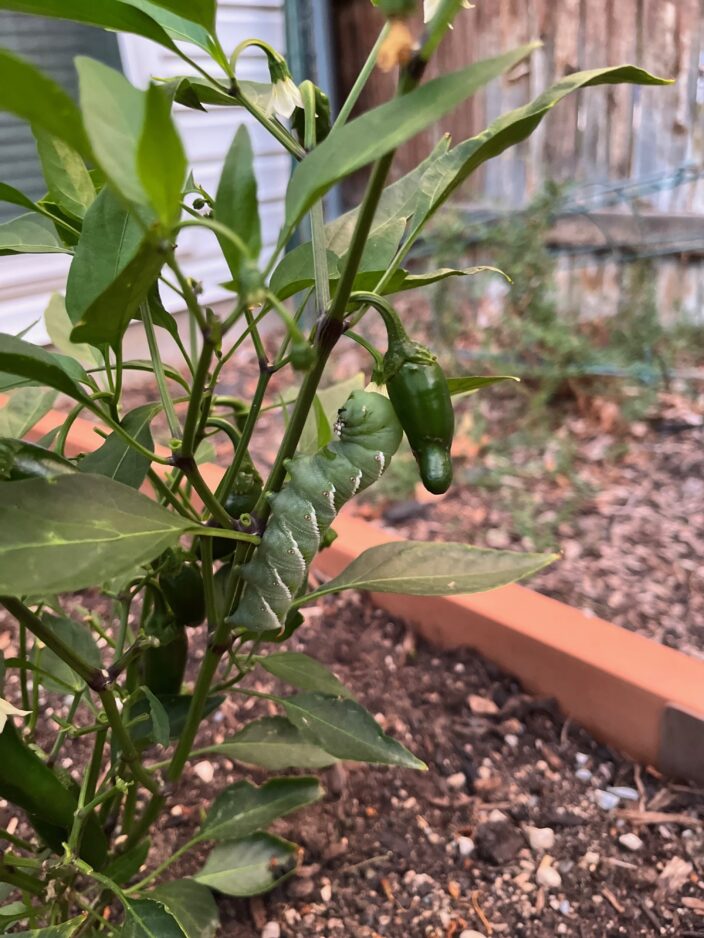
Hornworms can be quite large but are easy to overlook because their coloring helps them to blend in with garden foliage.