Garden Help Desk: How to care for houseplants during winter
-
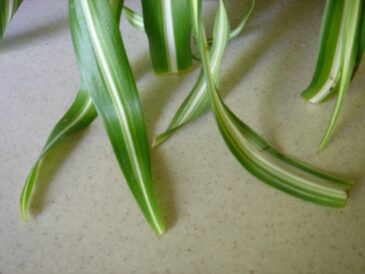
- When trimming damage from leaves, it’s important to leave a very thin edge of damaged tissue instead of trimming into healthy tissue.
-
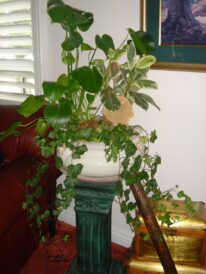
- The light level in many homes is not bright enough for most houseplants. Placing plants closer to a window can help.
-
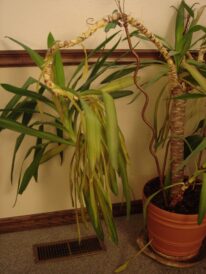
- The dry, warm or cold air from a heater/AC vent can quickly damage a houseplant.
-
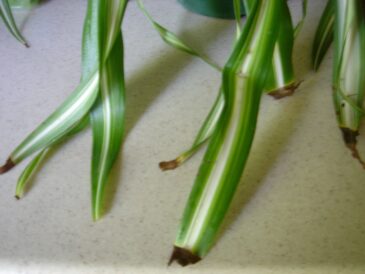
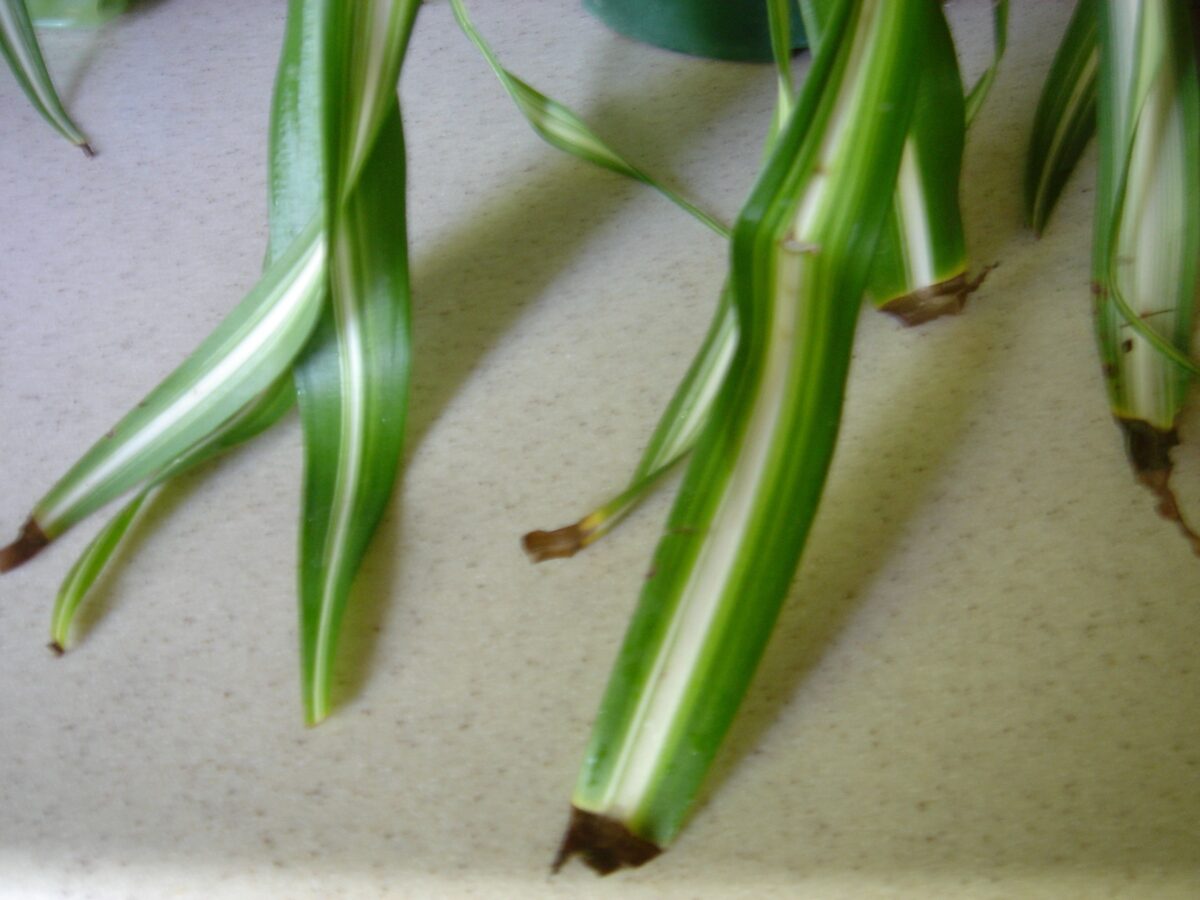
- Minor damage to leaves like the tips of these spider plant leaves is unsightly but can be carefully trimmed away to improve the appearance of an indoor plant.
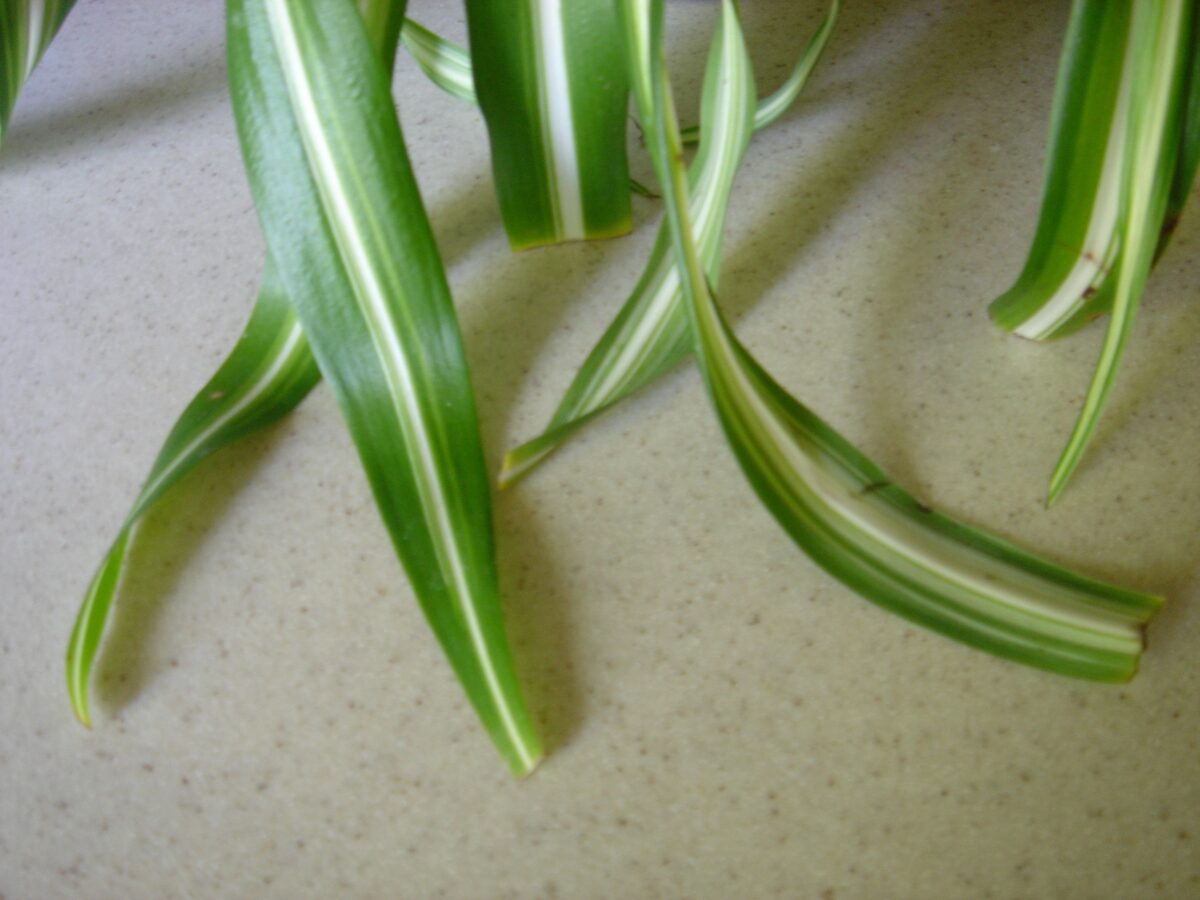
Photo by Meredith Seaver
When trimming damage from leaves, it’s important to leave a very thin edge of damaged tissue instead of trimming into healthy tissue.
Is there a right way to perk up my houseplants? I got a few plants when I moved into my house a couple of years ago and they’ve been fine, but lately I noticed that even though they don’t look sick, they don’t look great like they used to either.
It’s normal for houseplants to slow down during the winter season. Light levels are lower and the indoor temperature near windows and exterior walls can be a bit cooler. This is the season when plants take a break.
If your plants were doing “fine” — putting on some new growth, still green, and no signs of disease during the spring and summer — you probably just need to do some simple maintenance. Here are a few things to look for.
Leaves have lifespans, and eventually each leaf on a houseplant reaches the end of its life. Leaves that are old or worn out can be removed to improve the appearance of your plants. You can also remove any leaves that have been badly damaged. Just snip or carefully snap them off. Healthy leaves with just a little minor damage at a tip or margin can be carefully trimmed. Trim that damage off just inside the damaged portion; don’t cut into healthy green leaf tissue.
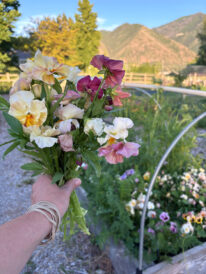
If any of your houseplants are flowering plants, the spent flowers should be removed. It’s a good idea to do this little task whenever flowers start to fade.
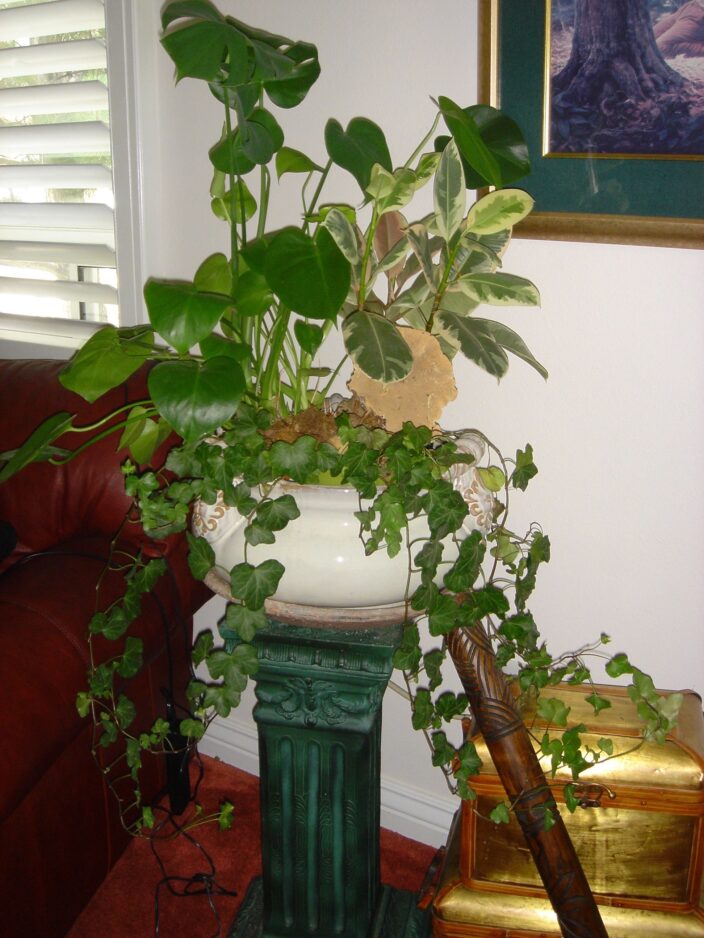
Photo by Meredith Seaver
The light level in many homes is not bright enough for most houseplants. Placing plants closer to a window can help.
Houseplants can collect dust and lint just like any surface in your home, and they need to be cleaned once in a while. Plants with small or very soft leaves can be cleaned monthly with a blow dryer set on the no-heat setting. Houseplants with large, sturdy, glossy leaves can be gently dusted with a very soft, clean cloth. Take care that you don’t apply pressure with your cloth; you don’t want to scratch those leaves. You can also take plants to your sink or tub and wash off the leaves with a gentle spray.
You may see leaf polish products in the store. Resist the urge to use them on your plants. A clean houseplant doesn’t need polish to look its best, and these products tend to collect dust and lint, making it more difficult to keep your plants clean.
Lastly, take a few minutes every week or two to check your plants carefully for spider mites and other pests. Not only will these pests affect the beauty of your houseplants, but they will also affect the health and vigor of your plants. Frequent checking means you can deal with a problem before it becomes serious.
It’s easy to think of houseplants as unchanging, decorative accents, but they are alive and have needs that must be met if they’re going to meet your expectations.
- Make sure your plants get the brightest indirect light possible (a few hours of direct morning sun can help). Keep them close to windows but without letting their leaves touch the windows.
- Houseplants generally use less water during the low-light winter months. Water your plants deeply when needed and make sure there is always good drainage.
- Avoid placing your houseplants in drafty locations — exterior doors, leaky windows, heater vents and other heat sources.
Meredith Seaver is a USU Extension horticulture assistant.
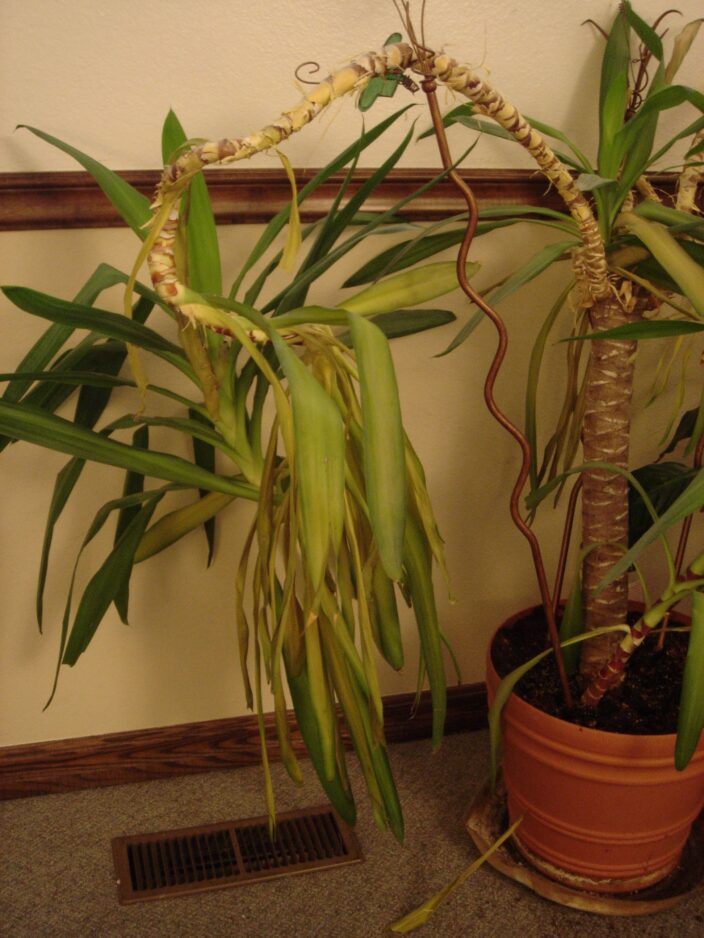
Photo by Meredith Seaver
The dry, warm or cold air from a heater/AC vent can quickly damage a houseplant.
Minor damage to leaves like the tips of these spider plant leaves is unsightly but can be carefully trimmed away to improve the appearance of an indoor plant.