Attention, gardeners: Utah’s free plant program gives bees a boost
Courtesy Meredith Seaver
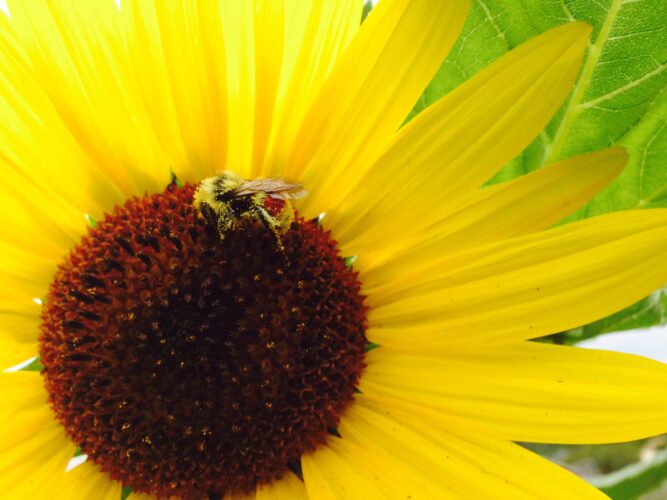
Most of our favorite sunflowers aren't perennial, but they are a popular food source for bees and will reseed freely. Plant annual sunflowers once and you may get seedlings for several years.Utahns have one more week to apply to receive free native plants before a deadline for the state’s pollinator habitat program flies by.
It’s not just individual gardeners that are eligible, but also nonprofits, government agencies, businesses, hospitals, and Native American tribes, among other organizations.
The goal is to expand habitat and boost populations of bees and other pollinators, including butterflies and moths. Their numbers have been diminished by climate change, pesticides and other forces, according to the Utah Department of Agriculture and Food, which administers the program.
Another benefit, especially in dry years like this one, is water conservation. Some cities are seeing water savings as participants tear out grass to create a new home for bees and caterpillars, said Jim Bowcutt, director of conservation at the department. And some of the native plants need to be watered just a few times a month.
“Since these are native species, they use very little water,” Bowcutt said. “And they’re beautiful.”
The program began in the Beehive State with an act of the Legislature in 2021. It became permanent last year when lawmakers approved $240,000 in yearly, ongoing funding.
It’s also a help to farmers. Pollinators are key to growing a variety of crops in the state, including melons, squash and cucumbers. But they’re especially helpful in orchards. And the native insects are much more efficient than honey bees, Bowcutt said.
Applicants must have at least 900 square feet to fill and are more likely to be approved if they have a plan for irrigating, whether it involves hand watering or another source. Program administrators note that native plants tend to prefer full sun and well-drained soils.
“The more native species that we can get and take off with this, it’ll be huge,” Bowcutt told Utah News Dispatch.
The window to apply closes April 15. Grant winners will be announced in June and receive the plants in September, with varieties tailored to their regions of the state. Some aren’t available on the market and were grown from foraged seeds, Bowcutt said.
For more information and to apply, visit the Utah Department of Agriculture and Food website.
Utah News Dispatch is part of States Newsroom, the nation’s largest state-focused nonprofit news organization.