Garden Help Desk: A journal is one of a gardener’s most useful tools
-
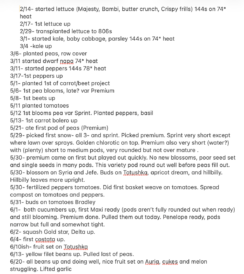
- The Notes app or a similar app on a smart phone is a handy way to make notes about your vegetable or flower beds while you’re right there outside working in the garden. With your timely notes, it’s easy to take some time during the winter to make a more organized permanent document for the year.
-
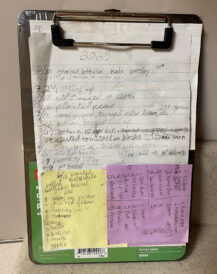
- A clipboard kept on a kitchen desk or other convenient place makes it easy to jot down details for seed starting, planting and harvesting.
-
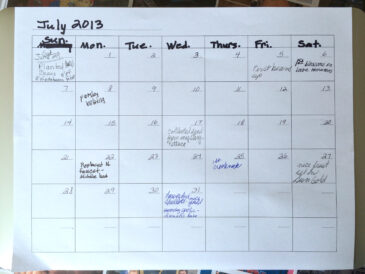
- Even a blank calendar page in a handy spot can be used to keep a record each year of what you did and how things worked out in your garden.
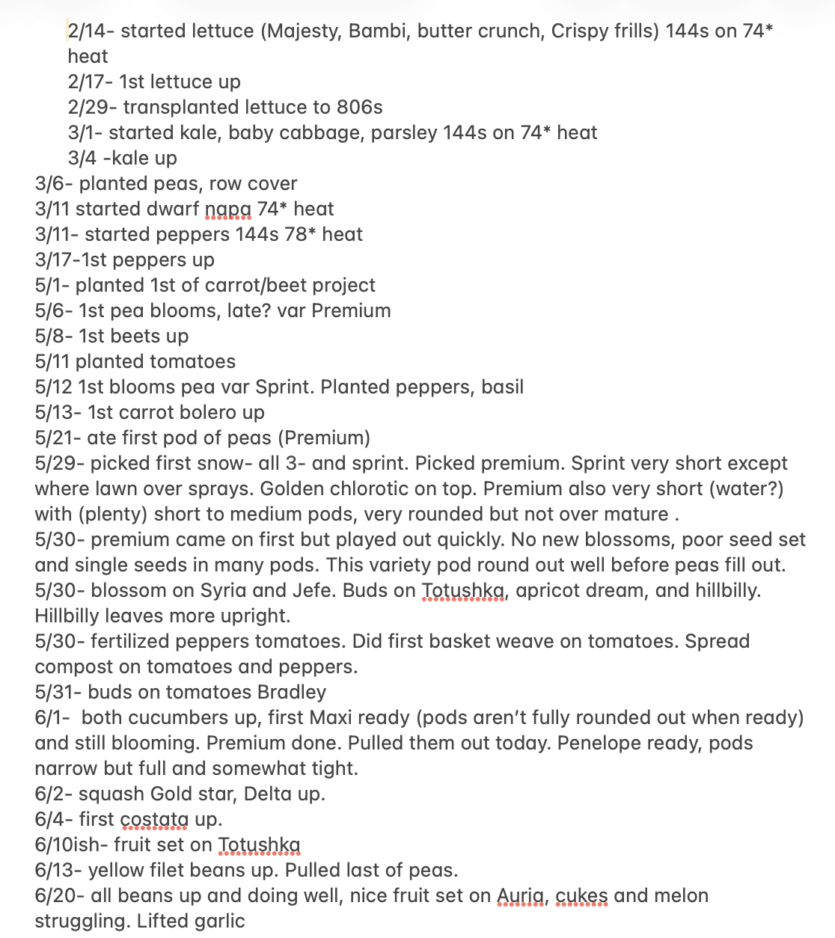
Photo by Meredith Seaver
The Notes app or a similar app on a smart phone is a handy way to make notes about your vegetable or flower beds while you’re right there outside working in the garden. With your timely notes, it’s easy to take some time during the winter to make a more organized permanent document for the year.
What can a garden journal do for you?
We’ve talked about garden journals before as well as what a journal can do for a gardener. Your journal is the place where you keep a yearly record of your garden – what and when you planted, how each variety did, how the weather worked for or against you, and all the other things that happen in a garden.
If you haven’t been keeping a garden journal, now is a good time to start. You don’t need anything special for keeping a garden journal. Anything that lets you keep a record of date and information will do – a clip board with pencil and paper, a calendar with room for notes, a stack of sticky notes with a blank paper for storing and organizing the notes, a notebook, the note app on a smart phone or even a bound journal. Lately, I’ve been using the Note app on my smartphone. It’s convenient because I usually have my phone with me in the garden and can enter notes about things as I notice them.
Keep your journal in a handy place so it is easy to jot down a few notes when you come inside from the garden. It only takes a few moments to make some simple notes each time you’ve been out in the garden. You’re not likely to remember the details you need if you are only making notes once every few weeks.
If you already keep a garden journal, make sure you’re getting the most you can from your journal. You’ve probably already been using your journal to decide what you’ll plant and when you’ll do it, but have you discovered how your journal can also help you with pest and disease management?
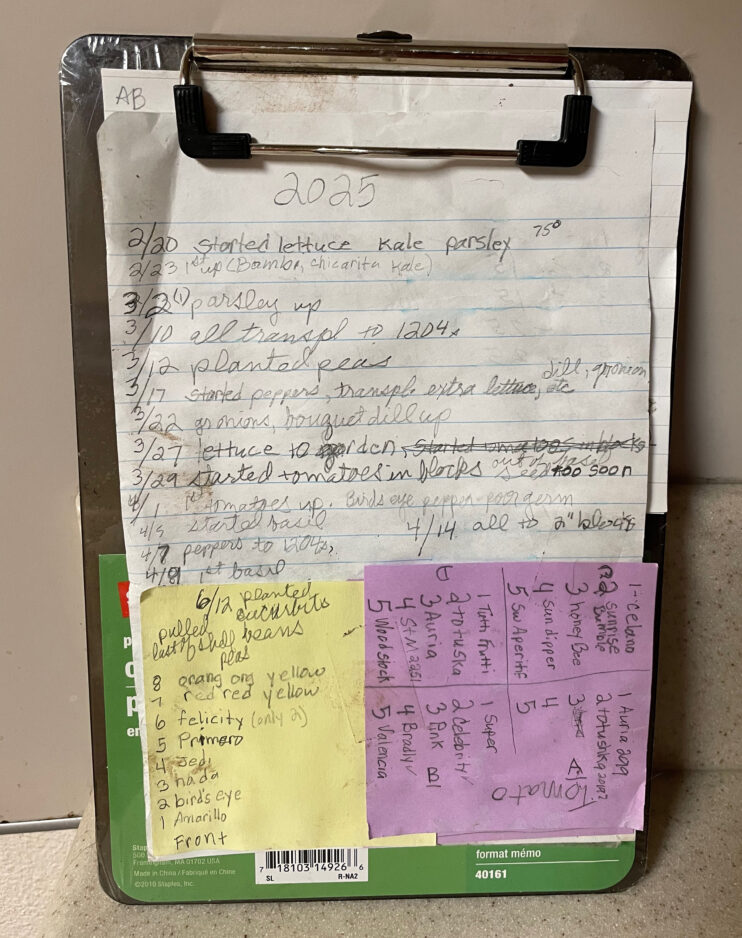
Photo by Meredith Seaver
A clipboard kept on a kitchen desk or other convenient place makes it easy to jot down details for seed starting, planting and harvesting.
Keeping a record of pest problems will help you anticipate their arrival and prevent the problem instead of trying to get things back under control once the problem is bad enough to get your attention. For example, pests like aphids and thrips can arrive in your garden a few weeks before their population and damage are noticed by you. If you made a note about when you saw their damage last year, you can start scouting more frequently a few weeks before that date this year and begin some soft pest control options like insecticidal soap while their population is low.
Your journal can also help you with crop rotation and weed control. By knowing what you’ve planted in each part of the garden for the previous two years, you can make informed decisions about what to plant each year.
If you had disease problems in your garden or flowerbed last year, your garden journal can help you choose varieties with better disease resistance or remind you where you had disease problems so you can plant something different in that area this year.
Did you make a record of any perennial weed problems last year? Using your garden journal, you can avoid planting early spring crops in that part of your flower or vegetable beds, giving you a few more weeks to do weed control without damaging any of your plantings.
Take a few minutes this month to start a garden journal or review last year’s journal and make it one of your most useful gardening tools this year and every year.
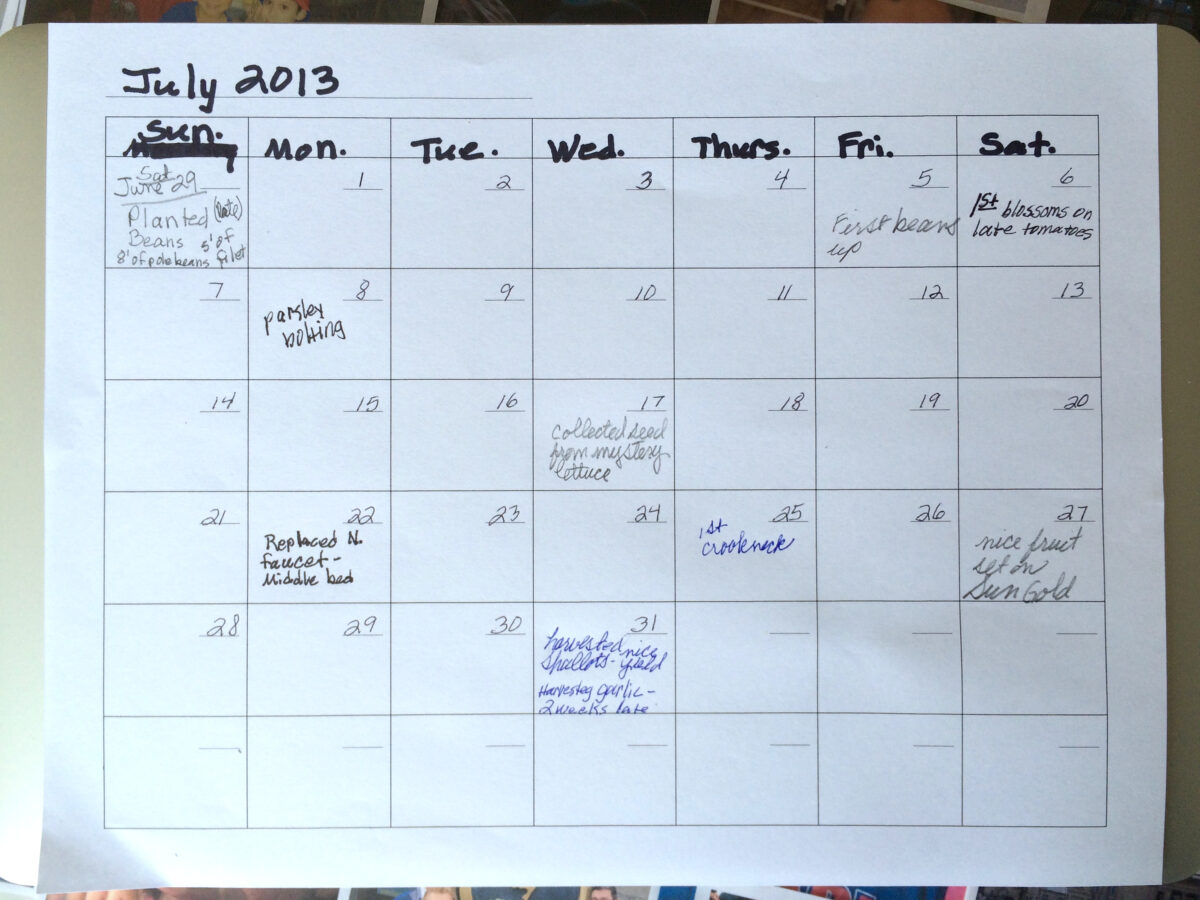
Photo by Meredith Seaver
Even a blank calendar page in a handy spot can be used to keep a record each year of what you did and how things worked out in your garden.
Meredith Seaver is a USU Extension horticulture assistant.