Garden Help Desk: Evaluating the risk of frost damage to fruit trees
-
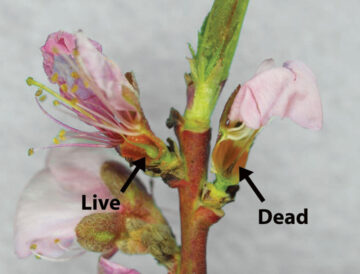
- About one week after a frost event, fruit tree blossoms can be checked to see if the ovaries in the flowers were killed. There is nothing you can do about the dead ovaries, but you’ll at least understand why your harvest is smaller than usual.
-
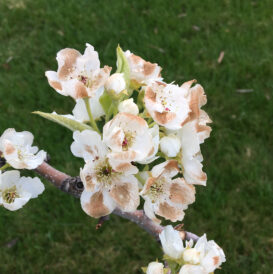
- The brown damage on these petals is a sign that there could be frost damage inside the flower as well. If only the petals are damaged, the flower can still set fruit.
-
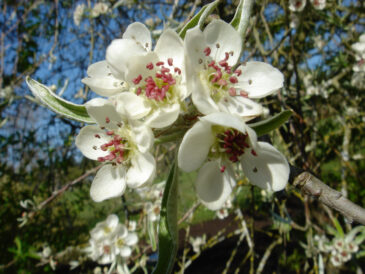
- All parts of a flower are important, but frost damage to the ovary of a fruit blossom can result in distorted fruit or even death of the ovary and no fruit set.
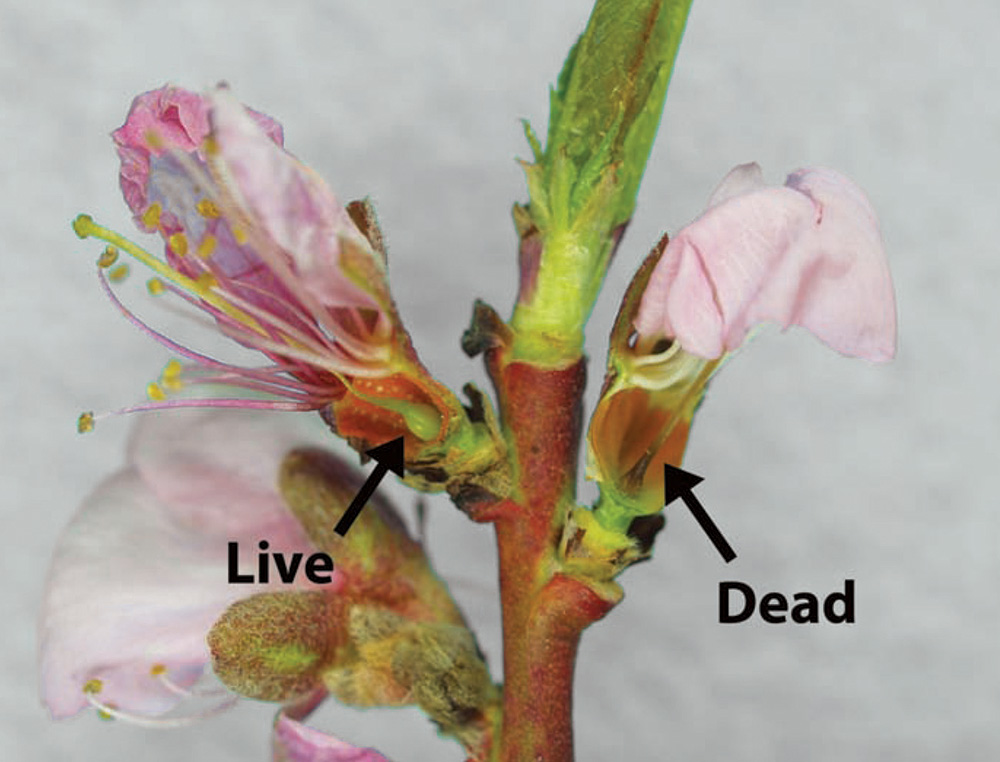
Photo courtesy USU.edu
About one week after a frost event, fruit tree blossoms can be checked to see if the ovaries in the flowers were killed. There is nothing you can do about the dead ovaries, but you’ll at least understand why your harvest is smaller than usual.
What are the very best apple and peach varieties for Utah County? I thought our trees were good ones for our zone, but almost every year it seems like frost damages our trees and we get a poor harvest.
Most of the peach and apple varieties will do well in our county, except for a few that need more days to mature than our climate provides. It seems like your question isn’t so much about what varieties produce the best quality fruit in our zone; it’s more about what sounds like a problem with surprise spring frosts in your area.
Poor fruit production can be related to a few different things: poor pollination due to lack of pollinators, weather that discourages pollinators, poor tree management, and frost events while trees are in bloom. Unfortunately, late frosts can happen in any of the moderate to cooler hardiness zones.
Hardiness zones tell us about the average lowest temperature in a zone over multiple decades. We can use that information to tell us how well the trees and perennials we want can tolerate the coldest temperatures in our hardiness zone. Whether your home orchard is lakeside or at the top of the foothills, it’s in a hardiness zone, and you can check for your zone in the tag information when you purchase trees or other plants for your yard or garden.
Late frosts (and early fall frosts) are individual events — day-to-day weather that can happen in almost any of the moderate and cooler zones. Just like we can get warmer-than-average weather during some summers, we can also have colder-than-average nights in the spring after our landscapes are already “waking up.”
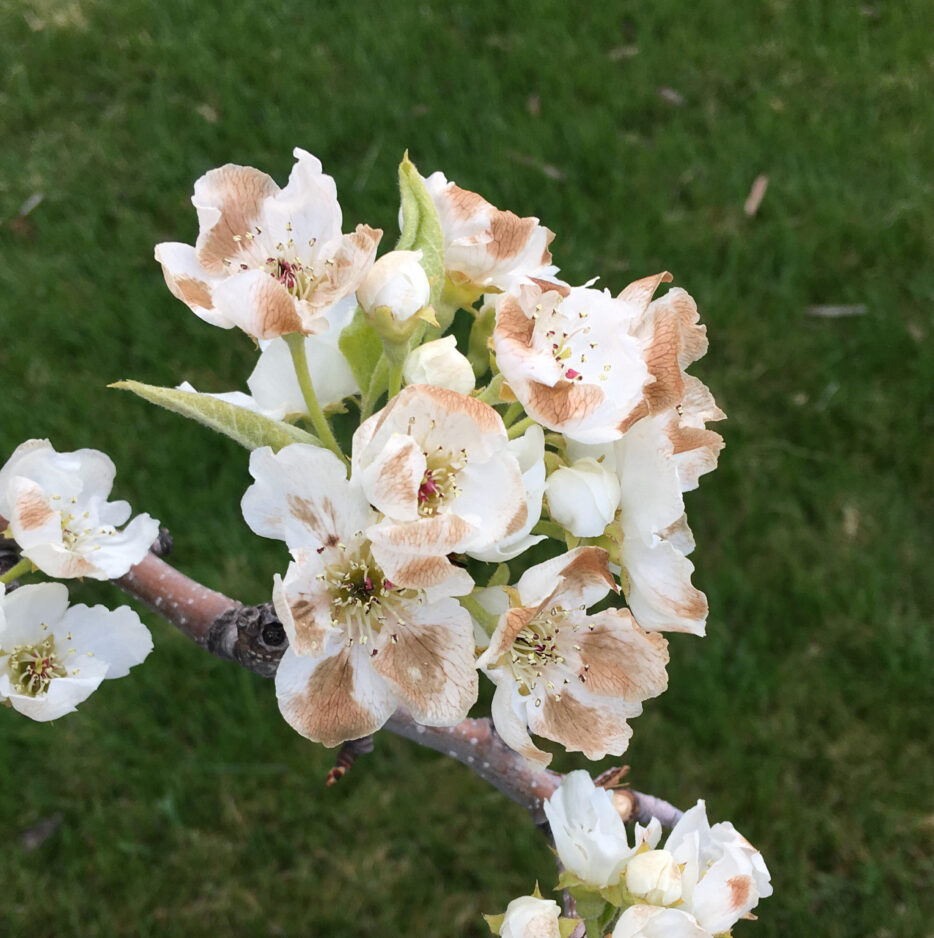
Photo courtesy Meredith Seaver
The brown damage on these petals is a sign that there could be frost damage inside the flower as well. If only the petals are damaged, the flower can still set fruit.
Almost every year in our valley, there will be a late frost somewhere that damages the blossoms on some fruit variety. The more open the blossoms, the more susceptible they are to frost damage. They’re damaged when unexpected freezing overnight temperatures and blossoms at a critical stage come together. The longer and lower the freezing temperature during a critical bloom stage, the high the percentage of fruit loss.
Also, the earlier a fruit tree blooms, the higher the risk of blossom damage. You may have chosen varieties that are early bloomers, making it more likely they’ll be damaged by a surprise frost. Sometimes the damage is only minor and resembles the thinning you would be doing in a few weeks anyway. Other times, so many blossoms are killed that you end up with a very poor harvest or no harvest at all.
If your trees are small enough, you can try covering them overnight when frost is in the forecast during bloom. The covering should be opaque so the blossoms can’t “see” the sky and should be removed during the day. This isn’t practical for larger trees. Keep in mind that coverings may weigh down and break branches if freezing rain or snow collects on the coverings. The fact sheet at this link can help you decide if you need to be concerned about your trees when temperatures are expected to drop below freezing.
Did you know there are also Heat Zones? American Horticultural Society heat zone information can be helpful when selecting new plants for a landscape. Heat zones are like hardiness zones, but they tell you the average number of days per year that temperatures will exceed 86 degrees instead of the average lowest temperature for a hardiness zone. The AHS Heat Zones aren’t as commonly used as the USDA hardiness zones, but you’ll sometimes see the heat zone included on plant tags.
Meredith Seaver is a USU Extension horticulture assistant.
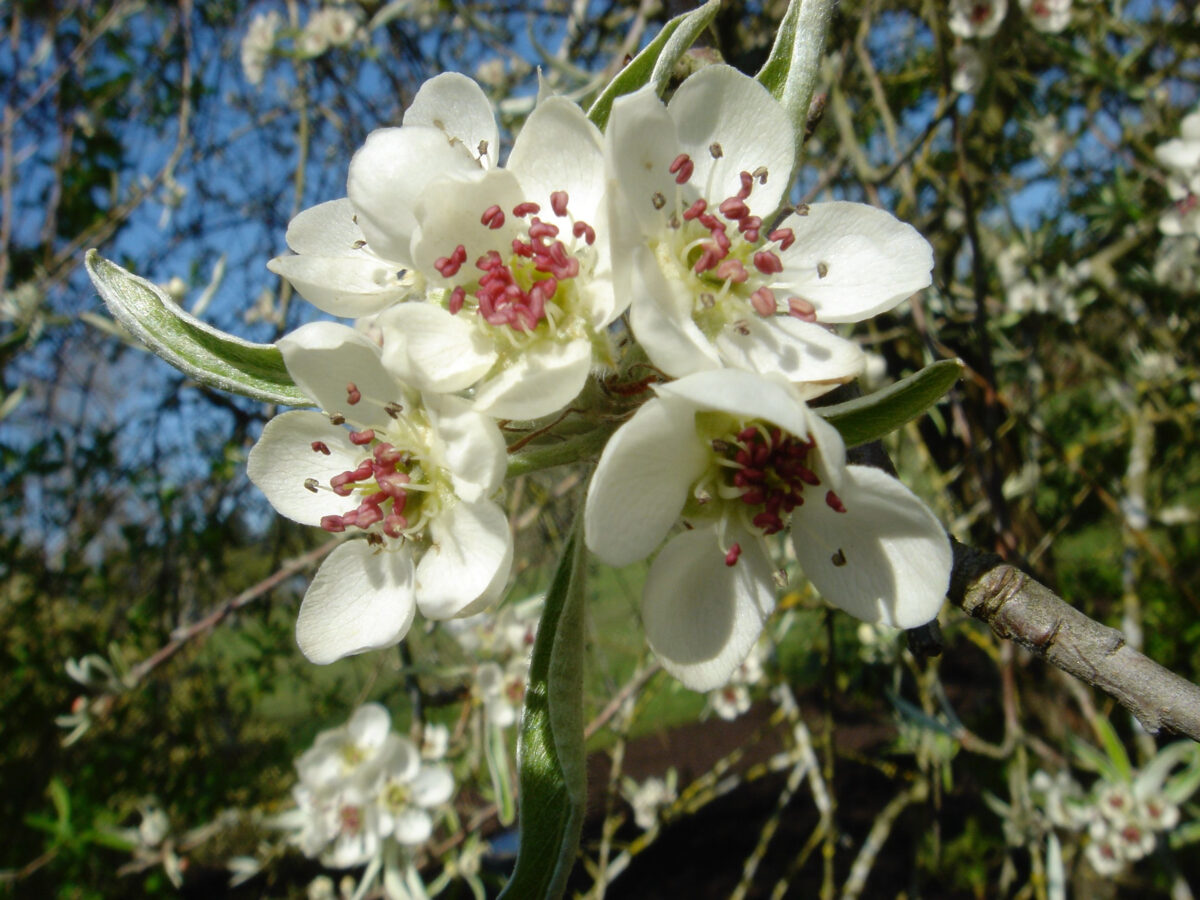
Photo courtesy Meredith Seaver
All parts of a flower are important, but frost damage to the ovary of a fruit blossom can result in distorted fruit or even death of the ovary and no fruit set.