What’s on the menu?: Expert tips for improving eating habits in 2026
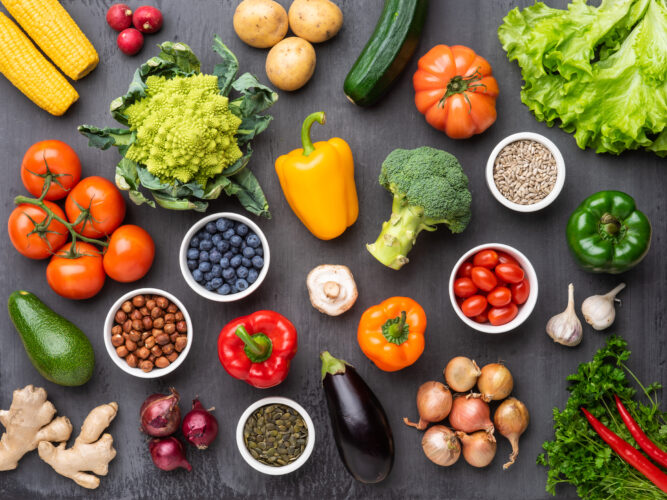
Healthy eating ingredients: fresh vegetables, fruits and superfood. Nutrition, diet, vegan food concept. Concrete background
Food is wonderful stuff.
Our bodies need its sustenance to survive and thrive. Unlike many of our ancestors, we have extensive availability of diverse and delicious food options.
But that very abundance can pose its own health challenges. Eating too much can result in weight issues and diabetes.
Most of us recognize that our bodies function better when we eat healthier, but that’s not always easy to do with everything else going on in our daily lives.
Not only that, there are so many voices shouting about different diets or supplements or food choices that it gets confusing quickly.
So how do we cut through the noise and eat better?
Dr. Mary Shotwell, professor of health and wellness programs at Rocky Mountain University of Health Professions in Provo, took a few minutes earlier in the week to provide expert advice on how best to navigate the challenges of healthy eating and see improvement in 2026.
Here are some of her recommendations:
1. Embrace the process
Shotwell knows that making lasting changes when it comes to improving eating habits may seem daunting, so she came up with an analogy to put it in perspective.
“Think of driving a car,” she said. “None of us drives perfectly. It’s a series of corrections. I’m not steering right. I have my foot too heavy on the gas and I need to ease up. I need to press the brake gently. It’s the same thing with healthy eating. I didn’t do that well this day, so let me calibrate back and tomorrow I’ll eat well and cleanse my system. Those are the kind of things that I think people really need to evaluate on an ongoing basis.”
She said it can be easy to get frustrated when they don’t see results or indulge in food that isn’t as good, but urged everyone to be patient.
“Give yourself grace not to be perfect,” Shotwell said. “Realize that you may need to calibrate up or down with your habits or your behaviors.”
She also encourages us to work together and help each other do better.
2. Focus on the basics
Most of us know the fundamentals of healthy eating, including having lots of fruits and vegetables and minimal sugar and processed foods.
“None of this is rocket science,” Shotwell said. “It’s about balance.”
She talked about how the recently released updated food pyramid (now inverted from how it was taught in years past) from the Department of Health and Human Services may not be completely clear on how to value different foods but it does make some good recommendations.
“It was fairly explicit about saying no amount of sugars or non nutritive sweeteners is recommended,” Shotwell said. “It focuses on fruits and vegetables and what they call healthy fats and protein and dairy, but I don’t think the actual content of the pyramid has really changed. The pictures and organization may have changed, but it’s really about eating things that are healthier.”
3. Build good habits
Shotwell explained that while we may have a solid understanding of the foods we should eat, actually eating them regularly often requires some work.
“Healthy habits — or the lack of them — is the thing that gets in the way of healthy eating,” she said. “Busy families have to get to activities, so it’s easiest to just give some processed food as a snack. It can be difficult to make dinner so you end up getting fast food. We’re busy, but we have to have food.”
One habit she said some develop is preparing meals ahead of time.
“They do the grocery shopping and they do their meal prep on the weekend, and then they feel more in control of what happens to their eating during the week,” Shotwell said. “At Rocky Mountain, a lot of the students are graduate students who do meal prep for dinners and lunches and then they carry their lunch with them every day. Then they feel better about their eating.”
She believes it is important for us to evaluate both what we are eating and our eating habits.
“Everybody needs to do that forever,” Shotwell said. “Then we can see how we are doing on the things we want to change.”
It’s also something that doesn’t have to be done alone.
“Many community centers and faith-based organizations have classes,” Shotwell said. “There are also apps that can help track what foods we are eating. When I track, I eat healthier.”
The bottom line, according to Shotwell, is to do things that help us improve as often as we can.
“They don’t have to be drastic steps,” she said. “We don’t have to bite off more than we can chew. They can be small habits that you change gradually.”