Garden Help Desk: Houseplant problems often due to watering, temperature issues
-
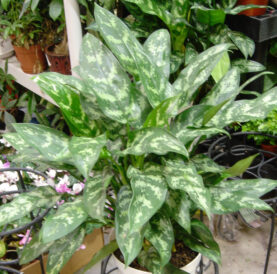
- Healthy, beautiful houseplants like this Aglaonema are the result of putting the right plant in the right place where it will get the right care in the right conditions.
-
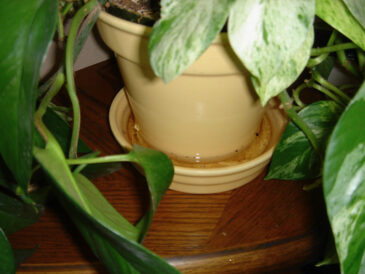
- Leaving indoor plants to sit in standing water is very unhealthy for plants and can lead to problems like root rot.
-
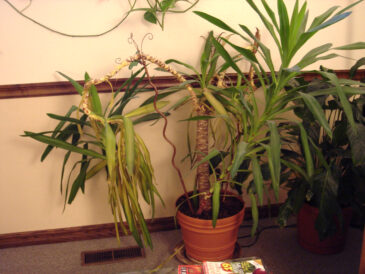
- Indoor plants suffer when placed near vents where dry hot or cold air flows past the foliage or pot.
-
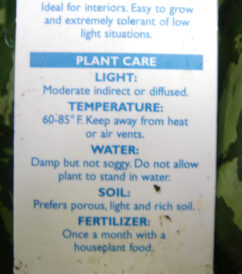
- Keep the tags that come with your plants so you can check them for details about the best care for each houseplant.
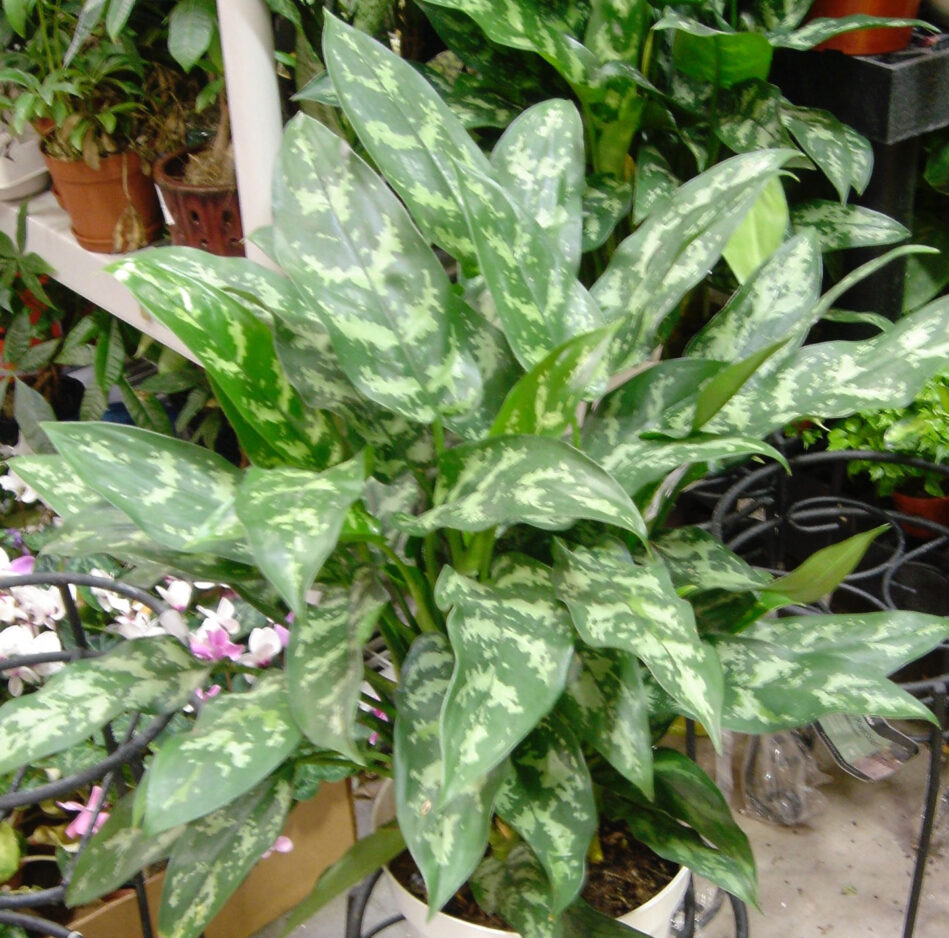
Photo by Meredith Seaver
Healthy, beautiful houseplants like this Aglaonema are the result of putting the right plant in the right place where it will get the right care in the right conditions.
I have a few houseplants (a schefflera, a rattlesnake plant and a spider plant), and most of them aren’t doing very well lately. It looks like a disease. The leaves are wilty and some have dropped. I’ve heard that swabbing them with alcohol could help.
Swabbing houseplants with alcohol is one way to deal with soft-bodied insects and scale on houseplants, but the details in your message suggest that the problem isn’t a pest or disease. The problem is more likely to be an abiotic (non-living) issue.
There are a few pests and diseases that can affect a wide variety of plants, but most pests and diseases affect one or just a few host species. Closely related plants may all show the same symptoms when a pest or disease is the cause, but when multiple unrelated species of plants seem to be struggling with the same symptoms, the problem is most likely related to plant care (watering, fertilizer, chemicals) or environmental issues (temperature, sun exposure, indoor or outdoor air pollution).
This principle also applies to some of our common landscape problems, but there are some common things to look for with your houseplants. Also, since the problem seems to be recent, look for any changes in how you take care of your plants and where you’ve placed them.
Improper watering
Improper watering is the most common cause of houseplant problems. Consider the following questions.
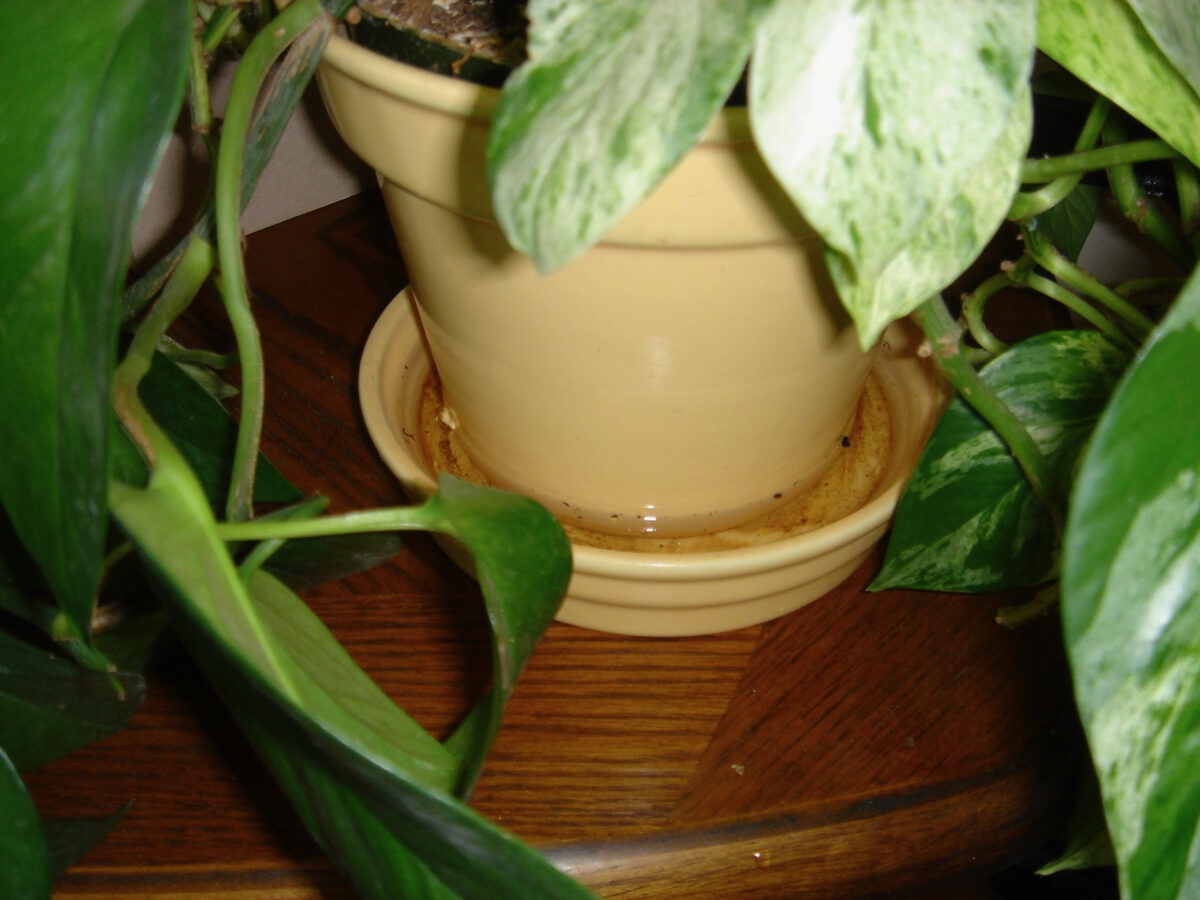
Photo by Meredith Seaver
Leaving indoor plants to sit in standing water is very unhealthy for plants and can lead to problems like root rot.
Are you watering more than once every 7-10 days? Plant roots need more than water to be healthy. They also need oxygen. They get that oxygen when air moves into pore spaces in the soil as water leaves the pore spaces. Frequent watering keeps those pore spaces filled with water, making it difficult for air to reach the roots. Even plants that need evenly moist soil need time between waterings for the soil to dry a bit.
Are you watering deeply, so that water drains from the bottom of the pot? The watering should completely wet the soil in the pot. If you don’t see water drain from the pot, and if the pot doesn’t feel heavy for its size once you’ve watered, you may not have watered deeply enough.
Do you frequently leave your plants sitting in the water that collects beneath the pot after you water? That keeps the soil wet, reducing oxygen for the roots. Always remove the collected water once your plants have had a few minutes to drain.
Has your water quality changed? Have you started using a water softener recently? Soft water can add unneeded minerals to the soil in potted plants. This can affect the health of your plants.
Light exposure
Light exposure also affects the health and vigor of houseplants. The wrong light level or a change in lighting might also be the problem.
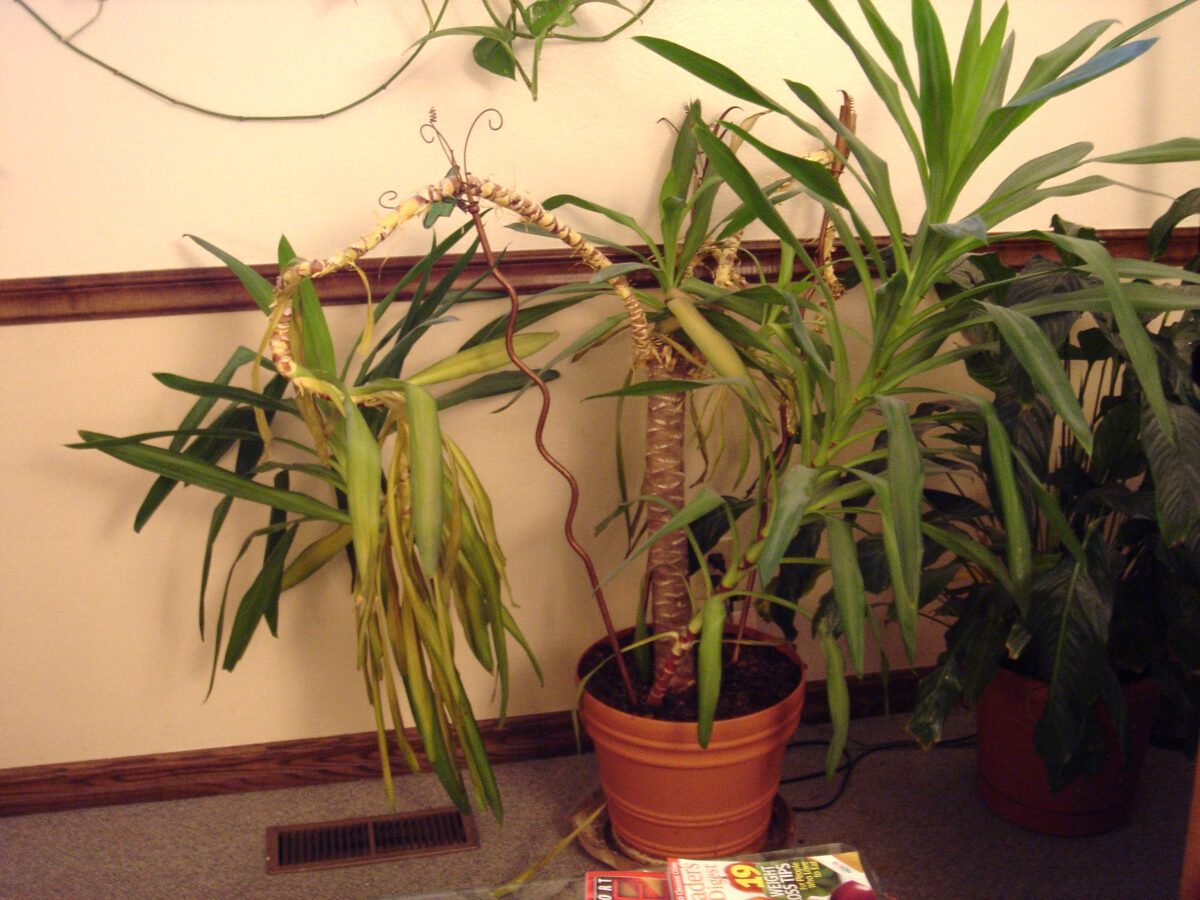
Photo by Meredith Seaver
Indoor plants suffer when placed near vents where dry hot or cold air flows past the foliage or pot.
Are your plants exposed to direct sunlight for part of the day? Most of the popular indoor plants won’t tolerate much bright direct sunlight.
Have you added or removed window coverings? This can affect the amount of light your plants receive. Adjusting the distance between your plants and the window may make a difference.
Have you moved your plants to a new room in your home where the lighting is very different? Moving your plants either closer to a window or into a more shaded corner could help.
Temperature and air quality
Room temperature and air quality are also important for indoor plant health.
Are you plants very close to a window where overnight winter temperatures can give them a chill?
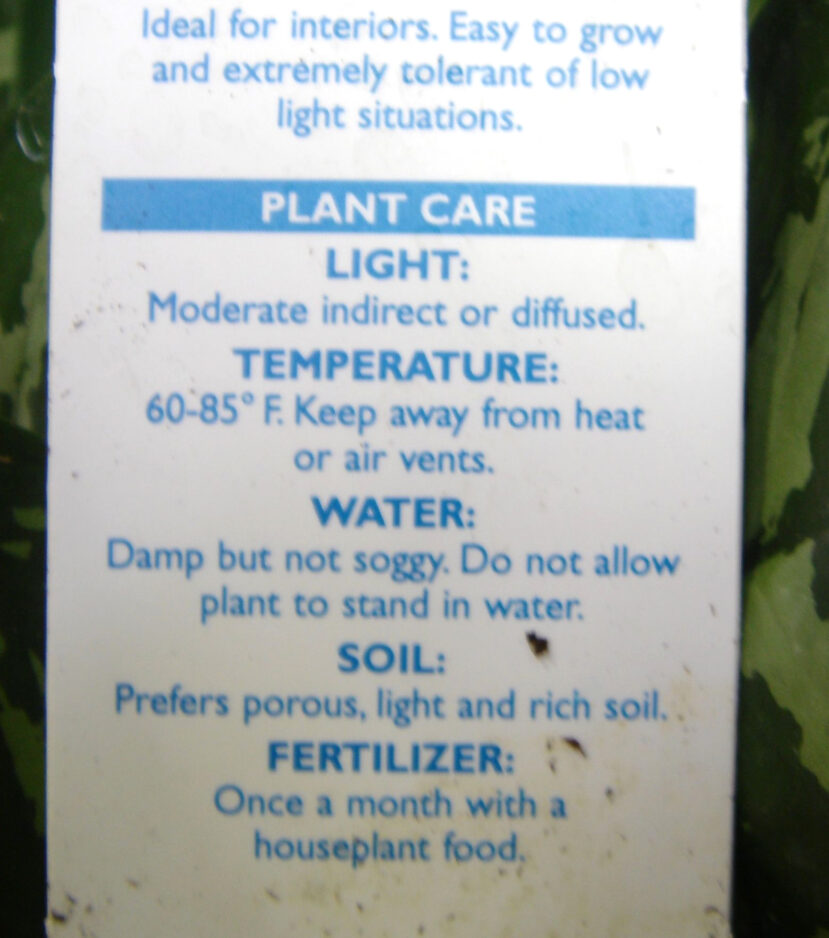
Photo by Meredith Seaver
Keep the tags that come with your plants so you can check them for details about the best care for each houseplant.
Have you recently closed or opened heat (or AC) vents near your plants? This can affect the air temperature around your plants. It can also reduce the humidity around your plants and cause the leaves to dry out. Make sure your plants aren’t directly in the path of airflow from the vents.
Have you recently started using any new cleaning products that might be creating lingering fumes? Changing cleaning products or increasing ventilation in that area could help.
Are your plants in a room with a fireplace or wood stove that you’ve recently started using? Fumes from the fireplace or stove can create indoor pollution that affects plant health. If this is the problem, your plants may need to spend a few months in a different room.
Meredith Seaver is a USU Extension horticulture assistant.