Get Out There: America’s most wanted beaches are calling
Stock image
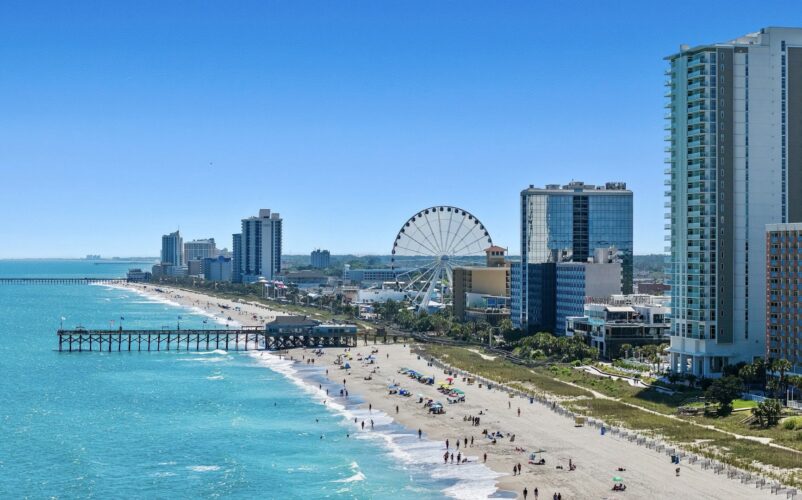
Myrtle Beach, South CarolinaAmerica’s beaches are having a moment — not because they’ve suddenly changed, but because we have. According to the latest national survey on vacation interest, where you live increasingly shapes where you long to escape. And the results read like a love letter to three very different coastlines: the sugar-soft calm of Clearwater Beach, Florida; the big, breezy expanse of Myrtle Beach, South Carolina; and the misty, almost mythical shores of Cannon Beach, Oregon.
Together, they reveal something deeper than sand preferences. They show what different parts of the country are really craving when they dream of the sea.
Let’s start in the Midwest, where winters linger, waves are optional, and serenity is king. Midwesterners overwhelmingly set their sights on Clearwater Beach, one of the most beautiful beaches in America — and perhaps its most soothing. Clearwater’s sand is famously white and powdery, like it’s been sifted by hand. The Gulf of Mexico laps gently at the shore, producing little to no waves most days, which makes the beach feel more like a giant, sunlit spa than an adrenaline sport.
This is a beach for floating, strolling, and exhaling. You don’t come to Clearwater to conquer the ocean; you come to be held by it. For travelers who spend much of the year landlocked or bundled up, the appeal is obvious. Clearwater offers warmth without chaos, beauty without bravado, and water that feels friendly rather than feral. It’s vacation as therapy, and the Midwest has spoken clearly: calm is calling.
Head east, and the vibe shifts dramatically. Northeastern states are overwhelmingly drawn to Myrtle Beach, South Carolina — a beach that doesn’t whisper, but welcomes you with open arms. Myrtle is sprawling, spacious, and endlessly energetic, yet never feels cramped. There’s room here to spread out, whether you’re walking miles of shoreline, tossing a football, or setting up a full-day beach camp with umbrellas, chairs, snacks, and stories.
What makes Myrtle Beach so magnetic is its sense of scale and accessibility. It’s picturesque without being precious, lively without being overwhelming. The Atlantic rolls in with confidence, the boardwalk buzzes, and the beach seems to stretch forever. For Northeasterners accustomed to smaller, more rugged beaches and tighter coastal towns, Myrtle offers breathing room — physically and mentally. It’s the kind of place where generations vacation together, where traditions form, and where the beach feels less like an escape and more like a seasonal home.
Then there’s the West and Mountain states, whose collective imagination drifts north — to Cannon Beach, Oregon. This choice is perhaps the most telling, because Cannon Beach is, in many ways, unbeachy in the traditional sense. The water is cold. The skies are often moody. Sunbathing is optional at best.
And yet, nowhere else in the world looks or feels quite like it.
Cannon Beach is defined by Haystack Rock, sea stacks rising from the shoreline like ancient sentinels, and by a landscape that feels cinematic no matter the weather. Fog rolls in. Light shifts. The ocean roars rather than shimmers. This is a beach for contemplation, photography, long walks, and moments that stay with you long after you’ve left.
For Western state travelers, many of whom are surrounded by dramatic natural beauty year-round, Cannon Beach doesn’t compete — it complements. It’s not about lounging; it’s about feeling small in the best possible way. It’s forever memorable because it’s emotional, not just scenic.
So what are America’s most wanted beaches really telling us? That travel isn’t about sameness — it’s about contrast. We seek what we’re missing. Calm. Space. Wonder.
From Clearwater’s gentle embrace to Myrtle’s generous sprawl to Cannon Beach’s unforgettable soul, America’s coastlines are answering three very different calls. And somehow, they’re all right.
Blake Snow contributes to fancy publications and Fortune 500 companies as a bodacious writer-for-hire and seasoned travel journalist to all seven continents. He lives in Provo, Utah with his wife, five children, and one ferocious chihuahua.