Get Out There: Did you know Utah is home to the second highest rock face in America?
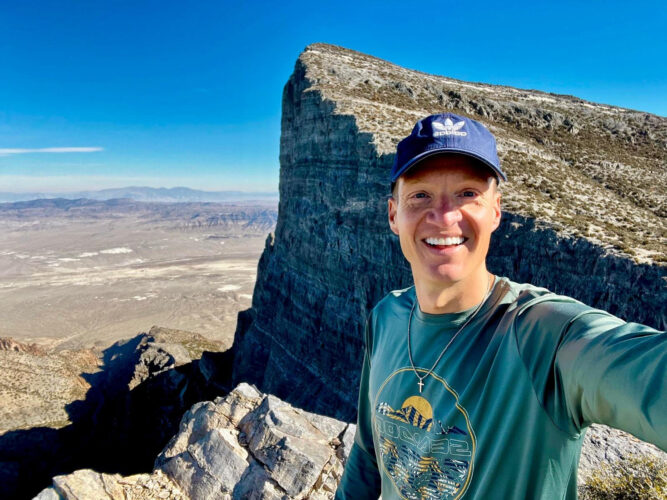
Courtesy Blake Snow
Blake Snow poses for a photo at Notch Peak in western Utah.Hiking Notch Peak in western Utah feels like stumbling onto a secret that should have been famous long ago. The summit hosts the second highest vertical drop in America after El Capitan, which gives the place an undeniable Yosemite vibe. Yet almost no one goes there. That criminal level of under appreciation makes the experience even better because you get grand scenery without the grand crowds.
The trailhead starts in a wide desert wash that cuts through classic basin and range country. The opening miles feel more like a casual stroll than a proper hike as you wander past sagebrush and juniper under a big open sky. The air is dry. The ground is gravelly. And the ease of movement gives you time to look around and wonder how something as dramatic as a two-thousand-foot cliff could hide beyond such a gentle beginning.
Eventually the wash narrows and leads you into a limestone canyon that feels cooler and more intimate. This section is surprisingly scenic. Vertical walls rise above the trail. Shadows cut across the path. The sound of footsteps echoes a little more. Those familiar with Utah’s red rock may be surprised by this gray, limestone world. It feels different and refreshing.
As the canyon opens again, the real climb begins. It is steady but not punishing, and it rewards you at every switchback. Here you pass through one of the most impressive bristlecone pine groves in America. Their twisted trunks and weathered branches look like sculptures shaped by centuries of exposure, adding a sense of age and permanence to an already dramatic landscape.
The higher you climb, the more the horizon widens. Mountain ridges layer in the distance. Then it happens. You reach the ridge, and the world drops away. The north face of Notch Peak falls more than two thousand feet in a single vertical sheet of limestone. It is one of the biggest sheer cliffs in North America, and it hits you with equal parts awe and nervous excitement.
You can stay well back from the edge, but if you inch close enough to peer over, be prepared for a jolt of adrenaline that might weaken your knees. The views stretch across the West Desert in all directions. Depending on the weather, you may feel strong wind on your face, which only heightens the wild vulnerability.
The solitude is another gift. On many days you might see only a few hikers or none at all. On the day my friend and I hiked last fall, we only encountered a single other hiker. While Utah’s national parks regularly hum with activity, this massive place stayed quiet. That quiet changed the quality of the experience. It was less of a tourist outing and more of a personal encounter with the wilderness.
The statistics back up the challenge and reward. The round trip clocks in at about seven miles with nearly three thousand feet of elevation gain. Most hikers finish in four to six hours. Spring and fall offer the best temperatures. Summer is hot with almost no shade. Winter can bring snow and ice to the upper trail, so come prepared.
Because the area is remote, you must carry plenty of water. Do not count on cell service. Tell someone where you are going, and stay well back from the cliff if winds pick up.
In the end, Notch Peak delivers a rare combination of easy desert walking, a steady climb through ancient pines, and one of the most dramatic cliff views in the entire state, if not America. It feels wild. It feels overlooked. And it deserves to be on every Utahn’s bucket list.
Blake Snow contributes to fancy publications and Fortune 500 companies as a bodacious writer-for-hire and seasoned travel journalist to all seven continents. He lives in Provo, Utah with his wife, five children, and one ferocious chihuahua.