Get Out There: Last place on Earth: My journey to Antarctica with National Geographic
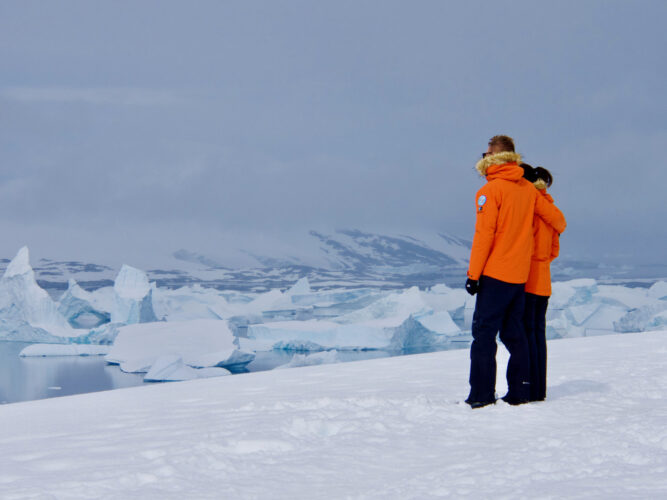
Photo supplied
AntarcticaI saved the best for last. After 10 years of travel writing, I recently made landfall on Antarctica, my seventh and final continent. It is the most stimulating, majestic, and unpredictable place I’ve ever visited.
For two weeks aboard National Geographic Explorer, my wife and I saw thousands of gleaming icebergs and pungent penguins. We gawked at massive but nameless glaciers and snow-capped mountains that would be protected national parks anywhere else. We saw dozens of breaching whales, several calvings, and pods of orca intent on eating a distressed humpback for dinner.
We also survived 25 foot waves on the infamous Drake Passage, marital strife while kayaking ice flows, and the infamous polar plunge. We did all of this among the most professional wait staff, capable crew, and scientists sailing the Southern Ocean today–usually in between five-course meals with icebergs, wildlife, and three hour sunsets outside our window.
In short, cruising to Antarctica with National Geographic was not a “trip” as we often say. It was an expedition. It was also an amazing privilege–although an expensive one. But if you have the means or discipline to save for such a once-in-a-lifetime adventure, sailing to, hiking on, and cruising around Antarctica is worth every penny. Here’s why.
Come for the penguins, stay for the ice
Fact: Antarctica is the least photographed continent on the planet. Because of this, it’s like visiting a place with no postcards. I cannot describe what that feels like other than it’s the only continent you can still visit completely fresh. While many travel writers exaggerate with claims of “like nothing you’ve seen before,” Antarctica is the only place on Earth where this cliche is actually true — a continental-sized national park that’s yet to be discovered.
While sailing around, we were flanked by giant icebergs as far as we could see. I lost count of the number of majestic mountains and glaciers we confronted. “All of these would have names and brochures on any other continent,” I said to my wife. As our ice-breaking ship navigated the content, it would often crush massive blocks of ice, which rattled but never broke our course. On short hikes up nearby peaks, I swore many of them could rival the famous hikes I’ve taken on any other of the six continents.
While the ice is the star of the show, the wildlife is equally inspiring. We saw porpoising and squawking penguins wherever we sailed or hiked. They do not fear humans, although you will fear their smell. We witnessed several pods of killer whales and a trio of humpbacks gorging on millions of krill for breakfast not 50 feet from our Zodiac. We saw well-fed elephant seals resting on ice slabs, several calving glaciers, and albatross buzzing overhead.
We saw so much I couldn’t take notes fast enough, making Antarctica the most mentally stimulating place I’ve ever visited.
National Geographic perks
On National Geographic ships, all gourmet food, drinks, tips, scientific presentations, and excursions are included. Book it and forget it.
Our chef’s daily food tour was borderline miraculous. Stunning photography plasters the ship. Below deck, there’s a badass mudroom with lockers to decontaminate your gear and stage for wet landings, Zodiac tours, kayaks, hikes, and polar plunges. If that weren’t enough, underwater divers film what goes on below the ship as you explore everything above it. Then they premier their footage just for you every night before dinner. How cool is that?
Another extra: you get access to the continent’s hardest to reach spots. “Very few companies attempt the routes we take because our ships and insurance are simply better,” our expedition leader said. Indeed, we only saw three other cruise ships out of the 70 total that sail these waters. That’s what you get with National Geographic.
Simply put, cruising to Antarctica with National Geographic was the greatest trip — nay, expedition — I’ve ever been on. After traveling over 2,000 miles of its coastline and connecting waterways, it’s my new favorite continent. Indeed, no place on earth requires more time, money, and planning than this. And no company provides a better experience than National Geographic.
Blake Snow contributes to fancy publications and Fortune 500 companies as a bodacious writer-for-hire and seasoned travel journalist to all seven continents. He lives in Provo, Utah with his wife, five children, and one ferocious chihuahua.