
The search for answers: Friends in Bosnia remember teen, blame influence of war
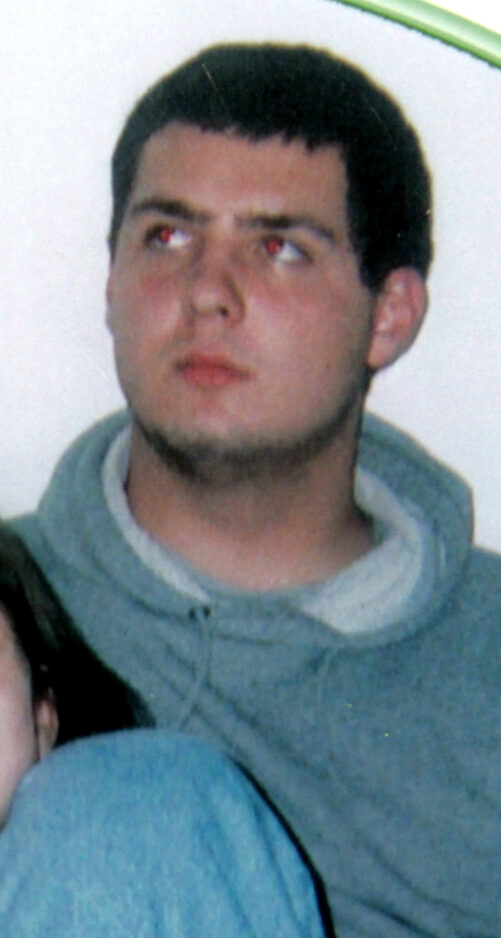
SALT LAKE CITY — The profile of the Bosnian immigrant who gunned down five people at a shopping mall is filled with uncertainty. Neighbors say they rarely saw the lanky teenager, whose mother removed him from school at 16 to work.
But authorities and family members agree on what Sulejman Talovic, 18, was not: He was not motivated by Islamic belief or an act of terrorism when he shot nine people, five fatally, before he was stopped by police.
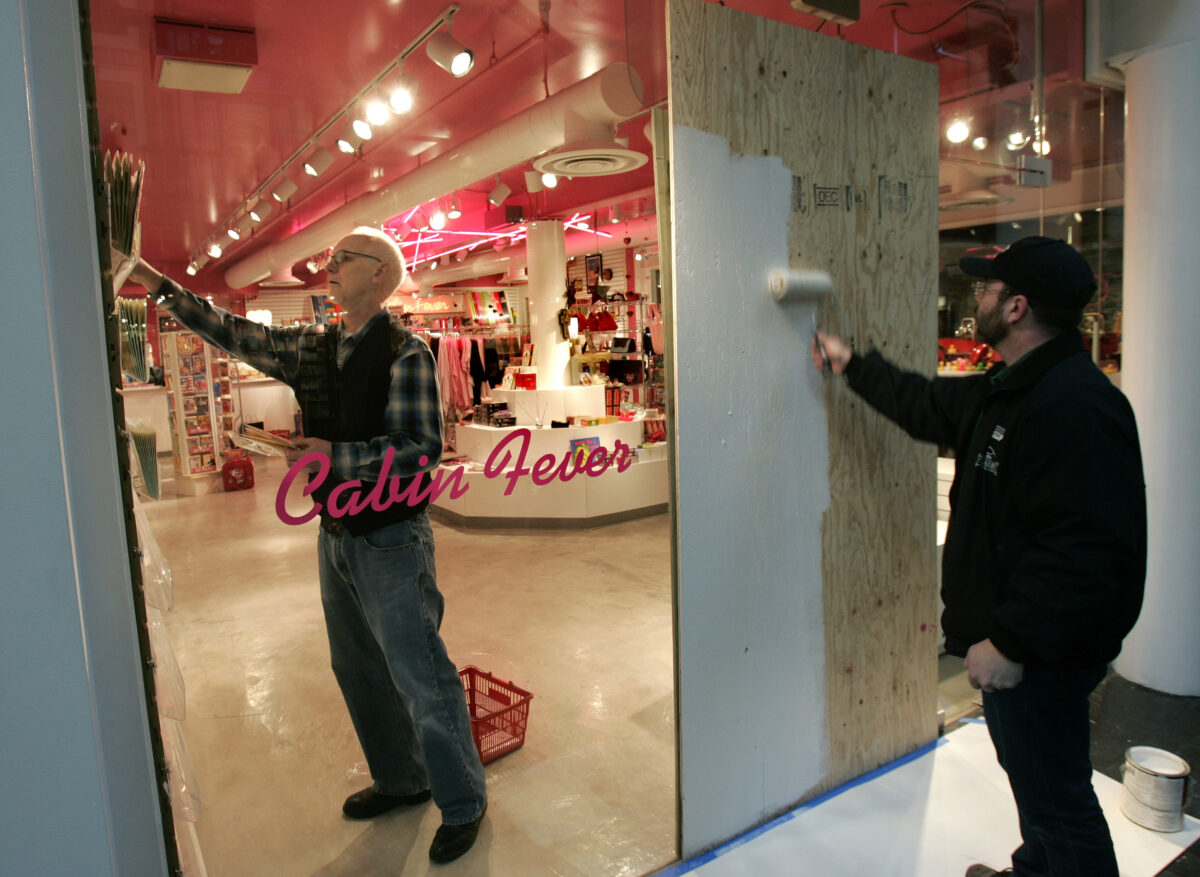
Trolley Square reopened Wednesday, less than 48 hours after the rampage, but some stores remained closed and plywood covered shattered windows.
Bosnia’s U.S. ambassador, meanwhile, planned to visit the city today in the search for answers to the shooting. Bisera Turkovic was scheduled to join fellow countrymen for lunch at the Bosna Restaurant and attend an evening memorial at the downtown library.
“We are Muslims, but we are not terrorists,” the boy’s aunt, Ajka Omerovic, said Wednesday at the family’s home.
She rejected any religious motive for the shooting and said the family is as mystified as anyone in a city that logged just eight homicides in 2006.
“We couldn’t believe our eyes,” Omerovic said of early TV images of a city in panic. “We want to know why that happened.”
Authorities also are at a loss to figure out why Tolavic committed the rampage and how he got his hands on a gun.
“It’s just unexplainable,” said FBI agent Patrick Kiernan, adding there was no reason to believe the rampage was motivated by religion or politics. “He was just walking around and shooting everybody he saw.”
The Bureau of Alcohol, Tobacco, Firearms and Explosives is investigating how Tolavic got a .38-caliber pistol. He also had a shotgun, a bandolier of shotgun shells under his trench coat and a backpack full of ammunition.
But it’s the pistol that he wasn’t legally allowed to possess.
“You can buy long guns at 18. That’s not a problem. The handgun he shouldn’t have had, so obviously we’re going to look at where he got that gun,” said Lori Dyer, in charge of the local ATF office.
The victims were identified as Jeffrey Walker, 52, Vanessa Quinn, 29, Kirsten Hinckley, 15, Teresa Ellis, 29, and Brad Frantz, 24.
Talovic lived with his parents and three younger sisters in a tiny ranch house on the west side, blocks from where a railroad yard and Interstate 15 slice through Salt Lake City. His father works long hours in construction.
Neighbors described the boy as a loner who dressed in black.
His parents, Suljo and Sabira Tolavic, do not speak English well and have refused to answer the door, drawing their window blinds tight. A school counselor close to the family was muzzled by superiors when an Associated Press reporter showed up at Jackson Elementary School.
“We don’t want to stick our necks where it may not belong,” Salt Lake City school district spokesman Jason Olsen said.
Talovic worked for two months as a general laborer at Aramark Uniform Services, an industrial launderer and uniform-rental company, manager Trent Thorn said. He appeared for his regular shift on the day of the shooting.
Talovic was just a toddler when the war broke out in Bosnia in 1992. Serb troops laid siege to the tiny hamlet of Talovici in northeastern Bosnia, bombing it for a year before finally overrunning the village in March 1993, relatives said Thursday.
‘We were besieged and bombed day and night. We couldn’t stick our noses out of the house,’ recalled cousin Redzo Talovic, 59.
‘At first we all hid from the shells, but later we gave up on life, didn’t care and started coming out. That’s how later the shelling killed 20 people in the village,’ Rezdo Talovic said.
Sabira Talovic fled on foot with Sulejman, his three sisters and his grandfather, while her husband, Suljo, hid in the mountains with other men from the village, relatives said.
‘Many left the village, only a few made it,’ said Murat Avdic, 54, a friend of the family.
The mother and children, exhausted, desperate and hungry, made their way the to nearby enclave of Srebrenica also besieged, bombed and crowded with starving families like the Talovics. One of the bombs killed Sulejman’s grandfather but relatives say despite the conditions, they were a quiet, gentle and caring family.
‘Those were really nice people, never argued with anybody about anything. During the war, they shared the little food they had with others,’ said Sefko Talovic, 59, a distant relative. ‘His father helped other injured people flee when the village fell although he himself was injured too,’ he said.
Later that year, Sabira Talovic and the four children were among the displaced rescued by the U.N. They made their way to the government-controlled town of Tuzla, impoverished but safe.
‘I remember they arrived in 1993 on an overloaded U.N. truck and settled here in an empty house the owner had left,’ said former neighbor Zijad Cerkic in the Tuzla suburb of Bare.
‘They were very poor, they had lost everything, but they were very nice and quiet people,’ Cerkic said, recalling the young Sulejman as ‘a good child, always with a smile on his face.’
Sulejman’s father, meanwhile, narrowly survived the 1995 massacre in Srebrenica of some 8,000 Muslim men and boys by Serb forces loyal to then-Yugoslav leader Slobodan Milosevic. The massacre of civilians was Europe’s worst since World War II.
The family finally reunited in Tuzla later that year when a peace agreement brought an end to the war. But the accord divided up the country, putting their native Talovici in the Serb-controlled half of the country and they did not dare return, relatives said.
They made their way to Zagreb, Croatia, where they obtained Croatian citizenship. In 1998, they joined family members already living in Utah. They created new lives for themselves in Salt Lake City, relatives said.
‘I spoke to his father on the phone almost every month since they left to the United States, and he said for the first time they have a decent life, they have a home, jobs and they were happy,’ said Redzo Talovic.
The news of Monday’s shooting came as a shock to his extended family back in Talovici.
‘When I heard his name on TV, I fainted. I still can’t believe what he did,’ said a cousin, Mina Talovic, 54. ‘I remember him as a happy little boy sitting in my lap.’
‘Not in my wildest dreams could I have presumed Sulejman killed those people. When I heard his name, I fell from the sofa,’ Redzo Talovic said.
‘What got into himfi This is what we are all asking ourselves. We are all in shock,’ he said.
Avdic speculated that the teen had been traumatized by what he saw and experienced as a child of war. Up to 200,000 people were killed in the 1992-95 war in Bosnia, and 1.8 million others lost their homes.
‘I’m convinced the war did this in Utah,’ he said. ‘There cannot be any other reason.’
Relatives describe a clan scarred and scattered by a war that destroyed their lives and kept them far from home. Most of the homes in Talovici remain in ruins, including the house Suljo Talovic built a year before the war broke out.
Most of the 30 original families living in Talovici fled most to Switzerland or to the U.S., said Sefko Talovic.
‘Nobody even thought of returning into Serb land,’ he said. ‘Only in 2000 a few of us visited Talovici for the first time. Everything was burned and destroyed.’
In 2003, eight families returned home and fixed up their homes and Sulejman Talovic’s family was talking about doing the same, relatives said.
‘We are all dismayed. We are having a hard time connecting that horrible act with the little smiling boy we remember,’ Redzo Talovic said.
Associated Press writer Debbie Hummel contributed to this report.
This story appeared in The Daily Herald on page A1.