History soared while the economy slumped
During the early 1920s, what is likely the most virulent, long-lasting and beneficial strain of reverencia historiana merged with a favorable form of Ancestorus veneratus and swept through Provo. This strong inclination toward history struck the Sons and Daughters of Utah Pioneers with the most vigor. It prompted them to resolve that future generations of Provoans should never forget the sacrifices, sufferings, hard work, and determination of the city’s early colonizers.
The two organizations took steps aimed at achieving that goal. Thanks in part to their resolve, the contagious interest in history continued to spread. Eventually, a stately shrine to the memory of pioneer history slowly emerged in North Park on 500 West in Provo.
One of the Daughters’s early efforts occurred in the spring of 1922. The group invited University of Utah historian Levi Edgar Young to Provo. He was to speak in the tabernacle about early pioneer life. According to the Provo Post, Young – who was an early proponent of faith-promoting history and a grand nephew of former LDS President Brigham Young – “characterized the pioneers as the truest type of American soldiers.”
Young admonished his audience: “There is too much history written without a soul, without a spirit. The facts are alright, but get the spirit of the time as well. And do not forget to tell of the pioneer mother. She was a dominant figure, and that concerning her life is yet to be written.”
Young returned to Provo early in 1923 and urged Kiwanis Club members to help preserve historical sites in Provo and collect information about early incidents that occurred in the area. He emphasized the importance of having someone write the history of Provo before all of the pioneers were gone.
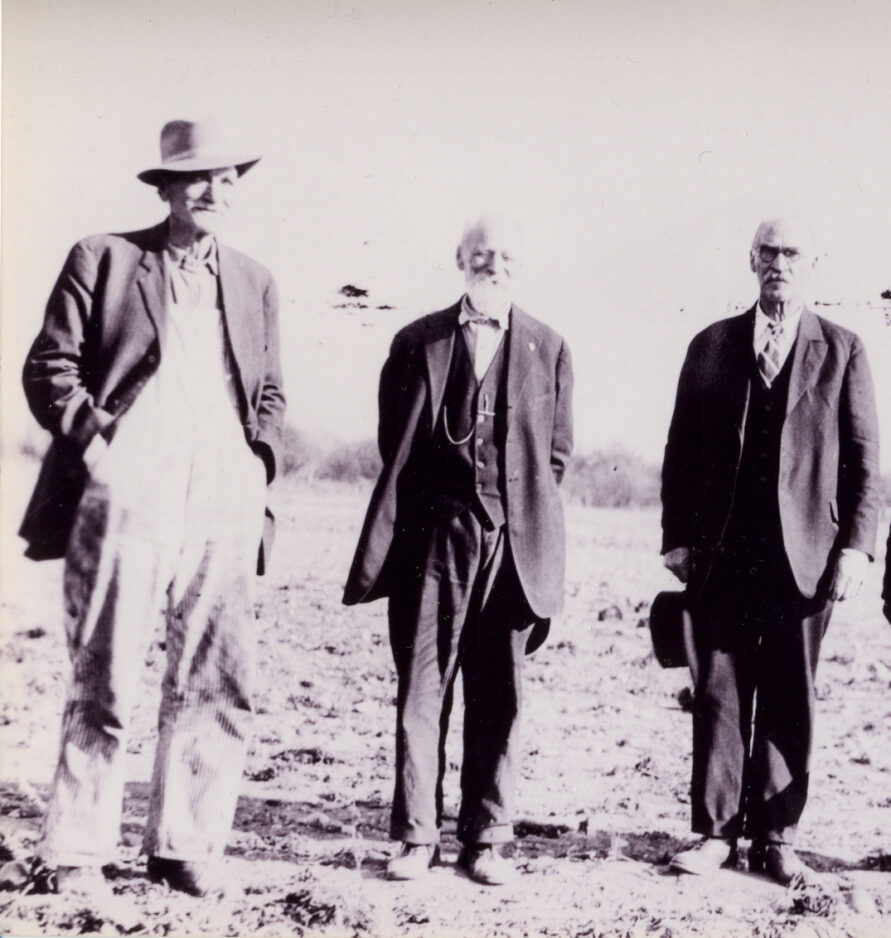
The Sons and Daughters of Utah Pioneers, especially local veterinarian, Dr. David H. “Doc” Loveless, further stimulated Provo’s newborn interest in history by collecting artifacts relating to the city’s past and putting some of them on display, first in a relic room in Provo High School and then at the new Utah County Courthouse. Loveless and other elderly men also attempted to locate historic sites and identify significant buildings.
Another Provo man worked assiduously during the 1920s to preserve Provo’s past. A diminutive Dane had arrived in Provo in 1858 when he was just four years old. Samuel Hans Jepperson spent basically the rest of his life in the city he grew to love.
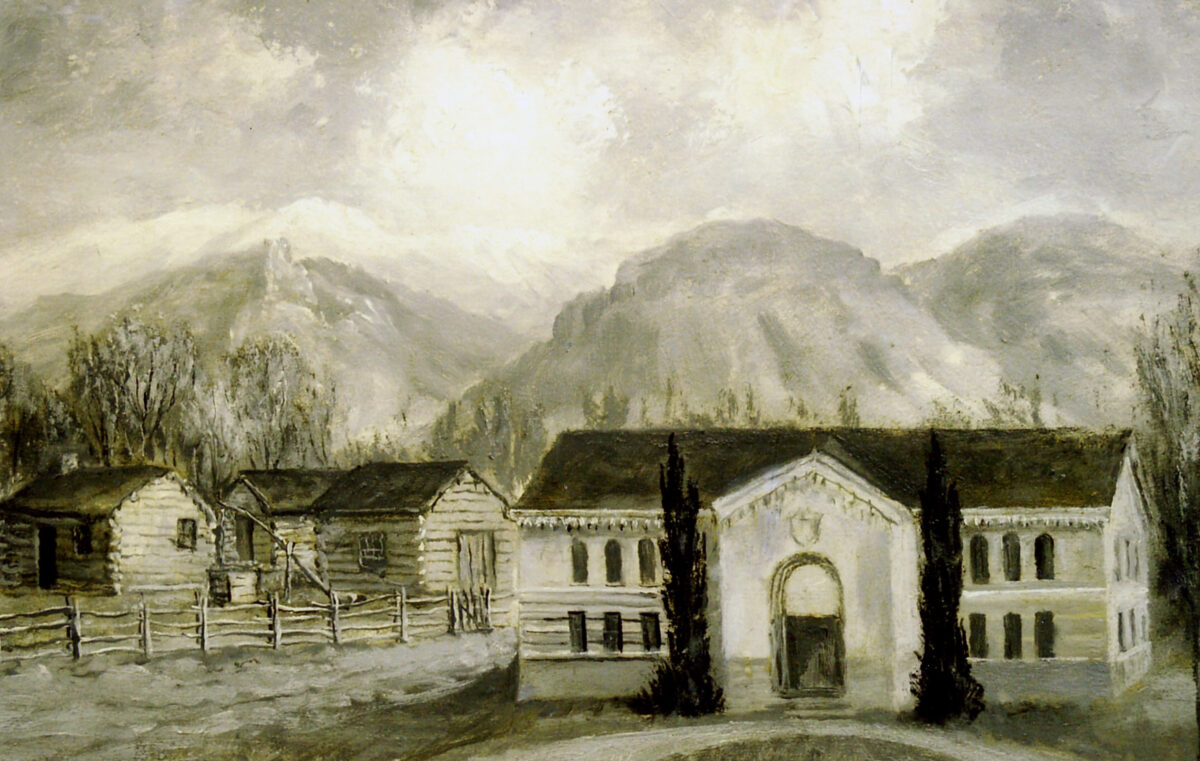
As a young man, Jepperson taught himself how to paint, and often during the last decade of his life his paintings dealt with historical topics and places. He seemed to feel an obligation to preserve on canvas the buildings and events of the past for the eyes of future generations, and he depicted many of them.
Jepperson donated a large painting of Fort Provo to the Daughters of Utah Pioneers. In February 1927, just four years before his accidental death, the Daughters showed their appreciation by sponsoring a testimonial in the Sixth Ward Meetinghouse for the artist. Jepperson’s painting of Fort Provo hung in a place of honor in the Utah County Court Building’s small relic hall.
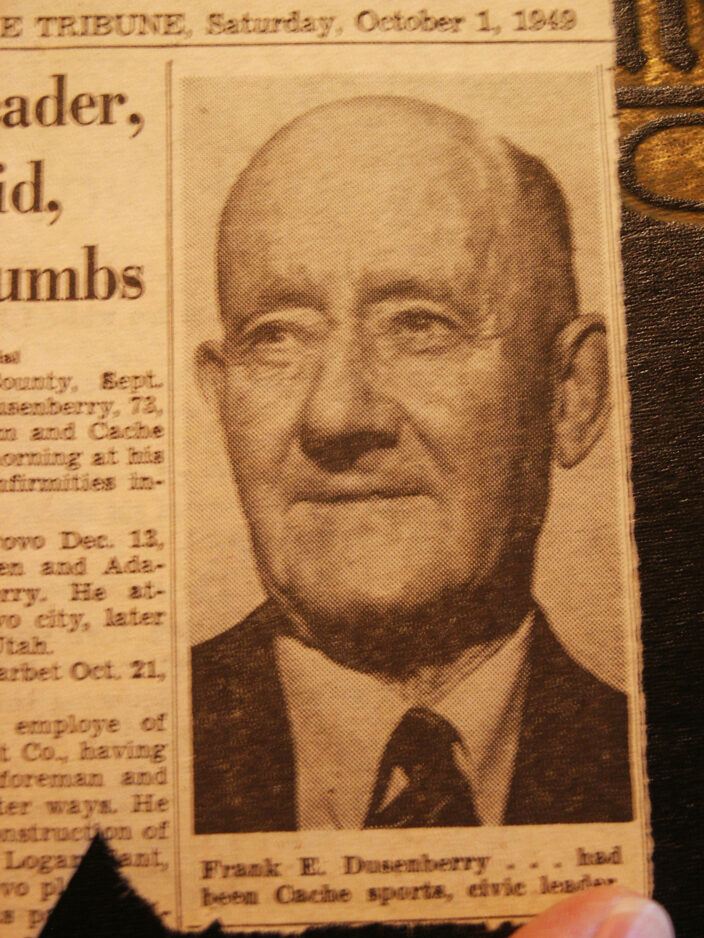
As this cramped relic hall gradually filled with artifacts, the Sons of Utah Pioneers developed plans to construct a larger relic hall of their own. In December 1929, just two months after the stock market collapsed and the Great Depression began, a committee consisting of Frank Dusenberry, president of the George A. Smith Chapter of the Sons of Utah Pioneers; David Loveless, local artifact collector; and Peter Groneman, a Provo contractor, met with Provo’s city commissioners to talk about constructing a new relic hall.
Although building the hall would undoubtedly be a daunting task during dire economic times, the city promised to cooperate in the venture by making crime pay for it.
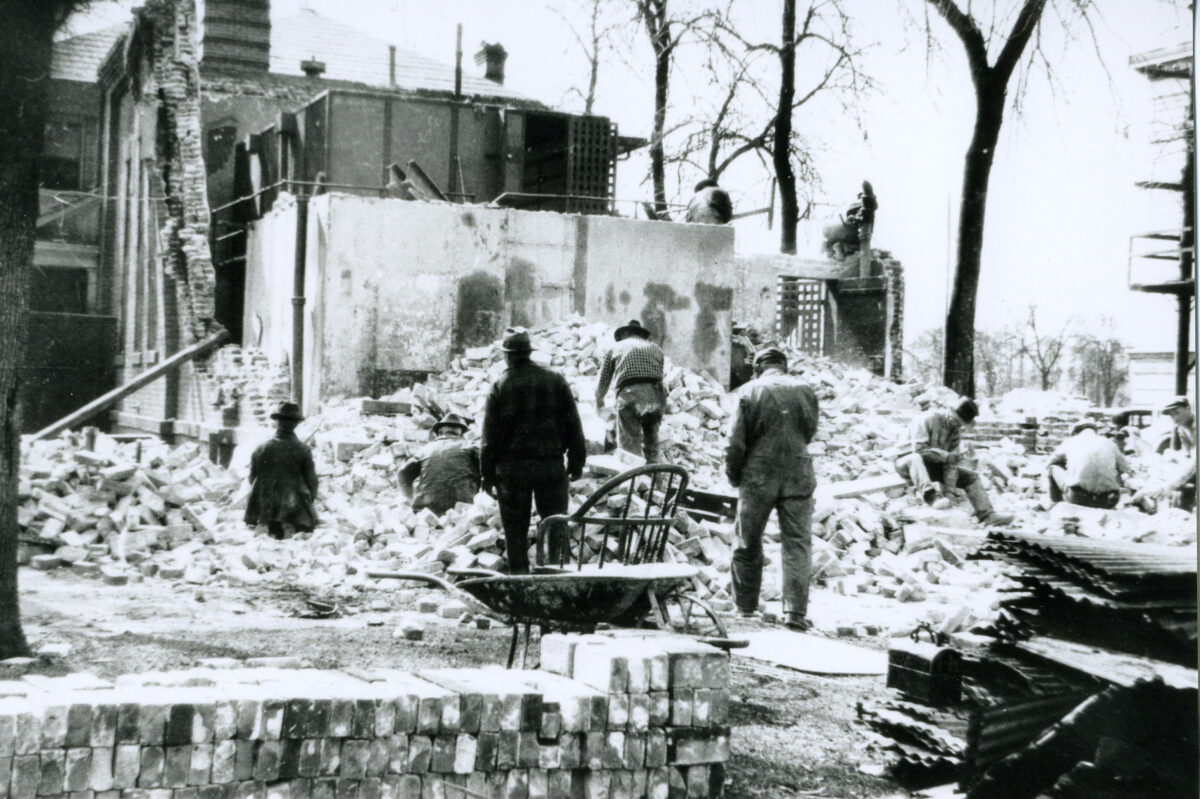
The work of removing the old county jail from the Utah County Courthouse lot was scheduled to begin. The faithful building had served the community well after Provo contractor Samuel Liddiard completed it in March 1888 at a cost of $4,350, plus another $6,630 for steel-barred cells.
After serving as the local lockup for more than four decades, the bad boys in “Hotel Provo” would soon be moved into new quarters in a defunct pump manufacturing factory on West Center Street near the railroad tracks. The county bought the industrial building and converted it into the new county jail.
City commissioners suggested using the bricks salvaged from the old jail to construct the new hall for historic relics. Utah County commissioners approved of this proposal, and prospects for constructing the hall seemed to brighten.
A local architect began drawing plans for a brick, two-level building 70 feet long and 35 feet wide. A smooth layer of stucco would cover the old red brick from the jail. Peter Groneman, the contractor, planned to present the finished plans for the building to the general membership in mid-January 1930. To give the general public a glimpse of what the building would look like, artist Jepperson dashed off a rapid monochomatic oil painting showing a somewhat squat relic hall with a circular drive in front. Partly on the strength of this rather primitive painting, the pioneer organization and the city commissioners approved the plans.
Initially, the leaders of the Sons of Utah Pioneers favored Pioneer Park for the relic hall. It was Provo’s first town square, at the corner of 500 West and Center Street. Mayor Jesse N. Ellertson and the city commissioners had no objection to the site so long as the people of Provo would go along. (The mayor likely realized that in the past the people of Provo had never been united in their opinion about where public buildings should be built, and he took precautionary action.)
The Evening Herald reported that Provo’s highest official suggested the building committee and the members of the city commission should visit the proposed site in Pioneer Park “along with other locations, to determine which is more ideal.” The group tentatively settled on a site near the southwest corner of Pioneer Park.
Early in February 1930, local camps of the Daughters of Utah Pioneers joined Provo’s Sons of Utah Pioneers in their effort to build the large hall. Committees representing the two organizations met later that month, and the Daughters suggested a new site for the proposed memorial hall – North Park.
They offered two compelling arguments in support of the new site. North Park was very important historically because it was the site of the city’s second fort, Fort Provo. The new site was also likely more convenient for tourists, since an auto park for visitors was at that time located in North Park. Travelers could easily visit a new museum located contiguous to their campground.
After further discussion, during which the women appear to have had the final word, the Sons agreed to accept the new site suggested by the Daughters. The two organizations soon met with the city commission, presented their new recommendation, and the city fathers gave their approval.
The Provo City Commission verbally granted the Sons and Daughters of Utah Pioneers use of a plot of land approximately 668 feet long and 198 feet wide. It fronted 500 West on about 600 North. The Sons and Daughters planned to construct their hall facing 500 West about 80 feet east of the fence which then marked the park’s west boundary. They planned to include a semi-circular driveway leading from the road to the building and back.
Wasting no time, the optimistic organizations planned a March groundbreaking ceremony for their new building. Suffering a paroxysm of overconfidence, leaders announced plans to dedicate the new building on July 24 or later that fall.
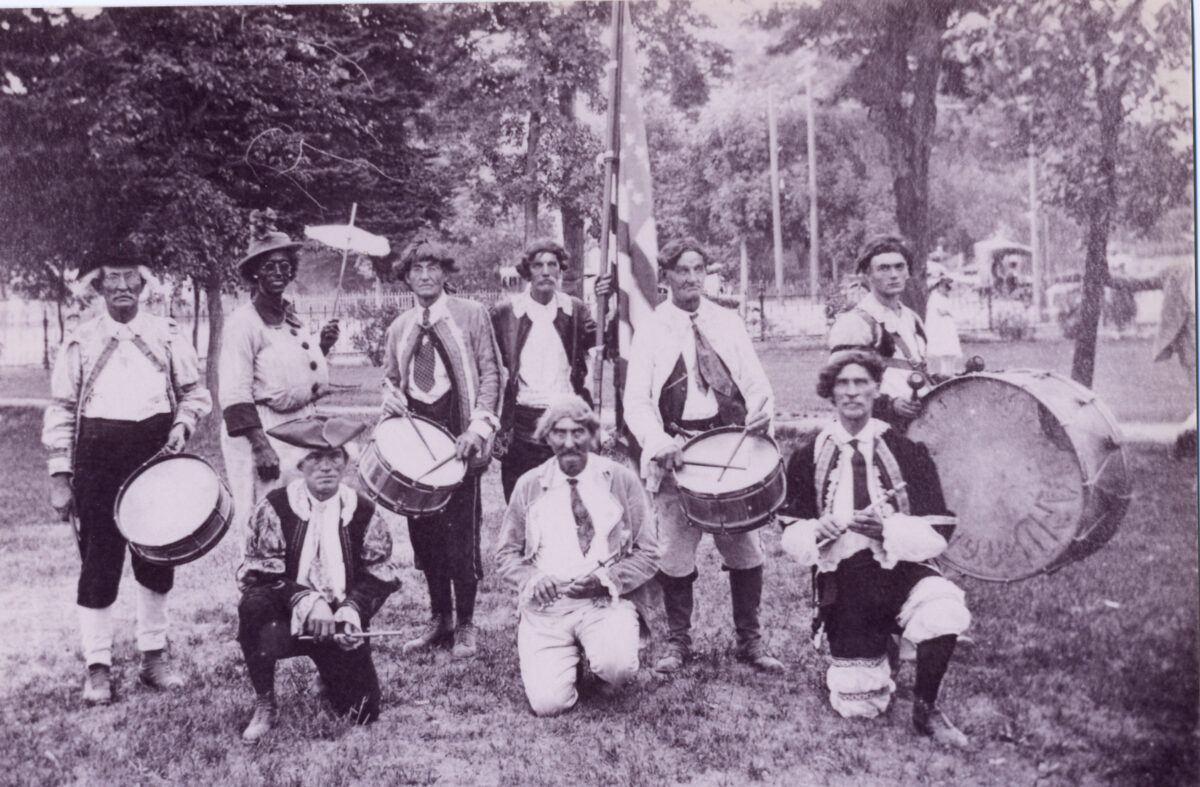
More than a thousand people gathered in the park on March 3, 1931 to hear many dignitaries speak. Stake President Thomas N. Taylor offered the dedicatory prayer. Men had laid out the boundaries of the excavation that morning. When it was time to break the ground, Myron C. Newell held the plow and Alvin Boardman drove the team. The Provo Martial Band provided the instrumental music, and Sarah Ramsey and Emma Egileson sang a vocal duet, “Oh, Ye Mountains High.”
Contractors estimated the building would cost about $20,000. The pioneer organizations hoped to raise much of the money for the building through contributions. The day after the groundbreaking, The Evening Herald recorded the names of the first two donors to the building fund: “Mrs. Robert Boardman, 83, a Provo pioneer, made the first contribution to the women’s organization, and J.B. Walton made the first contribution to the men’s organization.”
Despite this early encouragement, a significant number of large cash donations failed to materialize, and the resilient building committee pursued other possibilities. They hoped much of the labor and many of the materials would be furnished free by community minded citizens and businesses.
It seemed this might just be possible. The day after the groundbreaking, about a dozen men began razing the old county jail, and as promised, the city and county commissioners donated the brick. The building committee vainly hoped the new relic hall would now rapidly rise.
The Sons and Daughters next cooperated to sponsor their first fund raising event, a 49ers dance held in the Utahna Gardens on April 17. There would be homemade cookies, cake and locally manufactured “sparkling, bubbling Denhalter” (soda pop) served over the bar by Bishop John “Johnny Mack” McAdams. For amusement, guests could wander into the casino where William M. “Billy” Wilson spun the roulette wheel and mysterious Gypsy women told fortunes.
Verdi Brienholt and his gold-digging Columbians furnished the dance music. The party committee encouraged attendees to wear western clothing, but stated that costumes were not necessary. For a small fee, “street merchants” furnished carnival hats. “Squakers, zazooks, and tin horns” added to the merriment. The party committee successfully mined the pseudo miners and deposited a small but respectable profit into the newly opened and sorely needed building fund.
Provo City Commission records show that on April 2, 1931, a month after the groundbreaking, the commission finally gave the Sons and Daughters official permission to build on the west side of North Park. The title to the ground, however, was to remain with Provo City.
Apparently, the Sons had developed a parallel plan to construct a replica of a pioneer farmstead in the park. It was also decided at the commission meeting that David H. Loveless be given permission “to erect such buildings as he may wish on the North park, north of the building of the Sons and Daughters of Utah Pioneers; title to the ground not to pass from Provo City.”
Work on the relic hall progressed slowly because of lack of funds. Apparently, workmen finished the excavation for the lower level of the building and poured the concrete floor and foundation that summer.
However, all hopes of having the structure completed that year evaporated in the heat of reality. On September 2, five months after the city commissioners granted the Sons and Daughters permission to construct their museum, a committee representing the Daughters went before the commission once more and asked for financial help. Commissioner Hopkins received the assignment of working with the committee to see what could be done. Eventually, work ground to a halt that winter because of inclement weather and lack of money.
- D. Robert Carter is a local historian who resides in Springville. His books on early Provo, “Founding Fort Utah” and “From Fort to Village,” can be purchased from Pioneer Books, Borders and the BYU Bookstore in Provo; Confetti Books and Antiques in Spanish Fork; and from the author at (801) 489-8256.