Young lives lost: Part 1
Utah has the 14th highest rate of suicides in the nation for youth under age 18. For young adults age 18-30, Utah ranks 11th.
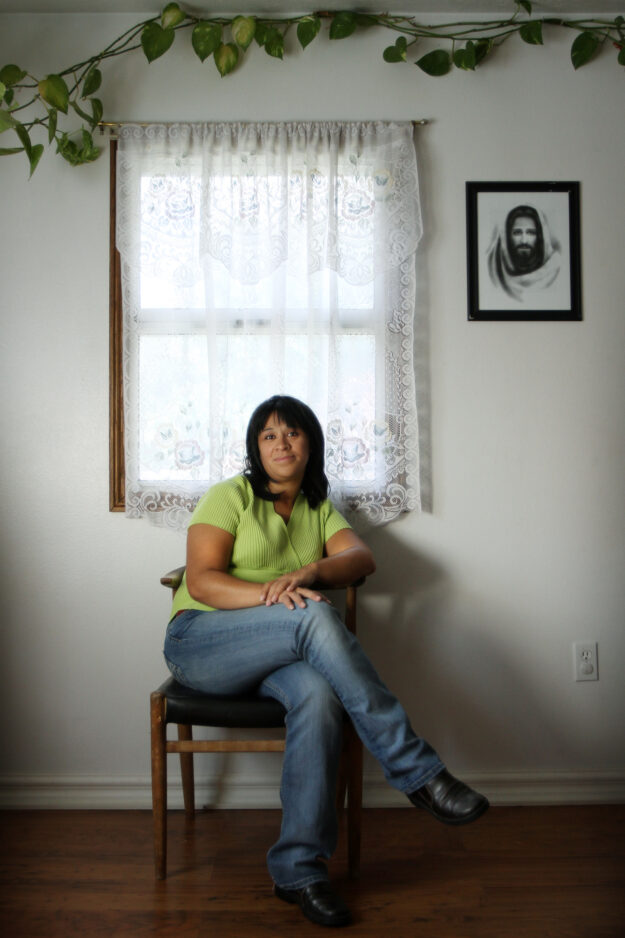
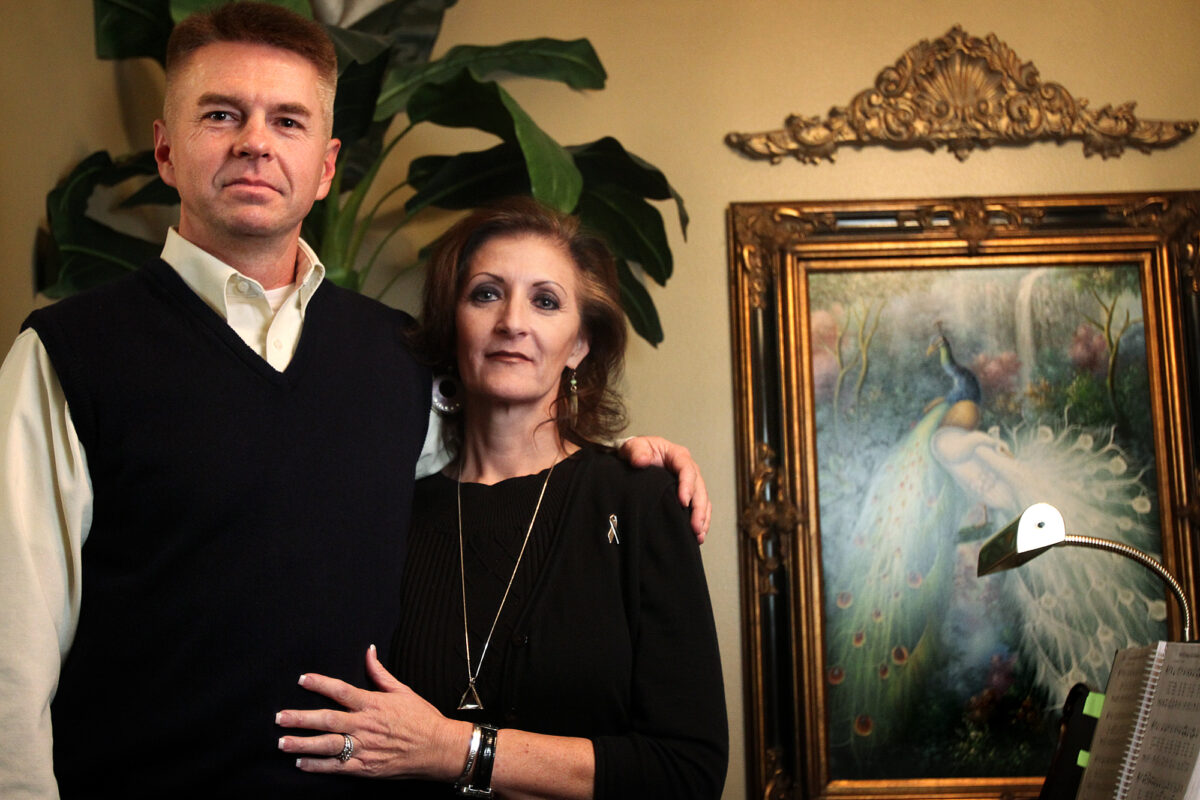
• An 18-year-old Provo woman shot herself in her apartment last year. Her mother found a suicide note: “It was nobody’s fault but my own. You all were wonderful. … I am so sorry.”
• A 10-year-old boy from northern Utah County hanged himself in his backyard one weekday afternoon in 2005. His younger sister was home at the time. He was a Boy Scout. Nothing pointed to why. There was no note.
• In 2008, the mother of a 17-year-old northern Utah County boy discovered her son’s body after his friends called to find him. The cause of death was clear, but not the reasons.
• On Tuesday morning last week, a student at Utah Valley University handed his academic adviser a note declaring his desire to kill himself. He then climbed onto a ledge at the computer science building. The young man didn’t jump, but he is one of many Utahns who struggle with suicidal feelings and sometimes take the next step.
These are details from a handful of cases in Utah Valley that represent a disturbing reality. Utah has the 14th highest rate of suicides in the nation for youth under age 18. For young adults age 18-30, Utah ranks 11th.
Nobody is sure exactly why.
Utah is 15th in overall suicides with 14.3 per 100,000 population; Alaska, at No. 1, has 21.8. The national average is 11.5.
The good news is that young people who feel driven into a corner by life can be reached by those who recognize the warning signs. Suicide in the prime of life can be prevented. All it takes is a willingness to listen, to bring the subject out of the shadows and into the light of frank acknowledgement by loving family members and acquaintances — people who can make a difference.
•••
Adam Gonzales lied to his big sister only once.
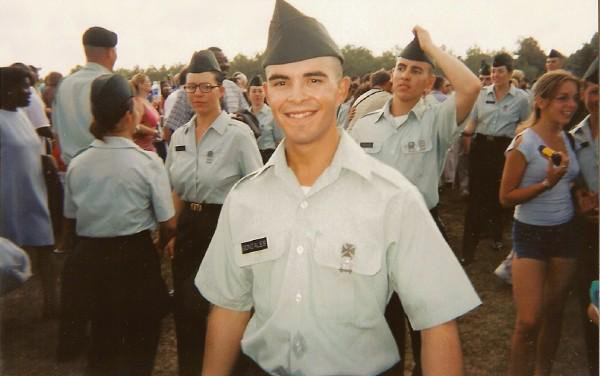
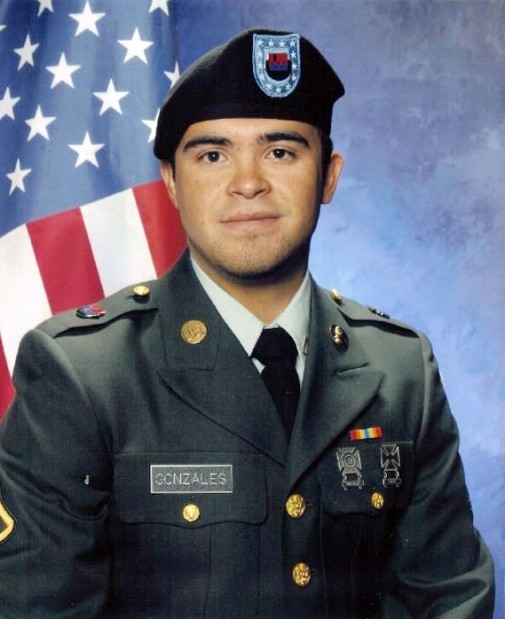
It was a Saturday in 2008 when he told her he would never kill himself. But on a cold November morning three days later — Veterans Day — the 23-year-old Iraq vet, all alone in his Payson home, put on his military uniform, pointed a rifle at his heart and pulled the trigger.
Veronica Valadez, who is more than 10 years older than her baby brother, still relives that morning. She’d gone to work and planned to have lunch with Adam. It started off just like any other day but turned into a horrific nightmare from which she still struggles to wake up.
Valadez, who also lives in Payson, believes the root cause of Adam’s suicide was untreated post-traumatic stress disorder followed by an ugly romantic breakup. When he was 16, he enlisted in the Army, went to boot camp that summer, returned for his senior year in high school and then went to Iraq just one month shy of his 18th birthday.
The man who returned from Iraq was not the boy who went. During his year’s deployment Adam had completed difficult missions. He’d seen friends get killed and he’d seen women and children subjected to brutal acts. He rarely talked about it. Sometimes his sister would get him talking, but after a couple of minutes he’d fall silent and stare into space.
He couldn’t get into the VA Hospital because of a backlog of veterans needing help. He was told to call back in three months, Valadez said. The signs were there, she now knows. No one recognized them until after Adam died. In his letter to Valadez, he told her that the real Adam had died in Iraq.
“In retrospect, when we look at the pictures, we can see that he had sad eyes,” Valadez said.
She’s gone through a range of emotions — guilt, anger, grief, pain, loss. She can function on most days. But don’t ask if she’s OK.
“There is a hole in our hearts,” Valadez said. “It’s really hard to live when your heart’s not completely full.”
Guilt, fault, blame
The choice to take one’s own life belongs to the individual, but that doesn’t stop survivors from assigning blame. Most often it falls upon themselves.

Charn Burton, whose 18-year-old son Jordan killed himself nine years ago, said she understands that his mental issues were not her fault — or anyone else’s — and that he made the choice for himself. But that doesn’t stop her from asking what she did wrong along the way as a mother. She even wondered if the baths she took while pregnant were too hot, and that’s why he was sick.
“We crucify ourselves, we literally do,” Burton said.
Jordan’s father, Jeff, said that he and his wife stopped being Jeff and Charn the day their son died. They became the parents of “that boy who shot himself” — the mark of someone who, in the eyes of others, must have done something terribly wrong for their child to have ended his own life.
People are left with “if-onlys” — if only I’d answered the phone, if only I’d been there, if only I’d known how much she was hurting.
Danny Haven, whose daughter Alysha killed herself when she was 15, planned to be home from his contractor job by noon the day she died. He didn’t make it until about 6 p.m. She died in their Springville home sometime in that last hour. He wonders what might have been different if only he’d gotten home earlier.
The last communication Valadez had from her brother Adam was a text — “Thanks” — in response to her texting him a happy Veteran’s Day an hour before he died. She’s still upset with herself for reminding him of an experience he was ready to kill himself to get away from.
Rev. Dean Jackson, pastor at Rock Canyon Church and chaplain for the Provo Police Department, said such survivor guilt is common. Suicide, however, is a choice that only one person can make. Another individual can’t hold himself responsible for the actual choice of another person to kill himself, he said.
“At the point of completion, you have to let go and realize you did what you could,” Jackson said.
Suicide, he believes, can be completely stoppable, but it depends on knowledge or observation by others, or information provided by the person contemplating it.
“The idea that we can keep people from doing things themselves, I don’t buy that notion,” he said.
Loved ones left behind need to focus on what they could change in a similar situation in the future, Jackson said, instead of beating themselves up for not seeing the signs, not being there at the critical juncture or failing to stop that final act.
It isn’t easy.
“You can only respond to what people tell you,” said Dr. Doug Gray, a suicidologist at the University of Utah. “There’s a point where the person has to take some responsibility.”
Sadly, that doesn’t always feel like enough. Survivors want to look at what went wrong and determine what they could have done differently to get a better outcome. Adam Gonzales talked to his sister about everything. So why not this?
Other people are talking to her now. She has become a liaison for people who feel depressed or hopeless. She listens with the hope that another family won’t have to suffer what she has. More than one person has told her she has saved their lives. Such victories are bittersweet. She couldn’t save her own brother.
Greg Hudnall, student services director for Provo School District, is haunted by the faces of children who killed themselves. He thinks of a 4th-grader who hanged himself at school and remembers that private moment behind the school, at about 2 a.m. after the police were gone, when he simply wept. The superintendent found him after a few minutes, sat down on the hard pavement next to him, and they cried together. Each suicide is a personal failure.
“That’s one more child we didn’t save,” he said. “What more could we have done to prevent that?”
Lasting pain
Suicides, particularly among children and young adults, create new wounds and leave behind crippling fears — that another loved one might do the same, for example, or that a child might think it’s OK, or that a phone call or text message or a closed bathroom door will again signal the worst. For some survivors the permanent result is gut-wrenching angst that can leave one barely functional and contemplating suicide himself.

Valadez, for the first time in her life, thinks about killing herself. Since Adam died, she’s in more pain than she can handle sometimes, and she’s not sure it will ever end.
At least she has some anchors that her brother did not — three, actually — two girls and a boy, ages 4, 11 and 19. She also knows how much it hurts to lose someone and would be unwilling to put anyone in her family through that.
“Adam was one person in my life whom I loved amongst the many,” she said. But the children who keep her grounded also provide a constant source of worry. She’s afraid they’ll take the same road as Uncle Adam.
Suicide is more common among family members of suicide victims. A 2003 study published in the American Journal of Psychiatry found that family members of suicide victims were twice as likely to kill themselves as members of comparison families. Valadez keeps special watch on her 19-year-old daughter, who refuses to discuss her feelings.
Valadez doesn’t want any more statistics in her family. She talks with her children about Adam’s death, telling them he was sad and that’s why he killed himself, and when they’re sad they can talk to parents, family members, teachers or church leaders.
She begs them to ask for help.
And she constantly tells them she loves them, hoping the love that was not enough to save her brother will be enough to save her children.
Aftershocks
Charn Burton knew suicide was a real possibility for her oldest son. Eighteen-year-old Jordan had been on antidepressants, had mutilated himself and had been hospitalized for attempted suicide before age 10. He had been diagnosed with rapid-cycling bipolar disorder. He’d always felt life was too cruel, that he didn’t belong.
That didn’t make his violent suicide any less horrifying. He broke into the family’s Payson home when everyone else was out of town, broke the lock on his father’s gun cabinet and laid down on the family room floor, waiting to shoot himself the moment Charn walked into the room. Jeff was a few feet behind her.
She now suffers post-traumatic stress disorder. For months after the suicide no one would go into the family room where he died. Jeff, who had run up the stairs to keep their other children away, feels he failed in his job as family protector.
For Charn the eerie calm that filled the house after the cataclysm remains vivid nine years later. It was a marked contrast to the family chaos they’d always known. Her other son, then 16, appears in most every picture the family has of Jordan. He tries not to think of his brother because it hurts too much. A daughter, who was 11 when Jordan died, cries because she can’t remember the sound of her brother’s voice.
“He was very loved and he didn’t know it. He didn’t perceive it that way,” Charn said.
She remembers coming home in the middle of a school day a couple of years later and seeing her second son’s truck in the driveway. He was supposed to be at school. She told herself to remain calm, then walked inside and called out his name. No answer. Again she called, and still no answer. Unable to quell the panic, she frantically searched the house.
Burton found her son in the basement, headphones on, playing his guitar.
“You become irrational, you really do,” she said.
Valadez has experienced similar moments — to the point of paranoia, she said. She’s always texting her children and gets anxious if she doesn’t hear back from them quickly. The last time someone didn’t respond, it was because he was dead.
Rev. Jackson was the executor of his own uncle’s estate after a suicide in 1998. His uncle had been having serious financial difficulties for years. Jackson spent four years trying to sort through the mess. He sums it up this way:
“When he took his own life, his problems didn’t go away, he just gave them to somebody else.”
Uphill journey
Veronica Valadez yells at her brother sometimes. She’s angrier than she’s ever been with him. What was he thinking? she wants to know. Does he know that her 4-year-old daughter will never know the fun-loving, carefree mother her older children had, that a part of her died when he did? Why didn’t he think about how badly she would hurt and that she will never get over his suicide? It still hurts as much as it did the day he died.
Danny Haven still doesn’t display any pictures of Alysha, who took her own life in the bathroom. That event taints everything. He can’t bear to see any reminders of her because he can’t remember the good times without also remembering how she died.
He is also careful with the movies he watches. He doesn’t like seeing a person being hanged. He doesn’t want to see his daughter dying.
Charn and Jeff Burton were both asked in the months after their son’s death if they were over it yet. The answer will always be no. Charn has questioned her faith and still grieves for the loss of the person she herself used to be. Jeff has tried to get people to identify with Jordan’s life instead of identifying him only by his death. It’s hard to make suicide palatable, he said.
“It’s loss without really any way to combat it,” he said.
Jessica Gehrke wishes she had one more chance to tell her cousin, who was 16 when she killed herself a year ago, that she loves her. And she wants to apologize for not being there for her. She’s finds some comfort in memories of sleepovers, girl talk and family parties. But those memories also hurt. Each one — especially the plans they’d made to grow up together and watch their children become best friends — now will never happen.
Death overshadows it all.
“I just miss her, and it’s just a really hard thing,” she said.
For one Utah County father who lost his teenage daughter more than a decade ago, guilt is always there. He gets up, he goes to work, he takes care of his other children. He doesn’t want more lives ruined.
He didn’t want to be identified for this article. He forgives his daughter. But that doesn’t stop him from looking in the mirror each day and feeling that he had responsibility for the death of a child he would have died to protect. He can’t forgive himself.
Walking for Jake
Connie Cooper has a framed picture of her 21-year-old son, taken the day he was sworn into the U.S. Army Reserves in 2004. Jacob Cooper was just under 6-feet-7-inches tall with blue eyes and brown hair. He’s sharp and alive in the photo, ready to take on the world.
When six weeks later she found his suicide note — “I’m sorry, but I couldn’t handle the pain” — she had a hard time reconciling it with the confident Jake in the picture.
“I thought he had overcome his battle with depression,” Cooper said.
She said this mostly dry-eyed before hundreds of people with similar struggles at the 6th Annual Suicide Awareness Walk on Sept. 11 in Provo. She spent the time reminiscing about her son and sharing what she’s learned since he died. Mainly, she has learned to trust other people and God. She also has an increased awareness of her need for service, both to get her mind off her suffering and to honor her son’s life.
She described Jake as a kind, generous, considerate mountain of a man, who had struggled to live a good life before succumbing to the hopelessness that typically precedes suicide. She’d thought — as the years passed and he graduated from LDS seminary, served a mission in Indiana, became an Eagle Scout, volunteered at Scout camp and joined the Reserves — that his life was picking up. She learned the truth too late.
Her words that day didn’t focus on how Jake died but how he lived: “We were truly blessed to have Jacob as our son.”
•••
RELATED STORY:
Teen suicides often come out of nowhere
Alysha Haven was beautiful.

Yet no pictures of her adorn the walls of her family’s home. Her possessions don’t fill shelves or closets. There are no visible reminders of a 15-year-old girl.
It hurts too much.
Danny Haven is still angry at his daughter, who hanged herself in March 2008. He’s angry that she made a choice that drastically and permanently changed so many people’s lives. He’s upset she didn’t talk to him, that she took the easy way out and left her family to pick up the pieces.
Mostly, he’s angry that she’s gone and he didn’t stop it.
“I think if it came down to it, I forgive her more than I forgive myself,” he said.
Alysha had been struggling for awhile. Danny and the children’s mother had divorced two years earlier, and Mom wasn’t around. An acquaintance of the family was under investigation for raping Alysha a year before, and the prosecutor was trying to get her to testify against him. She was having trouble keeping her grades up.
The day she died, Alysha didn’t go to school. She didn’t feel well, she told her father, and she wanted to think about the decision to testify against the alleged rapist.
She and Danny talked a few times throughout the day. In the late afternoon, she called to say that Thomas, her older brother, was ill. Danny told her to sit with Thomas and he’d be home soon.
Braydon, Haven’s 6-year-old son, was asleep on the couch and Thomas was resting when Danny walked in. The house was quiet. He checked on the two boys and went to find Alysha. The door to his bathroom, the only functional one at the time, was closed, so he assumed she was in there. After several minutes Alysha still hadn’t come out, so he knocked.
“I couldn’t understand why there was no answer, so I knocked again, and no answer,” he said. “I tried the doorknob and it was locked.”
He forced the door open.
As he gets to this part — the worst moment of the worst day of his life — Danny pauses, leans back on the couch and presses his hands to his face.
Alysha was hanging from the shower by a dog leash.
Haven started yelling — for his son, for the police, for help. He pulled Alysha down and started CPR, even though he knew she was dead. When the police arrived, he yelled at them over how long the rape case had dragged on.
That night, the family all stayed in the same room at the home of Haven’s parents.
He has analyzed and overanalyzed the month leading up to Alysha’s death. He sees the signals now, he said, although it could be he’s just reaching for answers. Alysha had never been diagnosed with depression, although it was possible she was depressed. He found out later that Alysha had told her mother she wanted to kill herself and had a way to do it. She’d been dealing with the effects of the alleged rape for almost a year. Danny knew she wanted to put that ordeal behind her.
“You never find the answers,” he said. “I’m looking for things to try to explain, but there’s no explanation. To this day there’s no explanation.”
This type of trauma — a suicide that seems to come out of nowhere — happens more often with teenagers, according to youth suicidologist Dr. Doug Gray at the University of Utah. Teens are more impulsive than adults and make split-second decisions. They also don’t have the life experience to help them get through difficult times. They get a poor grade, get into trouble with the law or have a fight with a parent, boyfriend or girlfriend and then turn to suicide.
Those who don’t exhibit any warning signs may be more likely to complete suicide because the people around them don’t know anything is wrong. No one knows to ask if they’re suicidal or to make sure they’re never alone. These are the most preventable cases, which makes a youth’s death all the more tragic, Gray said.
“What we’re not seeing is as much attempt, attempt, attempt, suicide,” he said. “For the majority — the first time is completion.”
•••
Jessica Gehrke, like Danny Haven, never had the chance to ask one of her closest friends to not kill herself. She couldn’t talk her 16-year-old cousin Kylie into getting help for her sadness. She couldn’t remind her of the plans they’d made together for their lives or tell her how much she would miss her. Instead, she received a phone call one night last November while out with her boyfriend. It was her father. The first thing he said was, “Are you sitting down?”
The news was a numbing blow.
“I couldn’t breathe,” Jessica remembered. “I couldn’t even cry.”
No one saw it coming. Jessica’s mother, Terri, said her niece wasn’t depressed and had never exhibited any of the classic warning signs of suicidal drift. She’d just broken up with a boyfriend. Her family found out later that she had been teased in school, but they never considered any of that to be enough to drive her to kill herself.
“She was full of life, beautiful, never any problems,” Terri Gehrke said. “Just zero warning signs.”
“It was kind of like a spur-of-the-moment thing, I guess,” Jessica said.
Danny Haven didn’t know how long his daughter had been considering suicide. She didn’t leave a note. He knows Alysha was in a dark place in her life when she died and takes comfort in knowing she’s probably doing better than he is.
“You just never forget. You’ll never stop missing her,” he said.
•••
Suicide Watch
Young people
Utah is ranked 14th in the nation for suicides among 10- to 17-year-olds and 11th among 19- to 30-year-olds, according to the Utah Department of Health. Researchers also have found that teenagers are more likely to complete suicide on their first attempt, while most adults who complete suicide have made one or more attempts already. Emergency room visits for suicide attempts were highest among people ages 15 to 24 in Utah.

Adults
Suicide rates are highest among elderly white men nationwide and in Utah. According to the Utah Department of Health, men 75 years and older are the most likely group to kill themselves, followed by men between 45 years and 54 years of age. Men and women older than 85 years old had the highest prevalence of reporting thoughts of hurting themselves or thinking they would be better off dead. Elderly women have higher rates of attempts or suicidal feelings. Suicide is the leading cause of death for Utahns 35 to 44 years old.
Veterans
About 950 military veterans attempt suicide monthly, and 18 complete suicide every day, according to an April 26 article from Army Times. About a third of those who complete were receiving care through the Veterans Affairs Department. It’s a group fraught with difficulties; many of the soldiers are young and are just returning from war zones. Suicide rates in this group decrease with treatment, but sometimes treatment is hard to get. Roy Baumeister, a researcher at Florida State University, wrote in a 1990 paper that veterans, along with victims of child or domestic abuse, are more prone to suicide because they have a higher tolerance for pain because of their experiences, which makes the pain of actually carrying out a suicide more bearable.
LGBT
Lesbian, gay, bisexual and transgender people, and particularly gay youth, are at a high risk for suicide, according to advocates. Valerie Larabee, the executive director of the Utah Pride Center, said LGBT youth are one of two risk groups listed in the national suicide prevention plan. Studies have shown that an LGBT youth from a highly rejecting family is more than eight times as likely to attempt suicide than a peer who experienced little or no family rejection. In Utah, with large numbers of residents identifying with the LDS Church, gay people are more likely to feel rejected, Larabee said. This leaves them feeling isolated, which can lead to suicide or suicidal feelings even without mental illness. Additionally, many church leaders do not have sufficient training to know how to talk to LGBT members, she said.
Inmates
About half a dozen inmates per week at the Utah County Jail confess to feeling suicidal. According to the National Institute of Mental Health, having been incarcerated is a risk factor for suicide. Suicide among inmates is a concern, as inmates are at such a low point in their lives. They’re often addicted to drugs, may have been disowned by family members and frequently have lost everything they have. In 2005, a spate of four suicides in the Utah County Jail caused the sheriff’s office to reconsider its safeguards. Lt. Dennis Harris said the arresting police officer fills out an assessment, and medical personnel meet with each individual. They ask about suicidal thoughts and assess the person’s risk to himself. Inmates are no longer left alone when they initially get to the jail, since the first 72 hours are the most likely time for a suicidal person to attempt. Harris called the jail one of the best in the country in preventing suicides, although he pointed out that a person determined to carry out suicide will find a way around the checkpoints.

Talking about suicide — the way to cope after losing someoneand the way to prevent more suicides.
Utah County Crisis Line: 801-226-4433
National Suicide Prevention Hotline: 1-800-273-TALK (8255)
To volunteer for the crisis line, e-mailutahcountycrisisline@gmail.com.
The Provo School District, in conjunction with otherorganizations, is holding its annual suicide prevention conferenceon Dec. 3 at the BYU Conference Center. This conference is gearedtoward school administrators and counselors, social workers,community leaders, health educators, teachers, clergy members, lawenforcement and others who come into contact with suicidal people.For more information, call (801) 374-4802.