Young lives lost: Part 3
At 18 years old, Jenna thought she had nothing more to live for. So she swallowed all the pills she could find and waited to die.
She was 12 when puberty brought more than menstruation and acne — her hormones triggered severe recurrent depression. Along with junior high jitters, she became bulimic, a disorder in which a person binges on food and then purges.
The nice girl who did well in school and got along with everyone became a “cutter,” slicing up her legs and arms with razor blades and burning herself in the perverse hope that self-inflicted pain would dull the emotional agony she lived with every day.
“It seemed like the little things that everyone else would just blow off were the end of the world to me,” Jenna said. At her request, her real name is not being used.
Jenna survived the pills. She put the incident behind her and moved to Provo to start school at BYU. But depression was close behind. She spent finals week in the hospital, a victim of feelings she couldn’t seem to shake. She’s been in and out more times than she’s kept track of. She thought of dying every day for years, but those thoughts have not led to another suicide attempt.
•••
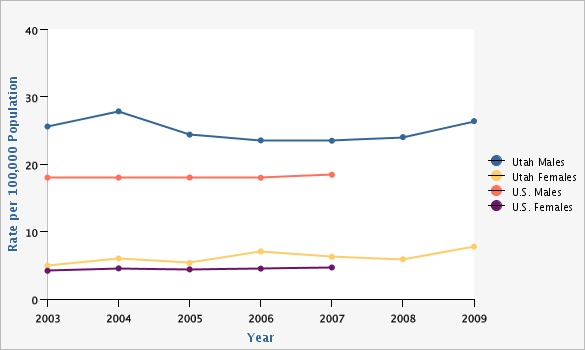
Jenna’s story is not all that unusual. About one in 10 people in Utah annually experience a depressive episode. Statistically, the average Utahn is more likely to be suicidal or to complete suicide than the average American. That’s an unsettling race to be leading.
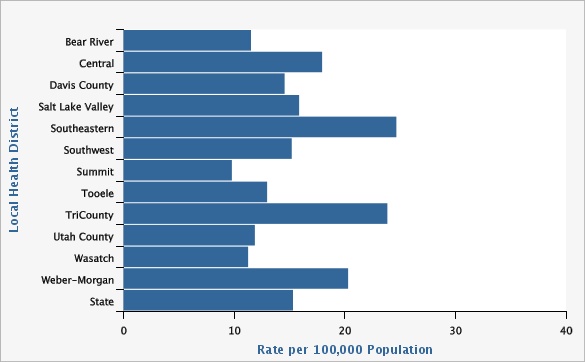
Utah has the 15th highest suicide rate in the nation across all age groups, with 14.3 per 100,000 population. And that’s an improvement from past years. No. 1 Alaska has 21.8 suicides per 100,00. The national average is 11.5.
This state and its Rocky Mountain neighbors have continually headed lists of suicide rates in the United States. Utah ranks 14th highest in suicides for youth under age 18. For young adults age 18-30, it ranks 11th.
Nobody is sure exactly why, especially with what appears to be a strong family culture and a widespread emphasis on faith in Utah. At this point in the school year, the Provo School District has four children on suicide watch. Two are in elementary school. One was hospitalized at the beginning of November.
Deadly silence
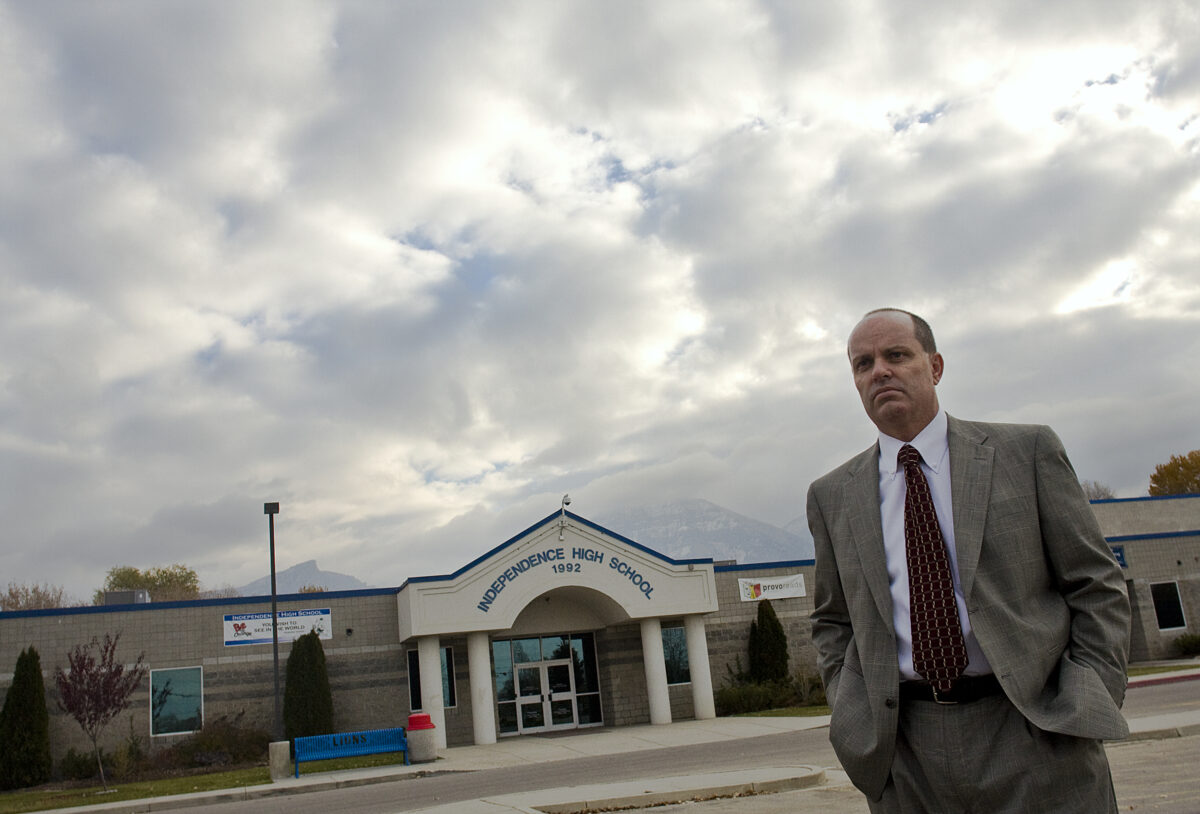
Greg Hudnall, student services director for Provo School District, has made suicide prevention his life’s mission. He lectures people on the signs and symptoms and shares resources available for depressed, suicidal teens.

Several years ago he was speaking to the mayors of Utah County about how to help youth battle the tough teenage years. He was surprised when one mayor approached him to ask that he avoid speaking in his city. He didn’t want Hudnall putting the idea of suicide into the minds of impressionable youth.
Hudnall, with many years of working with school districts in suicide prevention and dealing with tragedies when they happened, responded with the heart-wrenching truth: Suicide was already in the minds of teenagers in this man’s city. It was in the minds of young adults, elderly people, unemployed fathers, abused women, drug addicts and even some who were much too young, too happy and too successful to be thinking about death.
“Most people don’t want to talk about suicide until there’s a suicide,” Hudnall said.
Suicide is not a secret, he said. Ignoring the reality only prevents people who need help from getting it.
“We don’t talk about mental illness; we don’t talk about suicide,” said Lisa Bullock, a member of the HOPE Task Force, Hudnall’s brainchild. “It’s almost as if people think if we don’t talk about it, it doesn’t exist.”
Yet it does. People in the suicide community cite ample anecdotal evidence to back up their claim that part of the problem is a tight-lipped culture. No one wants to talk about suicide with their kids. No teens want to ask their friends about it. Few are willing to broach the subject with someone who might now be — or who once might have been, or who might soon become — suicidal.
The reluctance makes the problem worse. Many suicides are preventable, but refusing to talk about it makes saving a person all the more difficult, experts say. Most suicidal people feel as Jenna did, that there is no other way to end the pain, that death is the best solution.
Jenna couldn’t explain the desire she felt to end it all. Even those who tried to talk her out of self-inflicted harm didn’t truly grasp what she was going through, she believes.
“It’s so hard, because you hear everything from people — ‘It’s gonna be fine,’ ‘It won’t always be like this’ — but when you’re in the moment, it doesn’t matter,” Jenna said.
To the healthy, non-suicidal mind, self-inflicted death seems so over the top that the thought doesn’t stick.
Rev. Dean Jackson, pastor at Rock Canyon Church and chaplain for the Provo Police Department, compared life to a room that’s full of windows and doors that a person can choose or not. One of those portals is suicide. It’s an option for everyone, but most people glance at it and walk away.
“Some people, however, begin to fixate on it. They begin to move toward it,” Jackson said. “They take the door.”
Jenna, overcome with the physical and emotional effects of her depression, saw no other option. She tried to take that door.
A complex epidemic
When Mental Health America ranked states using data from 2004 measuring the number of depressed people in a society, Utah was found to be the most depressed. A more recent study has not been released, but in 2009 the National Association on Mental Illness released grades for each state. Utah, along with about half the nation, earned a D.
 Urgent needs, according to that assessment, included an increase in statewide services for people who are mentally ill.
About 90 percent of people who complete suicide have some form of diagnosable (although not always diagnosed) mental illness. Most are untreated or under-treated. Studies have established that depressed people are 20 times more likely to attempt suicide than others. So if you can find the reasons for depression, you also address the incidence of suicide.
All of the Rocky Mountain states are roughly similar for suicide frequency, said suicidologist Dr. Doug Gray. So at least the factors that lead to Utah’s high rate may not be unique to the Beehive State. Underlying factors are not likely to be related to unmet expectations, a culture of perfectionism or increased bullying — all of which are unscientific but commonly given explanations of higher rates in Utah. Each of these factors could contribute in specific situations, but the reasons behind each suicide vary too widely to use them as a catch-all.
Suicide among young people is seen in more or less equal measure in Provo, Las Vegas and Billings, Montana.
“Utah’s suicide rate is too high, but we’re just like our neighbors,” Gray said.
Speculative correlations like high rates of gun ownership in the West, the independent nature of Westerners or the more rural environment don’t seem to answer the questions. Access to guns has been shown to affect people’s suicide choices, Gray said, but Texas and the Deep South are home to more guns than the West, and suicide rates there are lower. Utah and surrounding states have vast rural areas — but again, so does Texas.
“This just didn’t seem satisfying as an explanation for such a robust phenomenon,” Dr. Perry Renshaw said.
Renshaw came to the University of Utah two years ago to focus on suicide research. He wanted to know what it was about the West drove people to suicide in higher numbers.
 One startling factor indicated by his research is altitude. Statistics show that areas at higher elevation have significantly higher rates of suicide.
Renshaw’s research shows that the reduced oxygen at higher altitudes may put metabolic stress on the brain, which can lead to greater levels of depression and suicide.
“Every year 150 Utahns die by suicide who might not die if they happened to live somewhere at sea level,” he said.
Here’s the hypothesis: The brain needs energy to send messages between neurons. People who are depressed or who have tendencies toward depression have fewer high-energy compounds in the brain, which means neurons cannot communicate as effectively. Higher altitudes take away even more of the energy-producing compounds.
Most people’s brains are able to compensate for the change and are not affected. But for some who are already depressed, the high-energy starvation can worsen their condition, even if they are taking medication and going to therapy. People who have never been depressed may become depressed.
Renshaw and several colleagues published a study in September. They found the rate of depression increases by about 12 percent when a person is 2,000 meters above sea level, and the rate of suicide increases by 50 percent. Additionally, people are less likely to overcome their depression at higher altitudes.
This is not the sole explanation for increased suicide rates. Population centers in No. 1 Alaska, for example, are at sea level. According to the Suicide Prevention Action Network, Alaska natives and American Indians, especially males between the ages of 15 and 24, are more likely to struggle with depression, anxiety and drug abuse and are less likely to have access to help, both in resources and because seeking such help is less culturally acceptable.
Care shortage
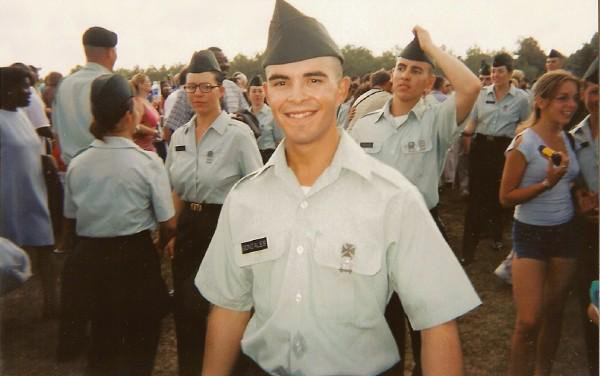
Adam Gonzales had never struggled with mental illness growing up. He was a normal teenager who wanted to join the Army. He got his parents to sign the papers and enlisted at 16. He went to boot camp and summer training, then shipped out to Iraq at age 17 years, 11 months.

Adam’s sister, Veronica Valadez, doesn’t know all that her little brother witnessed in combat, but she saw his sad eyes and his changed demeanor when he came home. Suspecting he suffered from post-traumatic stress disorder, she encouraged him to call the Veterans Administration Hospital in Salt Lake. In September 2008, more than two years after getting back from Iraq, he made the call. There was a backlog of patients, and he was told to call back in December.
He killed himself in November.
The VA, of course, hosts a particularly stressed population. It is responsible for a large number of soldiers returning from war zones, and more are suffering than the system can handle. Making things worse, a shortage of resources and support is common in the mental health sector generally, officials say.
Lana Stohl, associate director for mental health in the state’s Department of Substance Abuse and Mental Health, said Utah has one of the lowest per capita funding formulas for mental illness treatment in the U.S. And that was before the economic downturn wreaked havoc on the state’s budget.
Private insurance often doesn’t cover mental health treatment and medication at the same rates it covers physical conditions. Add to that society’s overall wariness of psychiatry and the perspectives of teenagers and young adults who don’t want to appear weak or different and at least some of the reasons behind Utah’s rates begin to take shape.
Yet, said Doran Williams, associate director of Wasatch Mental Health in Provo, mental illness can be just as debilitating as diabetes, as life-threatening as heart disease and as devastating as cancer. It also is just as treatable as most physical conditions and options are available for the insured and uninsured alike. The mental illness situation in Utah is far from ideal, he acknowledged, but help is available.
“Treatment works,” he said. “It does help people get better, it helps people function better.”
Jenna is a living testament to that statement, although the process wasn’t easy. She went through years of trial-and-error drug testing and therapy combinations to find one that stabilized her hormones and allowed her to live a normal life. She had to drop out of BYU and has altered her life plans until she barely recognizes them. But she has plans, goals and life, and she’s happy. She hasn’t mutilated herself or thought about suicide in a year.
She stuck it out thanks to a lot of help, she said. She knows she’s lucky.
“I definitely think it takes a long time to figure out, and that’s when people kill themselves because they couldn’t wait any longer,” Jenna said.
•••
Greg Hudnall’s nightmares are filled with the faces of too-young suicide victims, and he recommits himself to the impossible task of ending all the suffering.
That there is an annual suicide awareness walk means people in the community are talking about the problem now, he says. Knowing that the HOPE Task Force is continuing to educate is encouraging. And the fact that more teens are coming to know what to do when a friend becomes suicidal — and that community members are more vigilant — means something is working.
That Hudnall is spending more time on prevention and intervention these days and less time dealing with aftershocks means the message is getting through.
“I’m pretty confident that we can prevent most suicides,” Hudnall said. “We’ll never be able to prevent all of them.”
Extraneous causes
Depression, desperation and the resulting tragic suicides among youth are not bound by tidy demographic lines. The conditions for suicide are found in all groups, even among popular icons with clean-cut family bonds.
Marie Osmond’s son from her second marriage, Michael Blosil, for example, jumped from the 8th story of an apartment building in Los Angeles in February. He was 18 years old, a student at The Fashion Institute of Design and Merchandising and had struggled with depression and drug abuse. He had one previous attempt when he was in drug rehab.
He was a cute, easygoing child who grew into a loving and respectful teenager, Osmond told Oprah Winfrey earlier this month. Her son also started using drugs when he was 12 years old, and the changes that came over him when he was high brought her great pain.
Michael had finally gotten sober, and his final month was the happiest she’d ever seen him. But the day before he died, he called and told her he felt alone, Osmond said. The pain of depression had became too much, she believes.
Depression or some other form of mental illness remains the primary indicator for suicide. However, the vast majority of people who are mentally ill do not kill themselves, which means that other factors contribute.
“It is abundantly clear that most depressed people do not attempt suicide and that not all suicide attempters are clinically depressed,” Roy Baumeister, a Florida State University researcher, wrote in 1990.
Utah is widely hailed for its wholesome standard of living: crime rates are low; incidence of disease is below national norms; average education level is high; it’s friendly for business start-ups and established business alike.
All of this good cheer may be an indirect cause of higher suicide rates, according to Baumeister.
In his paper, “Suicide as Escape From Self,” Baumeister asserts that those states with better quality of life and high standards of living have higher suicide rates. One interpretation, he wrote, is that people have higher expectations for satisfaction even though life is quite pleasant as it stands.
There’s also a perceived compulsion in Utah to attain perfection based on religious or cultural ideals, several people told the Daily Herald. They say Utahns hold themselves to an impossibly high standard and get upset with themselves when they fail to reach it.
“You’re expected to be perfect in so many ways, and people feel like they’re falling short,” said HOPE Task Force member Lisa Bullock.
There also are a number of societal factors that may not be suicide drivers but may make the difference in at attempt at any given time:
Access to guns
Guns don’t cause suicides. However, access to a gun might allow a suicidal person complete the act more easily. Firearms are the mostly commonly used method for taking one’s own life. About half of all suicides in 2007 were people who shot themselves, according to the American Association of Suicidology. Males remain more likely to use a gun for suicide. University of Utah suicidologist Dr. Doug Gray said having a gun in the home increases the risk of a completed suicide.
Significant life event
Losing one’s job is traumatic. So is divorce or a death of a loved one. For teenagers, getting into trouble, getting poor grades or breaking up with a first love may be the push. People generally do not kill themselves because of one event, but one event may provide the catalyst.
HOPE Task Force creator Greg Hudnall said a young woman he knew failed her driver’s test and broke up with her boyfriend on the same day. She overdosed on drugs but did not die. Depression doesn’t always start out with a chemical imbalance, he said, but outside influences can cause a person to become depressed.
Popular culture
In video games, music, movies, books and TV, characters kill themselves: Dr. Lawrence Kutner on “House”; Will Smith’s character in “Seven Pounds”; Romeo and Juliet; a “Family Guy” character daydreaming about shooting himself. Plenty of songs have been written about suicidal people.
Wealthy and successful celebrities kill themselves too: Nirvana lead singer Kurt Cobain, Denver Broncos wide receiver Kenny McKinley, author Ernest Hemingway. German soccer star Robert Enke.
“We as parents think it’s not out there as much as it is, but unfortunately it is an option,” Hudnall said.
Bullying
Kids can be cruel. Hudnall said bullying, including on the Internet via text messaging and sites like Facebook, is always a problem in school systems. Youth suicides and school shootings are increasing because of that, although about 19 percent of Utah students reported being bullied on school property in the last 12 months, which is not statistically different from the national rate.
In Utah County, with such a large percentage of the population being LDS, children who are not Mormons may become isolated from their peers. In general, children who don’t fit in can be bullied or become depressed or suicidal, including those who are gay, who are of a different ethnicity or culture or those who have a disability.
Genetics
Suicidal tendencies can be genetic, Gray said. Studies show that if adopted children who never met their birth parents killed themselves, it was found that the parents were six times more likely to complete suicide. Also, identical twins are 10 times more likely to kill themselves than fraternal twins.
Depression is genetic, he said, but a family can have five generations with depression and no suicide, while another family has five generations of depression with suicide. It could be that the second strain of depression was more psychologically painful, or that impulsiveness and aggression also were passed down as well. It’s also possible that the first suicide created a psychological chain reaction in the family that makes the next generation think of suicide as an acceptable option. Generally, one suicide somewhere in a family tree doesn’t put all posterity at a greater risk for suicide, but if it happens frequently or among close family members, that does increase the risk down the line.
Contagion
The contagiousness of suicide is something officials worry about. Provo School District’s policy disallows any sort of memorial to those who take their own lives — no trees on campus, no yearbook pages, no dedicated walls. Instead, fellow students can write letters to the child’s parents, sharing memories of their friend. Officials also want to do everything possible to not make suicide seem attractive or make people who complete seem special because of the suicide.
School officials want to talk about suicide as a social issue, not make it appear romanticized or a good way to immortalize oneself.
“We always want to remember the child, not the act,” Hudnall said.
Utah statistics
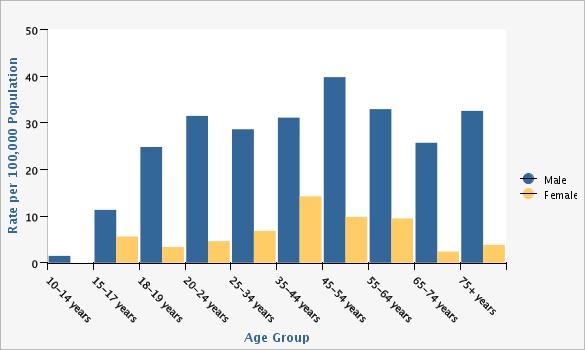
- Utah dropped to 15th from 11th in the national ranking. From 2000 to 2004, Utah had the 7th highest rate in the nation. It has been as high as 6th.
- Utah is 11th in the nation for men ages 15 to 24; in 2006, the state was first.
- Utah County’s suicide rate is the second lowest in the state, although, at 12.1 suicides per 100,000 people it is still higher than the national rate of 10.9 suicides per 100,000 people.
- Emergency room visits for suicide attempts were highest in the 15- to 24-year-old age group.
- 3.2 percent of Utah students have made a suicide attempt that resulted in an injury requiring treatment in the last 12 months, which is statistically higher than the U.S. rate of 1.9 percent.
- Utah is 49th out of 50 for per capita funding formulas for mental health in the nation.
- Utah ranks 14th for youth suicides and 11th for young adult suicides.
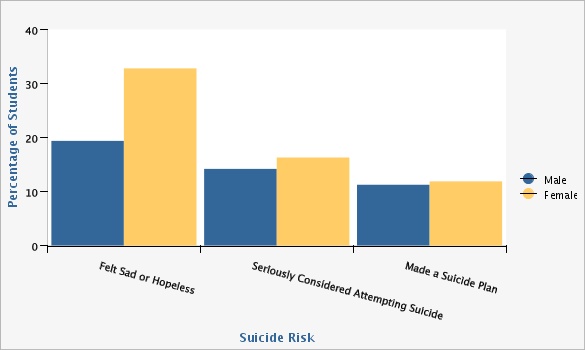
- About 15 percent of Utah students have seriously considered suicide in the last month.
- More than 11 percent of Utah students had made a suicide plan in the last 12 months.
- About 7 percent of students had attempted suicide in the last 12 months.
- More than 3 percent of Utah children have attempted suicide in a way that required medical care; that rate is higher than the national average.
- The Provo School District has not had a suicide since 2007; for the 10 years prior it averaged one every two years.
Sources: UDOH, CDC, American Association of Suicidology
National statistics
- Suicide is the second-leading cause of death for college students.
- 90 percent of attempters are female; 90 percent of completers are male.
- Males between 20 and 24 years old are five times more likely than females to complete suicide.
- One in 12 college students has made a suicide plan.
- 10 percent of college students have been diagnosed with depression.
- College students are more likely to kill themselves than their peers who are not in college. In April, a 21-year-old BYU student jumped to his death from the breezeway in the Tanner building; his friends told police that they had no idea he wanted to kill himself.
- Suicide is the third leading cause of death, behind accidents and homicides, for Americans 15 to 24 years old.
Source: American Association of Suicidology