Ancient art of falconry lands at Hutchings Museum
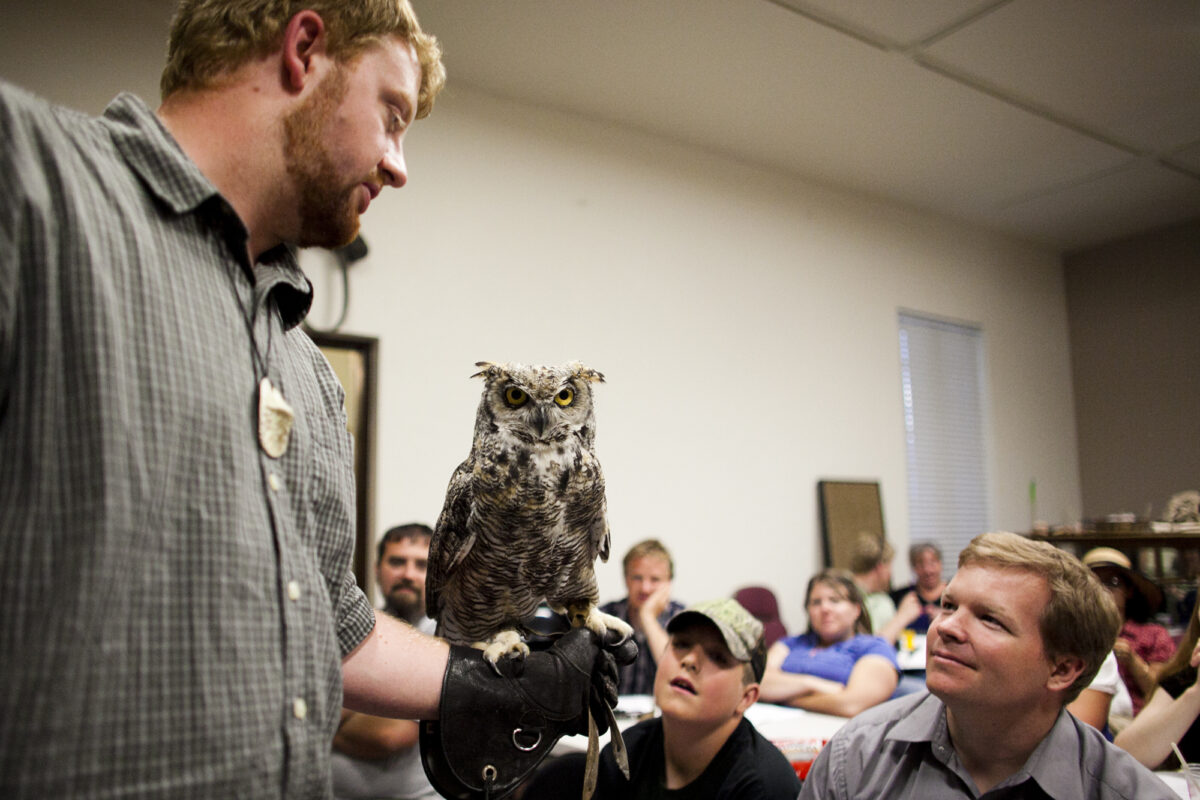
Ben Woodruff shows of a Great Horned Owl during a falconry class at the Hutchings Museum in Lehi on Tuesday, July 12, 2011. SPENSER HEAPS/Daily Herald
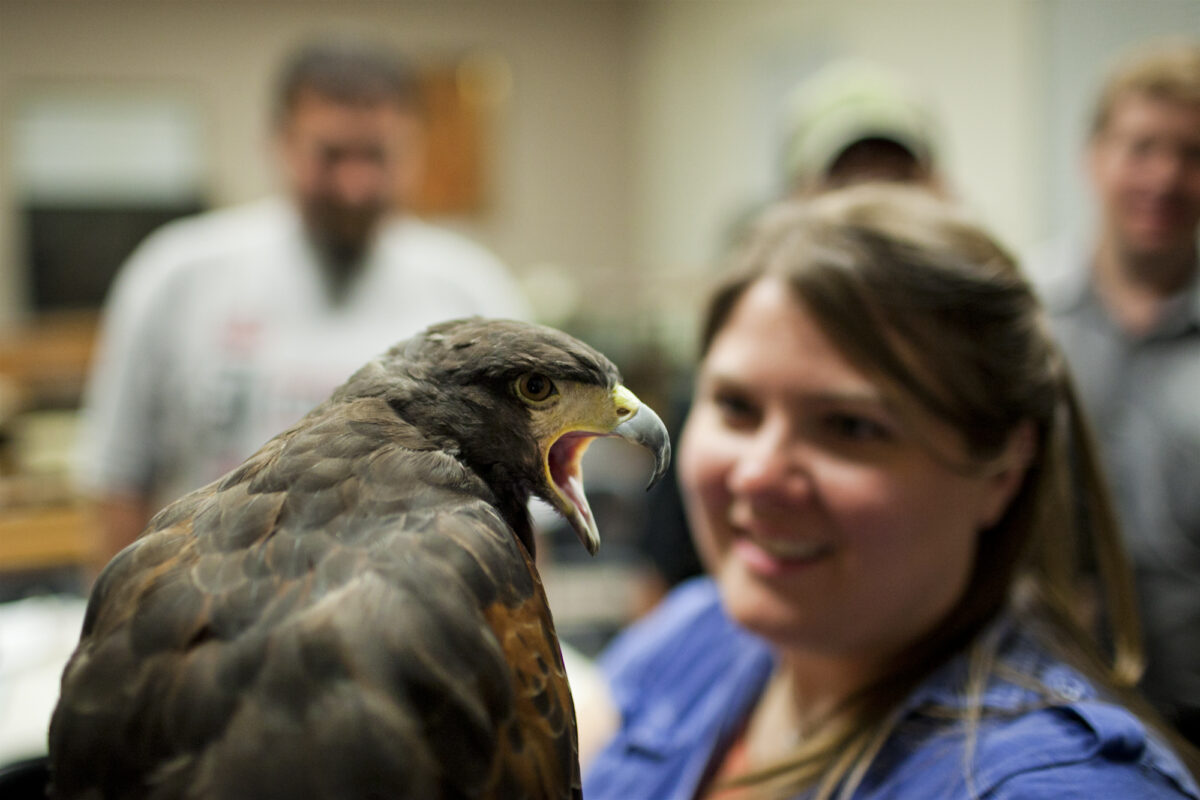
Tia Mickelson holds a Harris Hawk during a falconry class at the Hutchings Museum in Lehi on Tuesday, July 12, 2011. SPENSER HEAPS/Daily Herald
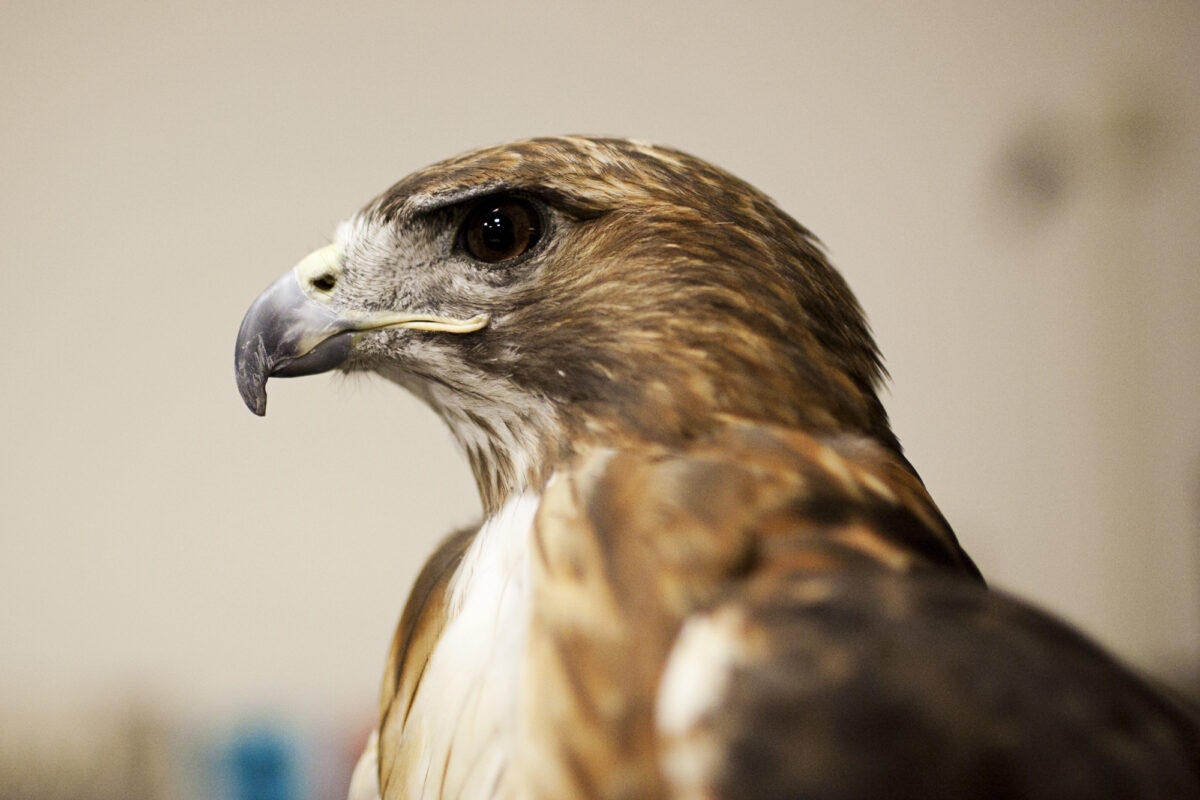
A Red Tailed Hawk is seen during a falconry class at the Hutchings Museum in Lehi on Tuesday, July 12, 2011. SPENSER HEAPS/Daily Herald
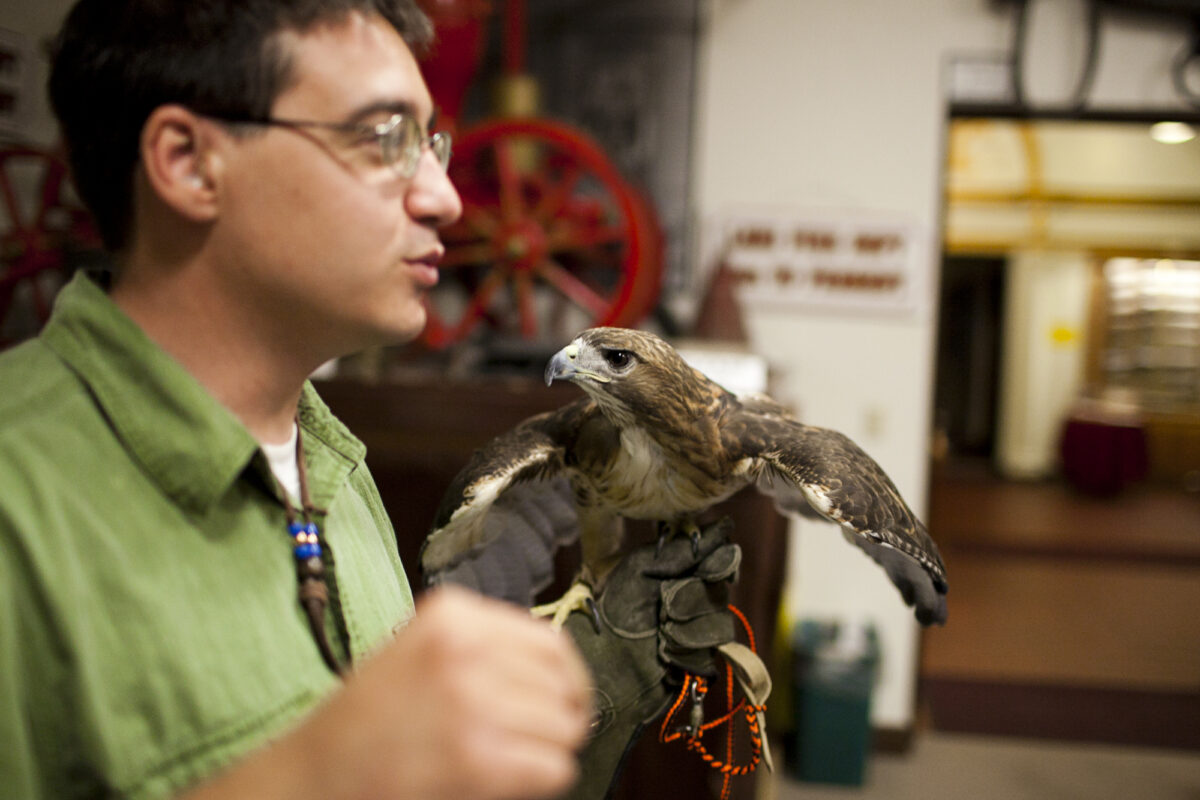
Matt Finch shows off his Red Tailed Hawk named Utana during a falconry class at the Hutchings Museum in Lehi on Tuesday, July 12, 2011. Finch volunteers at the museum and has been falconing for nine years. SPENSER HEAPS/Daily Herald
“When you die, it is not the number of breaths you took, but how many moments took your breath away. If you are a falconer, you will have moments like that almost every day.”
Those words from professional falconer Ben Woodruff launched a series of unusual classes at Lehi’s Hutchings Museum this week, classes aimed at letting students of any age get government licensing for keeping the protected birds as a pet.
This is a great time to learn falconry because “the laws have just changed to become much looser,” Woodruff told two dozen students.
The misconception about falconry is that you are training the birds to hunt. But hunting is what these birds do naturally, without any need for human training.
“You are training them to trust you, or see you as some kind of advantage,” said Woodruff and fellow falconer Matt Finch.
To introduce the class to the birds, they brought two hawks, a gyrfalcon and a great horned owl for students to hold. The owl is the choice for anyone interested in keeping protected birds but who does not want to hunt the birds.
Hunting is hard to swallow for some people, but shouldn’t be. Falconers take their birds out into nature to let them feed themselves, and even hunt ducks and pheasants for their human owners.
“Falconry is a hunting sport, which seems very gory at first, but it is natural,” Woodruff said. “You get to the point where you are rooting for your bird. My bird would not be alive if not for hunting in the wild.”
Training and caring for these birds isn’t easy.
“It’s very easy to kill a kestrel,” Woodruff said. “You must feed them the same hour every day. You have to do things right. Because of that, I don’t recommend kestrels for beginners.” Peregrine falcons, on the other hand, “train so easily, it’s a joy. It’s so ridiculously easy.”
Peregrines are also the fastest animals in the world, he said, flying 300 miles an hour in a dive, and 110 mph in level flight.
Scott White, 51, of Orem said that falconry has been a lifelong dream. He intends to attend all four sessions of the class and take the state-required licensing exam. He is a special education teacher and the birds could also bring life to the classroom. And after just the first lesson, he had already changed his mind about one thing.
“I’d like to hunt a red-tailed hawk,” he said. “Before I came, I was thinking of a kestrel.”
Thirteen-year-old Johnathan Edsberg of Eagle Mountain is also intent upon passing the licensing exam. He wants a great horned owl as a pet.
“I think great horned owls are awesome,” he said.
The Hutchings Museum Falconry Workshop continues on July 19, July 26, and Aug. 2 from 7-9 p.m. Cost is $10 per class. The class still has room for students, and students who missed the first week will still be prepared to pass the state test, Woodruff said. To sign up, call (801) 768-7180 or email hmuseum@lehi-ut.gov.