‘Troubled Times’ in Provo: Research shares city’s early issues

Robert Carter poses for a portrait at Pioneer Village in Provo on Tuesday, Aug. 11, 2015. Carter has written a new book on Provo history "Troubled Times, Provo, Utah 1855–56." SAMMY JO HESTER, The Daily Herald
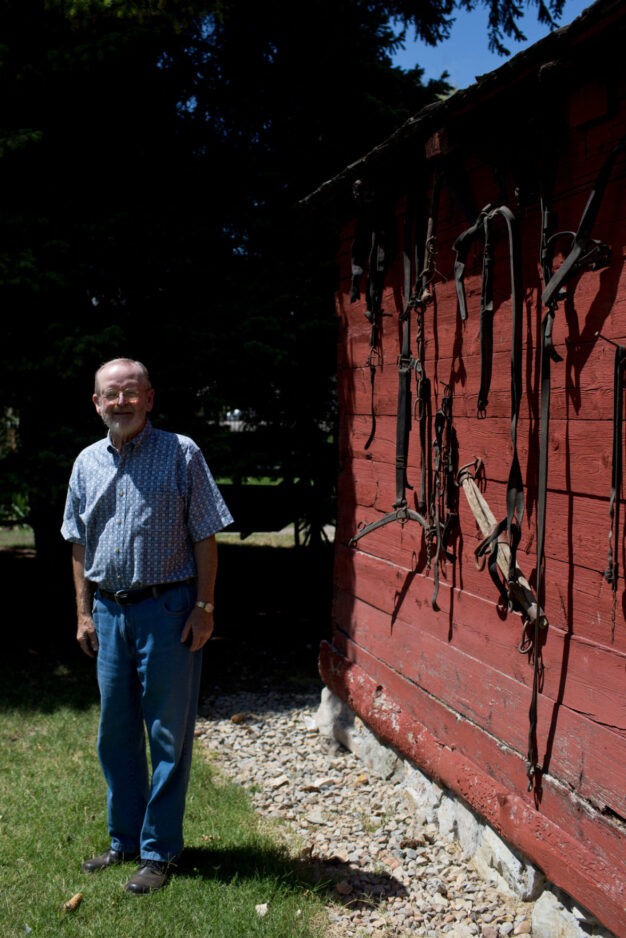
Robert Carter poses for a portrait at Pioneer Village in Provo on Tuesday, Aug. 11, 2015. Carter has written a new book on Provo history "Troubled Times, Provo, Utah 1855–56." SAMMY JO HESTER, The Daily Herald
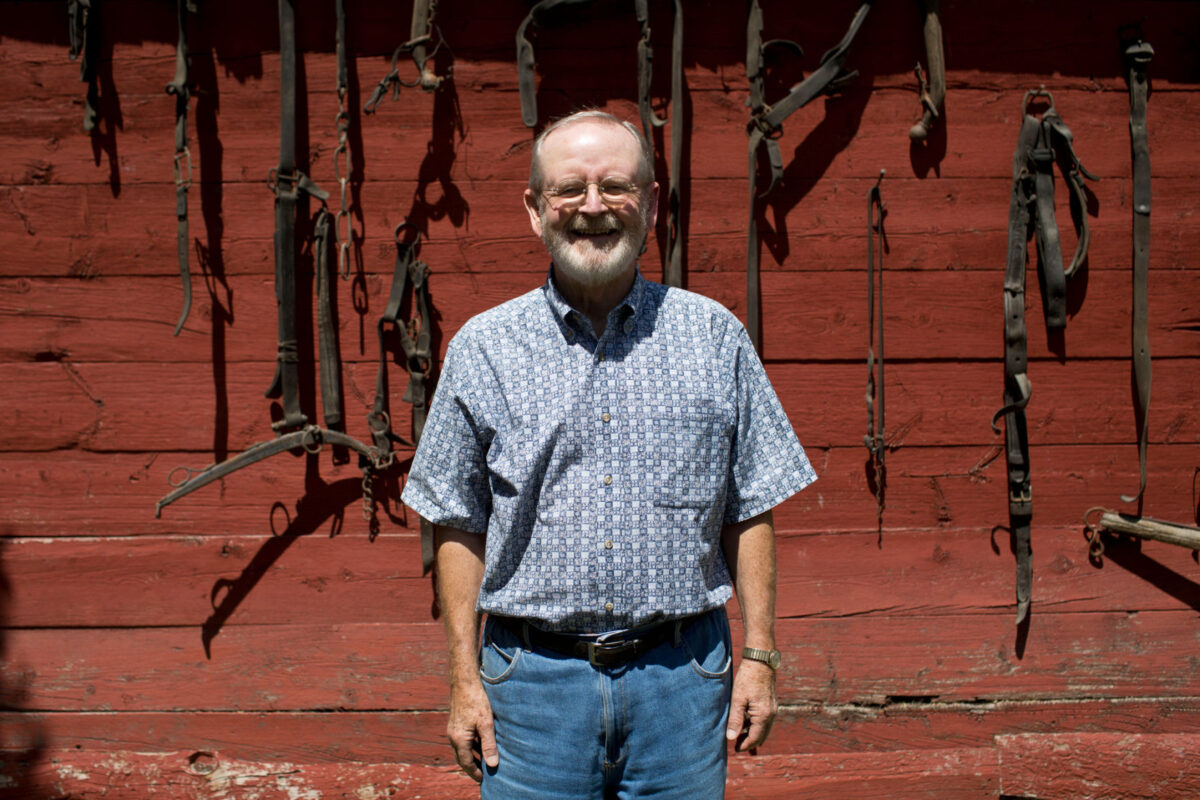
Robert Carter poses for a portrait at Pioneer Village in Provo on Tuesday, Aug. 11, 2015. Carter has written a new book on Provo history "Troubled Times, Provo, Utah 1855–56." SAMMY JO HESTER, The Daily Herald
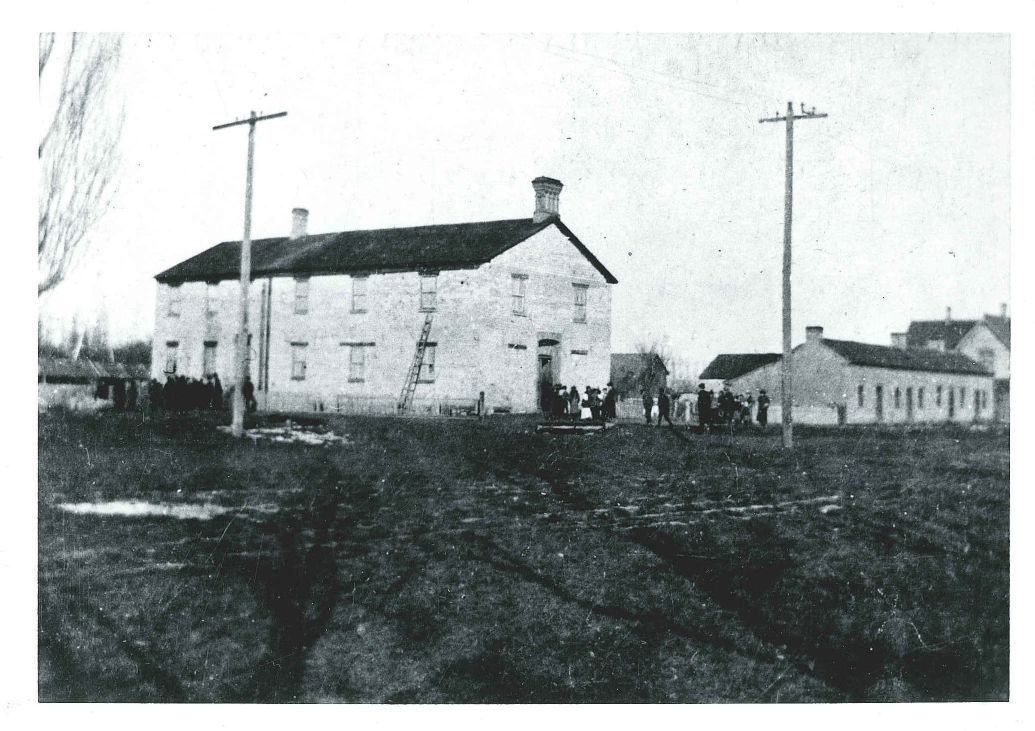
Originally the home of George A. Smith, it was used as a seminary building, meetinghouse, dance hall and courthouse. It was built in 1850s.
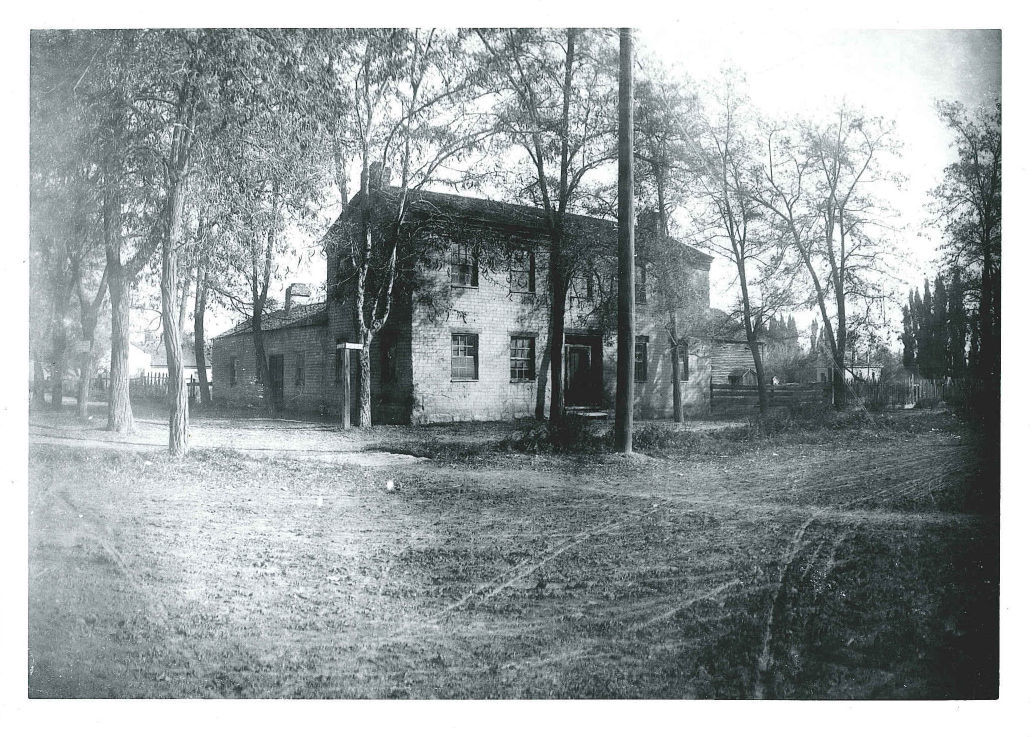
Hotel Redfield/Bullock was built in the 1850s and served as a hotel until 1900 when it was torn down. It was located in the southeast corner of Center Street and 5th West, Provo.
Robert Carter gets a “high” when he reads microfilm; he compares it to a runner’s high. “That’s how I feel — really good!” said the author of yet another history book about Provo.
Carter, 75, a retired history and English teacher from Alpine School District, loves to do research. His newest book, the third in a series of four about Provo’s first decade, “Troubled Times, Provo, Utah 1855-1856,” was recently released.
Carter researched eight years at the Utah State Historical Society but he said “the gold mine is at the archives of The Church of Jesus Christ of Latter-day Saints.” During the first few years of his research, the church archives were not open to the public but now the information is readily available.
“You can use the library and most of the documents in the archives,” he said. “There is a wealth of letters, meeting minutes and original journals. Some are on microfilm and a few are original.
“Tithing records up until 1900 are open — you can see what people were growing because they are paying in kind. Plus, there are lots of reminiscences which aren’t as credible as on the spot news. Lots of times you get the family interpretation of events.”
The historian also researched special collections at Brigham Young University and University of Utah libraries, as well at Utah State Historical Society.
“I worked five or six days a week for seven or eight years,” he said. “I decided all that information wasn’t worth much unless I wrote it up.”
Grasshoppers, drought, Native Americans
Six books later, Carter is still writing it up. As he researched and studied, Carter found out the two most difficult years in the history of Provo and Utah were 1855 and 1856. Grasshoppers were at the top of the list of problems.
“They were way worse than the 1848 cricket infestation,” he said. “The grasshoppers kept coming back and they could fly. Provo had them as did Salt Lake City and along the Wasatch Front.”
On top of that, Provo experienced a severe drought.
“It was a dry, hot year,” Carter said. “Provo was better situated because they had the Provo River. The pioneers thought they could eat meat until the harvest came out. But the crops were damaged so the animals had to be taken to higher ground for food.”
To make matters worse, it was a deadly cold winter and half the animals froze to death, he pointed out. Another complication was an outbreak of issues with Native Americans.
“Instead of preparing crops they had to put down an uprising by Chief Tintic and his band,” Carter said.
Mormon reformation
With one problem right on top of another, “the Mormon authorities viewed all these problems as a punishment [to the Saints] for not obeying the commandments,” said the historian.
In September of 1856 a reformation was instituted: pay tithing, obey the leaders and become clean were the mantra from leadership in Salt Lake City. Carter said some members followed the admonition, others were turned off and thought it was an infringement, and some got pretty forceful.
“Provo had the reputation for being backsliders,” Carter said. “It took them 14 years to build the first tabernacle. But when they’d see people in real trouble and about to starve, they stepped right up to the plate and did all they could to relieve the problems.”
The first crop of wheat was sent to Salt Lake. Potatoes were damaged by insects, so Provo sent up bushels and bushels to the tithing yard, he said.
Saved by fish and manna
Two things saved the pioneers during those troubled times according to Carter: fish and manna on the leaves.
His favorite story from 1855-56 is how the fish helped save the people during the famine. “That wasn’t widely known 10 years ago,” he said. “I feel good about being able to get some of the things Provo is known for before the public. Offering more detail on them helps people relate to the community — see what has been accomplished.”
“Fish played a huge part in alleviating the problem,” he added. “Fishing companies came from Salt Lake, caught fish on Utah Lake and sent them back home. They lived on the lake. In fact, fish helped build the Salt Lake Temple because they were what fed the workmen — fish were extremely important. Almost every journal or family history says, ‘We survived mainly on wheat, grains we could harvest and fish until the new grain came on.’ “
Along the lower part of the Provo River manna appeared on the leaves of the trees.
“A sticky crust and sap from the trees formed on the leaves and dripped off,” Carter said. A farmer noticed and tasted it and thought, “What is the possibility of making sugar out of it?” Fellow farmers thought he was crazy at first.
The farmer broke off some branches, brought them home and soaked them in water. When he boiled it down he had created a sugar substitute. Carter noted that sugar was rare in territory; it had to be shipped in. The farmer (and others) manufactured several thousand pounds of sugar from these leaves.
“People gathered on the Provo River to harvest this sugar,” Carter said. “They had candy pulls and made syrup out of it. At the time they considered it a gift from the Lord. It probably couldn’t have come at a better time. They paid tithing on all the sugar they made. Several hundred pounds were taken to the tithing office.”
Alas, a good rain came and washed off the “sugar” from the leaves. The modern day manna had dissolved.
Mayor John Curtis speaks highly of Carter’s book in the foreword: “Carter’s account is enlightening and factual, based on years spent in meticulous research through archived journals, meeting minutes, letters, financial accounts and personal histories. … He is careful and passionate about history and particularly about events and stories that offer an account of how Provo came to be.”
Good, bad, ugly
The historian includes other happenings in Provo during these two years, what he calls, the good, the bad and the ugly. Wild West stories include an almost duel between William Wild Bill Hickman and Thomas Ivie that local church authorities diffused. Another story found in the archives tells of horse thieves from California who wanted to settle in Provo.
Why would people want to read Carter’s new history book? For some it might just be a different view of Provo’s pioneer era.
“There were a variety of people — as much a variety as there is today,” Carter said. “Before I got into it I thought Provo was a pretty sanctified place. It wasn’t. Like today it was good, bad and ugly. It was difficult times and not all measured up to the mark. There was always a good element but bad as well.”
Carter’s goal is for people to gain a fuller knowledge of what went on in those early days.
“The more you know about the history of your town the more you invest in the town,” he said. “The more you invest in your town the better place it is to live.”
The best of times
Carter claims Provo as his hometown. He moved there with his family when he was 3 years old and was raised and schooled in Provo.
“I left 30 years ago to go to Springville for an historic house built in 1906 — it’s a clean two-owner,” said Carter. “But I still have a tender spot in my heart for Provo.”
What: D. Robert Carter signing his book, “Trouble Times, Provo, Utah 1855-1856”
When: 11:30 a.m.-noon Fri. Aug. 14
Where: Senior Citizen’s Center, 65 E. 200 South, Springville
When: August 19 at 6 p.m.
Where: Pioneer Books, 450 W. Center St., Provo
Info: (801) 356-2931, (801) 489-8256.
Facebook event: https://www.facebook.com/events/1631223590451010/
Books available at: Pioneer Books, BYU Store, DUP Museum, 500 W. 500 North, SUP Village, all in Provo; Confetti Books/Antiques, Spanish Fork. Also from the author, D. Robert Carter, (801) 489-8256.
“Founding Fort Utah, Provo, Utah 1849-1850”
“From Fort to Village, Provo, Utah 1850-1854”
“Utah Lake Legacy”
“Tales of Utah Valley, Volume I,” out of print.
“Tales of Utah Valley, Volume II,” out of print.
Local News

Changes to resubmitted Vesper Amphitheater application addressed at Provo neighborhood meeting

Honoring those who served: Military members celebrated at Orem Veterans Day program