How the county attorneys and public defenders work harmoniously in law
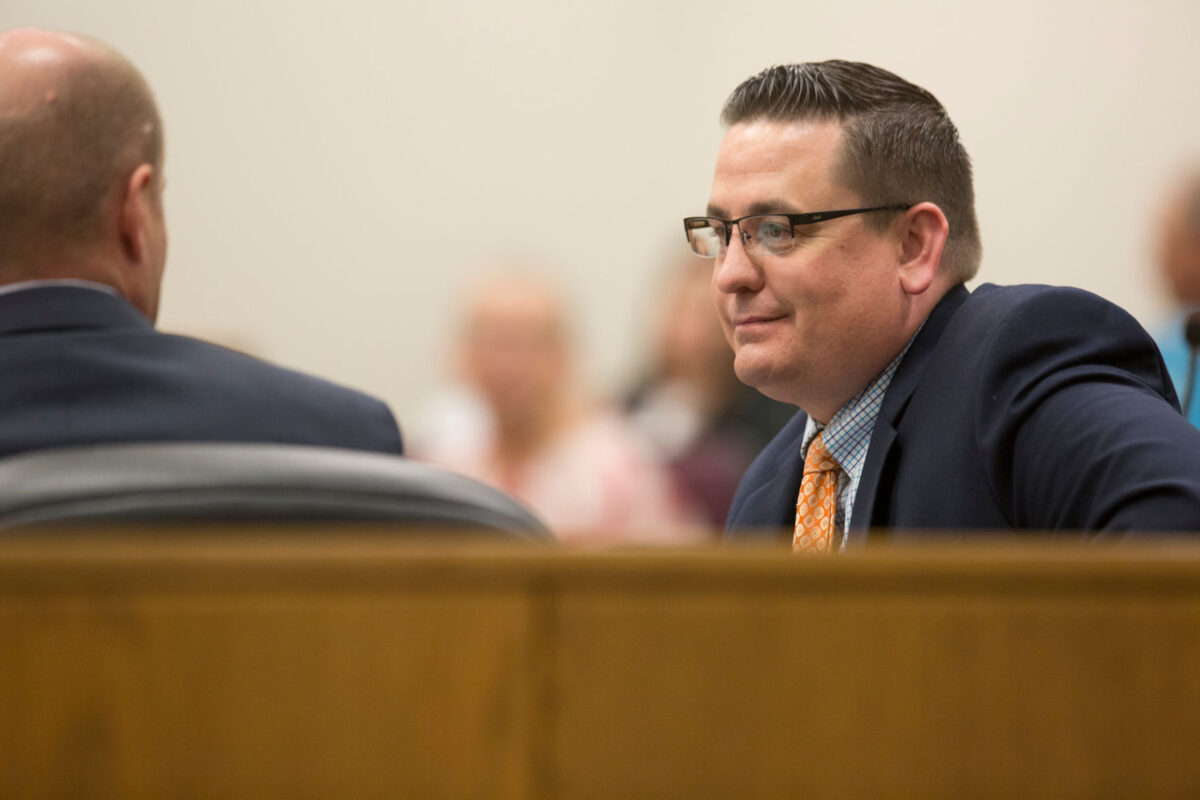
Josh Esplin, defense attorney, speaks with Chad Grunander, prosecutor, on Monday, June 27, 2016 at the Utah County Judicial Court. SAMMY JO HESTER, Daily Herald
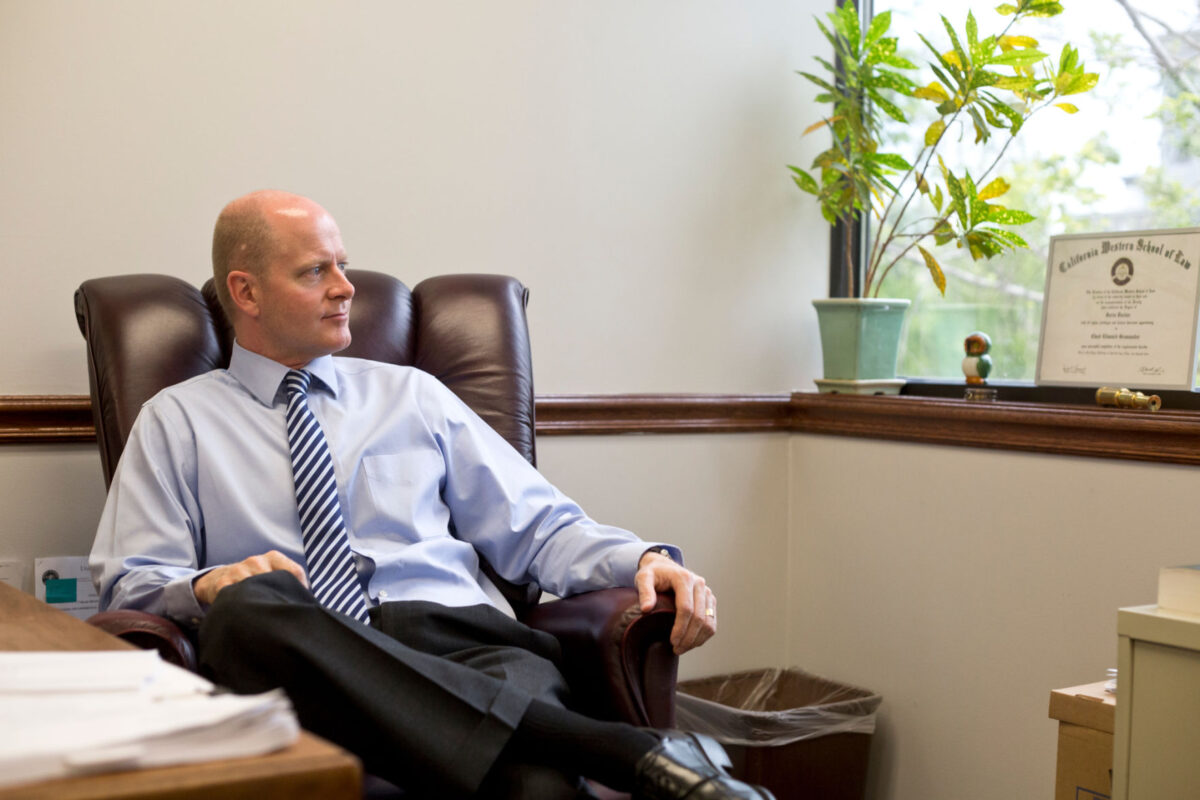
Chad Grunander, prosecutor, poses for a portrait in his office, on Wednesday, June 29, 2016. SAMMY JO HESTER, Daily Herald
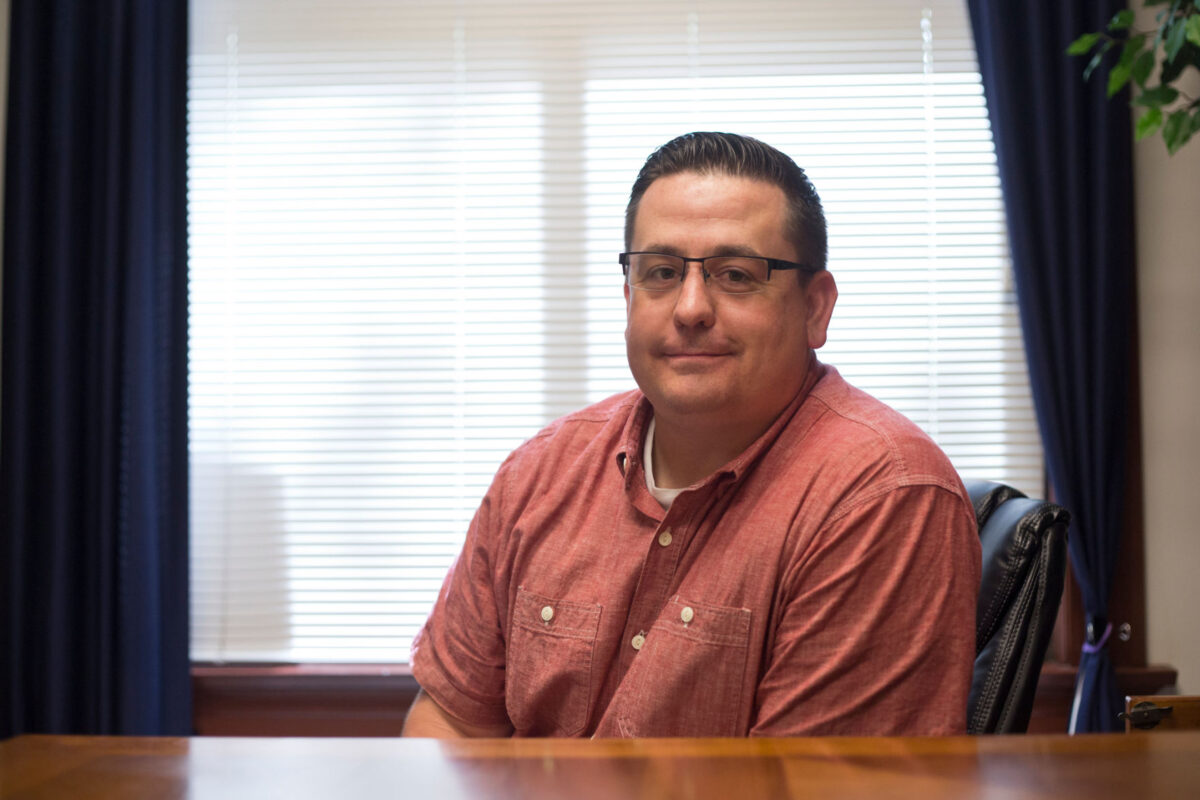
Josh Esplin, attorney, poses for a portrait in his office, on Wednesday, June 29, 2016. SAMMY JO HESTER, Daily Herald
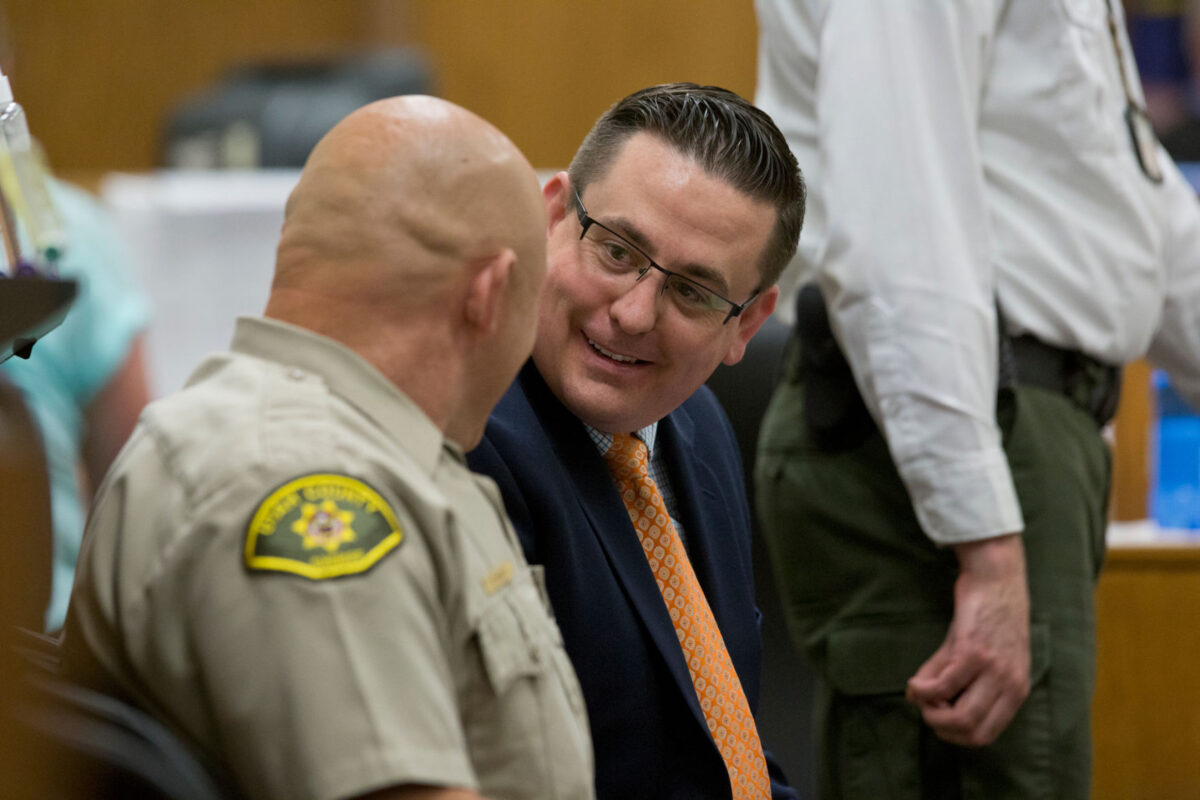
Josh Esplin, defense attorney, speaks with Chad Grunander, prosecutor, on Monday, June 27, 2016 at the Utah County Judicial Court. SAMMY JO HESTER, Daily Herald
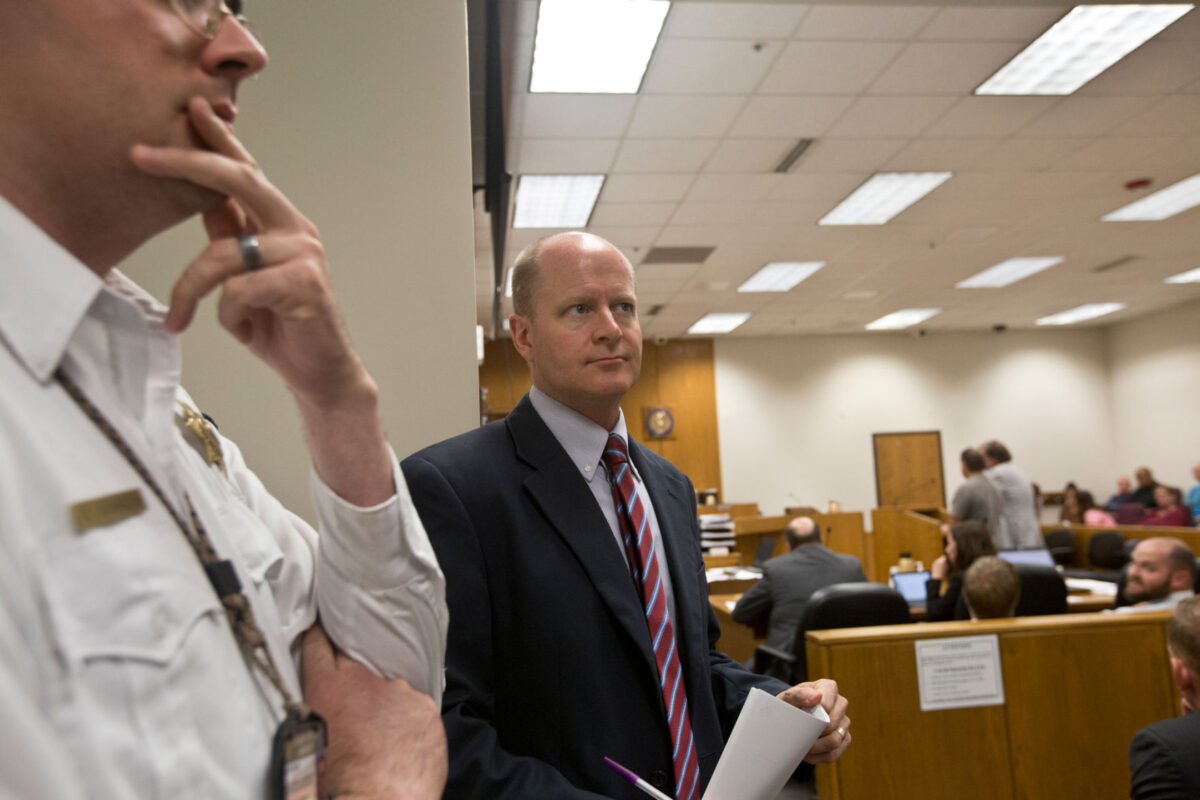
Josh Esplin, defense attorney, speaks with Chad Grunander, prosecutor, on Monday, June 27, 2016 at the Utah County Judicial Court. SAMMY JO HESTER, Daily Herald
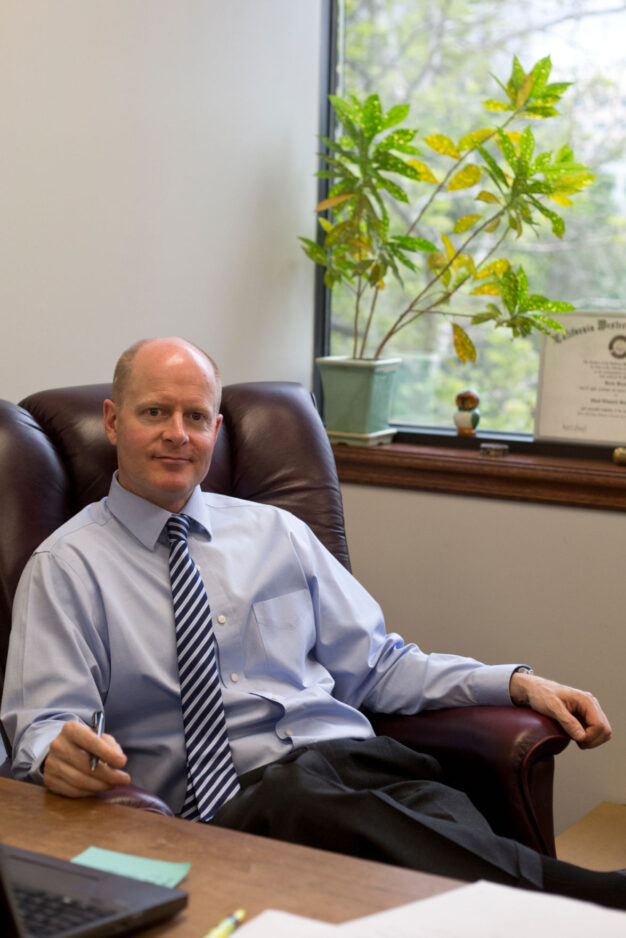
Chad Grunander, prosecutor, poses for a portrait in his office, on Wednesday, June 29, 2016. SAMMY JO HESTER, Daily Herald
One could easily assume that Chad Grunander and Josh Esplin are bitter rivals, especially considering they’re often on different sides of the same issue.
But instead of bickering and biting, the two more often can be seen gabbing and laughing together in their days in local courtrooms.
That’s because the two are after the same goal: protecting the rights of Utah County citizens.
Grunander and Esplin are just two of a few dozen attorneys who practice in, respectively, the Utah County Attorney’s Office and the Utah County Public Defender’s Association.
While Esplin represents defendants accused of a myriad of crimes, Grunander supervises a team of attorneys who specialize in prosecution of all crimes omitting special victim cases and misdemeanor crimes.
“My case load involves things that aren’t super egregious all the way up to first-degree felonies and mandatory sentences,” Esplin said. “It’s a broad spectrum. … I don’t really have a favorite type of case I like to handle.”
“A prosecutor has the responsibility of a minister of justice,” Grunander said. “Prosecutors are in a unique role, and I think it’s because of the power that comes in being a prosecutor. You file criminal charges against someone. That’s a big deal in that person’s life.”
A day in the life of a prosecutor
The Utah County Attorney’s Office is the only agency in Utah County that prosecutes felony cases. The ministers of justice, as Grunander described the position, are tasked with proving beyond a reasonable doubt that crimes occurred, requiring a great deal of research and knowledge to ensure guilty individuals are proven guilty.
“We look at ourselves as kind of gatekeepers for the Constitution as well,” Grunander said. “We don’t want to prosecute someone if we don’t have admissible evidence. Obviously, we’re not going to prosecute someone if they’re innocent.”
Most Utah County prosecutors spend at least two days in court each week before the Fourth District Court judges. The rest of the week is devoted to meeting with victims, research, additional meetings and preparing cases for the next court hearing.
Grunander’s career
Grunander’s law career in Utah County began just before 2004, when he completed an externship at the Utah County Attorney’s Office. The Provo native said he felt a natural draw back to Utah County after completing his law degree in San Diego.
“It was an easy decision to come back home,” he said. “I had a family and stuff already.”
Following his externship and some time as a law clerk for Judge Fred Howard, Grunander began his work for the county attorney’s office in 2004, now having worked there for more than a decade.
“I just sort of fell in love with prosecution,” he said. “I was always interested in public service and that side of the law.”
Grunander has handled numerous cases of ranging severity and scale — even homicides. But his prosecution in the Martin MacNeill murder trial will forever be emblazoned in his mind and the minds of so many in Utah County.
MacNeill trial
Gathering dust in a corner of Grunander’s office are a dozen boxes about one-foot wide, one-foot high and one-foot deep, each labeled “MacNeill.” Each cardboard box is filled with case notes, transcripts and other bits of paperwork used in convicting MacNeill of murdering his wife.
“The MacNeill case was — what an event,” said Grunander with exasperation, just thinking of the case.
In May 2007, Michelle MacNeill, Martin MacNeill’s wife, was found dead in the bathtub of their Pleasant Grove home, and was presumed to have drowned. It wasn’t until August 2012 that charges were filed against MacNeill because of a presumption of innocence.
“We were able to get the medical examiner’s office to reopen the case and look at the evidence that was collected by our investigators,” Grunander said. “When it first occurred, it wasn’t treated as a homicide. There wasn’t a whole lot to investigate.”
But eventually, investigations showed MacNeill had poisoned his wife with her own pain medications and then staged the scene to look like she drowned in her bathtub.
The bizarre nature of the case captured the attention of the world. CNN was stationed outside the Fourth District Courthouse in Provo most days during the trial. Nancy Grace covered the six-week trial from start to finish in late 2013. It was the first trial covered live in Utah.
And Grunander was, whether he liked it or not, in the spotlight, accompanied by Jared Perkins, as the prosecuting attorneys trying to prove how MacNeill killed his wife. As Grunander said, six weeks of trial was not easy for him or his family.
“My wife was amazing,” Grunander said. “I would leave very early in the morning, well before the kids were up and going to school, and I would get home sometimes before they were in bed. But if that were the case, I would be back in my room prepping for the next day.
“My wife did attend a few days of the trial, which was the first and only trial she’s come to watch,” he joked.
Interaction with public and defense attorneys
Once the trial was over and MacNeill was found guilty and sentenced to prison, a weight, not to mention the burden of proof, was lifted from Grunander’s shoulders.
“There are some added burdens on prosecutors, but we invite those on as we understand that we play a pivotal, critical role in the process,” he said. “We’re imperfect. Maybe the right thing isn’t always what the defense council thinks it is, but we have an obligation to do the right thing.”
One could presume that prosecuting attorneys receive the brunt of a lot of aggression once defendants are out of custody. But Grunander said it’s quite the opposite.
“I do run into defendants on the streets sometimes, and many of them have approached me, and some have appreciated what I did for them, helping them take responsibility and get the help they need,” Grunander said.
Grunander greatly appreciates the work the defense attorneys do in Utah County and lauds the Public Defender’s Association as an honorable, respectful agency.
“We have some of the best defense attorneys at that office; I respect each one of them,” he said.
The public defenders
A common stereotype in the media of a public defender would be like unto Lionel Hutz of “The Simpsons” — inept, bumbling and self-deprecating. That stereotype is unfortunately something public defenders have to fight against each case.
“That’s something that’s not unique to Utah County or this Public Defender’s Office,” Esplin said. “It’s something that’s typical, but most people who go into public defense choose [the practice].”
Despite the stereotype, Esplin and the other public defenders help fill a constitutional right afforded to all Americans — the right to an attorney.
Esplin’s career
Law practice runs in Esplin’s family. His father, Michael Esplin, has his own practice in Provo, practicing criminal defense. The temptation to transition to private practice or even his father’s practice is always there. But Esplin said he’s never wanted to do anything but serve the common man.
“That’s always kind of in the air,” he said. “But my intent was always just to help people out.”
Esplin, also a Provo native, has served as a public defender in Utah County for eight years.
He has seen everything from drug abuse to violent crimes, and everything in between. The last time he checked, he had about 70 cases.
Yet, he treats each case with care and attention.
“I try to give the same amount of effort to every case,” Esplin said. “I don’t select specific ones that dominate my time. I put as much time as I can to every case.”
Esplin said because prosecutors have the burden of proof, he understands why some cases are more stressful than others for them. But for defense attorneys, especially public defenders, it’s all the same.
“It’s just one big thing of stress from all of your cases,” he said. “I couldn’t sit down and say one causes more stress than others.”
Just as it’s difficult for Grunander to not take work home with him mentally, Esplin does his best to avoid weighing his family down with the burden that can be his job.
“It’s difficult to not have something come to mind that you’re working on,” he said. “You’re constantly thinking about it.”
Future of both attorneys
For the immediate future, both attorneys plan on remaining where they’re at: Grunander prosecuting criminals and Esplin defending their rights.
Esplin said a lot of his clients simply need a wake-up call in life, and he hopes that comes.
“A lot of people are dependent on drugs or maybe have a background or lifestyle that makes it difficult to get out of that [life of crime],” he said.
Grunander said he wishes well for the future of both offices to be strong as they continue defending the innocent and bringing justice to the guilty.
“I think we have a great office,” he said. “Our office has a lot of experience. … Our future is really strong.”