
Maglock bike pedals lock in a new way to cycle
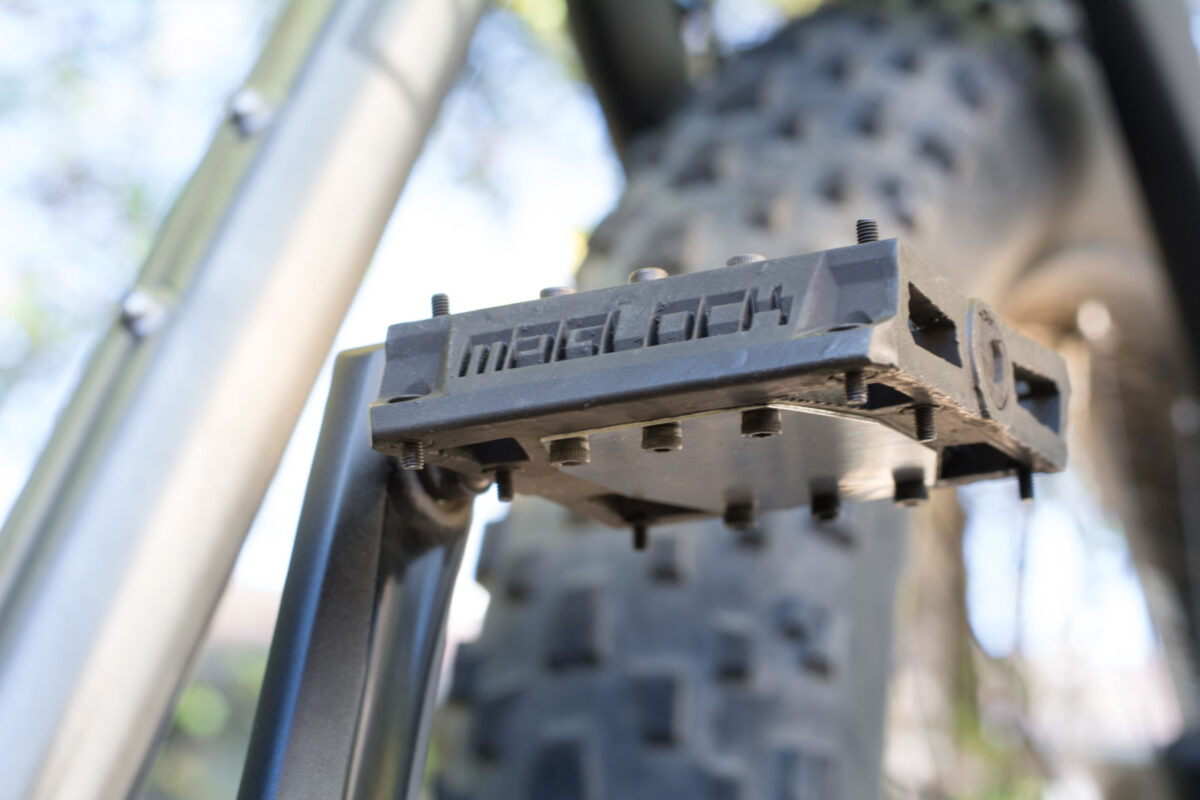
A Maglock Vault bike pedal on a mountain bike.
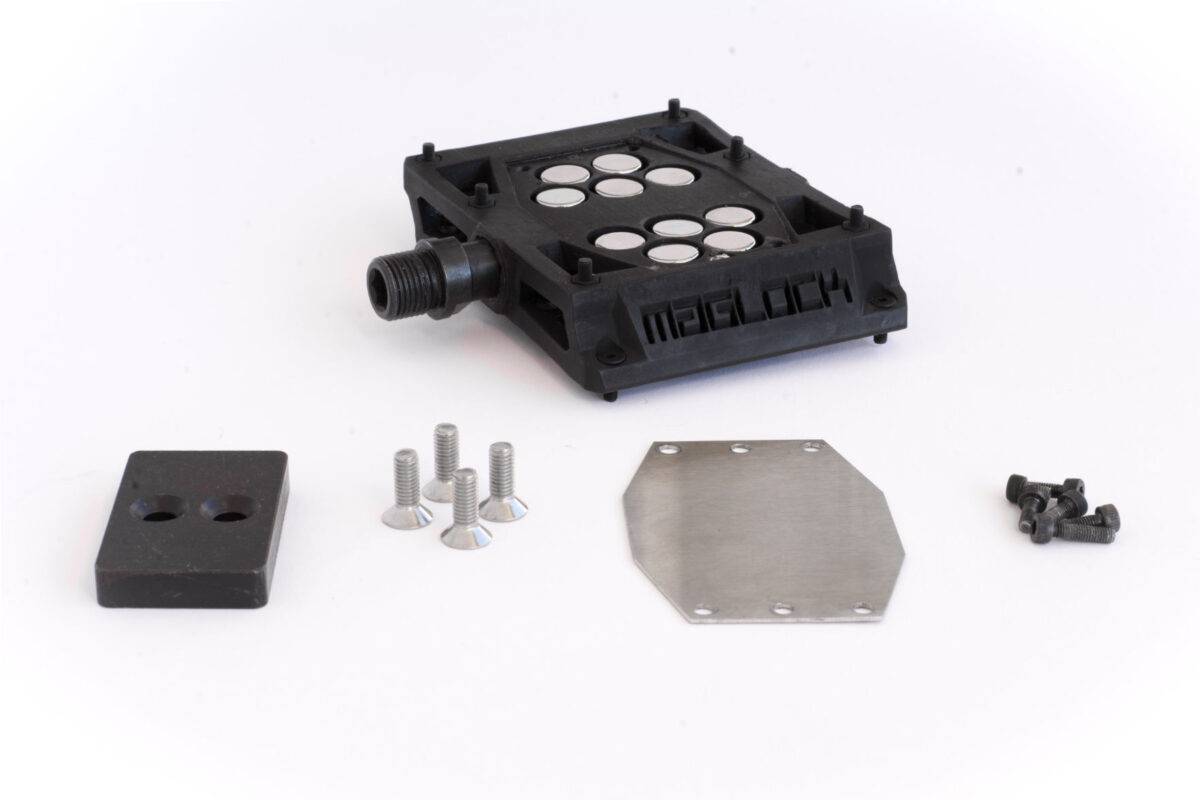
Exploded version of the Maglock Vault bike pedal.
Anyone who has ever “clipped in” to their bike pedals knows those few seconds of panic when it’s time to stop — or you are about to crash — and you’re still trying to perfect that specific twist and pull release.
David Williams, 30, knows that pain literally. He is an avid mountain biker, and has had too many bumps — where his feet came off the pedals, which meant his body came down hard on the crossbar. When he decided to swap that pain for clipping in, though, he came back with more scrapes and bruises than usual.
“Oh, yeah, those first few times I crashed. I even ended up sliding through a cactus once,” he said.
After his experience, he decided there had to be a better option. So he went to work tinkering.
“Dave has always been this inventor. He’s always thinking,” said Dee Williams, 62, David’s father and business partner.
After at least six different prototypes, David came up with a magnetic bike pedal under the brand, MagLock Bike Pedal. A biker swaps out his/her standard pedals with the MagLock pedal, which houses a customizable number of strong rare-earth magnets. With the use of a screwdriver, riders can choose how many magnets they want in their pedal.
The rider then removes the clipping mechanism from his/her biking shoes, and attaches a small metal slab in its place. To magnetically “clip in,” the rider hovers his/her foot over the pedal and the magnets automatically attract. To release, it’s a simple matter of slightly pronating the foot.
“People were originally skeptic at first that the magnets would actually hold your foot in. But they are plenty strong. I’ve had riders tell me they had to remove some of the magnets,” David Williams said Thursday in the living room of his home and headquarters in south Provo.
His first version, the Fort Knox pedal, successfully funded through Kickstarter in 2015. After fulfilling all his orders and hearing customer feedback, he created a second version, the Vault. It again successfully funded just last week.
“The biggest complaint about the Fort Knox was weight,” David Williams said.
That first pedal is oversized and built from aluminum. The Vault’s casing is a smaller, durable plastic/nylon. With both pedals, riders can opt to also use regular shoes, as they have a solid surface.
Neither pedal will necessarily ever make it onto the top road bikes of the world, because even though the Vault is much lighter, when dealing with overall weight, the magnets will always be an issue. But David is okay with that, as his target market is the beginner and intermediate cyclists — those that want security when road or mountain biking.
While David is targeting those groups, and hoping to move forward in that direction, one unique user has loved the MagLock from the beginning. Guy Hansen is a 63-year-old Lindon man who specializes in mountain unicycling. Dubbed Muni, it’s a unique forkless twist on the adventure of wheeling down a rocky forest path.
For Hansen — who’s unicycled for more than 50 years and racing in national mountain unicycling competitions for about 15 — the MagLock was an “answer to prayers.” When mountain unicycling, Hansen said he needs to be attached to the unicycle, both on the upstroke and the downstroke. That allows for more power and control — two things essential to his sport. Regular pedals don’t give him that.
“But clip-ins are suicide pedals. Most clip-ins require a specific movement to get out of them. But on a unicycle, when you’re falling, you can’t always do that movement,” Hansen said. “The MagLocks are perfect. I leave all the magnets in, and I have no trouble getting out during a fall.”
MagLock is a side business for David and his father, as Dee works full time elsewhere and David is finishing a bioengineering master’s degree at the University of Utah, then headed to Stanford University later this year for a master’s in business. But David wants to get his MagLock pedals into local bike shops and larger retailers. For many riders, he knows they could be game-changers, like they were for Hansen.
David’s headed to the North American Handmade Bicycle Show in Salt Lake City in March, and then just a week later to an international bike show in Taipei. MagLock pedals are currently only available online.
Maglock bike pedals lock in a new way to cycle
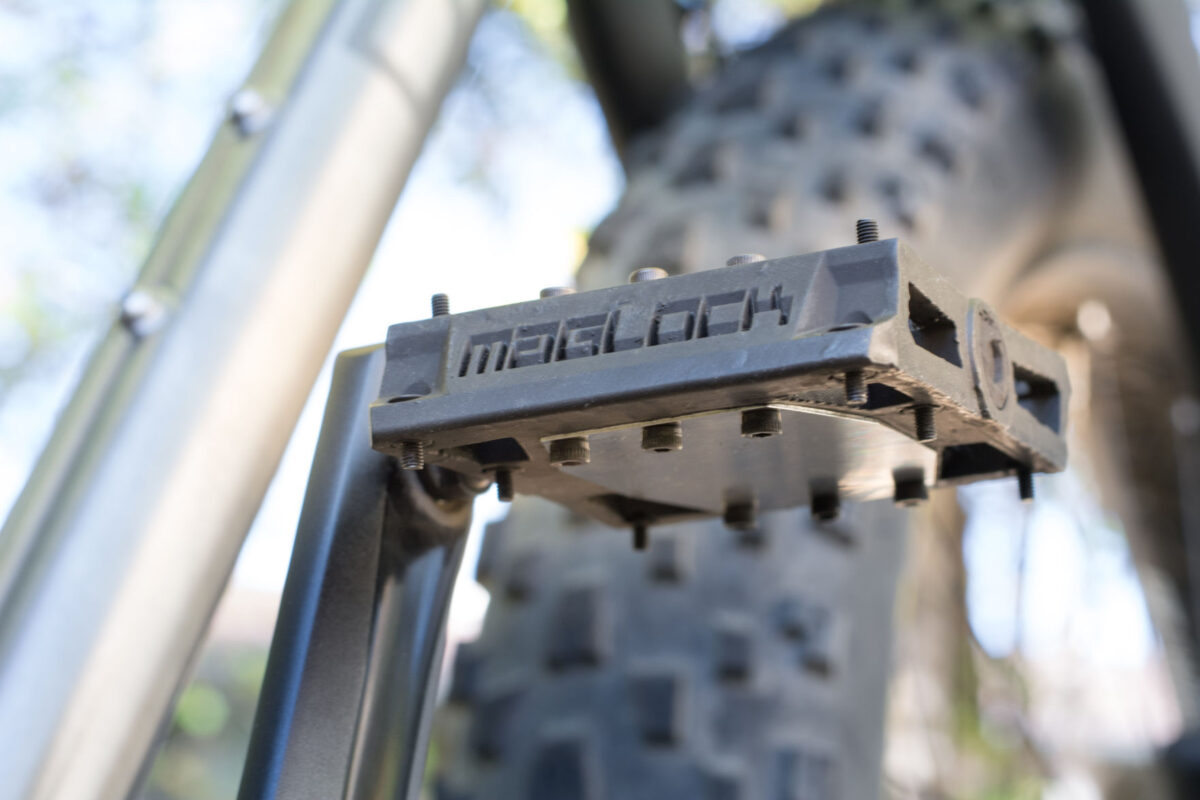
A Maglock Vault bike pedal is pictured on a mountain bike.
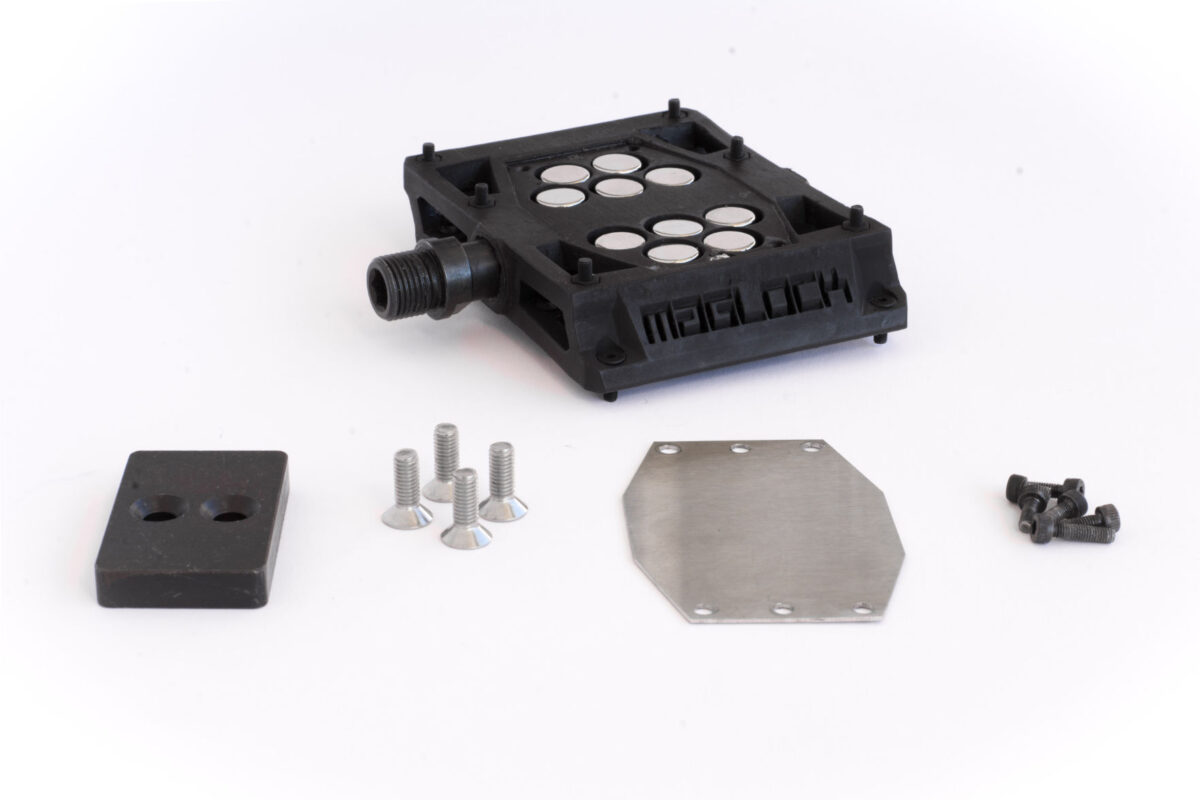
Exploded version of the Maglock Vault bike pedal.
Anyone who has ever “clipped in” to their bike pedals knows those few seconds of panic when it’s time to stop — or you are about to crash — and you’re still trying to perfect that specific twist and pull release.
David Williams, 30, knows that pain literally. He is an avid mountain biker, and has had too many bumps — where his feet came off the pedals, which meant his body came down hard on the crossbar. When he decided to swap that pain for clipping in, though, he came back with more scrapes and bruises than usual.
“Oh, yeah, those first few times I crashed. I even ended up sliding through a cactus once,” he said.
After his experience, he decided there had to be a better option. So he went to work tinkering.
“Dave has always been this inventor. He’s always thinking,” said Dee Williams, 62, David’s father and business partner.
After at least six different prototypes, David came up with a magnetic bike pedal under the brand, MagLock Bike Pedal. A biker swaps out his/her standard pedals with the MagLock pedal, which houses a customizable number of strong rare-earth magnets. With the use of a screwdriver, riders can choose how many magnets they want in their pedal.
The rider then removes the clipping mechanism from his/her biking shoes, and attaches a small metal slab in its place. To magnetically “clip in,” the rider hovers his/her foot over the pedal and the magnets automatically attract. To release, it’s a simple matter of slightly pronating the foot.
“People were originally skeptic at first that the magnets would actually hold your foot in. But they are plenty strong. I’ve had riders tell me they had to remove some of the magnets,” David Williams said Thursday in the living room of his home and headquarters in south Provo.
His first version, the Fort Knox pedal, successfully funded through Kickstarter in 2015. After fulfilling all his orders and hearing customer feedback, he created a second version, the Vault. It again successfully funded just last week.
“The biggest complaint about the Fort Knox was weight,” David Williams said.
That first pedal is oversized and built from aluminum. The Vault’s casing is a smaller, durable plastic/nylon. With both pedals, riders can opt to also use regular shoes, as they have a solid surface.
Neither pedal will necessarily ever make it onto the top road bikes of the world, because even though the Vault is much lighter, when dealing with overall weight, the magnets will always be an issue. But David is okay with that, as his target market is the beginner and intermediate cyclists — those that want security when road or mountain biking.
While David is targeting those groups, and hoping to move forward in that direction, one unique user has loved the MagLock from the beginning. Guy Hansen is a 63-year-old Lindon man who specializes in mountain unicycling. Dubbed Muni, it’s a unique forkless twist on the adventure of wheeling down a rocky forest path.
For Hansen — who’s unicycled for more than 50 years and racing in national mountain unicycling competitions for about 15 — the MagLock was an “answer to prayers.” When mountain unicycling, Hansen said he needs to be attached to the unicycle, both on the upstroke and the downstroke. That allows for more power and control — two things essential to his sport. Regular pedals don’t give him that.
“But clip-ins are suicide pedals. Most clip-ins require a specific movement to get out of them. But on a unicycle, when you’re falling, you can’t always do that movement,” Hansen said. “The MagLocks are perfect. I leave all the magnets in, and I have no trouble getting out during a fall.”
MagLock is a side business for David and his father, as Dee works full time elsewhere and David is finishing a bioengineering master’s degree at the University of Utah, then headed to Stanford University later this year for a master’s in business. But David wants to get his MagLock pedals into local bike shops and larger retailers. For many riders, he knows they could be game-changers, like they were for Hansen.
David’s headed to the North American Handmade Bicycle Show in Salt Lake City in March, and then just a week later to an international bike show in Taipei. MagLock pedals are currently only available online.