From dugouts to log cabins, one Spanish Fork pioneer park showcases them all

J.P. Hughes stands in the Hansen Cabin at the Jones-Hughes Pioneer Park on Wednesday, Aug. 22, 2018, in Spanish Fork.
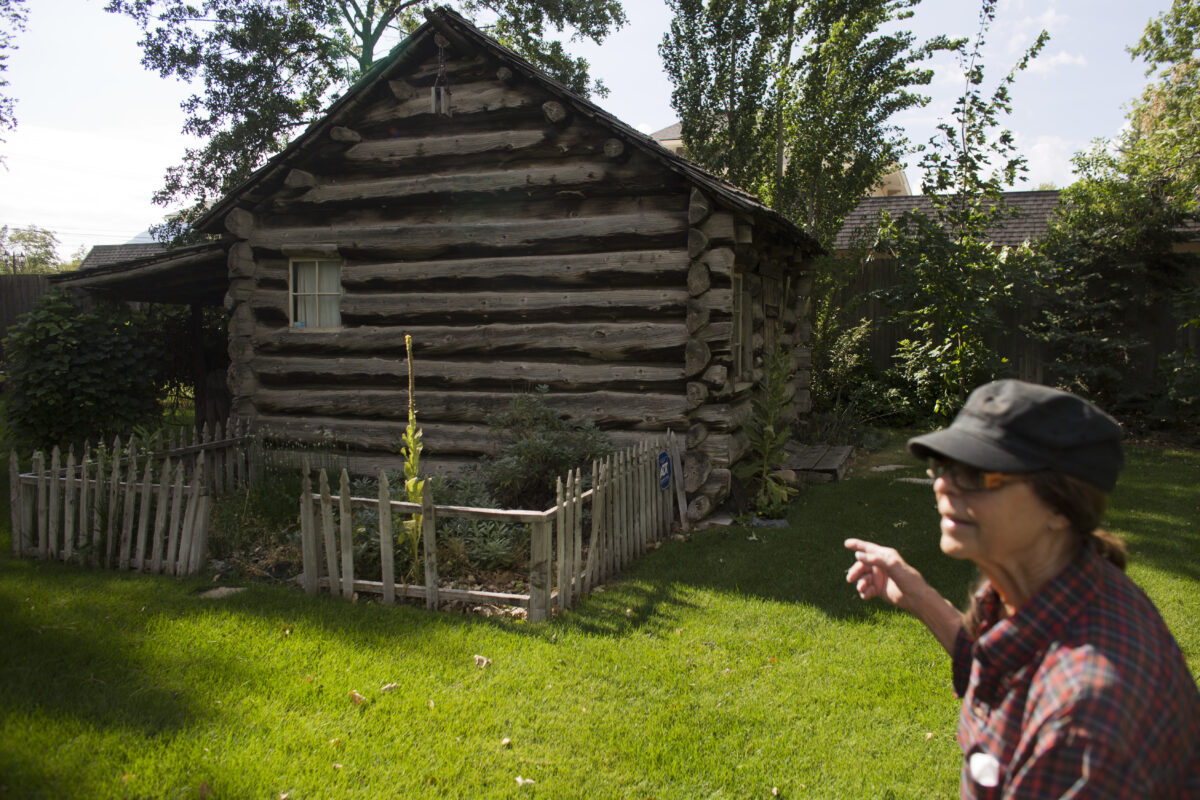
Elaine Hughes walks past the Hansen Cabin at the Jones-Hughes Pioneer Park on Wednesday, Aug. 22, 2018, in Spanish Fork.
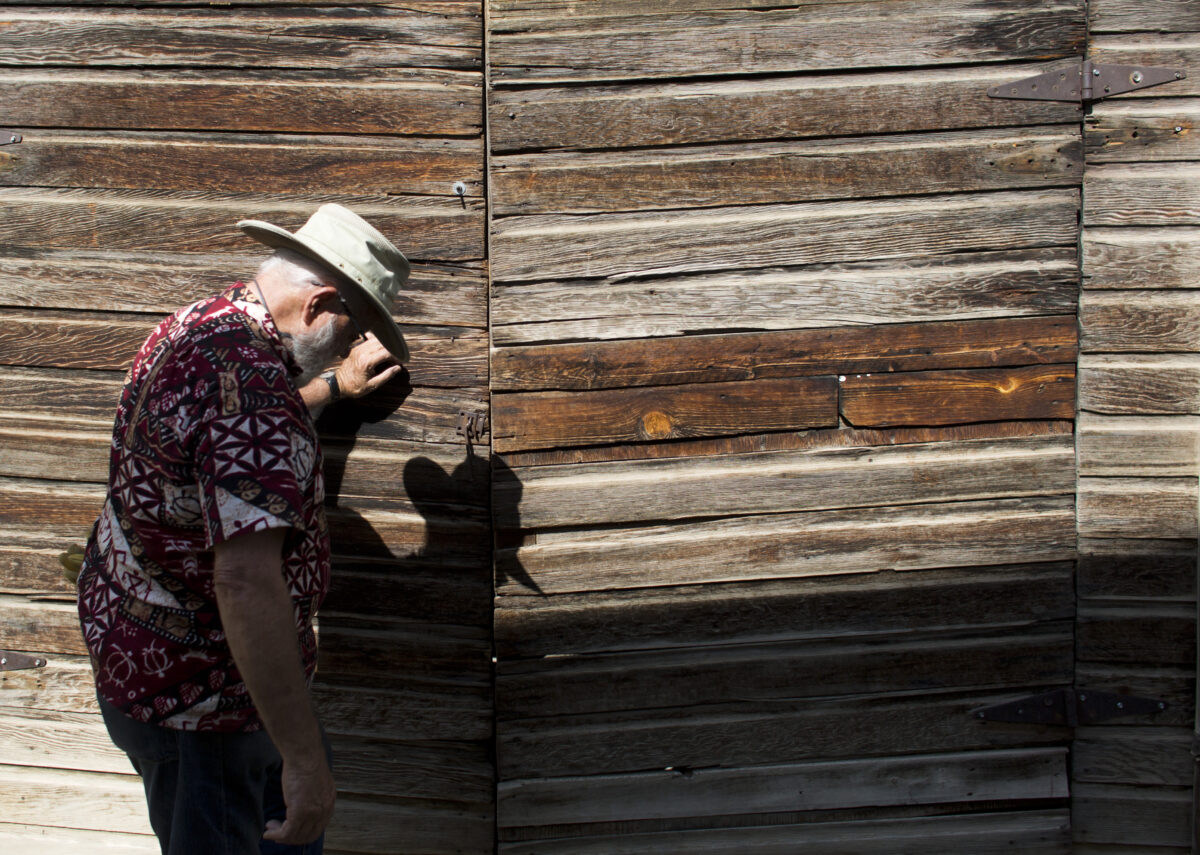
J.P. Hughes opens up the future blacksmith building at the Jones-Hughes Pioneer Park on Wednesday, Aug. 22, 2018, in Spanish Fork.
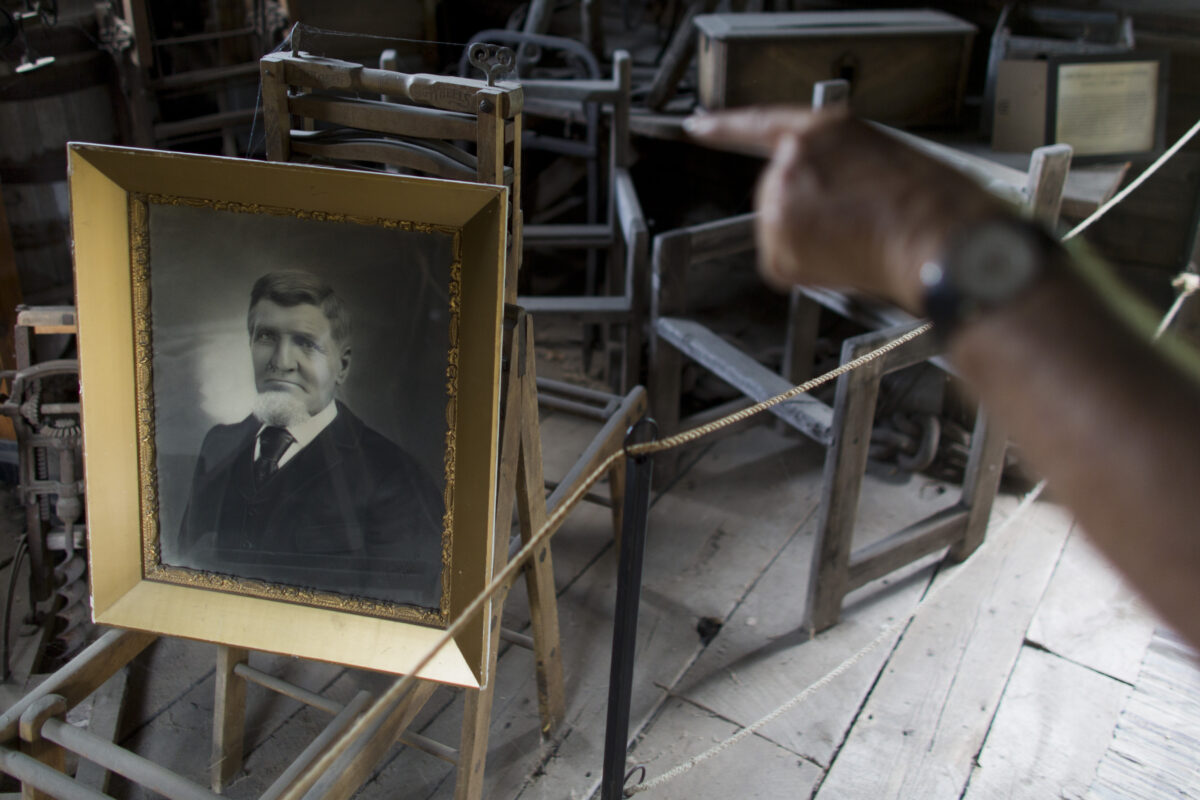
J.P. Hughes points out the items in Archibald Gardner's cabin on Wednesday, Aug. 22, 2018, in Spanish Fork. The framed photograph is an image of Gardner.
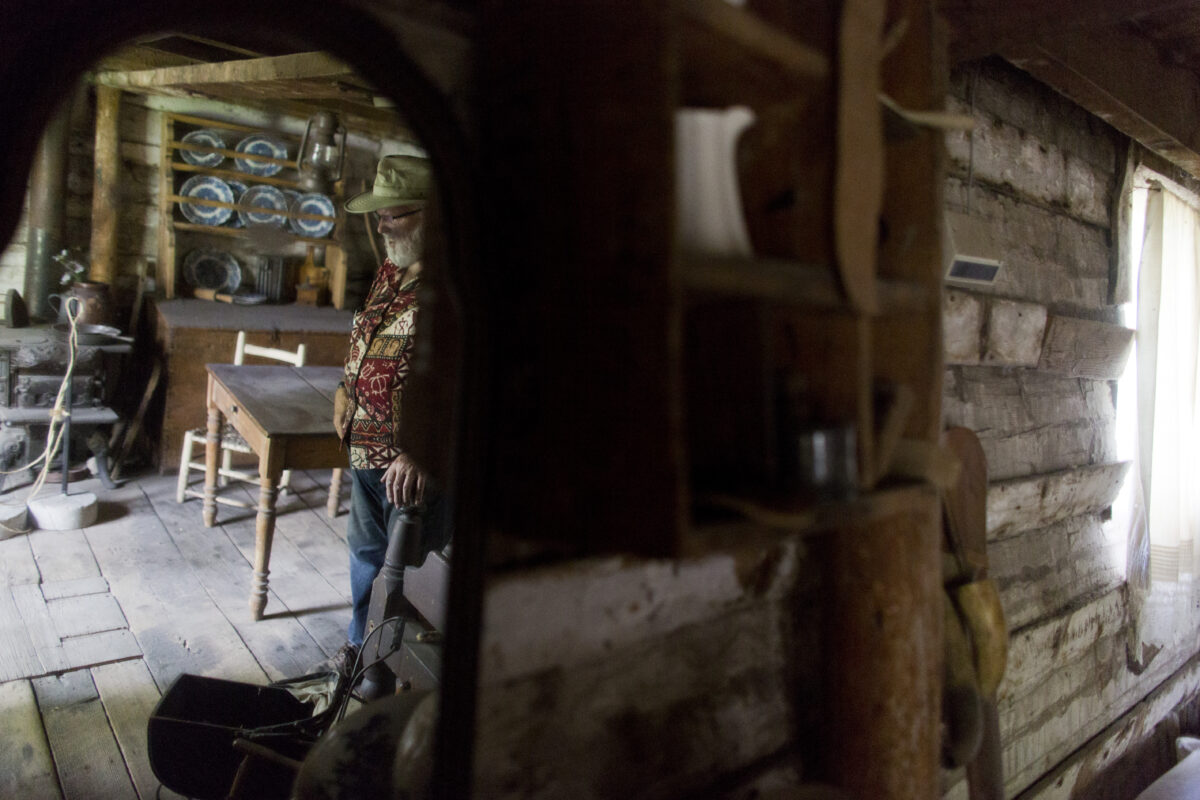
J.P. Hughes is reflected in mirror in the Hansen Cabin at the Jones-Hughes Pioneer Park on Wednesday, Aug. 22, 2018, in Spanish Fork.
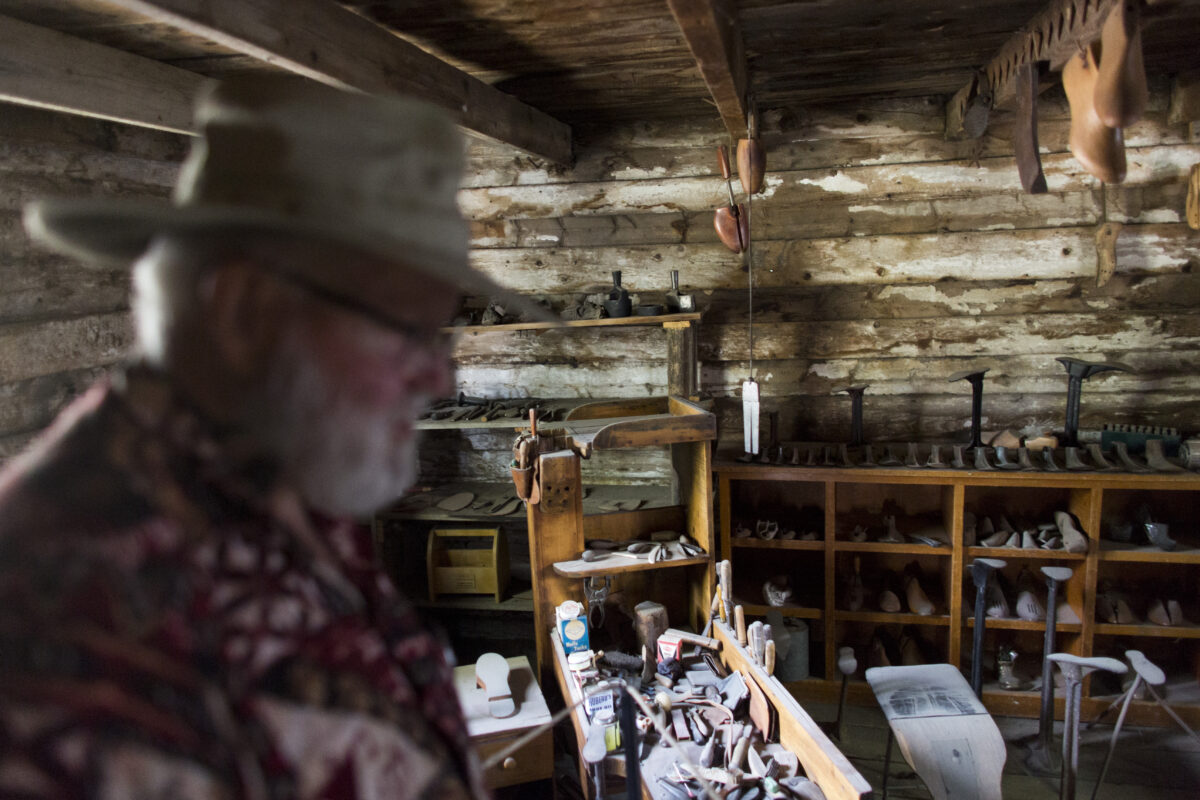
J.P. Hughes walks through the Jenkins Cabin at the Jones-Hughes Pioneer Park on Wednesday, Aug. 22, 2018, in Spanish Fork. The cabin was originally built in the 1850s.
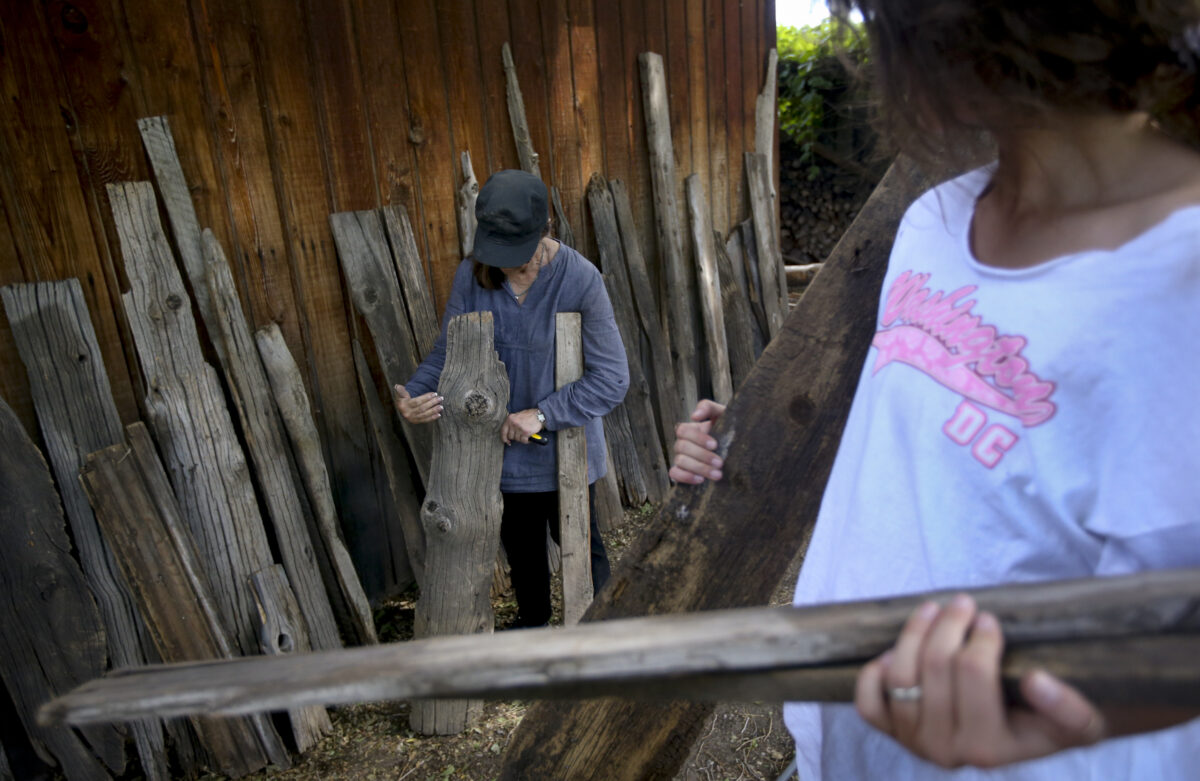
Elaine J. Hughes looks over a piece of wood as she and Morgan Tew choose pieces of wood to replace exterior walls of structures Saturday, Aug. 25, 2018, at the Jones-Hughes Pioneer Park in Spanish Fork. Isaac Hale, Daily Herald
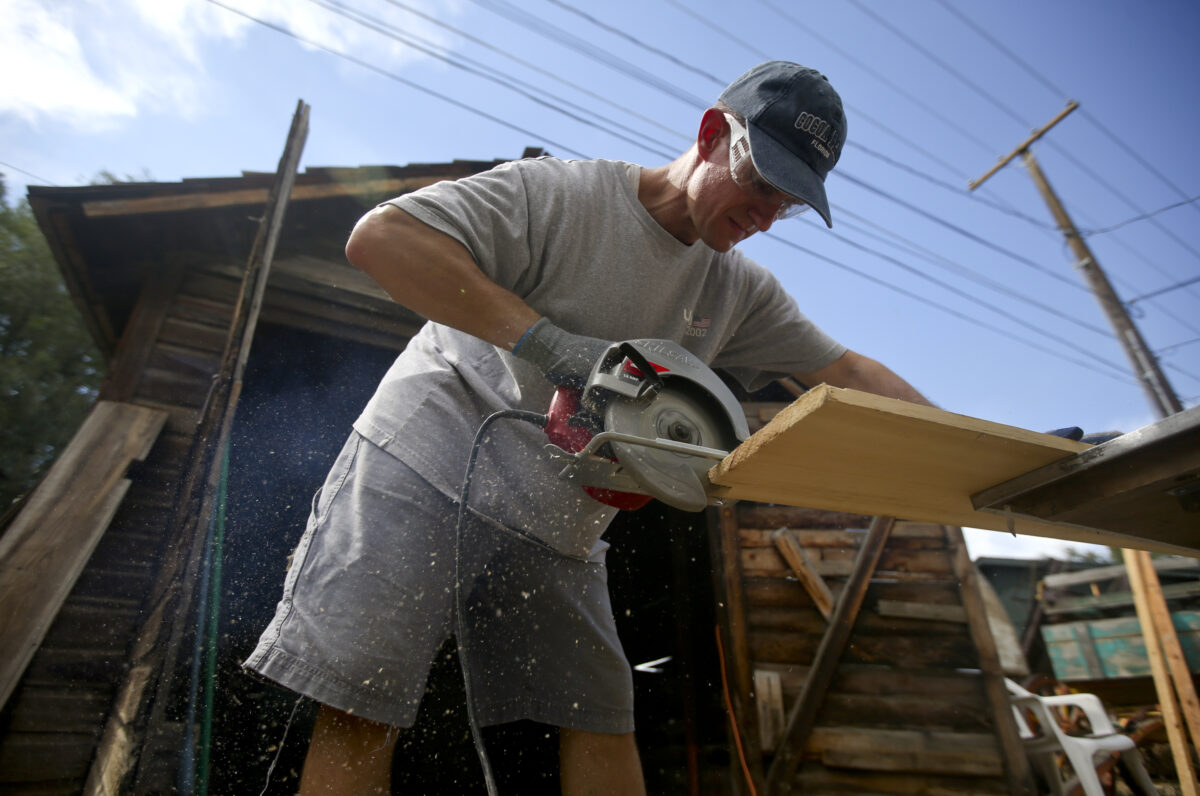
Bryan Tew cuts a board to size Saturday, Aug. 25, 2018, at the Jones-Hughes Pioneer Park in Spanish Fork. Isaac Hale, Daily Herald
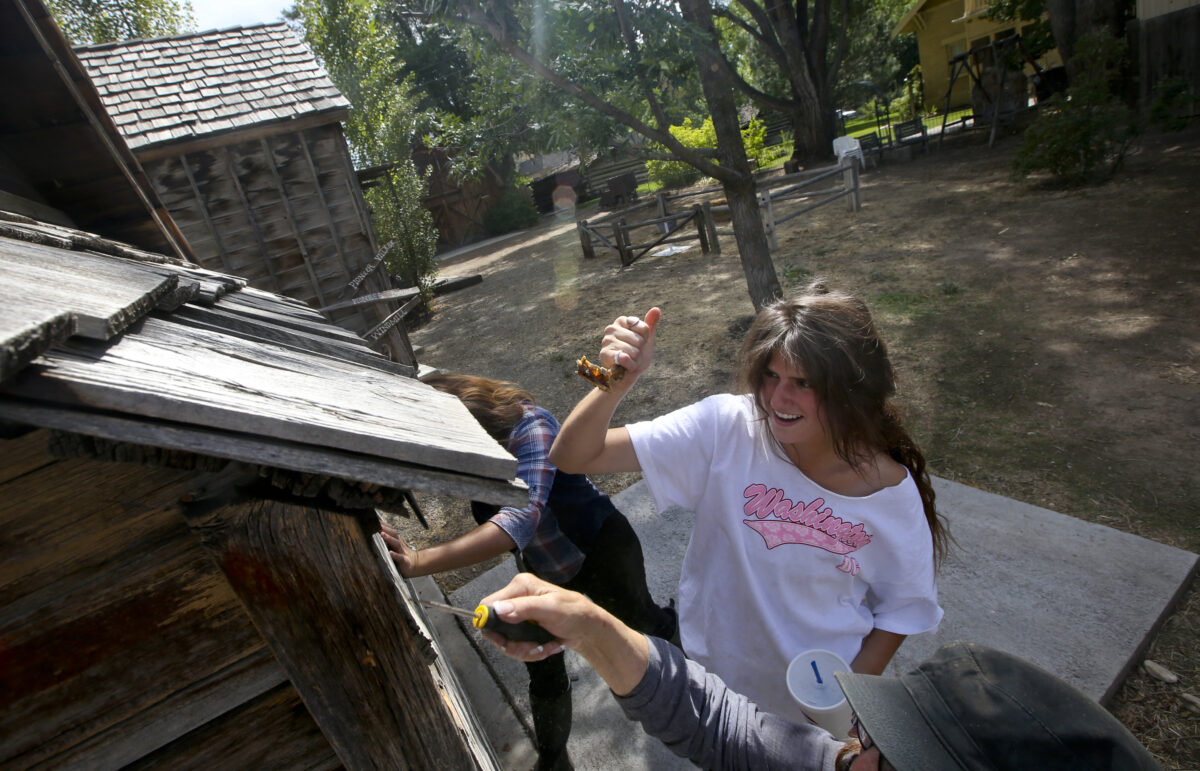
Jenna Tew helps support boards as her son, J.J., secures the board with a screw from the other side of the wall Saturday, Aug. 25, 2018, at the Jones-Hughes Pioneer Park in Spanish Fork. Isaac Hale, Daily Herald
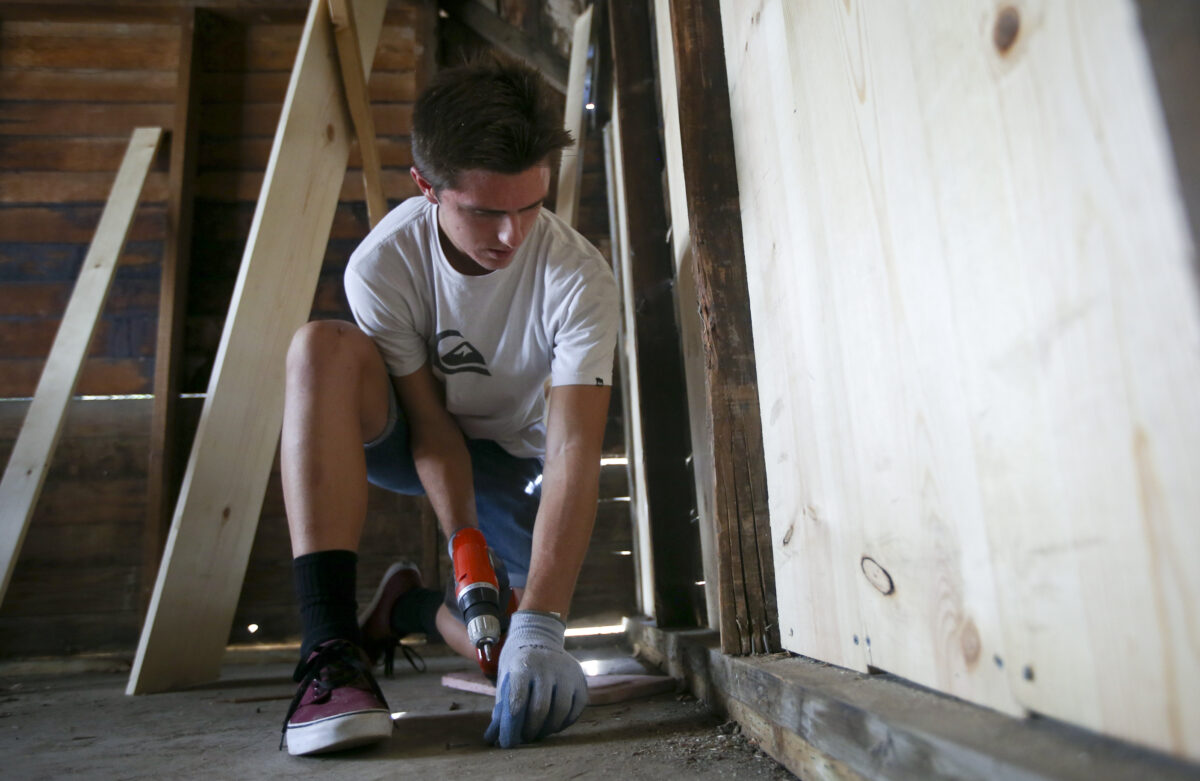
J.J. Tew readies a screw as he and others work on reinforcing the blacksmith's shop Saturday, Aug. 25, 2018, at the Jones-Hughes Pioneer Park in Spanish Fork. Isaac Hale, Daily Herald
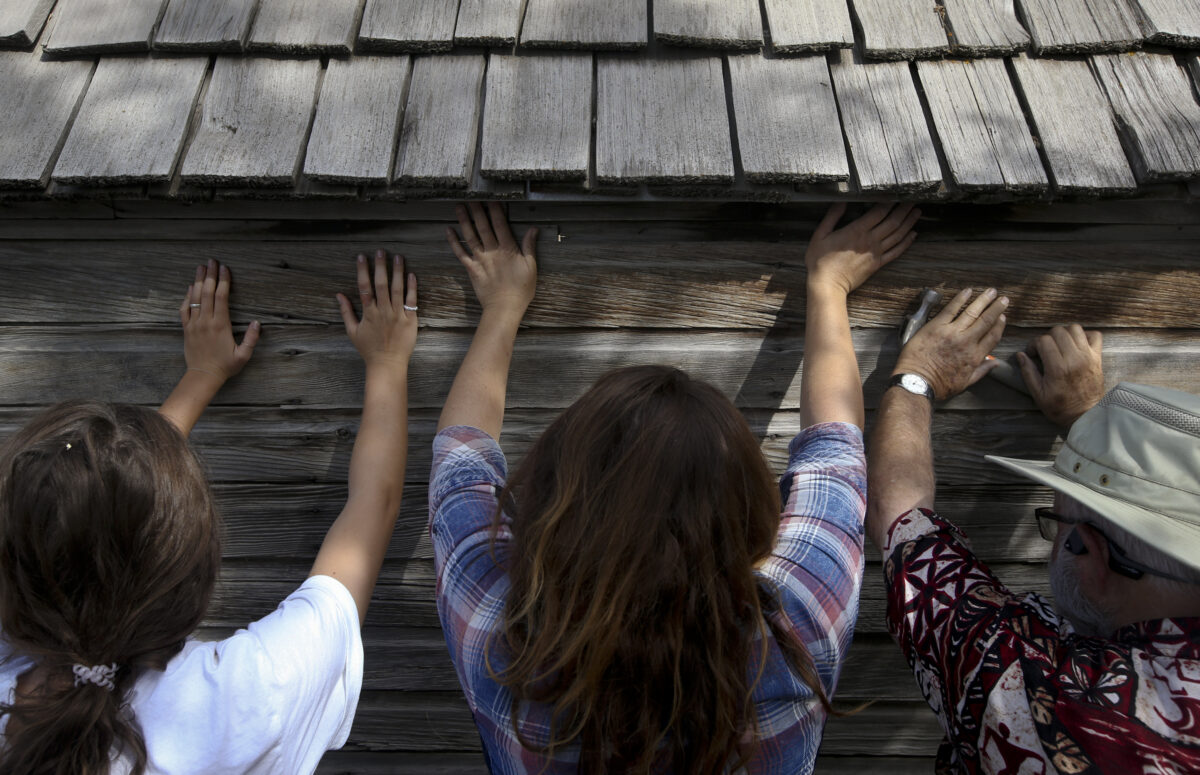
From left, Morgan Tew, Jenna Tew and J.P. Hughes hold boards in place as J.J. Tew secures them with screws from the other side of the wall Saturday, Aug. 25, 2018, at the Jones-Hughes Pioneer Park in Spanish Fork. Isaac Hale, Daily Herald
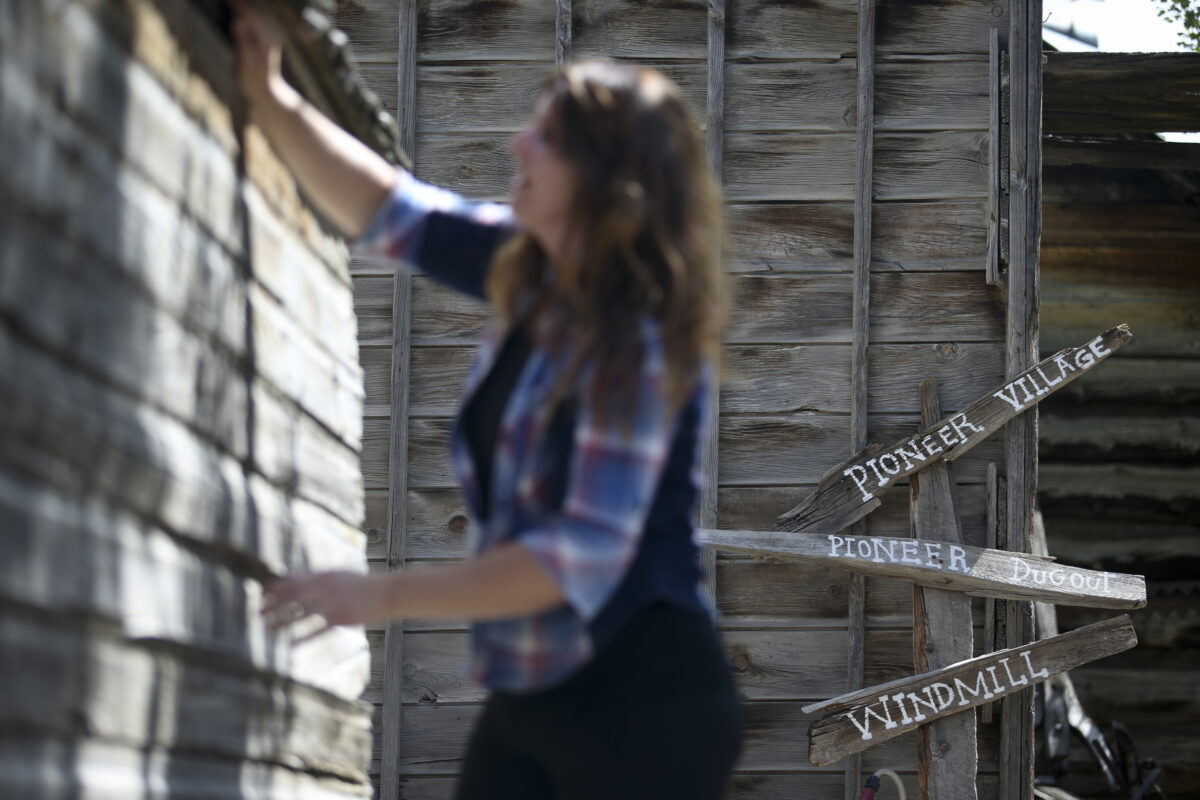
Morgan Tew pulls a loose piece from a wall of a structure as she and others work to reinforce the blacksmith's shop Saturday, Aug. 25, 2018, at the Jones-Hughes Pioneer Park in Spanish Fork. Isaac Hale, Daily Herald
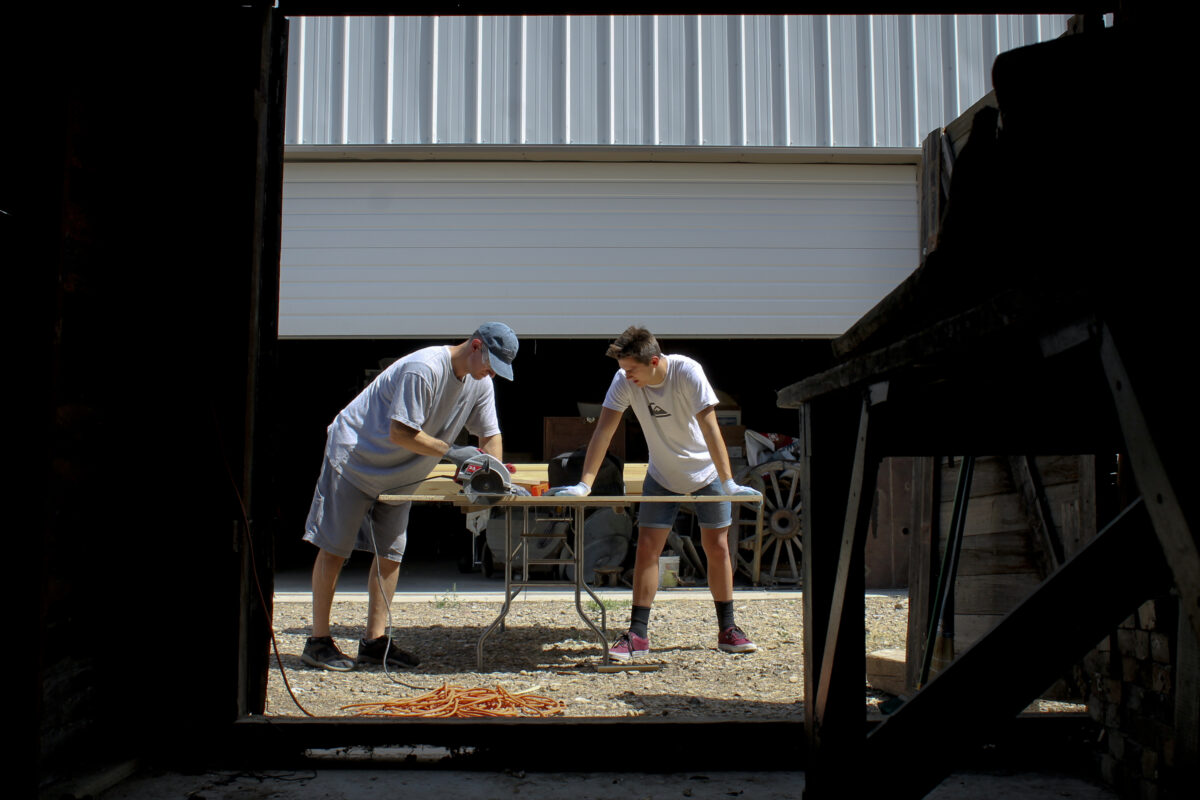
Bryan Tew and his son, J.J., cut a board to size to reinforce the walls of the blacksmith's shop Saturday, Aug. 25, 2018, at the Jones-Hughes Pioneer Park in Spanish Fork. Ashley Stilson, Daily Herald
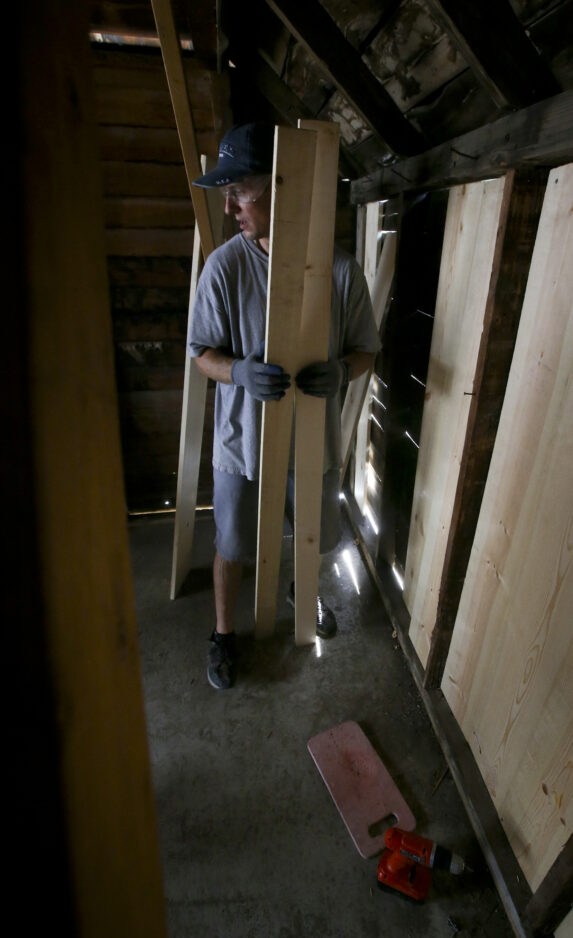
Bryan Tew moves boards around as he and others work on reinforcing the blacksmith's shop Saturday, Aug. 25, 2018, at the Jones-Hughes Pioneer Park in Spanish Fork. Isaac Hale, Daily Herald
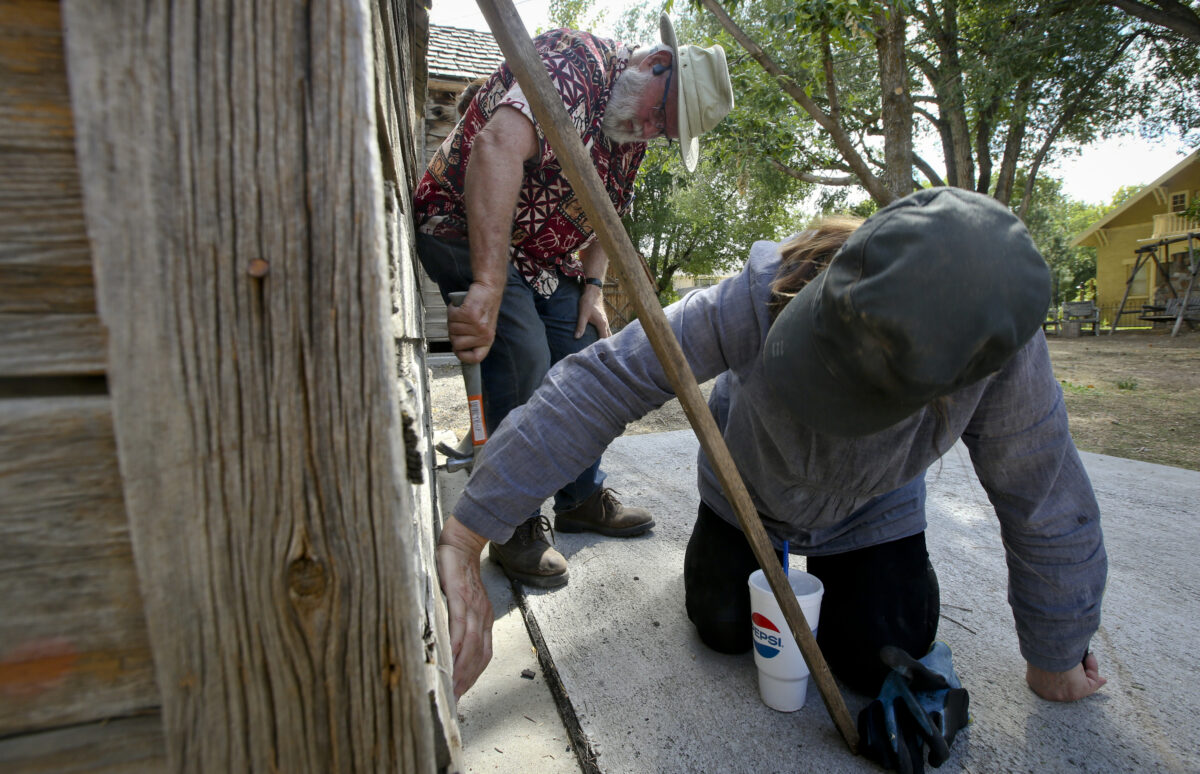
J.P. Hughes, left, and Elaine J. Hughes, his wife, work on reinforcing the blacksmith's shop Saturday, Aug. 25, 2018, at the Jones-Hughes Pioneer Park in Spanish Fork. Isaac Hale, Daily Herald
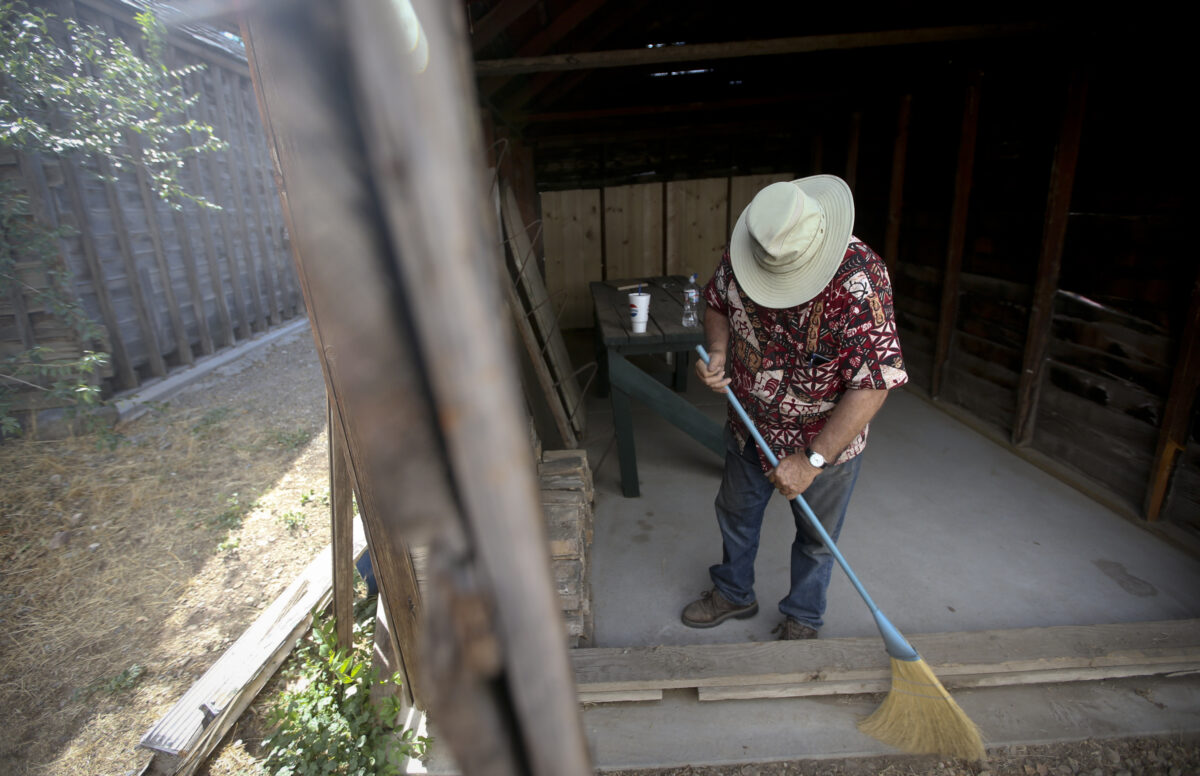
J.P. Hughes sweeps dust from the blacksmith's shop Saturday, Aug. 25, 2018, at the Jones-Hughes Pioneer Park in Spanish Fork. Isaac Hale, Daily Herald
In the heart of Spanish Fork, past the gas stations and freeway exits along Main Street, stands an old mustard yellow house built in 1912, and in the backyard are four log cabins that were never built there at all.
The authentic cabins were constructed all around the state by early pioneers. But instead of being left to rot where they were built, each cabin was selected and hauled away to the property now known as the Jones-Hughes Heritage Park in Spanish Fork.
The private park has almost every bona fide housing option that was available to pioneers and settlers in the 1800s, from a one-room dugout to spacious Icelandic and Danish log cabins.
Collected in the yard are also a windmill, a wooden phone box, an outhouse, a granary, a pump house and even a bright teal and yellow box wagon sitting beside a peeling lime green shepherd wagon.
Curator Elaine Hughes remembers the exact origin and history of every building, wagon or collectible on the site.
“I could keep you here all day,” she said, smiling and adjusting her black-rimmed glasses as she looked across the backyard. “We just love it here.”
What started as a house cleaning project quickly turned into a retirement enterprise for her and her husband, J.P. Hughes. Growing up, they lived two blocks away from each other in Spanish Fork, sharing a piano teacher and similar family histories.
Both their ancestors likely knew one another while living in Wales as recent converts to The Church of Jesus Christ of Latter-day Saints. Before that, both families might have crossed the ocean together on the Mayflower.
“We figured it was destiny we’d end up together,” Elaine Hughes said. J.P. Hughes nodded in agreement.
“It’s destiny,” he echoed.
The project started almost 40 years ago in 1980 when the couple bought the yellow brick house that belonged to Elaine Hughes’ grandfather. The home was placed on the National Register of Historic Places in 1985, and the property had just a wooden barn and a granary.
The plan was to simply repair and restore the house, but Elaine Hughes had a grander vision.
“We enjoyed doing the history, we enjoyed the project. The kids loved it, they helped us with all the landscaping,” she said. “It just became a bigger project.”
When a family in West Jordan offered to donate their cabin to the park, Elaine Hughes contracted with Valgardson House Movers to move the cabin to an empty lot next to her grandfather’s home.
It was the first log cabin on the property, a Danish cabin owned by Archibald Gardner, one of J.P. Hughes’ ancestors.
Steps away is the second-oldest standing log cabin from another location in Spanish Fork. It was built by Peter Hansen, who used logs from Payson Canyon and carved his initials on two sides of the home.
All the cabins curated so far have been moved onto the property by Valgardson House Movers. The entire cabin is original, including the outside logs that still retain traces of whitewash paint.
This is the cabin that means the most to J.P. Hughes, but his favorite piece on the property is without question the dirt dugout at the far end of the lot.
“It’s such a symbol and a metaphor,” he explained. “There was nothing, no wood, no rocks, nothing. So they dug a hole in the ground and lived there.”
The dugout is hidden behind all the wooden structures and surrounded by sagebrush. The shelters used to be so common in the area, Spanish Fork was once called “Gopher Town.”
A sagging off-white canvas holds the dirt roof in place while decrepit wooden slats line the walls. Pioneers sometimes build dugouts in the same way if they could afford to tear apart their wagons, Elaine Hughes said.
“We took all the histories and then we tried to incorporate a little bit of everything we read,” she added.
Both she and her husband say they feel something special whenever they step into the tiny dugout.
“I come in here and I have such a special feeling,” Elaine Hughes said in a quiet voice. “I think I could live here, but, you know, it humbles me the most and almost makes me cry every time I come in.”
From dirt dugouts, pioneers moved on to build log cabins of all sizes, including a small cabin the Hughes converted to a cobbler shop. The cabin was originally built in Palmyra, Utah County, and it is believed David Abbott “Ab” Jenkins was born there in 1883. Jenkins set world speed records for racing Mormon Meteor cars across the Bonneville Salt Flats in the late 1920s.
An expansive patch of land behind the shop is also reserved as a future tribute to Native American dwellings such as a teepee or a hogan.
During the summer, the Hughes’ daughter, Jenna Tew, and her family come three times a week to work on the site.
“I think the vision comes through Elaine,” J.P. Hughes said. “It’s a work project where we work together.”
The families met together Saturday to help clean and repair the blacksmith shop as part of a Scout project. One day, they want to finish organizing all the items that are stored in a huge white shed at the far end of the property.
There, the Hughes have collected wagons, trailers, printing presses, a soda shop bar, a glider and dozens of display cases with other artifacts. Almost all of the items were either purchased at thrift stores or are on loan from local families.
“We’re just the curators, of course,” Elaine Hughes said. “We’re just the lucky ones.”
The most recent acquisition to the site is an Icelandic cabin, filled with artifacts like butter churns, pocketbooks or coffee grinders from Icelandic settlers. The park is open for Icelandic Days in June when hundreds of visitors come to Spanish Fork and the historic cabin.
“I think it teaches you to really love humanity and how resilient we are,” Tew said. “If we work together, look at what we can accomplish.”
Someday, the Hughes hope the park will have open hours for visitors. For now, youth groups and visitors can call and set appointments to visit the historic site.
The park has also drawn hundreds of community members to the site on July 24 for Pioneer Day.
“It’s been a joyful hobby,” Elaine Hughes said, gesturing to another historic artifact. “Aren’t these all beautiful?”
Tours at the Jones-Hughes Heritage Park are by appointment only. To schedule a tour, call (801) 558-6299.
“I think it teaches you to really love humanity and how resilient we are. If we work together, look at what we can accomplish.”
— Jenna Tew, daughter of Elaine and J.P. Hughes