Utah DWR study recovery of trout in American Fork River
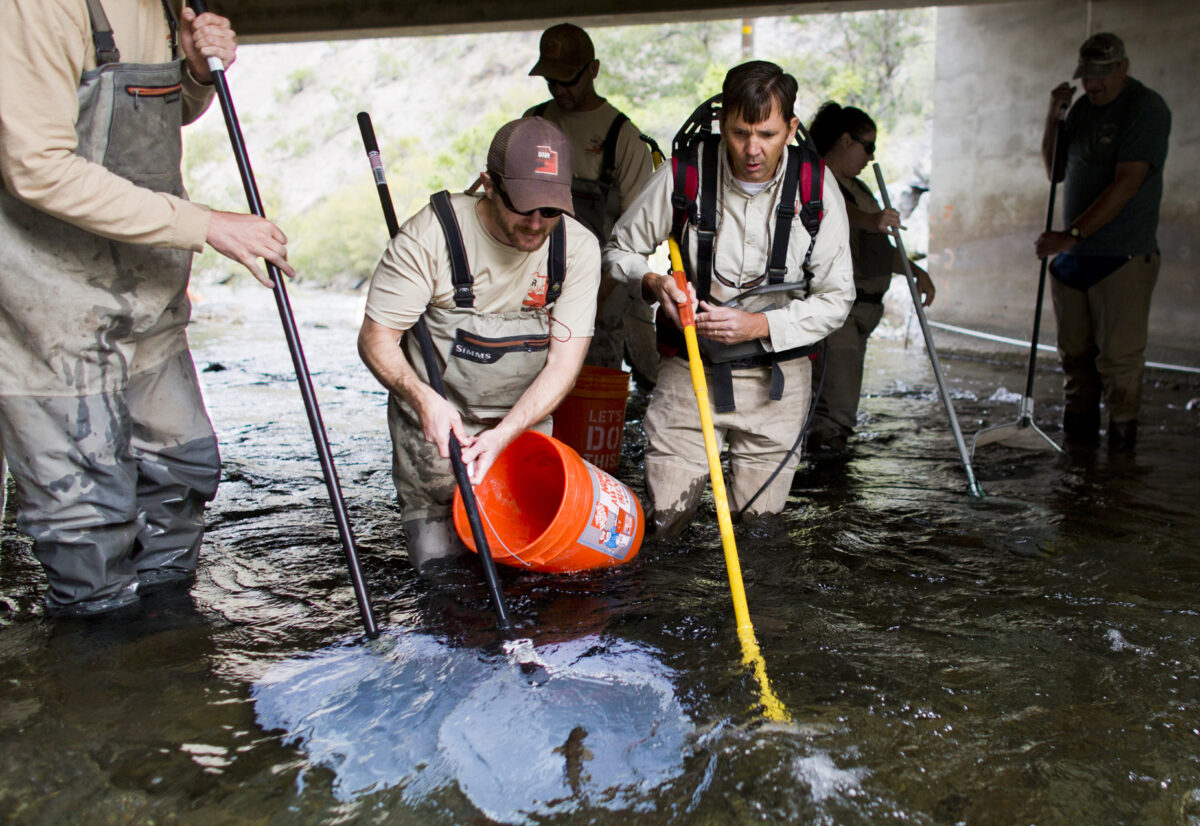
Chris Crockett, second from the left, the regional aquatic program manager from the Division of Wildlife Resources, nets a stunned fish in the American Fork River on Monday, Aug. 27, 2018.
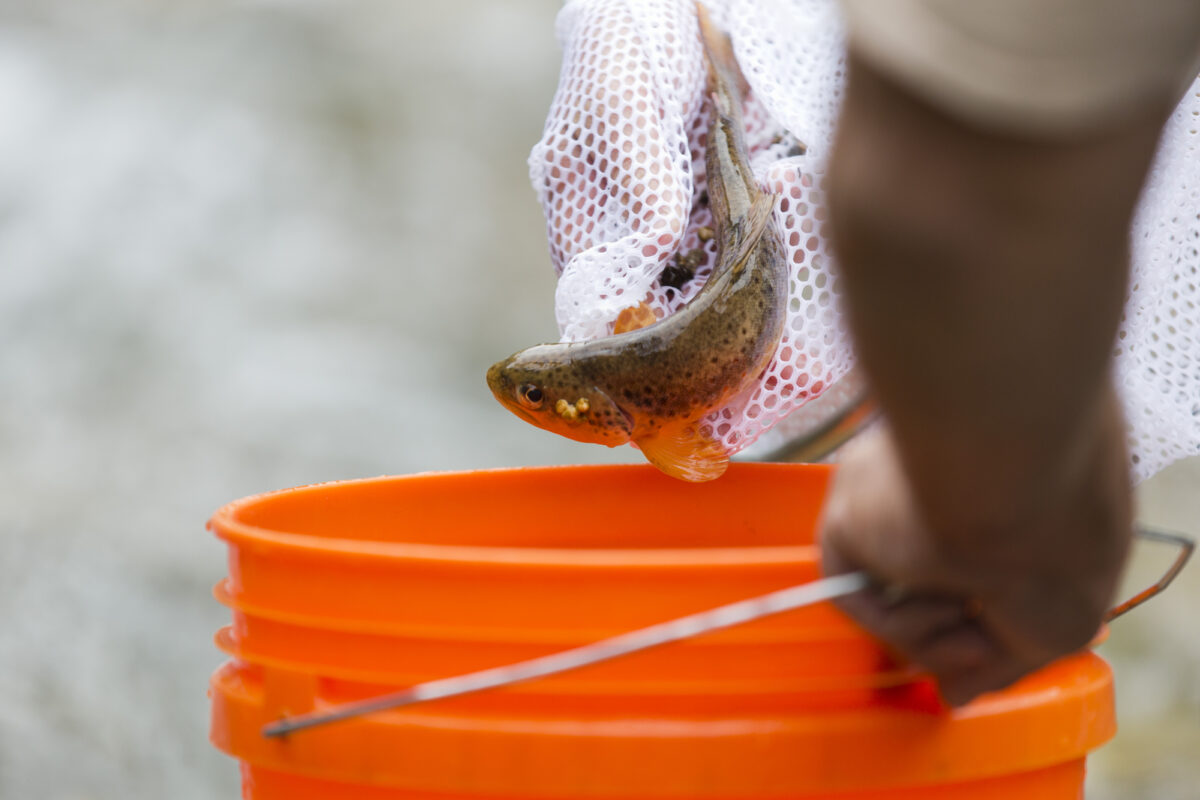
A brown trout is placed into a bucket as a team of biologists and technicians from the Utah Division of Wildlife Resources evaluate the American Fork River fish population on Monday, Aug. 27, 2018, in American Fork Canyon.
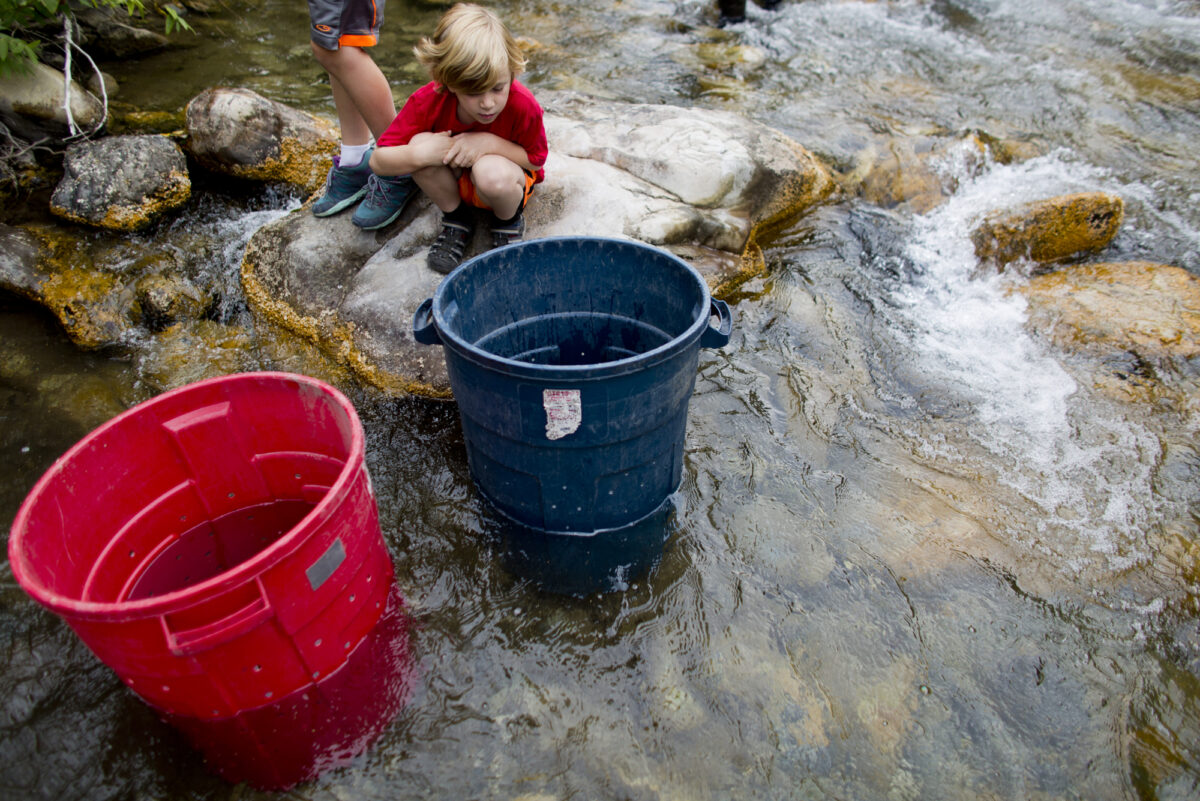
Xander McCandless, 6, peers into a holding tank for the fish that were caught during the electrofishing by a team from the Division of Wildlife Resources in the American Fork River on Monday, Aug. 27, 2018.
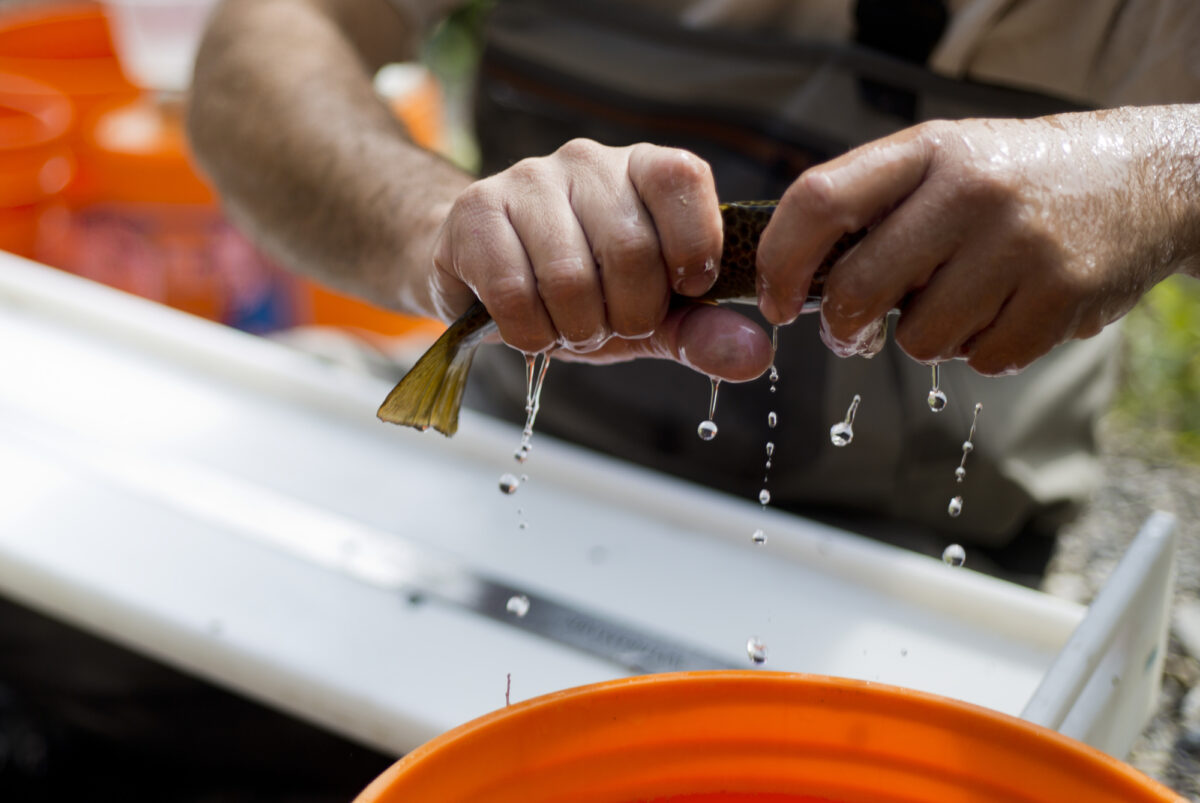
Stuart Bailey, a sports fish biologist for the Division of Wildlife Resources, pulls a brown trout from the holding bucket in order to measure and weigh the fish on Monday, Aug. 27, 2018, in American Fork Canyon.
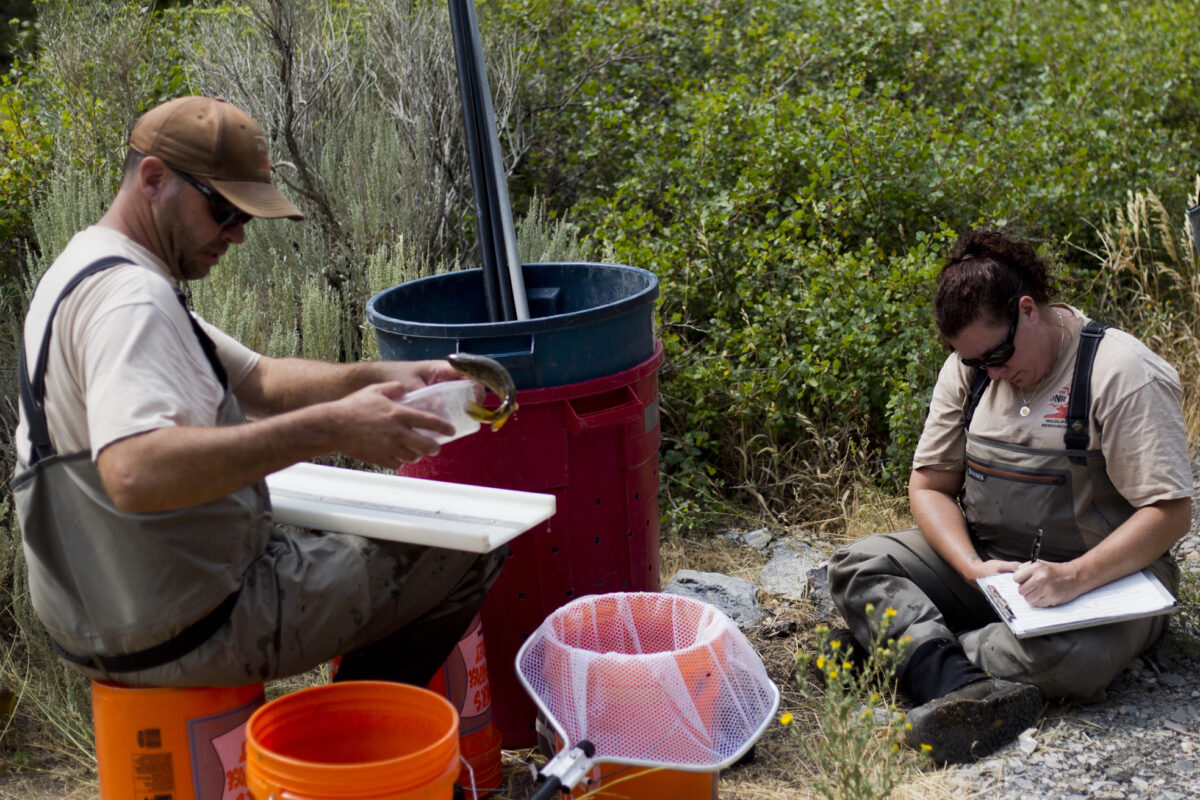
A brown trout tumbles out of a tray, which was used to weigh the fish, as Stuart Bailey, left, a sports fish biologist for the Division of Wildlife Resources, prepares to place the fish into a recovery bucket on Monday, Aug. 27, 2018, in American Fork Canyon. Jackie Watson, right, a blue ribbon fisheries biologist for the Division of Wildlife Resources, tracks the measurements and sizes of the fish
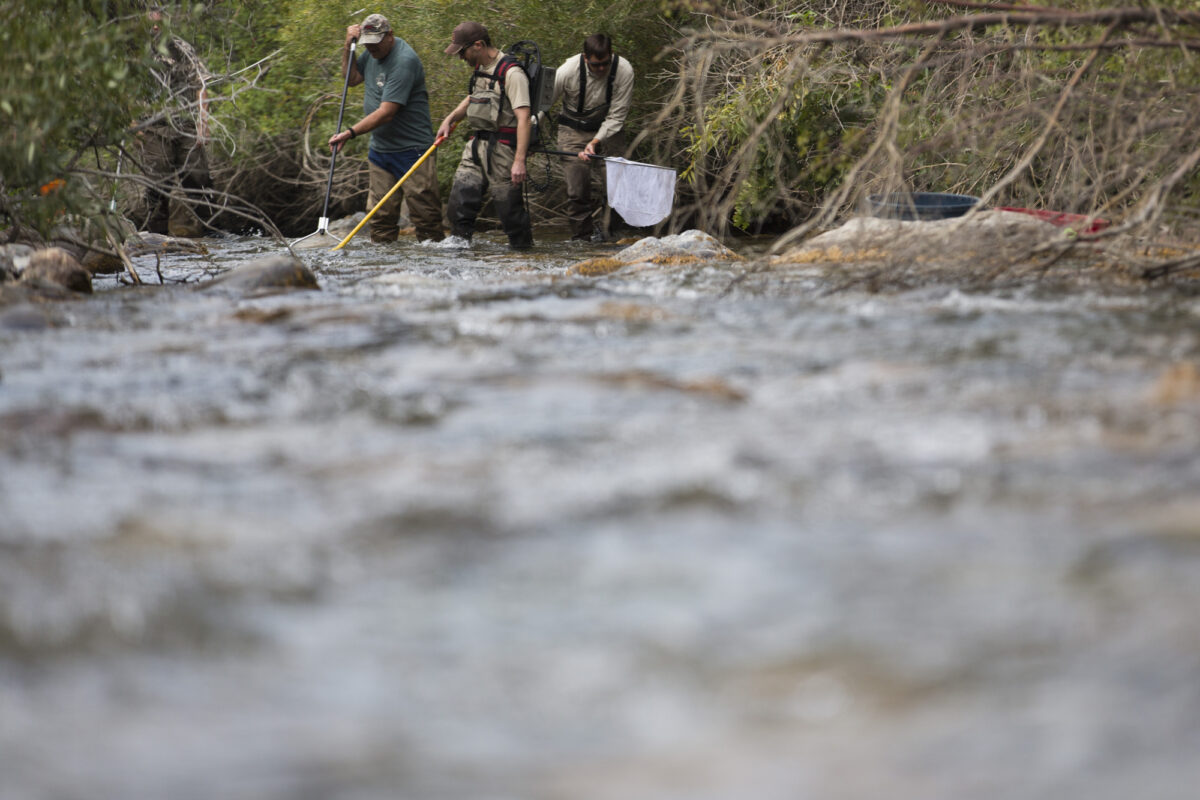
A team of biologists and technicians from the Utah Division of Wildlife Resources and volunteers capture fish from the river on Monday, Aug. 27, 2018, in American Fork Canyon. The fish were stunned with an electroshock and netted. After the section of river was walked twice, the team weighed and measured the fish.
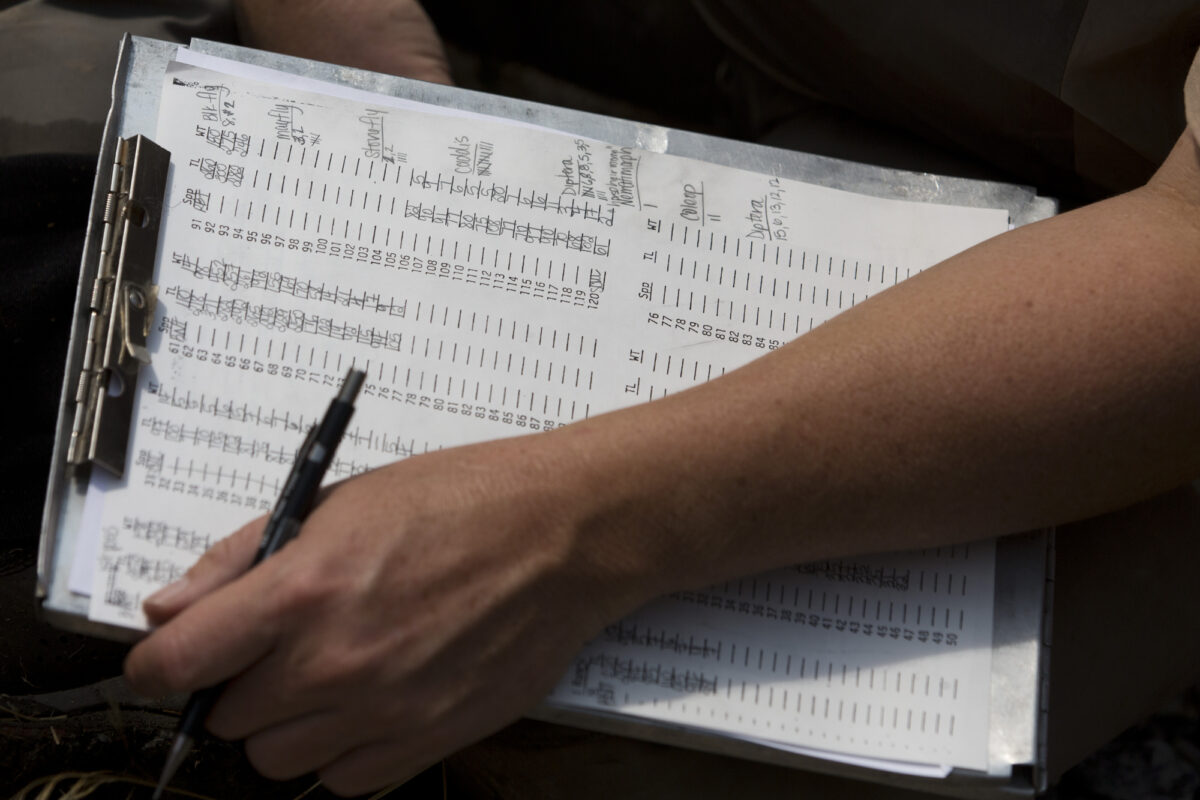
Jackie Watson, a blue ribbon fisheries biologist for the Division of Wildlife Resources, tracks the measurements and sizes of the fish that were temporarily removed from a section of the American Fork River on Monday, Aug. 27, 2018, in American Fork Canyon.
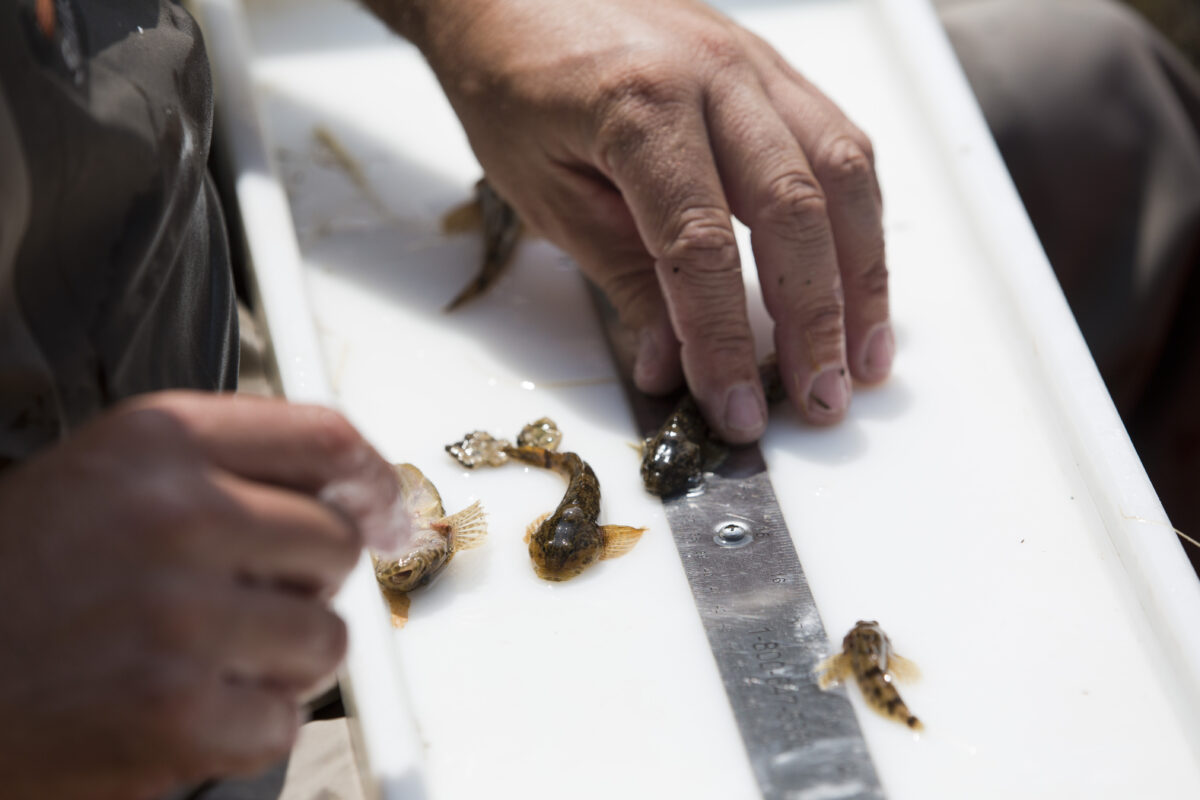
Stuart Bailey, a sports fish biologist for the Division of Wildlife Resources, measures small sculpins, that were temporarily removed from the American Fork River, on Monday, Aug. 27, 2018.
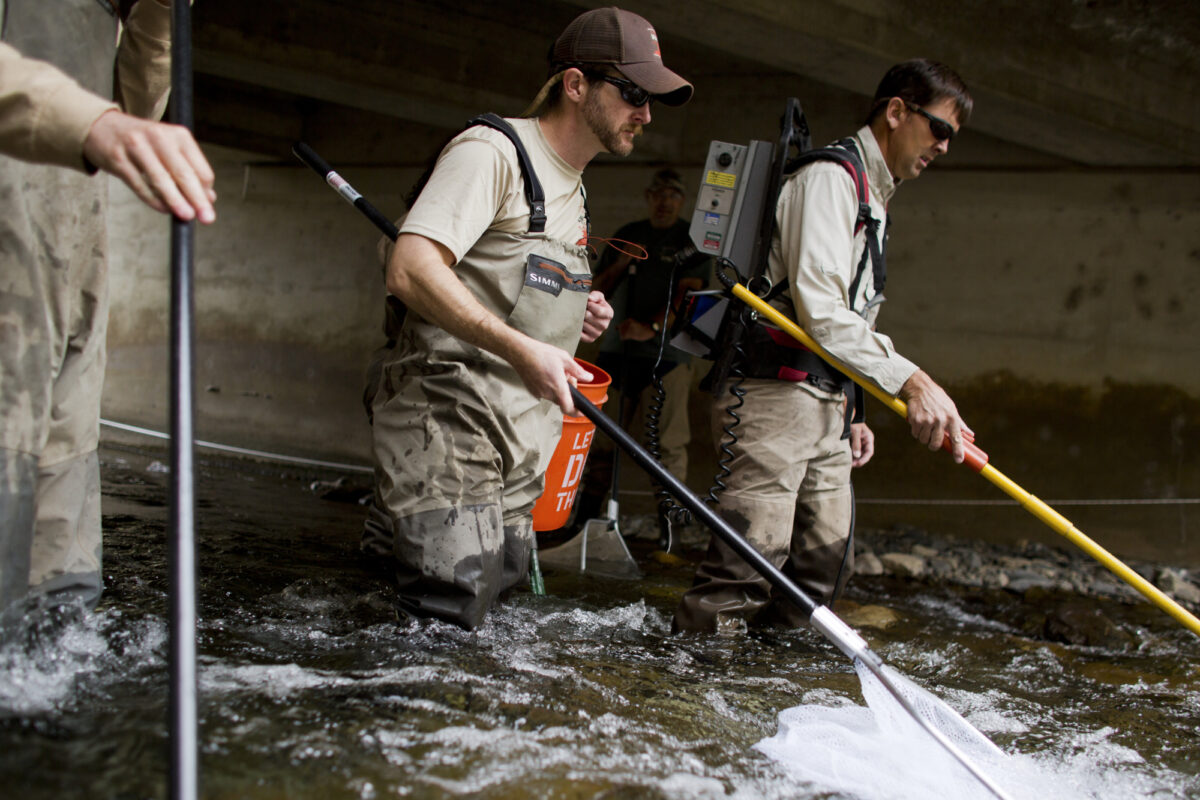
Chris Crockett, center, the regional aquatic program manager from the Division of Wildlife Resources, follows Mike Slater, right, the regional sport fish project leader, as he uses an electric shock to stun fish near the pole in the American Fork River on Monday, Aug. 27, 2018.
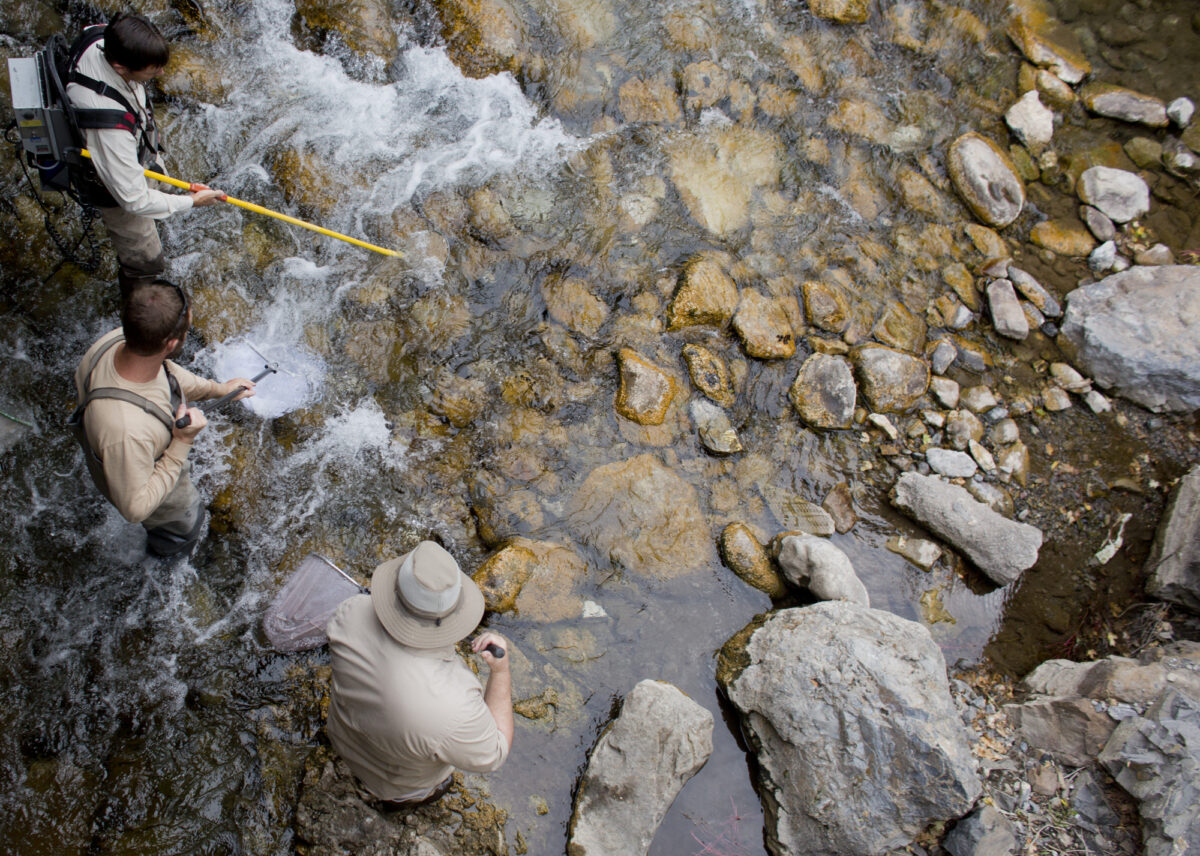
A team from the Division of Wildlife Resources temporarily stuns fish with an electroshock and then removes the fish from the American Fork River in order to track the amount, size and weight of the fish on on Monday, Aug. 27, 2018.
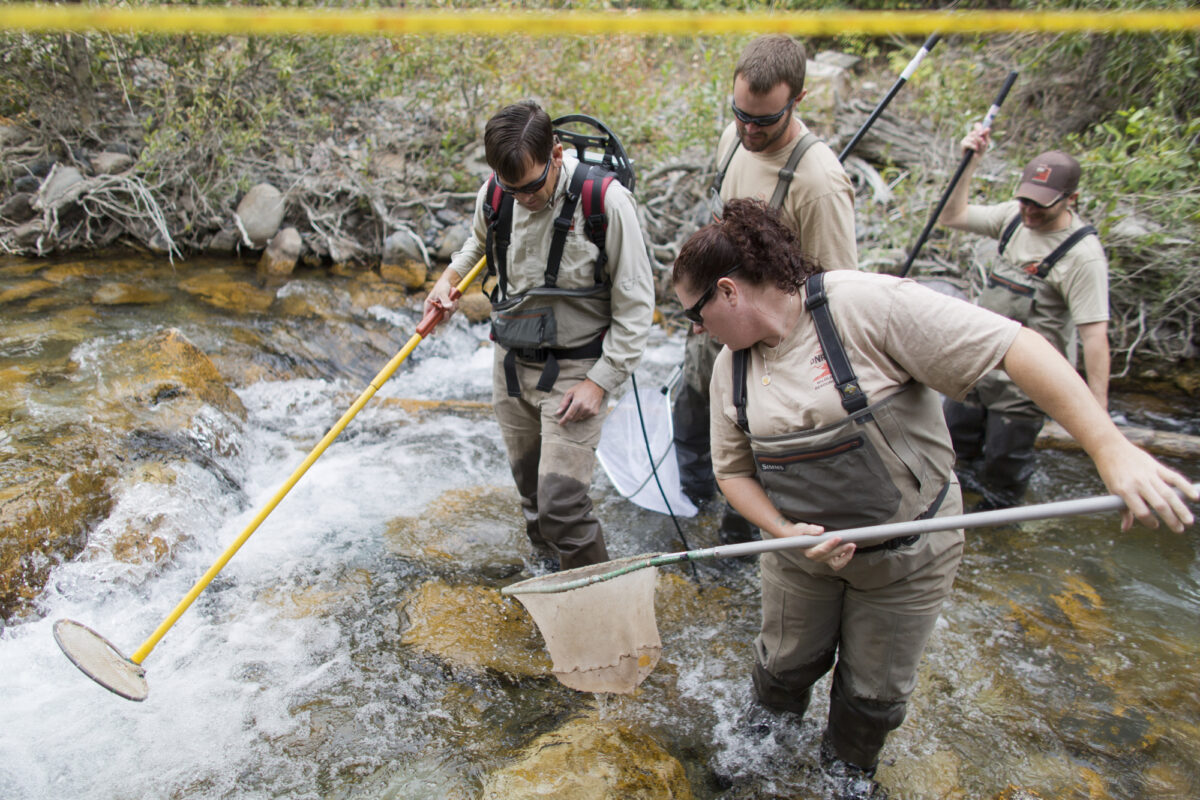
Jackie Watson, right, a blue ribbon fisheries biologist for the Division of Wildlife Resources, nets a stunned fish in the American Fork River on Monday, Aug. 27, 2018.
A measuring tape lines the American Fork River on Monday, Aug. 27, 2018. The team from the Division of Wildlife Resources was checking fish populations in sections of the river in order to understand the status of the river.
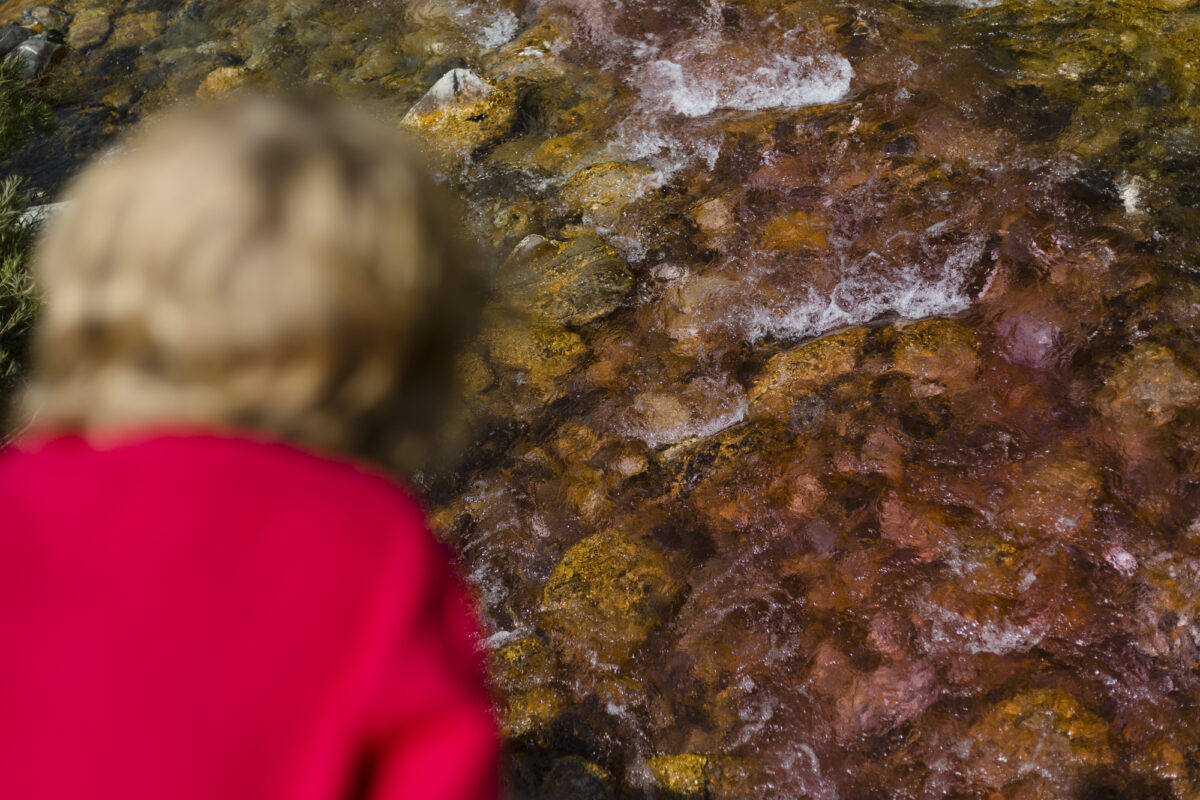
Xander McCandless, 6, watches as purple dye flows through the water of the American Fork River on Monday, Aug. 27, 2018. The dye is used to help track the flow rate of the river.
Monday morning was a shocking wake-up call for fish swimming in the American Fork River.
Rangers and technicians from the Utah Department of Wildlife Resources spent most of Monday electrofishing select sections of the American Fork River in order to study the habitat and health of the fish living there.
The goal was to safely capture the fish living in multiple 300-foot-long segments of the American Fork River and weigh and measure them. This week’s data will be compared against last year’s data from the same sections. DWR rangers are hoping to see some improvements showing the native brown trout are recovering since the large sediment release from Tibble Fork Dam in August 2017, which almost wiped out the fish population.
“We’re monitoring the fish, seeing how many big and little fish there are, monitoring the bugs, sampling the habitat and the water flow,” said Mike Slater, DWR regional sportfish project leader.
Using a netted electric wand, Slater and Chris Crockett, regional aquatic program manager, took turns leading teams upstream. The wand made a ringing sound, not unlike a muted alarm clock when the small electric current was active, stunning the fish for a few seconds. Team members, nets in hand, caught the stunned fish. They first collected the fish in five-gallon buckets, and then poured them into garbage cans — which had multiple small holes drilled in the sides to allow the river water to flow through the cans.
After making two runs to catch fish, the teams weighed and measured the fish, and then released them back into the river. A number of the fish were smaller than five or six inches, but in a few of the deeper pools, the team caught some full size 10 and 12 inchers.
“We’re very encouraged with what we’re seeing,” Crockett said, explaining that finding fish in all age groups is a promising sign that the fish population is doing well.
In addition to some beautiful brown trout any angler would be happy to include in a selfie, the crews also caught small mottled sculpin and rainbow trout.
Alan Jenkins, dam tender for the North Utah County Water Conservancy District, also took a few sample fish and sent them to a laboratory in Washington. The NUCWCD is studying the metal levels in the fish to see how the sediment flow molecularly affected them.
A couple of weeks ago, river flows hit their lowest levels since 1934, according to Ernie John with the American Fork Irrigation Department. Flows on Monday were still low, but the DWR wanted to study the fish population during the same time frame as 2017.
Local News
Developer eyes ‘GoldMine’ data center project in Fairfield

A piece of history: Operating B-17 on display at Spanish Fork Airport for Wings and Wheels Airshow