New Gorgosaurus comes to Thanksgiving Point

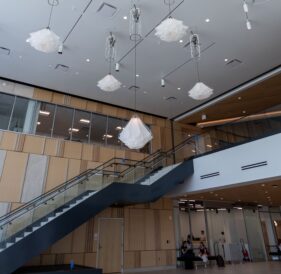
Talon Sabin, 17, examines "Ruth" the Gorgosaurus with his mother, Julie Jeffs, in the lobby of the Museum of Ancient Life on Friday, June 22, 2018, in Lehi.
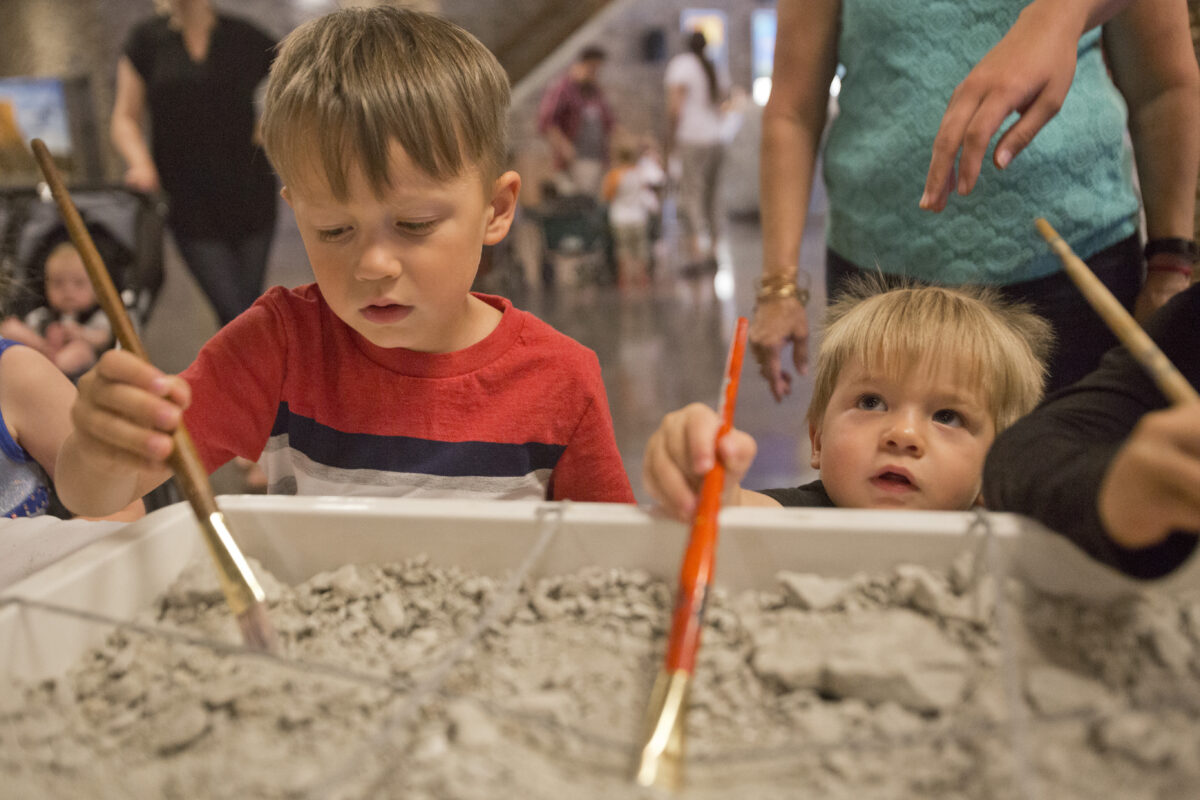
Mario Mutate, 4, and his younger brother, Dominic, 2, from Lehi, work to uncover dinosaur bones at the Museum of Ancient Life on Friday, June 22, 2018, in Lehi. The museum unveiled "Ruth" the Gorgosaurus earlier in the morning and had activities for visitors.
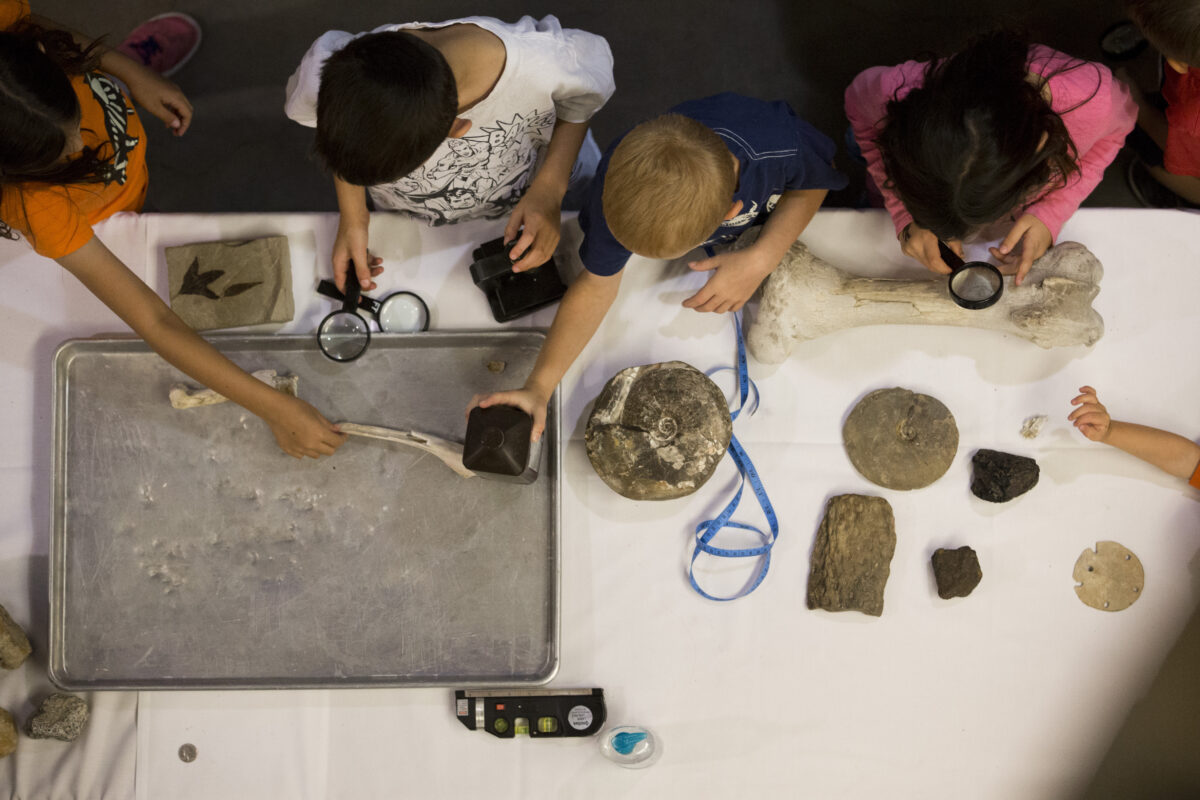
Visitors to the Museum of Ancient Life examine fossils and petrified wood in the lobby on Friday, June 22, 2018, in Lehi.
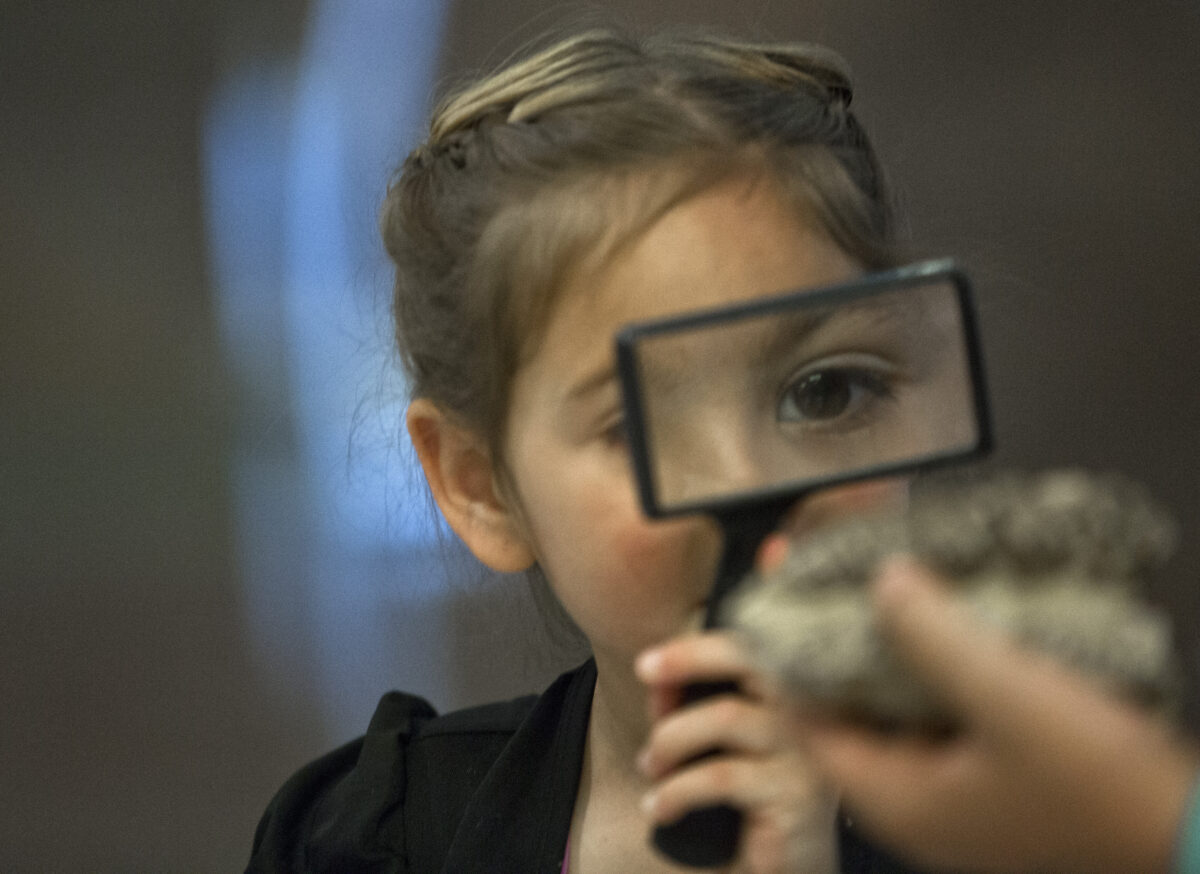
Ashley Virgin, 5, examines a portion of petrified wood through a magnify glass as her brother, Kevin Virgin, 12, holds it at the Museum of Ancient Life on Friday, June 22, 2018, in Lehi. The brother and sister were visiting Utah with their family from Oregon.
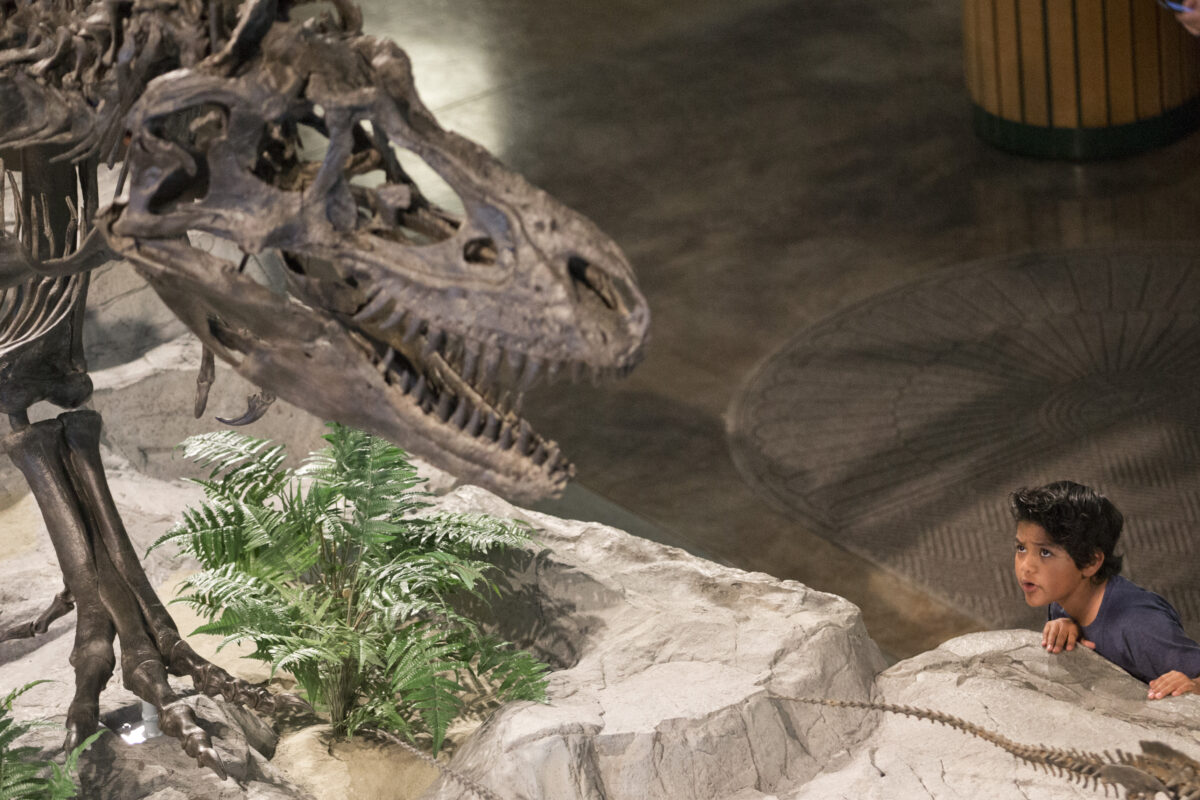
Emmanuel Jimenez peers up at "Ruth" the Gorgosaurus in the lobby of the Museum of Ancient Life on Friday, June 22, 2018, in Lehi.
A new dinosaur is greeting patrons as they enter Thanksgiving Point’s Museum of Ancient Life, and this one has an intriguing story to share.
A team from the museum unveiled Ruth the Gorgosaurus, a member of the Tyrannosaur family, Friday morning to cheers and gasps of excitement. According to Rick Hunter, a paleontologist at the museum, Ruth did not have an easy life while alive.
Ruth was discovered in 1997 in Teton County, Montana, by the Sandy and Cliff Linster family on their family ranch. The family’s son, Wes, had discovered another dinosaur in 1993 on the same land, and had been actively excavating the land.
“This was a mom and seven kids, and she went online to figure out how scientists did a dig. They made quarry maps, numbered every bone, all of it. They acquired over 9,000 bones — most of them belonging to Maiasaurs. It was a fabulous bone bed,” Hunter said.
The bone bed contained the remains of as many as 100 Maiasaur duckbill dinosaurs, and the Linster family documented, photographed, mapped and numbered all the fossil bones as they came out of the ground. The Linster family worked every summer for 15 years at the site — Sandy and Cliff Linster using the time as a scientific field school experience for the children, where they learned proper excavation, preservation, and documentation of the fossils they encountered.
During this process, Cliff Linster discovered Ruth’s skull and it took the family three years to fully excavate Ruth’s remains. She is one of the most complete and best-preserved Gorgosaurus specimens.
Ruth’s life was a difficult one, according to the scientists who studied her. She shows signs of a bone infection, bone cancer and multiple bone fractures along her ribs, both legs and tail. One leg bone broke, and then healed incorrectly, and scientists believe the bone actually healed with the end of the bone protruding out of her skin. Hunter explained that scientists can determine which bones broke before death because the bones show signs of healing.
“It brings up the question, how did it survive? Did it have a mate that nurtured it or did it just tough it out?” Hunter said.
Scientists also believe they have a good idea of what led to Ruth’s death at the relatively young age of about age 22 or 23: a brain tumor — the first known brain tumor in dinosaurs, Hunter said. In looking at her skull, they found an abnormal growth, indicating the tumor. They believe this caused vertigo and could be a major reason Ruth had so many broken bones. She fell down a lot.
Ruth’s original Gorgosaurus skeleton resides at The Children’s Museum of Indianapolis. The Thanksgiving Point specimen is a cast skeleton purchased by Linster family friend Ruth Peck. Peck donated the casting to the museum because of its dedication to citizen science, Josh Berndt, director of communications at Thanksgiving Point, said.
Though the skeleton’s gender is unclear, Hunter said they named it Ruth in honor of Peck. Ruth is on permanent exhibit in the museum’s lobby. The previous dinosaur lobby resident, a Tarbosaurus, is being moved to the museum’s Jurassic hall.
Wes Linster’s 1993 dinosaur discovery, which he named Bambiraptor, is also on display at the Museum of Ancient Life.
Local News
Improving the highway: U.S. 189 construction sees progress despite extended timeline

Utah County prosecutors to pursue death penalty against Springville man charged with two killings